



Why In Vitro Transdermal Testing Beats Animal Studies for Safety
2025-10-16


In Vitro Transdermal Testing gives development teams a clear, human-relevant view of how actives move through the skin - without the cost, delay, or ethical burden of animal studies. At Raytor, we design and build high-quality laboratory scientific instruments for teams that need dependable safety evidence on tight timelines. What they ask for is simple: data that mirrors human risk, records that stand up to audits, and a method that scales from exploratory screening to routine QC. Below, we explain why in vitro approaches lead on safety, how they resolve everyday pain points, and how Raytor's integrated platform helps standardize results across programs.

The Safety Edge
Animal models have long acted as stand-ins for human skin, yet they rarely match it. Differences in stratum corneum thickness, lipid organization, and follicle density can distort both absorption and irritation profiles. With In Vitro Transdermal Testing, you work with human or human-analog membranes under defined, repeatable conditions. That means fewer confounders, clearer signals, and decisions grounded in data that track to human risk - not to a proxy.
Safety improves when variables stop drifting. In vitro systems fix the basics: membrane selection, temperature control, agitation, and sampling cadence. Locking down those levers turns cause-and-effect from a guess into a traceable line. The payoff shows up in three places - early screens that actually rule compounds in or out, formulation tweaks that behave predictably, and submission packages that explain exactly how the data were produced.
Regulators are pushing in the same direction. Reviewers want transparent workflows and reproducible outputs. When your runs are machine-logged, time-stamped, and method-bound, in vitro skin permeation testing generates an audit trail that answers hard questions before they are asked. Fewer gaps mean faster reviews and fewer detours.
- What It Looks Like In Practice?
• Higher decision confidence: Human-relevant membranes shrink the gap between lab findings and clinical reality.
• Lower variability: Controlled conditions reduce noise and sharpen trend analysis.
• Cleaner compliance: Structured data capture simplifies investigations and CAPA narratives.
How Raytor Reduces Risk
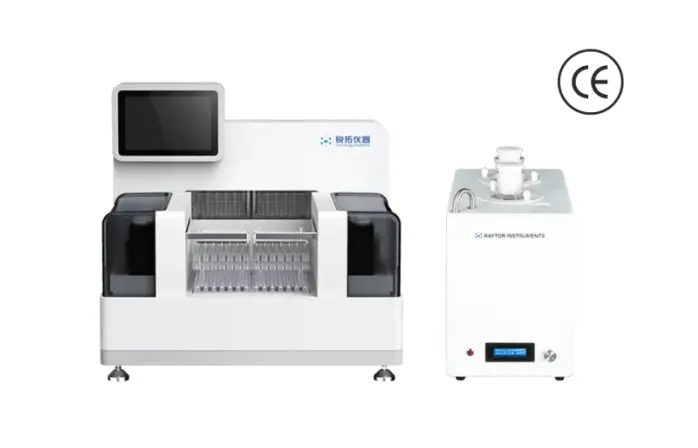
Formulators and regulatory teams share familiar headaches: inconsistent baselines, sampling errors that only surface late, and rework when documentation is incomplete. Raytor's answer is to remove those failure points at the instrument level. Our fully automatic 14-position transdermal diffusion cell (Franz cell) system brings the diffusion cell device, an automatic sampling module, and a medium thermostat into one cohesive, modular platform. Hardware and method control are aligned, so each position - and every run - operates under repeatable, documented conditions.
Performance is framed by recognized benchmarks, including the European Pharmacopoeia (EP 9.0) General Chapter <2.9.4> Dissolution Test for Transdermal Patches and the United States Pharmacopeia <1724> Semisolid Drug Products - Performance Tests. That alignment helps teams design protocols that map directly to guidance on in vitro release and permeation for creams, ointments, patches, and gels. It also keeps cross-functional collaboration on track: formulators, analytical chemists, QA, and regulatory read the same playbook and interpret results the same way.
Automation addresses human-factor risk head-on. Real-time monitoring and automatic recordkeeping deliver a reliable data spine for trending and submissions. Independent temperature control at each cell prevents heat-related bias, while an integrated diffusion-cell structure reduces leakage risk during long studies. The outcome is practical and measurable: tighter confidence intervals, more stable baselines, and fewer repeat experiments.
✅ Features That Protect Data Integrity
- Automatic bubble removal: A smart mechanical tilt expels residual bubbles in real time, cutting signal drift and sampling artifacts.
- Separate pipeline design: Dedicated pumps and lines per cell defend against cross-contamination.
- Two independent cell groups: Run method development and verification in parallel without interference.
- Flexible sampling options: Choose partial or full sampling to match the study endpoint - no hardware rework needed.
- Per-cell temperature control: Keep every position at target conditions with continuous logging for traceability.
For teams exploring standards-based workflows (and for search visibility), two long-tail phrases remain useful: Franz diffusion cell system and transdermal patch dissolution test. Both reflect well-established practices that ease method transfer and align expectations with partners and regulators.
Day-To-Day Impact
The value of In Vitro Transdermal Testing shows up in the routine work that fills most calendars. Early in development, teams can screen penetration enhancers, excipient levels, and backing materials before committing to costly trials. Mid-development, the platform clarifies how formulation adjustments shift flux, lag time, and steady state. In QC, the same validated conditions are repeated, so batch checks stay consistent month after month.
Here's how a typical study flows when Raytor's system is in place. You define your membrane and method parameters with references to EP and USP where appropriate. The thermostat stabilizes the medium, while per-cell temperature control mirrors real-world application conditions. You select a sampling strategy - partial sampling for fine time-course resolution, or full sampling for mass balance clarity. During the run, automatic bubble removal and the leak-resistant cell architecture protect the concentration gradient you planned for. At closeout, the system exports clean records: time stamps, temperatures, sampling volumes, and concentrations, ready for analysis and audit.
That structure produces three practical benefits:
- More time for interpretation, less for troubleshooting. Teams spend effort on what the data mean rather than on why they look unstable.
- Faster internal approvals. Protocol-faithful runs reduce debate and speed cross-functional sign-off.
- Submission-ready evidence. Clear objectives, validated conditions, and machine-logged results answer the questions reviewers actually ask.
✅ Typical Use Cases We See
- Early risk screening: De-risk candidate APIs and vehicle systems before large human studies.
- Formulation refinement: Compare vehicles and enhancers using clean diffusion profiles.
- Quality control: Standardize batch release with reproducible, logged parameters.
- Regulatory dossiers: Align with EP and USP guidance to support smooth reviews.
Closing Words
If your organization is moving beyond animal models - or if you need stronger, human-relevant safety evidence - Raytor can help you standardize In Vitro Transdermal Testing from screening to QC. Talk to our specialists to design a compliant, automated workflow that cuts variability, accelerates reviews, and builds confidence in your skin-absorption results.