


Pharmaceutical Solubility Testing: Why It Matters And What It Really Measures
2026-01-22


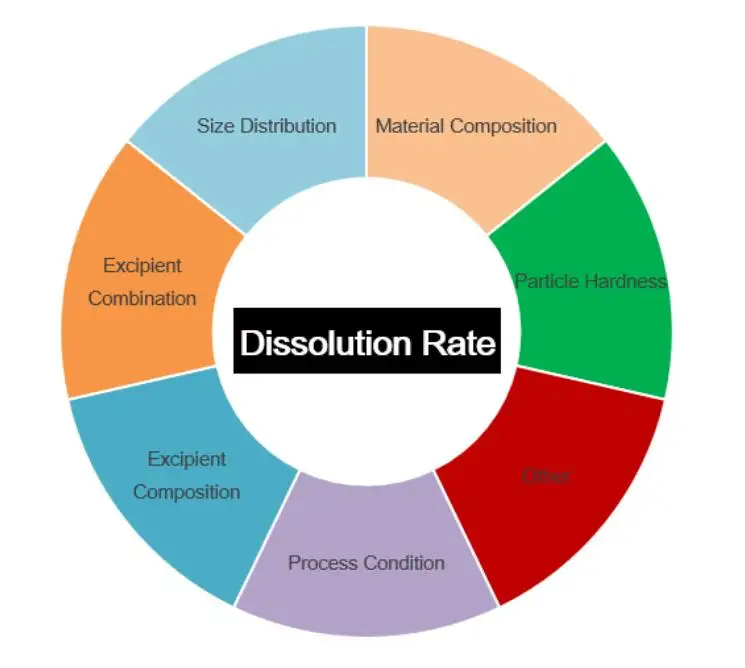
Solubility is one of the earliest and most consequential gates a compound passes through on its way to becoming a medicine. It shapes exposure, variability, and in many cases whether a tablet ever delivers enough drug to matter clinically. Yet "solubility" is not a single value. Pharmaceutical Solubility Testing spans a set of context-specific measurements that answer different questions depending on how the solution was created and what solid phase is present.
Two concepts anchor the landscape. Thermodynamic solubility is the equilibrium concentration when the most stable solid form sits in contact with a medium at a fixed temperature (usually 37°C) for long enough to equilibrate and, if necessary, transform to its lowest-energy phase. Kinetic solubility is the concentration at which a supersaturated solution first becomes unstable to precipitation, often observed after diluting a concentrated stock in DMSO into an aqueous medium. The former reflects a true equilibrium; the latter reflects nucleation and growth kinetics and can be heavily influenced by additives, mixing, and the path you took to get there.
Why pH, Solid Form, and Dose Context Matter
Most small-molecule drugs are weak acids or bases, so pH-dependent ionization dominates their apparent solubility. The intrinsic solubility (S0) describes the neutral species; total solubility increases with ionization according to Henderson-Hasselbalch relationships. As a result, a base may be highly soluble in the stomach and far less so in the intestine, with the reverse often true for acids. Solid-state form is equally decisive. Polymorphs, hydrates, salts, cocrystals, and amorphous phases can change both the measured solubility and the speed at which a dose dissolves.
Regulatory frameworks build these realities into practical thresholds. In the biopharmaceutics classification system (BCS), a drug is "highly soluble" if the highest marketed dose dissolves in 250 mL or less across pH 1.2-6.8 at 37 ± 0.5°C. Pairing solubility with permeability guides development choices, dissolution testing, and whether in vivo bioequivalence studies might be waived.
Equilibrium and Kinetic Methods in Practice
Shake-flask equilibrium studies remain the reference method for measuring thermodynamic solubility. A robust protocol typically adds excess solid to buffered media, agitates at 37°C for 24-72 hours (longer for slow converters), then samples the clarified supernatant. Good practice includes:
•Sampling and separation that avoid disturbing sediment, with centrifugation followed by low-binding filtration and recovery checks for filter or plastic adsorption.
•Analytical methods (LC-UV or LC-MS/MS) that are stability-indicating, with internal standards where helpful and autosampler stability confirmed.
•Solid-state verification of residual solids (XRPD, DSC, or FTIR) to confirm the equilibrated phase. For example, a salt may disproportionate to the free base under certain pH conditions.
Intrinsic dissolution rate (IDR) complements concentration-based measures by reporting mass flux from a compact of defined surface area under controlled hydrodynamics (e.g., a rotating disk). Expressed in mg/cm²/min, IDR fits within Noyes-Whitney mass transfer concepts and helps rank salts and polymorphs when powder dissolution is confounded by particle size.
Discovery teams often lean on high-throughput kinetic assays to triage large libraries. Microplate-based turbidity or "cloud point" methods dose compounds from DMSO into buffers (often pH 7.4) or simple biorelevant media and detect the onset of precipitation by optical scattering. These are efficient rank-order screens but reflect metastable behavior; colloids and DMSO-related artifacts can skew results. Promising chemotypes should be confirmed by equilibrium methods before key decisions.
Biorelevant Media in Pharmaceutical Solubility Testing
The gut is not just buffered water. Use biorelevant media (FaSSIF, FeSSIF, simulated gastric fluids) containing bile salts, phospholipids, fatty acids, and digested lipids to generate mixed micelles that raise apparent solubility of lipophilic compounds. Relative to simple buffers, expect:
•Higher apparent solubility via micellar/vesicular partitioning into colloidal phases.
•Promotion and occasional maintenance of supersaturation during gastric→intestinal transfer (notably for salts and amorphous forms).
•Shifts in precipitation/redissolution kinetics, altering the intestinal absorption window.
For translation, assemble pH-solubility profiles, micellar partitioning data, precipitation half-times, and dissolution rates, and input them into a PBPK framework to simulate exposure across fed/fasted conditions and GI variability. Combined with permeability and transit, PBPK can inform whether an amorphous solid dispersion, salt selection, or a lipid-based formulation is likely to succeed. For some immediate-release products, integrating biorelevant dissolution and solubility with clinical data supports in vitro-in vivo correlations that streamline post-approval changes.
Interpreting Results and Meeting Regulatory Expectations
A coherent solubility assessment starts with assembling a pH-solubility curve and fitting it to extract S0 and pKa values (and, for ampholytes, multiple equilibria). Deviations from ideal behavior often reveal stories worth investigating - salt disproportionation near neutrality, self-association at higher concentrations, or co-solvent effects when a little ethanol or surfactant is used to stabilize the analyte during analysis. If you use co-solvents or surfactants, document how they shift solubility and avoid extrapolating to additive-free conditions.
Link solubility with dissolution to compute the dose number (Do = dose divided by solubility times 250 mL). A Do greater than 1 flags a risk of solubility-limited absorption. Map this against permeability to prioritize formulation strategies and clinical risks.
For BCS-based biowaivers, regulators usually expect:
•High solubility across pH 1.2-6.8 at 37°C for the highest dose strength (≤250 mL).
•High permeability, often defined as ≥85% fraction absorbed based on human data or accepted surrogates.
•Rapid and similar dissolution for test and reference products (for example, ≥85% in 30 minutes in pH 1.2, 4.5, and 6.8 media using USP Apparatus I or II).
• Fit-for-purpose, reproducible solubility methods with justification for media and additives, solid-state confirmation of equilibrated phases, and an explicit discussion of variability and biorelevance when surfactants are used.
n Pitfalls
•Equilibrium not truly reached → inflated values (time, polymorphs, microcrystals)
•pH drift → monitor continuously; stronger buffers; minimize CO2
•Adsorption losses → low-binding labware; precondition filters; confirm recovery
•Colloids ≠ solution → DLS/ultracentrifugation; filtration vs centrifugation
•Degradation over time → stability-indicating analytics; protect from light/O2
•Condition control → 37 ± 0.5°C; define ionic strength (salting-out risk)
n Quality Controls
•Robust SOPs + replicates + orthogonal methods (LC-MS vs UV; filtration vs centrifugation)
•Kinetic screens: DMSO 1-2%, standardized mixing, rank-order readout
n Future Trendlines
•Automation + microfluidics: microliter mapping across pH/composition
•Physics-aware ML: predicts pH-solubility, micellar partitioning, precipitation risk
• Dynamic GI simulation: two-stage transfer, biphasic dissolution, gastric/lipid digestion
Formulation to stabilize supersaturation: Amorphous solid dispersions (e.g., HPMC-AS, PVP/VA), mesoporous carriers, and lipid systems aim to generate and maintain supersaturation in vivo. Simple solvent- or pH-shift tests with polymers help rank precipitation inhibitors.
From Method to Instrumentation: Automating Dissolution for Data Integrity
High-quality solubility and dissolution data depend not only on the chemistry but also on the mechanics of how fluid, solid, and sampler meet. Modern automation helps close gaps that create variability. As a case in point, RAYTOR's automated dissolution system uses eight positions driven by a single synchronized motor to keep hydrodynamics uniform across vessels - critical when solubility limitation drives release.
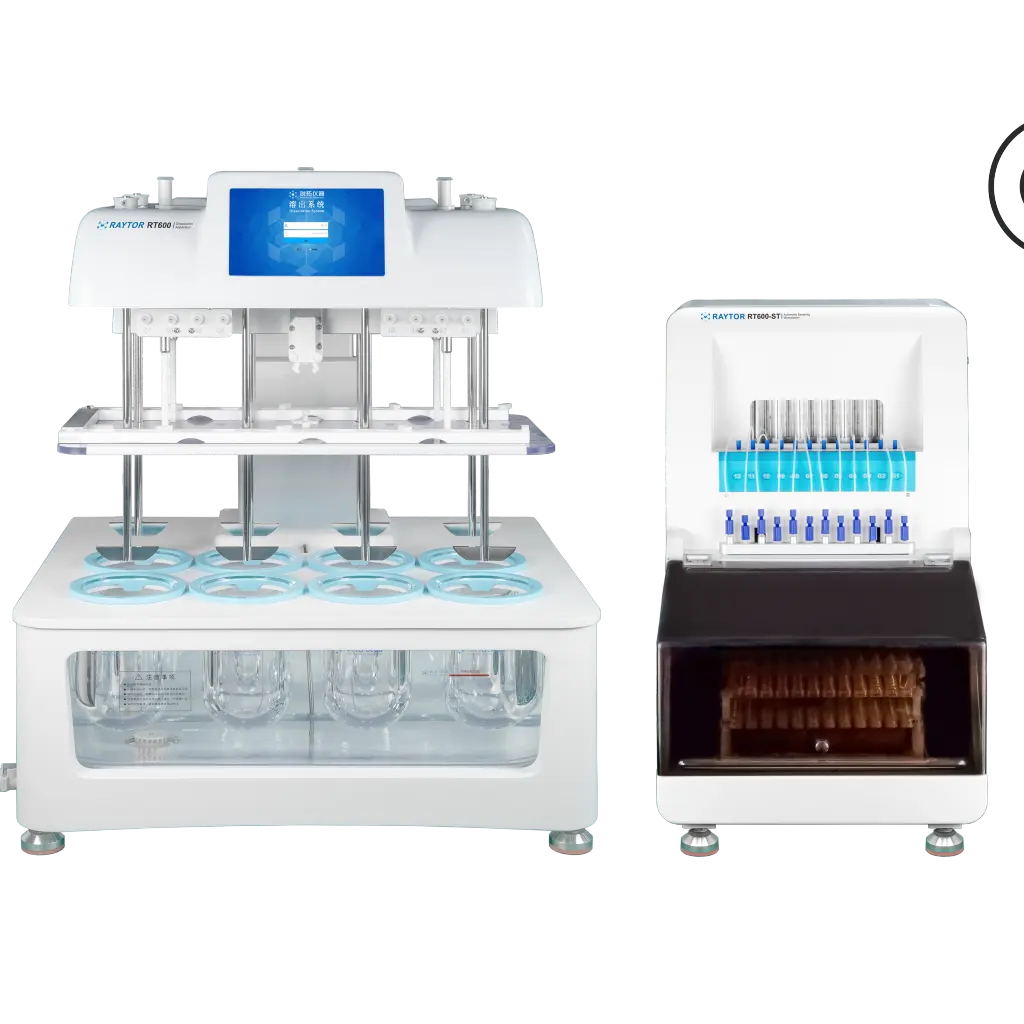
Key capabilities map directly to outcomes:
•Automatic, synchronous dosing with event time-stamps ensures all vessels start together, tightening early-time profiles and reducing reruns.
•Scheduled preheating and covered, auto-centered vessels bring media to set temperature on time and align cups without fuss, so the first run begins promptly and drift is minimized.
•Real-time displays of rotation speed and temperature let operators catch deviations before they waste a run.
•A co-axial paddle/basket design that requires no height readjustment when switching methods shortens changeover and improves cross-method comparability.
•A high-precision sampling pump with optional online dilution keeps small-volume time points consistent and prevents detector saturation at high concentrations, cutting manual handling while maintaining linearity.
•Chemically inert, low-adsorption Teflon flow paths protect low-dose or sticky analytes from surface binding, raising recoveries - especially for lipophilic compounds where adsorption is a hidden sink.
•Dual online filtration with automated rinsing conditions filters, stabilizes backpressure, and reduces clogs, preserving true profiles for poorly soluble or high-excipient products.
•Automated sample collection supports unattended, high-throughput sequences with a 120-position tray for 1.5 mL vials and compatibility with 10 mL tubes, maintaining identity from vessel to vial.
For semi-solid products, the instrument follows USP <1724> to support in vitro release and permeation testing. A bubble-preventing filling point maintains hydrodynamics - addressing one of the most common root causes of drift in IVRT.
These design choices matter because they strike at typical weak points in Pharmaceutical Solubility Testing: timing mismatches, thermal drift, adsorption losses, and filtration artifacts. By stabilizing the mechanics, you preserve the chemistry - and the conclusions you draw from it.
Call to Action
Speak with a RAYTOR specialist to schedule a live demonstration, review validation documentation, and map a fast path to method transfer. Bring us your toughest dissolution problem, and we will show you how to remove variability, accelerate release, and build confidence in every result.