

What Is Precision Laboratory Automation and Why It Matters
2025-10-17


Precision Laboratory Automation is reshaping how modern labs handle micro liquid samples, replacing repetitive manual steps with intelligent, reliable workflows that keep results consistent and projects on schedule. From pharmaceuticals to semiconductors, teams gain cleaner data, faster cycles, and less rework. As a manufacturer dedicated to the research, development, production, sales, and service of high-quality laboratory scientific instruments, Raytor designs automation that is practical to deploy and easy to trust.
Defining Precision Laboratory Automation
Precision Laboratory Automation means standardizing liquid handling - sampling, injection, timing, and cleanup - so outcomes no longer depend on who is on shift or how tired they are. In many labs, manual injection and regular sampling remain bottlenecks. They create variability, consume headcount, and increase contamination risk. Automation addresses these pain points with controlled motion, closed-loop metering, and traceable methods that behave the same way on Monday morning and Friday night.
- Where Manual Steps Go Wrong
Even well-trained analysts face drift when volumes are tiny and schedules are tight. Hands must move between instruments, caps, and filters; documentation lags; and cleaning becomes a game of compromise to keep the queue moving. Precision Laboratory Automation breaks this cycle. Intelligent control executes predefined methods, records every step, and performs automatic cleaning after each run, cutting downtime between batches. The result is stable throughput, fewer deviations, and data that stands up to review.
How Raytor Delivers Precision Without Friction
Raytor focuses on multi-channel liquid sample automation because parallelization delivers the biggest impact. Multiple channels enable more samples in the same time window, while identical control logic ensures each channel performs the same sequence, the same way, every time. For regulated environments, this uniformity supports audit readiness and easier method transfer across sites.
Our compact architecture saves bench space and supports internal placement of an ultra-clean bench, protecting sensitive workflows. Corrosion-resistant materials extend service life in challenging chemistries. An external touch screen enables remote operation and helps prevent pollution from unnecessary contact inside the workspace. Where many platforms automate a single step, Raytor streamlines the entire cycle - no manual intervention for injection, sampling, or refilling - and then finishes with automatic cleaning to reduce residual contamination and speed changeovers.
✅ Key Capabilities At A Glance
- High-precision metering: injection or sampling error within ±1%; ±0.1 mL accuracy achievable with a 10 mL syringe pump for micro-volume confidence.
- Flexible multi-channel design: expand from 4 - 12 channels as workloads grow, maintaining identical performance across lanes.
- Expanded sample capacity: scale 20 - 180 sample trays to fit short batches or long campaigns without re-platforming.
- Smart consumables handling: supports 0.45 μm (22 mm OD) filters and puncture of vial caps (including liquid-phase vial caps) for sealed, low-contamination workflows.
- Versatile vessels: compatible with 10, 20, 50, 100 mL vials (and others), plus racks for 1.5 mL liquid vials and 10 mL test tubes.
- Method management: store ≥500 methods, view records, and use authorization levels that align with QA expectations.
- Remote control, safer operation: external HMI for monitoring and control, helping reduce exposure and contamination risk.
- Repeatable scheduling: set up to 20 injection or sampling points per run to keep timing exact - even through overnight or weekend cycles.
Together, these features map closely to the long-tail needs teams often search for, such as "automated sample injection system for QC" and "multi-channel laboratory automation for micro volumes." With Precision Laboratory Automation at the core, analysts focus on interpretation and decision-making rather than choreography.
Use Cases, Payoff, And A Practical Path To Adoption
In pharmaceutical and biopharma QC, Raytor's automation supports pre-treatment for visible foreign matter inspection in injections, ophthalmic preparations, and sterile raw materials. Automated injection of purified water removes error-prone manual steps and helps uphold data integrity requirements. In fermentation, cell culture, and biochemical reactions, automated timing collection from shakers keeps intervals exact, so kinetic profiles remain trustworthy without tying up staff during off hours.
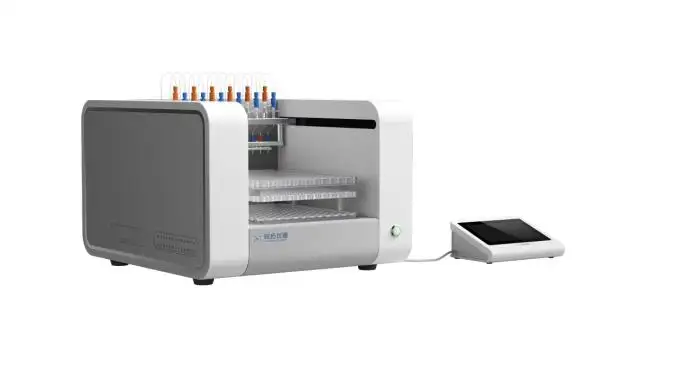
Food and chemical labs gain a safer, cleaner way to handle diverse matrices. Sealed puncture sampling and integrated filtration reduce exposure and protect sample integrity when switching products. Semiconductor environments - which live and die by contamination control - benefit from stable micro-volume metering and minimized carryover, achieved through filtered, sealed workflows and consistent, post-run cleaning.
Financial impact follows the technical gains. Standardized methods reduce failed runs and investigations. Faster cleaning and changeover increase instrument availability, allowing more lots or studies to move in parallel. Because injection and sampling volumes land precisely - 1 - 100 mL for injection and 1 - 20 mL for sampling - analysts spend less time troubleshooting and more time delivering results. Over months, teams see shorter release cycles, fewer late-stb. Map your sampling, injection, and cleaning needs to a configuration that scales from 4 - 12 channels and 20 - 180 trays, with method storage (≥500), authorization controls, record viewing, and truly automatic cleaning.
Call to Action: Ready to eliminate manual bottlenecks and raise confidence in every data point? Contact Raytor to design an automation plan tailored to your micro liquid workflows. Turn repetitive tasks into reliable, documented processes - and let your scientists spend more time on science.