


Automated Laboratory Testing Solutions Guide: 2026 Multi-Batch Dissolution
2026-01-21


The ground is shifting for QC and R&D labs in 2026. Sample volumes are rising, release windows are tightening, and dissolution testing must keep pace without sacrificing data integrity. Multi-batch capacity is transitioning from a nice-to-have to a core operational requirement. Automated Laboratory Testing Solutions give teams the headroom to run ten or more consecutive batches with confidence, while maintaining strict control over media handling, filtration, cleaning, and compliance. This article explains how to plan for that future, what pitfalls to avoid, and why RAYTOR's approach turns complex workflows into dependable, audit-ready routines.
Why 2026 Looks Different
For many organizations, throughput targets and traceability expectations are converging at once. Regulatory scrutiny of data practices is increasing, and the business is asking for faster lot release without more headcount. That combination puts dissolution testing under a spotlight. The labs that will thrive are prioritizing repeatability, standardization, and full-lifecycle data stewardship. In short, they are moving from manual, batch-by-batch operations to integrated systems that can execute multi-batch dissolution with minimal human intervention.
n The Bottlenecks That Keep Labs From Scaling
Dissolution may be mature as a technique, but the day-to-day reality still contains fragile steps. Four culprits appear again and again:
• Media variability: Slight inconsistencies in volume, temperature, or degassing can shift profiles and trigger unnecessary investigations or out-of-spec results.
• Incomplete cleaning: Residual drug or excipients can linger in vessels and lines, creating carryover that only shows up after a rerun wastes hours.
• Filter interruptions: Filters that clog mid-run force manual swaps, stall the schedule, and compromise recovery or timing.
• Fragmented records: When methods, raw data, and results are scattered or overwritten, trend analysis is clumsy and audits are stressful.
Automated Laboratory Testing Solutions address each of these issues at the source. By standardizing media distribution and removal, automating online filtration with a secondary filter on deck, and enforcing no dead-angle spray cleaning, they drive out variability before it becomes an OOS or a deviation.
How RAYTOR Enables True End-to-End Automation
RAYTOR designs Automated Laboratory Testing Solutions that convert a fragile chain of manual steps into a reliable, closed-loop workflow. The system is built to complete ten consecutive batches unattended, so analysts can focus on review and improvement rather than monitoring routine runs.
- Media Management Without Guesswork
The process begins with precise media preparation and delivery. Volumes are dispensed to specification, temperature is controlled within tight tolerances, and agitation speed is governed by the method. Removal is equally controlled to avoid turbulence, bubbles, or unintended shear that might distort profiles. By treating media as a critical parameter and not an assumption, the system stabilizes results across multi-batch sequences and reduces the need for retests.
- Online Sampling and Filtration That Never Pauses the Run
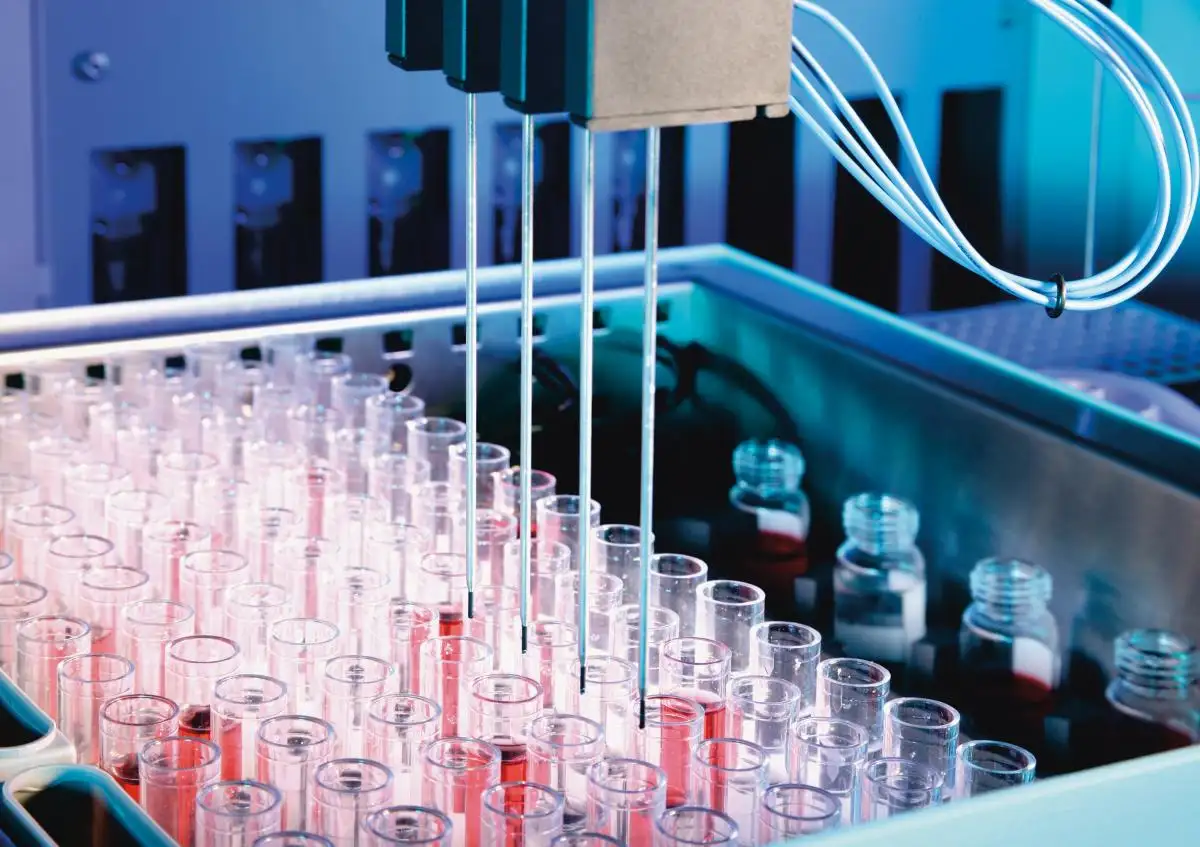
An integrated autosampler enables real-time sampling and filtration. When the primary filter nears capacity, an automatic switch introduces a validated secondary filter - no operator intervention, no pause, no loss of fidelity. That small change pays large dividends: fewer clogs, consistent recovery, and uninterrupted timing that keeps profiles comparable across all ten batches.
- No Dead-Angle Spray Cleaning Between Batches
Carryover risks are addressed with spray manifolds engineered to reach every internal surface of vessels and flow paths. Cleaning recipes map the fluids, contact timings, and verification criteria so you validate the process once and run it with confidence thereafter. With no hiding places for residues, cross-batch contamination becomes the exception instead of a constant concern.
Compliance by Design: USP 1/2 and 21 CFR Part 11
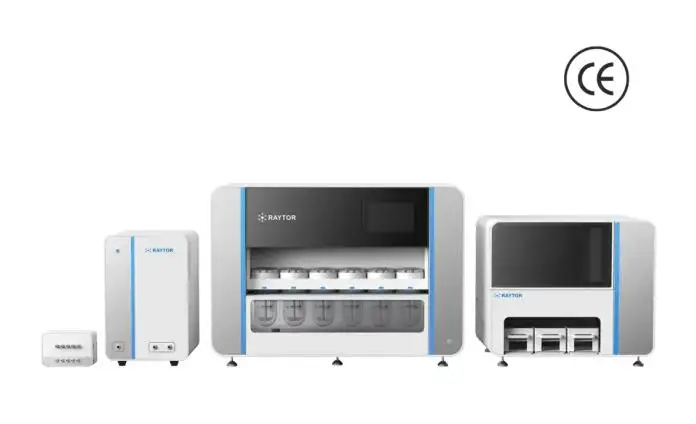
Regulatory fidelity is embedded in the system's hardware and software. The platform supports USP Apparatus 1 and 2 end-to-end, with parameters controlled within method limits and presented in real time for full traceability. On the data side, 21 CFR Part 11 principles frame user access, audit trails, electronic signatures, and time-stamped records. Every action is attributable, legible, contemporaneous, original, and accurate - ALCOA+ realized in practice. Those controls help teams move through audits smoothly and focus on continuous improvement rather than paperwork triage.
• A data backbone that holds up for 15 years and beyond
Automation reaches its potential when matched with sturdy data architecture. RAYTOR's Automated Laboratory Testing Solutions arrange methods, raw data, and results in structured repositories suited to long product lifecycles. Records can be retained for at least 15 years without the risk of accidental overwrites. Trend analysis is intuitive: compare profiles across batches and lots, detect subtle shifts early, and back stability studies with confidence.
n What This Means for Your Team
When multi-batch dissolution runs become routine, every role in the lab benefits in practical terms:
• Analysts: Unattended ten-batch sequences free time for method development, data review, and investigation closure. • Reduced variability means fewer dead ends and more productive improvements.
• Lab managers: Instruments run more hours with fewer interruptions. Schedules tighten, throughput climbs, and staffing can be allocated to higher-value tasks.
• Quality leaders: Audit trails, role-based access, and tamper-evident records turn audit readiness into a steady state. Cleaning validation and consistent media handling reduce the rate of deviations.
• Operations and manufacturing: Faster, more reliable dissolution results shorten release timelines and reduce the chance of late-stage surprises.
n How to Track the Gains
• First-pass yield: Monitor OOS rates, retest counts, and right-first-time percentage as media stability improves.
• Asset utilization: Track downtime from filter changeovers and CIP duration; automation reduces both.
• Cycle time: Ten consecutive batches without supervision compress scheduling and accelerate lot release.
• Compliance posture: Built-in Part 11 controls and validated cleaning decrease findings and audit fatigue.
Media Management That Scales With Your Pipeline
A recurring question is whether multi-batch accuracy holds when methods vary. The answer lies in flexible media recipes and tight control loops. Because volume, temperature, and agitation are all governed programmatically, method transfer is smoother: you can propagate a validated recipe across instruments and sites with predictable outcomes. For teams running a mix of immediate and modified-release products, that consistency is a strategic advantage.
- Filtration That Handles Real-World Samples
Not all products are gentle on filters. Suspended particulates, high-viscosity media, and surfactants can stress a system. Automatic switchover to a secondary filter keeps sampling on schedule, and predefined filter lifetimes embedded in the method help you avoid both premature changes and late clogs. In practice, this means fewer mid-run surprises and cleaner overlays when you compare profiles across the full ten-batch series.
- Cleaning That Proves Itself
No dead-angle spray cleaning is more than a slogan - it is a validation-ready protocol. Coverage testing, fluid selection, and contact times are all documented and repeatable. With parameters and results logged for every cleaning cycle, inter-batch cleanliness is proven by data, not presumption. That degree of transparency accelerates investigations and strengthens batch release decisions.
- Your First 30–90 Days
What's your baseline? Measure variability in media prep, sampling, filtration, cleaning.
How does automation perform? Pilot controlled multi-batch runs vs. manual on a high-volume product.
Are limits and controls validated? Confirm USP 1/2, audit Part 11, verify cleaning cycles, define retention policies.
How will you scale? Implement recipes, train exception workflows, and track expansion across the portfolio.
Why RAYTOR
RAYTOR's focus is simple: make complex dissolution schedules predictable. Our Automated Laboratory Testing Solutions bring together exact media control, uninterrupted online filtration with automatic secondary filter replacement, and no dead-angle spray cleaning - all inside a Part 11-ready software environment with long-term data retention. The result is a system that runs ten consecutive batches as designed, produces reproducible profiles, and keeps your lab audit-ready by default.
Call to Action
If your organization is preparing for 2026 multi-batch dissolution, RAYTOR can help you deploy Automated Laboratory Testing Solutions that scale throughput, protect data integrity, and satisfy USP 1/2 and 21 CFR Part 11 requirements. Contact our team to schedule a consultation and see an end-to-end automated run - from precise media dispensing to seamless online filter switchover and validated, no dead-angle spray cleaning. We will map your workflow, estimate savings, and create a validation plan tailored to your methods and products.