




Physical Properties of Pharmaceuticals Explained for QC and Stability
2026-01-20


Physical Properties of Pharmaceuticals shape how dosage forms perform from the factory to the pharmacy. This guide will help you master the following: why these properties drive QC and stability, what a disintegration tester is, how to reduce variability, how to stay compliant with Chinese Pharmacopoeia, USP, EP, and JP, and how RAYTOR turns instrument features into practical, daily benefits for your team.

Physical Properties of Pharmaceuticals - A Practical Guide For QC and Stability
Physical Properties of Pharmaceuticals include hardness, friability, disintegration behavior, dissolution kinetics, moisture content, density, and porosity. They determine how a tablet or capsule withstands handling, how it breaks down in fluids, and how actives are released. QC teams verify these properties lot by lot. Stability teams track how they shift under temperature, humidity, and light over time.
When properties drift, quality flags appear. Hardness rises, disintegration slows, and dissolution curves flatten. Packaging may no longer protect against moisture uptake. The result is delayed onset, variable bioavailability, and potential non-compliance. Robust QC turns these risks into monitored signals. Stability programs connect the signals to shelf life. The fastest wins come from standardized test setups, sound sampling, and instruments that reduce operator variability.
Why Physical Properties Matter for Quality Control and Stability
A dosage form must remain consistent from release to expiry. Physical Properties of Pharmaceuticals are the bridge between formulation and clinical performance. They show how excipients interact, how compression force affects porosity, and how coatings behave in fluids.
n For QC:
• Disintegration time offers a quick assessment of tablet integrity and liquid ingress.
• To ensure tablets arrive intact, manage hardness and friability to prevent chipping and dusting.
• Moisture uptake promotes swelling and cracking, frequently extending disintegration time.
n For stability:
• Disintegration curves under accelerated and long-term storage commonly precede shifts in dissolution behavior.
• Moisture uptake correlates with coating failure and modified release characteristics.
• Physical drift frequently precedes assay movement and degradation.
A stable product retains its physical baseline. A QC program that measures, trends, and explains variation safeguards batch release and long-term stability claims.
What Is a Disintegration Tester?
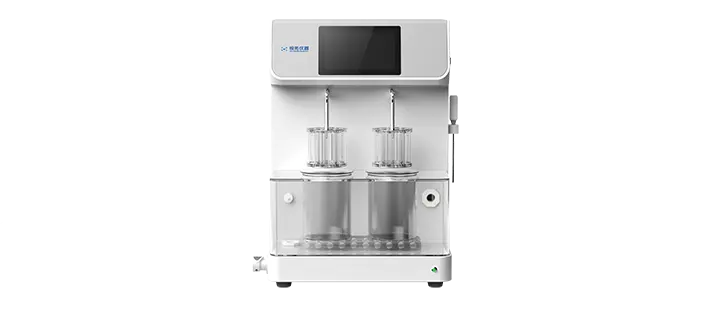
A disintegration tester measures the time required for tablets, capsules, or pills to break down under defined conditions. GI conditions are simulated with the monograph-specified medium, a calibrated, temperature-controlled bath, and the reciprocating basket-rack assembly. Maintain 37 ± 2°C to remain within the physiological range. Regulated stroke settings and basket dimensions protect comparability and compliance.
n Why Disintegration Matters for Stability?
Disintegration isn't dissolution, but it often predicts it. If disintegration slows, dissolution typically does too. Monitoring disintegration during stability work exposes early changes in tablet compression, coating integrity, and moisture sensitivity. It's a fast, low-cost check that flags risk before full dissolution testing, cutting effort in routine release and long-term studies.
n QC Pain Points - and How to Fix Them
• Inconsistent bath control: Temperature drift drives variability. Add integrated probes with live display. Confirm 37 ± 2°C before and throughout each run. Capture the true bath temperature, not just the setpoint.
• Limited throughput and cross-interference: Single baskets slow comparisons. Use dual, independently controlled groups to run parallel tests without interference. Evaluate reference and production lots side by side to catch method drift.
• Basket wear and setup errors: Baskets can wear, deform, or clog. Replace them on schedule and use the basket type specified by the monograph. Intuitive HMIs help prevent setup mistakes and keep parameters traceable.
• Poor visual documentation: Minor coating flaws and cap splits are easy to miss. Use focused lighting to observe and record disintegration. Document swelling, fragments, and residue to support root cause work.
n Compliance, No Compromise - ChP/USP/EP/JP
Global success needs harmonized disintegration. RAYTOR's systems comply with the disintegration time limit testing requirements in the Chinese Pharmacopoeia and align with USP, EP, and JP. This gives teams a single platform for multi-market products.
• Harmonized Setup And Documentation
Set method parameters, temperature targets, and basket types according to the relevant monograph. Record temperature traces, timings, and observations in an audit-ready format. Store electronic records with user access control to meet data integrity expectations. With one test frame, you can document compliance across regions without duplicate instrumentation.
RAYTOR's Disintegration Solution - Benefits You Can Use Today
RAYTOR designs instruments to translate Physical Properties of Pharmaceuticals into clear, repeatable data. Every feature is engineered to cut variability, speed decisions, and simplify audits.
• Replaceable Baskets That Match Your Method
Choose Type A (6-tube) or Type B (3-tube) baskets to match monograph requirements. Quick replacement shortens downtime and maintains dimensional tolerance, which preserves method fidelity.
• Dual Independent Test Groups For Parallel Work
Two hanging baskets operate independently. Run different products, lots, or media at the same time without cross-interference. This doubles practical throughput and improves side-by-side comparability.
• Integrated Water Bath With Temperature Probe
An integrated water bath and probe provide direct measurement and display of bath temperature. Control and verify 37 ± 2°C in real time. This reduces temperature-related result drift and strengthens audit evidence.
• Illumination For Confident Observation
Illumination allows continuous observation of the sample in the water bath. See coating integrity, edge chipping, and residue formation. Record visual cues that support decisions and investigations.
• Human-Computer Interaction Interface For Error-Proof Setup
A clear interface guides parameter selection, timing, and basket type. Consistent, traceable reports with fewer reruns start by centralizing methods and users, shortening training, and eliminating transcription/setup errors - yielding a unified QC-stability workflow that simplifies compliance. Your team gains reliable data, faster release decisions, and fewer audit findings.
Call to Action
Advance your QC and stability program with RAYTOR. Request a demo, receive an audit-ready specification sheet, and run a pilot comparison in your lab. Contact our specialists to design a harmonized disintegration method that supports your Chinese Pharmacopoeia, USP, EP, and JP filings - and turns Physical Properties of Pharmaceuticals into results you trust.