


Diffusion: Principles, Types, and Real-World Examples in Science and Culture
2025-10-29


Diffusion is one of the most useful concepts for explaining how things spread—whether that “thing” is a scent in the air, a drop of dye in water, a new technology, or a cultural trend. In science, diffusion describes the movement of particles from a high concentration area to a low concentration area. In human society, diffusion also explains how ideas, innovations, and behaviors travel across communities and regions.
This guide explains what diffusion is, why it happens, and how it works in both physical and cultural contexts. You’ll also learn the two key categories—relocation diffusion and expansion diffusion—plus common subtypes like contagious, hierarchical, and stimulus diffusion.
What Is Diffusion?
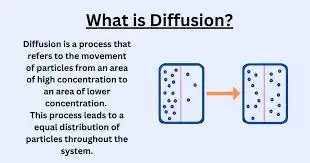
At its simplest, diffusion is the spreading process that happens when particles or information move from a “crowded” place to a “less crowded” place until things become more evenly distributed.
Diffusion in science (physical diffusion)
In scientific terms, diffusion happens because particles are always moving. They collide, bounce, and change direction randomly. Over time, this random motion creates mixing and leads to a more uniform distribution.
A classic example:
- Add a drop of food coloring into a glass of water.
- At first, the color is concentrated near the drop.
- Over time, the dye molecules spread throughout the water.
- Eventually, the whole glass becomes evenly colored.
This is diffusion moving toward equilibrium (a balanced state).
What drives diffusion?
The main driver is kinetic energy—the energy of motion. If particles have more energy, they move faster and diffusion happens more quickly.
A practical example:
- Sugar dissolves faster in hot water than in cold water.
- Why? Higher temperature = higher kinetic energy = faster particle movement = faster diffusion.
Diffusion in everyday life
You experience diffusion constantly, even if you never say the word:
- The smell of perfume spreading in a room
- Steam and heat dispersing in the kitchen
- Ink slowly spreading through paper fibers
- Carbon dioxide moving in and out of cells
Diffusion is not limited to liquids. Gases diffuse quickly (like scents in air), while solids can diffuse too, but usually much more slowly and under special conditions.
Types of Diffusion: Relocation Diffusion vs. Expansion Diffusion
In geography and cultural studies, diffusion is often divided into two major types:
- Relocation diffusion
- Expansion diffusion
Both explain how culture, language, products, and innovations spread—just in different ways.
Relocation Diffusion: When People Move, Ideas Move
Relocation diffusion happens when people physically move from one place to another and bring their culture, technology, and habits with them. The “carrier” of diffusion is the migrating group.
Key characteristics of relocation diffusion
- Requires migration or movement
- Ideas spread because people relocate
- Often leads to cultural mixing and exchange
Real-world examples of relocation diffusion
1) Food and cuisine
When communities migrate, they bring recipes and cooking traditions:
- Italian pasta becoming common in the U.S.
- Indian curry becoming widely popular in the U.K.
- Sushi spreading globally through migration and restaurant culture
Culinary diffusion often becomes a bridge to cultural understanding, because food is one of the easiest ways to try something new.
2) Language spread
Migration moves languages across borders:
- Immigrant communities maintain native languages at home
- New cities develop loanwords and mixed expressions
- In some cases, pidgin or creole languages emerge
3) Fashion and lifestyle
Relocation diffusion also influences:
- Clothing styles
- Beauty standards
- Music preferences
- Daily routines and celebrations
Modern global cities often show relocation diffusion clearly: multicultural neighborhoods, bilingual signage, fusion restaurants, and mixed traditions in festivals.
Expansion Diffusion: When Ideas Spread Without People Moving
Expansion diffusion happens when an idea, trend, or innovation spreads outward from its origin, but remains strong in the original place. People don’t need to move for diffusion to happen—the “message” travels through networks.
Expansion diffusion often occurs through:
- Media and the internet
- Education systems
- Business and marketing channels
- Social connections
Expansion diffusion includes three major subtypes: contagious diffusion, hierarchical diffusion, and stimulus diffusion.
Contagious Diffusion: Fast, Widespread, Person-to-Person
Contagious diffusion is like a chain reaction. It spreads rapidly from person to person, often across social networks. Physical relocation is not required.
Examples of contagious diffusion
- Viral internet challenges
- Trending memes or short videos
- Sudden popularity of a phrase or slang word
- Grassroots movements spreading via social media
Contagious diffusion is powerful because it feels “organic.” People share content because it is fun, emotional, or socially rewarding.
Hierarchical Diffusion: From Influencers and Institutions Downward
Hierarchical diffusion spreads from influential people, major cities, or institutions to others. It’s often top-down: elites → mainstream → broader public.
Examples of hierarchical diffusion
- Fashion trends starting with celebrities, designers, or high-end brands
- Technologies first adopted by large companies, then later by everyday consumers
- Policies or political ideas spreading from leaders to the public
Hierarchical diffusion explains why certain trends appear first in “core” places—like global capitals or leading universities—and later spread outward.
Stimulus Diffusion: The Idea Spreads, But the Form Changes
Stimulus diffusion occurs when the core idea spreads, even if the original product or practice is not copied exactly. Local cultures adapt it.
Examples of stimulus diffusion
- Fast food adapted to local taste (regional menu items)
- Architecture borrowing foreign styles but blending them with local design
- Business strategies copied across industries but modified for a new market
Stimulus diffusion is important because it shows diffusion is not always “copy-paste.” Many ideas spread through adaptation, not direct duplication.
Why Diffusion Matters: Benefits and Challenges
Diffusion shapes the modern world in huge ways—economically, culturally, and technologically.
Benefits of diffusion
✅ Spreads useful innovations
Medical knowledge, public health strategies, and new technologies can improve lives globally.
✅ Supports economic growth
When innovations diffuse, competition increases, markets expand, and new businesses emerge.
✅ Enriches culture
Cultural diffusion introduces new art, music, foods, and perspectives—often increasing tolerance and creativity.
✅ Accelerates technology adoption
From smartphones to online education, technological diffusion improves productivity and convenience.
Challenges of diffusion
⚠️ Misinformation spreads quickly
The same networks that spread helpful information can also spread false claims.
⚠️ Cultural homogenization
When dominant cultures spread widely, smaller traditions and languages may weaken over time.
⚠️ Information overload
Too much content makes it harder to judge credibility and relevance.
⚠️ Privacy and ethics concerns
Digital diffusion can expose data, increase surveillance risks, and create cross-border legal issues.
How to Think About Diffusion in a Connected World
Understanding diffusion helps you explain not only scientific processes but also real patterns in society. You can use diffusion to analyze:
- Why a product goes viral
- How a social trend becomes mainstream
- Why cities become cultural hubs
- How cultural identity changes over time
The goal isn’t to “stop diffusion.” It’s to manage it wisely:
- Support media literacy so people can evaluate information
- Protect cultural heritage while embracing exchange
- Encourage ethical technology adoption and data responsibility
- Promote sustainability as innovations scale globally
Conclusion: Diffusion Shapes How Our World Changes
Diffusion is a powerful force behind change—whether particles move through water or ideas move through communities. By understanding relocation diffusion and expansion diffusion (including contagious, hierarchical, and stimulus diffusion), you gain a clearer view of how innovations, cultures, and behaviors spread.