


How Pharmaceutical Testing Automation Achieves Accurate Chemical Sampling
2025-12-17


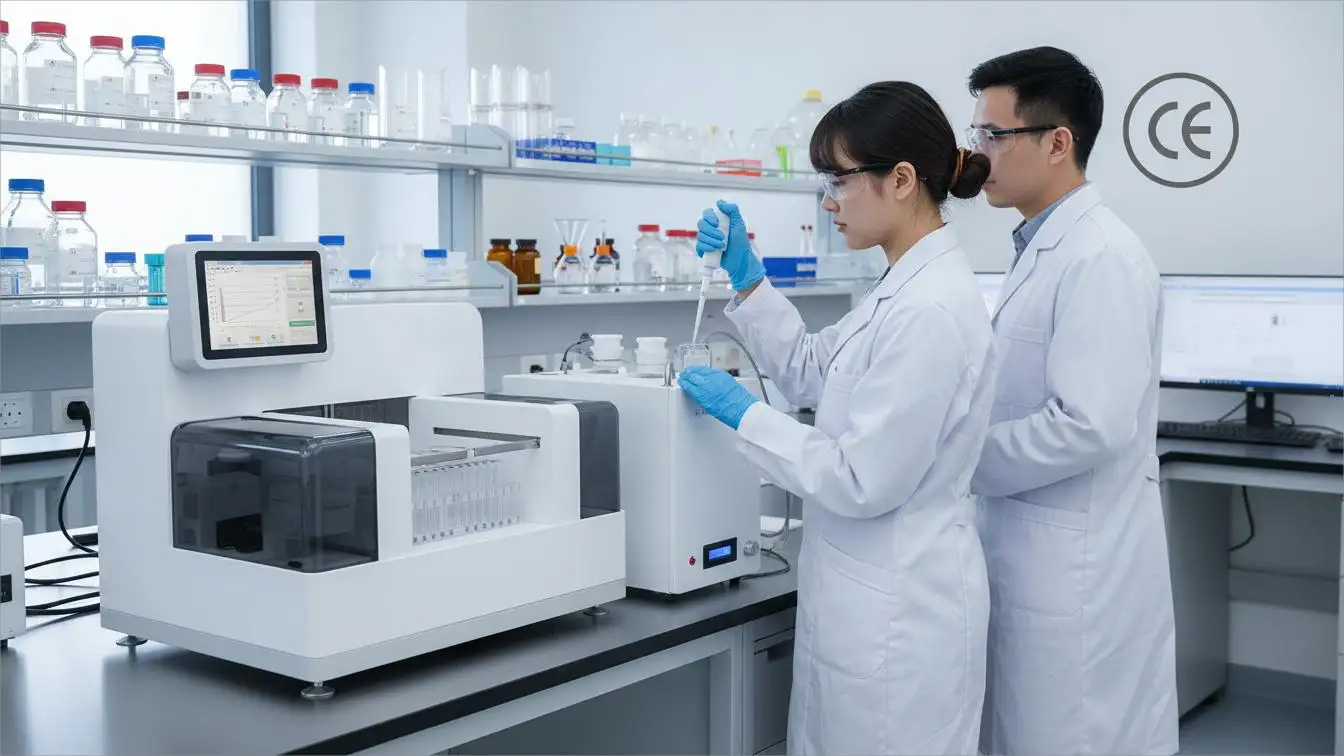
Pharmaceutical Testing Automation is no longer a distant concept reserved for a few cutting-edge labs. For many QC teams, it has become a practical way to survive growing workloads, tighter regulations, and constant pressure to release products on time. At RAYTOR, we see automation not as a gadget, but as a tool to make everyday testing more predictable, more traceable, and less stressful for the people who run the lab.
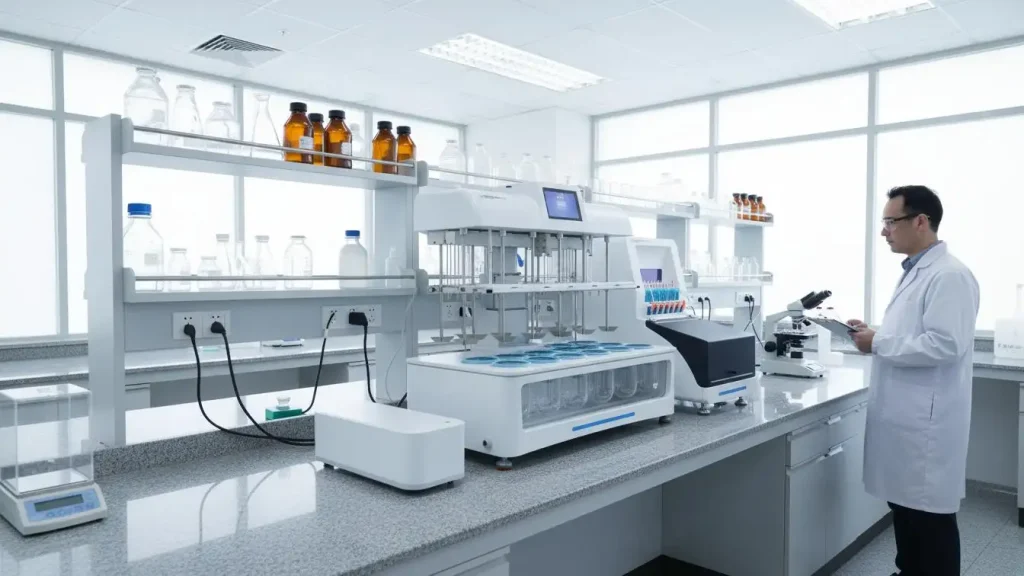
Our guiding idea, "More innovation and intelligence," sounds simple, but it shapes every detail: from the sampling pump to the pipeline materials and how samples are finally collected. In this article, we take you behind the scenes and show how RAYTOR's approach to Pharmaceutical Testing Automation helps labs get accurate chemical sampling without making the workflow more complicated.
Why Accurate Sampling Is So Difficult in Real Labs
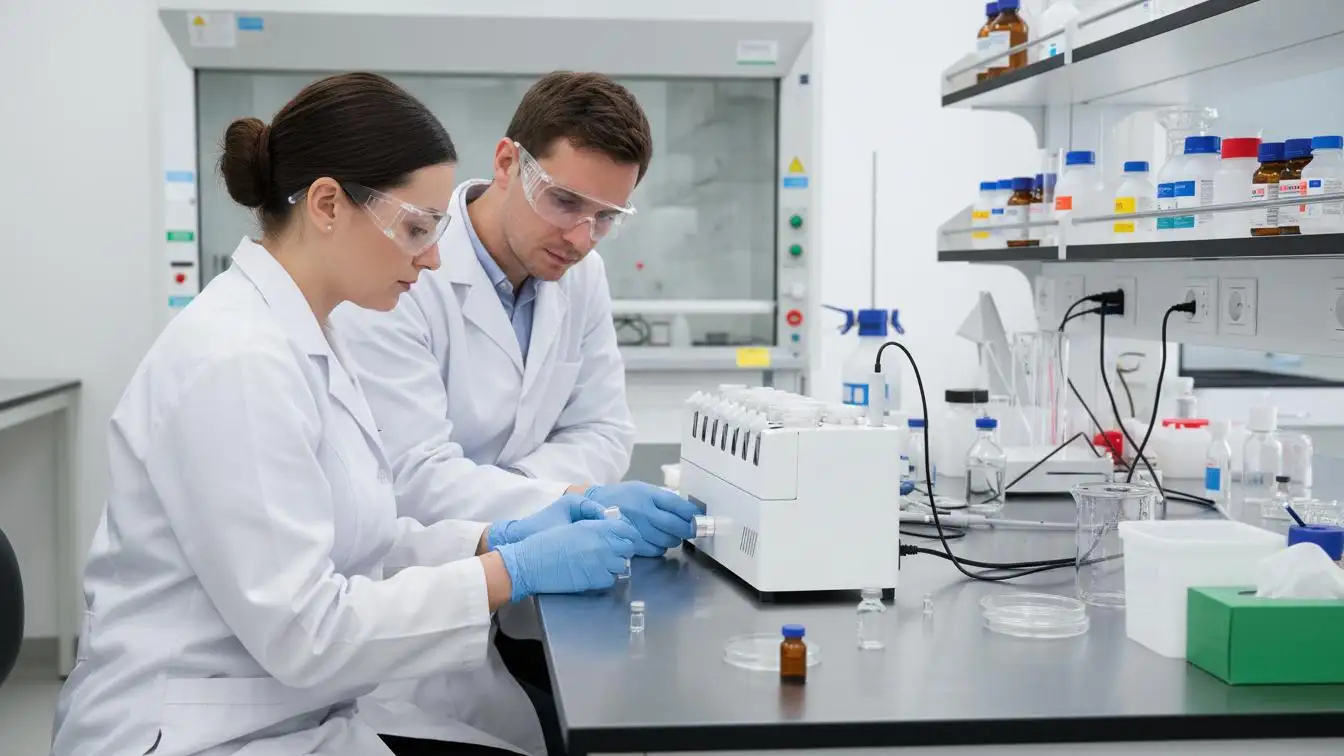
On paper, dissolution testing looks straightforward. You put the tablets in, run the method, take samples at set time points, and send them to analysis. In real life, the sampling step is often where problems start.
Many labs still rely on manual sampling with syringes or simple tubing. This introduces several sources of variation that are hard to control:
•Operators may not sample at exactly the same second.
•Pipettes and tubes can adsorb active ingredients, especially at low concentrations.
•Metal or low-grade plastic pipelines can corrode, leach, or interact with aggressive media.
The result? The tablet may be perfect, the dissolution method may be validated, but the data still "looks strange." Peaks shift, recovery is inconsistent, or early time points do not match expectations. Teams spend hours investigating whether the problem is the product, the instrument, or simply the sampling.
This risk is even higher for regulated products such as:
•general tablets
•immediate-release tablets
•enteric-coated tablets
•extended-release tablets
For these dosage forms, even a small bias in sampling can trigger a deviation, an out-of-specification (OOS) result, or a repeat study. Regulators do not only look at final numbers; they want to see that your sampling process is controlled, documented, and robust.
This is exactly where Pharmaceutical Testing Automation changes the picture. By standardizing how and when the sample is taken, and by controlling the path from vessel to vial, automation reduces the "human factor" in a step that has huge impact on data quality. For QC leaders, that means fewer surprises and more confidence when defending results in audits or inspections.
How RAYTOR Makes Pharmaceutical Testing Automation Work in Practice
A lot of automation on the market promises intelligence but ends up adding menus, settings, and alarms without solving real pain points. At RAYTOR, we work backwards from the everyday problems that analysts describe: unstable flow, clogged filters, lost samples, confusing racks. Then we design systems that quietly remove these obstacles.
- Stable Sampling from Vessel to Vial
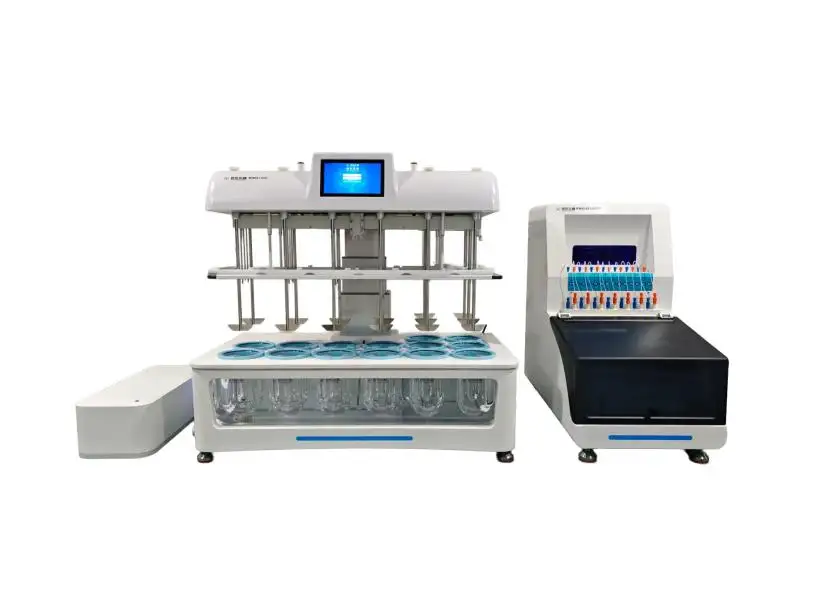
Accurate sampling starts with a predictable flow. Our systems use a high-precision sampling pump that delivers consistent volume and timing at every sampling point. This helps keep each vessel on the same footing, even during long dissolution profiles with many time points.
However, the pump is only part of the story. The pipeline that connects the vessel to the vial has a direct impact on sample integrity. That is why RAYTOR uses a Teflon pipeline system with high chemical stability and strong anti-adsorption properties. In practice, this brings several advantages:
•Less risk that APIs or excipients stick to the inner wall of the tube
•Better resistance to aggressive media, reducing corrosion and contamination
•More stable performance over time, with fewer unexpected cleaning or replacement tasks
When you combine a precise pump with a chemically inert pipeline, the sample that reaches the vial is a much truer reflection of what is happening in the dissolution vessel. Pharmaceutical Testing Automation, in this sense, is not just about doing things faster; it is about preserving the real chemical picture from start to finish.
- Smarter Filtration And Sample Collection
Filtration is another point where things often go wrong. Filters can clog, early fractions can be distorted, and manual filter handling can introduce variability. To address this, RAYTOR integrates dual on-line filters into the automated system.
The instrument can automatically discharge the primary filtrate to saturate the filter before "real" samples are collected. This helps to:
•Reduce particle-related interference in the measured sample
•Avoid early sampling errors caused by changing filter conditions
•Limit manual interventions during high-throughput runs

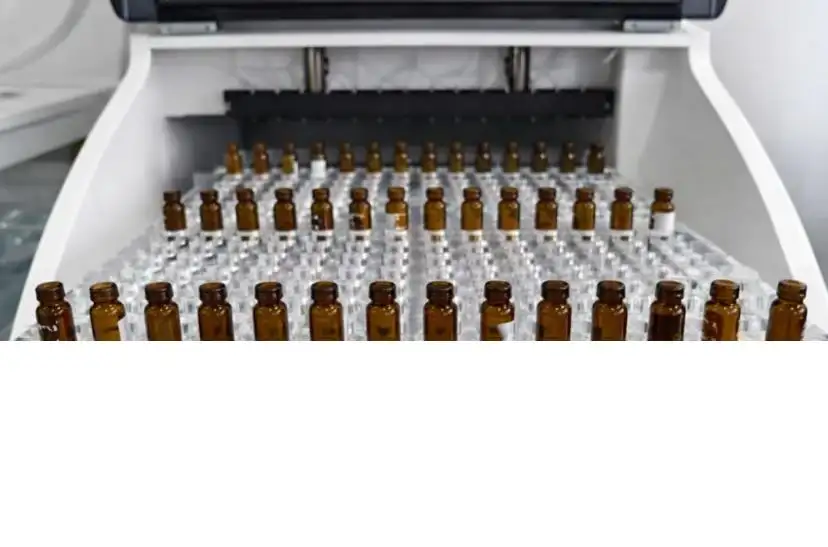
Once the sample is ready, it is transferred directly into a 210-position sample rack for 1.5 mL liquid vials. This layout supports both routine QC and development work. Analysts can run full profiles without constantly rearranging vials, and samples remain clearly organized by vessel and time point. The risk of mixing vials or mislabelling is greatly reduced.
All of this is designed to work with the basket and paddle methods that dominate major pharmacopoeias. RAYTOR's Pharmaceutical Testing Automation does not ask you to change your dissolution philosophy. Instead, it helps your existing methods perform more consistently in real-world conditions.
If your team is spending too much time troubleshooting unexpected results or repeating runs due to sampling doubts, it may be a sign that the process needs to change, not the people. Automation can take over the repetitive, timing-critical steps, while your scientists focus on interpretation and decision-making.
A Long-Term Partner for Automated Pharmaceutical Testing
Hardware alone cannot guarantee long-term success with Pharmaceutical Testing Automation. Labs need support, application know-how, and a partner who understands how regulatory expectations evolve. That is why RAYTOR invests as much in people and processes as we do in instruments.
Our R&D platform is dedicated to the independent development of pharmaceutical analytical instruments. Engineers work closely with application specialists so that ideas from the lab floor turn into practical improvements, not just cosmetic updates. When customers tell us about specific media, challenging formulations, or unusual dissolution setups, those stories feed directly into our design discussions.
RAYTOR also operates an Application Experiment Center, where certified senior pharmaceutical experts collaborate with universities and pharmaceutical companies. In these joint laboratories, we:
•Test methods and workflows on real pharmaceutical samples
•Evaluate how automation behaves under challenging conditions
•Share best practices to optimize sampling, filtration, and data handling
For new customers, this means you are not starting from an empty page. You gain access to accumulated experience, example methods, and practical tips that can shorten the path from installation to fully validated routines.
Beyond technology and applications, reliable support matters. RAYTOR serves customers through a global sales and service network, with teams trained to respond quickly and communicate clearly. Behind the scenes, we use lean production and 6S management to keep quality consistent and delivery times under control, so your project schedules are easier to manage.
Choosing RAYTOR for Pharmaceutical Testing Automation is essentially choosing a steady partner for your QC journey. Whether you are upgrading an existing dissolution lab, building a new facility, or simply trying to reduce the noise in your data, we are ready to explore options with you.
If you would like to see how automated sampling, filtration, and collection could fit into your current setup, reach out to the RAYTOR team. Share your workflow, your pain points, and your regulatory context. Together, we can design an automation strategy that helps you achieve accurate chemical sampling - consistently, defensibly, and with far less daily pressure on your lab.