


How Novel Formulations Challenge the Traditional Transdermal Drug Diffusion Apparatus
2026-05-29


Transdermal drug delivery has advanced much further than basic nicotine delivery. Now, there are microneedle patches, nanoemulsions, and even herbal creams. However, these innovations all push standard testing right to the boundary. A standard manual Franz cell or a standard Transdermal Drug Diffusion Apparatus has trouble with particle size, residue, and sampling accuracy. This article goes over how challenges traditional systems have a problem, and why the RAYTOR RT800 Automated Transdermal Diffusion System is a good, regulation-ready option.
Why a Reliable Transdermal Drug Diffusion Apparatus Matters
A Transdermal Drug Diffusion Apparatus is the gold standard for in vitro release tests (IVRT) and in vitro permeation tests (IVPT). It measures how active ingredients cross a membrane or skin over time. But when you switch from simple gels to complex botanicals or nano-carriers, the apparatus must handle:
• Non-Newtonian viscosity (thick pastes)
• Suspended particles (herbal extracts, nanocrystals)
• Micro-scale residues (needle fragments)
• Ultra-fast or slow permeation profiles
Without an advanced system, data becomes irreproducible – leading to failed regulatory submissions.
Three Novel Formulations That Push Traditional Diffusion Apparatus to Their Limits
1. Herbal Creams – The "Complex Mixture" Challenge
Herbal creams contain multiple lipophilic and hydrophilic compounds (e.g., curcumin, essential oils, plant waxes). They are often highly viscous and prone to clogging the donor compartment or the membrane pores.
• Problem for traditional apparatus: Manual sampling disturbs the cream layer; bubbles are easily trapped under thick pastes, causing flux errors up to 40%.
• The RT800's strengths are as follows: The RT800's open working area simplify loading of sticky creams. Additionally, the manual bubble exhaust removes all bubble from the chamber before the run. The filling point mark located on the diffusion cell allows the user to inject medium without having to re-bubble.
2. Nanoemulsions – The "Fast & Unstable" Challenge
Nanoemulsions (droplets <200 nm) offer high permeation rates but are thermodynamically unstable. They can aggregate, change droplet size, or adhere to sampling tubing.
• Problem for traditional apparatus: Long, coiled pipelines cause sample residue and cross-contamination. Small sampling time differences (e.g., 30 seconds between cells) lead to misleading penetration curves.
• Why the RT800 overcomes it: The system features a shorter pipeline design (reduces residue risk) and 7-channel synchronized automatic sampling. All diffusion cells in a group are sampled simultaneously, eliminating time-shift errors – critical for nanoemulsions with rapid initial burst release.
3. Microneedle Patches – The "Physical Damage" Challenge
Microneedle patches create micro-channels in the skin. However, needle fragments or dissolved polymers can detach and fall into the receiver medium, clogging the sampling needle.
• Problem for traditional apparatus: Manual sampling cannot distinguish real permeation from artifact (floating particles). Also, a typical setup lacks a blank control to exclude interference.
• RT800's advantage: The system supports 6+1 diffusion cells – six test cells plus one blank cell (e.g., skin without microneedles or formulation-only). This design identifies false positives. The dry heating method avoids water bath contamination, and the audit trail function logs every sample for traceability.
How the RAYTOR RT800 Automated Transdermal Diffusion System Redefines Testing
*The RAYTOR RT800 is not just another Transdermal Drug Diffusion Apparatus – it is an automated, regulation-compliant workhorse for challenging formulations.*
| Feature | Benefit for Novel Formulations |
| Compliance with USP <1724> & EP 9.0 (2.9.4) | Directly accepted by regulators for IVRT/IVPT. |
| 7 synchronized sampling channels | Eliminates time-skew – essential for fast-penetrating nanoemulsions. |
| Shorter pipeline design | Minimizes residue of sticky herbal creams and expensive nano-carriers. |
| Two independent groups (7×2 cells) | Run herbal cream and microneedle patch experiments simultaneously without cross-talk. |
| Manual bubble exhaust + filling point mark | Removes air pockets under thick ointments – a must for reliable data. |
| Dry heating (RT~45℃, error ≤±0.5℃) | No water evaporation or contamination; stable temperature for long-term tests (up to 9999 min). |
| Audit trail & SQL database | Meets 21 CFR Part 11 requirements; stores >200 test methods and >100 accounts. |
| Diffusion cell volumes: 10–40 mL | Flexible for different receiver media (e.g., PBS, surfactant solutions for lipophilic drugs). |
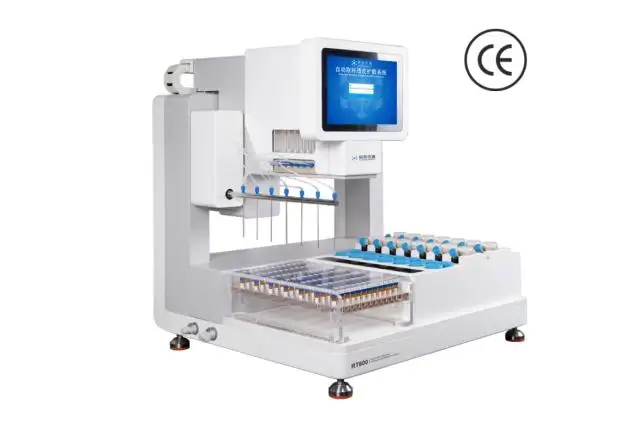
Summary: Why choose RT800 for herbal creams, nanoemulsions & microneedle patches?
• For herbal creams: Open loading + bubble exhaust + filling point → no air traps or uneven contact.
• For nanoemulsions: 7-channel synchronized sampling + shortened pipeline = precise burst release curves.
• For microneedle patches: 6+1 cell design (blank control) + audit trail → reject artifacts, prove permeation.
• For all formulations: Compliant with USP <1724> (type 5 diffusion cell description) and EP9.0.
Real-World Application: One Apparatus, Multiple Formulations
Imagine you are testing:
• A curcumin herbal cream (thick, sticky)
• A coenzyme Q10 nanoemulsion (fast permeation, tiny droplets)
• A dissolving microneedle patch (fragments in receiver)
With a traditional Transdermal Drug Diffusion Apparatus, you would need three separate setups, countless manual samples, and still worry about residue and time errors. With the RAYTOR RT800, you simply assign the two independent groups (7 cells each) – one group for cream/nanoemulsion, another for microneedles. The automatic sampling device performs cleaning, sampling, and refilling, while the audit trail records every step.
Conclusion: Future-Proof Your Transdermal Research
Novel formulations demand more than a basic Franz cell. An automated, precise, and compliant Transdermal Drug Diffusion Apparatus is needed. The RAYTOR RT800 Automated Transdermal Diffusion System delivers exactly that – shorter pipelines, synchronized sampling, dry heating, and full USP <1724> compliance. Whether you work with herbal creams, nanoemulsions, or microneedle patches, the RT800 turns challenges into reproducible, publishable data.
Ready to upgrade your transdermal testing? Explore the RAYTOR RT800 – where innovation meets compliance.
FAQ
Q1: Can the RAYTOR RT800 fill high viscous herbal creams without trapping air?
Certainly. The RT800 includes a bubble exhaust function and a filling point indicator located on each diffusion cell. This allows users to release trapped air and fill a cell with a medium of choice, which is useful for high viscous formulations.
Q2: Does the RT800 meet the transdermal evaluation guidelines outlined by the FDA or the EMA?
Yes. The RT800 is in line with USP <1724> in which Assessment of Semisolid Drug Products Performance Tests is described, and with European Pharmacopoeia 9.0, general rule <2.9.4>, which includes audit trail and SQL database for data integrity.
Q3: What is the advantage of synchronized sampling for nanoemulsions?
Because nanoemulsions tend to exhibit quick, initial spikes, the RT800's 7-channel sampling ensures that all diffusion cells are sampled simultaneously, which helps eliminate skew in sampling time that affects permeation curves.
Q4: Can I test microneedles patches as well as a cream at the same time?
Yes, on the RT800, you can conduct a Microneedle Patch test in one group, while in the other group, the test may be a cream or nanoemulsion, all in a completely cross-interfering manner.
Q5: How many receiver volumes does the RT800 provide?
The system can accommodate diffusion cell volumes of 10, 15, 20, 25, 30, or 40 mL, allowing for various options regarding the receiver medium (i.e. PBS, solutions of surfactants).