


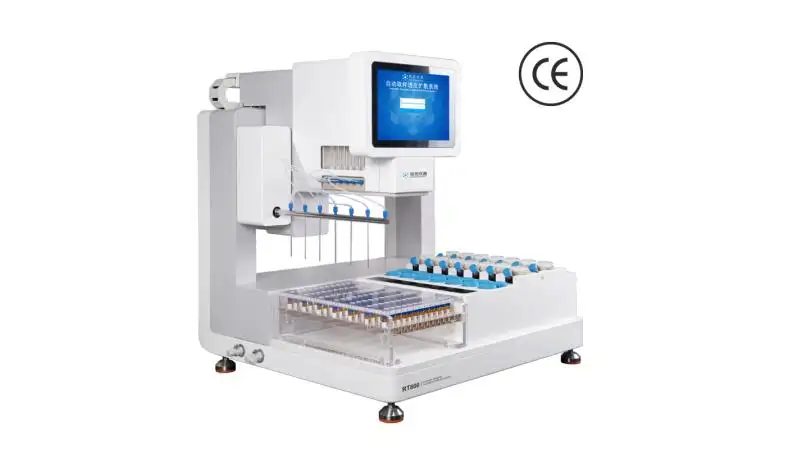

What Industries Use Pharmaceutical Dissolution Equipment?
2026-09-20


The Role of Pharmaceutical Dissolution Equipment
While discussing What Industries Use Pharmaceutical Dissolution Equipment, most respondents cite pharmaceutical manufacturing companies. This thinking is understandable. However, dissolution testing has evolved to support a more diverse clientele in and out of the pharmaceutical industry including contract research organizations (CROs), biotech companies, academic labs, and independent testing labs.
Pharmaceutical dissolution equipment is designed to study the behavior of active pharmaceutical ingredients (APIs) in a particular dosage form and the impact of controlling specific environmental factors and conditions on the release of APIs. Dissolution testing is a crucial element of the development testing and improved quality assurance of pharmaceutical products.
There are various industries that rely on different stages of the dissolution process.

1. Pharmaceutical Manufacturing Companies: Quality Control and Product Development
Pharmaceutical manufacturers are the largest users of pharmaceutical dissolution equipment. This can be for quality assurance testing of product lots or developmental testing of formulations.
In the development of pharmaceutical formulations, the effect of different variables on the intended drug release profiles of proposed formulations is studied. Variability in the following may be studied and their drug release impact evaluated.
• Particle size of the active pharmaceutical ingredient (API)
• Formulation excipients
• Variables of drug compression
• Layer formation and controlled release coating materials
• Release control systems
In the commercial manufacturing of pharmaceutical dosage forms, dissolution testing is used to ensure each manufacturing batch of a formulation has drug release characteristics that are consistent with batch-to-batch manufacturing.
Primary Applications of Pharmaceutical Manufacturing
| Purpose of Dissolution Testing at Different Stages | Description |
| Formulation Development | Analyses different formulations for restriction of drug release. |
| Process Development | Studies manufacture process parameters for their effect on drug release. |
| Quality Control (QC) | Assures consistency of batch-to-batch. |
| Stability Testing | Evaluates the effect of storage on performance of drug release. |
| Regulatory Submission | Provides needed supporting analytical data. |
The typical formulations tested are:
• Immediate release tablets
• Capsules
• Extended release formulations
• Enteric coated products
• Transdermal Systems
Based on the formulation, some laboratories use USP Apparatus 1 (Basket), others USP Apparatus 2 (Paddle), while others may use USP Apparatus 4 (Flow-Through Cell).
2. Pharmaceutical Dissolution Devices and Contract Research Organizations (CROs)
Contract Research Organizations (CROs), another typical example of What Industries Use Pharmaceutical Dissolution Equipment, outsource laboratory services that provide research and analysis for several clients. Unlike a single pharmaceutical company, CROs can work on different drug products, formulations, and the consequent activities and tests.
Thus, CROs require dissolution systems providing:
• Flexible configuration of methods
• High repeatability of testing
• Sample handling
• Ability to work with different dosage forms
Common CRO Activities
• Dissolution method development
• Studies of generic drugs
• Tests for formulation
• Bioequivalence assays
• Tests for Regulation
| CRO Requirement | Reason |
| Flexible testing framework | Different clients' projects |
| Automated sampling | Improves efficiency |
| Maintains constant test conditions | Control of temperature and speed |
| Data is traced | For use in regulatory documents |
For CROs, dissolution machines are not just lab machines; they are vital tools for delivering consistent services.
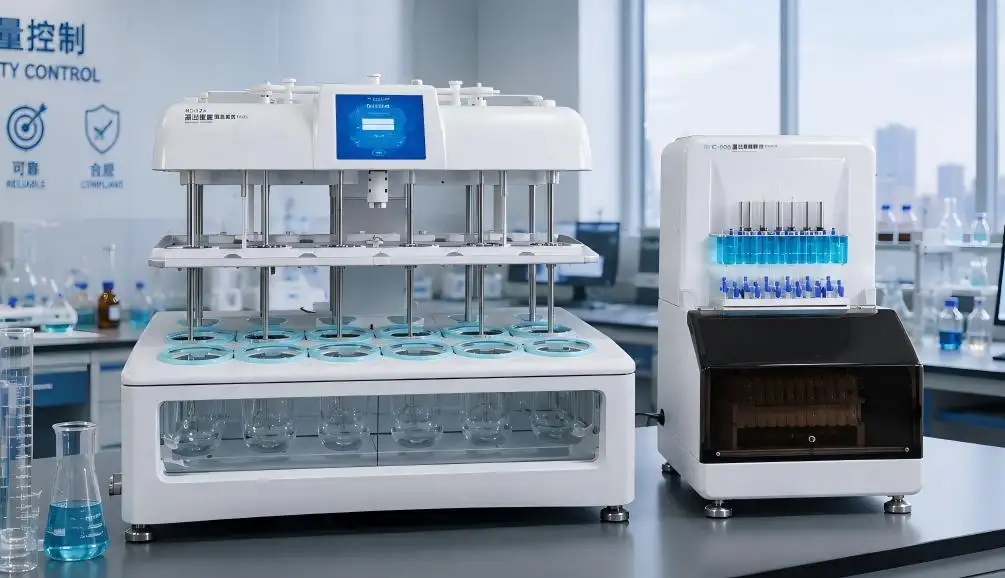
3. Advanced Biotechnology and Drug Delivery
As pharmaceutical innovation progresses, biotechnology and delivery firms are important users of dissolution testing machines.
Though the focus of dissolution testing is on tablets and capsules, more advanced formulations may require novel techniques for controlling and evaluating release over extended periods of time.
Applications Include:
• Controlled-release drug systems
• Long-acting formulations
• Transdermal patches
• Combination products
• Novel drug delivery systems
For these companies, the primary concern is both:
"How rapidly does the drug solve?"
"How does the formulation control the drug release?"
This means that for these companies, formulation design and optimization in the context of their drug delivery systems require assessment through the lens of dissolution testing.
4. Academic and Pharmaceutical Research Institutions
The question What Industries Use Pharmaceutical Dissolution Equipment? has an answer in Universities and research laboratories.
Pharmaceutical science researchers utilize dissolution equipment in studies dedicated to elucidating the relationships between drug release and the design of the formulation.
Areas of Research:
• Drug release mechanisms and excipient selection
• Polymer-based systems for controlled release
• Formulation optimization
• Development of new dosage forms
Researchers may focus on these areas:
| Research Variable | Evaluation Criterion |
| API | Dissolution rate |
| Polymers | Behavior of controlled release |
| Formula | Performance of the drug |
| Manufacturing parameters | Consistent of the product |
Flexibility of the equipment is important in an academic setting as one laboratory may conduct research on several pharmaceutical technologies.
5. Independent Pharmaceutical Testing Laboratories
Independent laboratories open up additional capacity and/or Verify external analysis required by a Pharmaceutical company.
These laboratories purchase dissolution equipment for the following purposes:
• Applied quality
• Comparative dissolution studies
• Regulatory support between testing
• Evaluation of product performance
Because their tests contribute to regulatory decisions, independent laboratories emphasize:
• Method accuracy
• Repeatability
• Documentation
• Standard compliance
An adequate dissolution test system enables these laboratories to achieve consistent analytical performance across different tasks.
6. Medical Device and Drug Delivery Technology Companies
Certain medical device companies developing drug-related products may utilize the ability to perform dissolution testing.
These companies' products may involve drug release performance that has an effect on device functionality.
Examples include:
• Drug-coated medical devices
• Implantable drug delivery systems
• Transdermal delivery technologies
• Combination products
In such examples, dissolution testing is concerned with long-term release characteristics rather than conventional tablet dissolution analysis.
Comparing Different Industries Using Pharmaceutical Dissolution Equipment
| Industry | Primary Purpose | Key Testing Focus |
| Pharmaceutical Manufacturers | Product development and QC | Batch consistency and release performance |
| CROs | Outsourced testing services | Flexible multi-project capability |
| Biotechnology Companies | Advanced formulation research | Controlled drug release |
| Universities | Scientific research | Mechanism investigation |
| Testing Laboratories | Independent analysis | Accuracy and compliance |
| Drug Delivery Companies | Release technology development | Long-term release profiles |
How Industries Select the Right Pharmaceutical Dissolution Equipment
Although different industries use pharmaceutical dissolution equipment for different purposes, several selection factors remain important.
1. Dosage Form Compatibility
The equipment that you use depends on the type of dosage form that you are testing. These are;
• Tablets, capsules
• Formulations for modified release
• Semi-solid products
• Transdermal Systems
2. Testing Standards and Compliance
Things to consider include;
• USP dissolution methods
• Requirements of the European Pharmacopoeia
• Japanese Pharmacopoeia methods
3. Workflow Requirements
Different laboratories may focus on one of the following:
• Manual operation to allow for research flexibility
• Automated sampling for a more efficient throughput
• Data management for regulated work environments
4. Application Stage
Research laboratories may demand flexibility for research purposes, while QC laboratories may require stability, repeatability, and fixed operations.
Expected Growth Patterns of Pharmaceutical Dissolution Apparatus and Equipment
Complexity in pharmaceutical products creates a corresponding requirement for advanced forms of dissolution testing.
The relevant trends include:
Increased Emphasis on Automation
Automated systems for dissolution sampling remove human error and improve the effectiveness of the laboratory as a whole.
Greater Level of Digital Integration of Laboratories
More advanced laboratories incorporate:
• Improved data logging
• Higher traceability
• Better control of the laboratory workflow
Higher Levels of Drug Release Assessment
More advanced drug delivery systems and modified release drugs create more complex systems that are assessed using advanced forms of dissolution testing.
Conclusion: How Dissolution Testing Supports Dependable Pharmaceutical Development
Studying the Use Cases of Pharmaceutical Dissolution Apparatus reveals a breadth of use cases beyond just pharmaceutical drug development. Dissolution testing is relevant to the formulation of drugs, testing of drugs, and advanced delivery systems.
While different industries or markets may have specific requirements for drug evaluation, accurate and repeatable dissolution testing data is used to evaluate and analyze the performance of pharmaceutical constructs.
At Raytor, we aim to support the needs of research laboratories, manufacturers, and quality control of pharmaceutical companies by providing reliable apparatus and equipment with user friendly integration into the laboratory setting. Advanced engineering in the context of design focused on pharmaceutical dissolution allows Raytor to help laboratories with designing better workflows for pharmaceutical testing and evaluation.
Raytor's offerings for pharmaceutical dissolution testing can be found at:
FAQs
Q1. What industries use pharmaceutical dissolution equipment?
Pharmaceutical dissolution equipment is used by pharmaceutical manufacturers, CRO laboratories, biotechnology companies, academic research institutions, and independent testing laboratories. These industries use dissolution systems for formulation development, quality control, drug release studies, and regulatory testing.
Q2. What types of pharmaceutical products can Raytor dissolution equipment test?
Raytor dissolution systems can support testing applications for various dosage forms, including immediate-release tablets, capsules, modified-release formulations, and other drug delivery systems depending on the selected testing method and configuration.
Q3. Why do pharmaceutical companies need dissolution testing equipment?
Pharmaceutical companies use dissolution equipment to evaluate drug release behavior, verify batch consistency, support formulation optimization, and generate analytical data required for quality control and regulatory processes.
Q4. Does Raytor provide dissolution equipment for both R&D and quality control laboratories?
Yes. Raytor develops dissolution testing solutions suitable for different laboratory environments, including pharmaceutical research laboratories, formulation development departments, and QC testing facilities.
Q5. What dissolution testing standards are supported by Raytor equipment?
Raytor dissolution systems are designed based on internationally recognized pharmaceutical testing requirements, supporting common dissolution methods such as USP dissolution apparatus configurations used in pharmaceutical laboratories.