


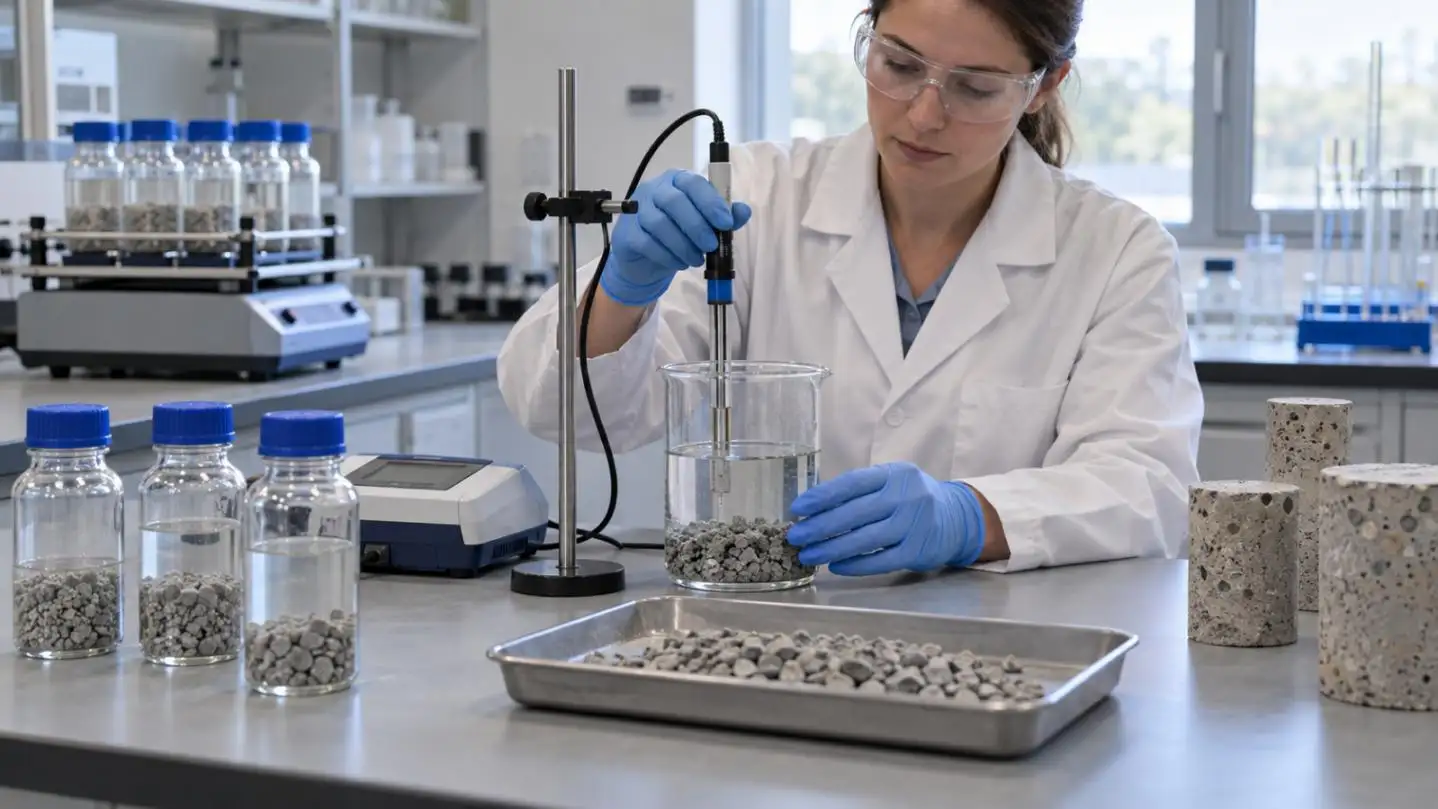
Civil Engineering Dissolution Testing: Batch vs. Flow-Through Methods
2026-09-23


In Civil Engineering Dissolution testing, the apparatus establishes the conditions under which release is measured. A closed batch vessel allows dissolved constituents to accumulate; an open-loop flow-through system continually supplies medium and removes released material. These differences can change measured concentrations without indicating a change in intrinsic material reactivity.
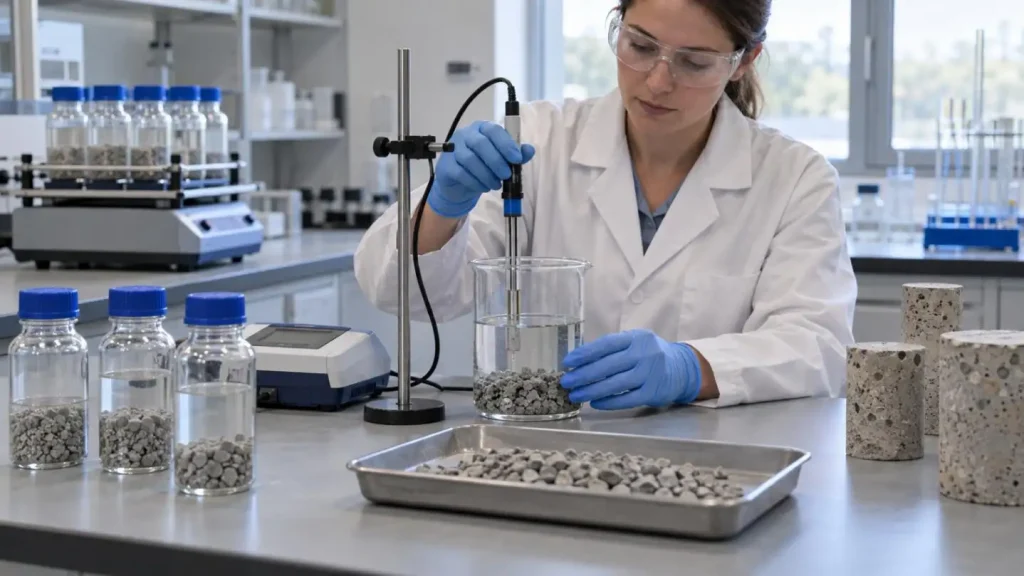
At Raytor, our approach to dissolution instrumentation emphasizes controlled fluid delivery, temperature monitoring and reproducible sampling. Applying these principles to construction-material research starts with defining the scientific question—and verifying equipment suitability.
What Civil Engineering Dissolution Results Actually Represent
Civil Engineering Dissolution elaborates on multiple investigations as opposed to a single, standardized test. Recognizing the mechanisms is crucial in order to avoid misinterpreting the results:
• Dissolution: Elements go from being part of a solid to being part of a solution.
• Leaching: Elements leave a material through a process of dissolution, diffusion, or desorption, or a combination of the three.
• Degradation: The material suffers a change in performance as a result of a physical or a chemical change.
For cementitious materials, the loss of calcium can certainly suggest a chemical change, but not necessarily a loss in strength. For recycled aggregates, the amount lost is a result of the mortar that is still attached, the particle size, and the chemistry of the surrounding material.
Service-life assessment therefore requires additional evidence, such as porosity, mineralogy, mechanical properties and representative exposure conditions.
Batch Methods: Characterizing Chemical Dependencies
Where Batch Testing Is Useful
Batch testing brings a defined material mass into contact with a specified liquid volume. It is useful for examining:
• Release across different pH conditions.
• Liquid-to-solid ratio effects.
• Differences between material formulations under matched conditions.
Results depend on particle preparation, mixing intensity, temperature and contact duration. Mixing can influence external mass transfer; aggressive agitation may also generate fines.
Where Interpretation Becomes Difficult
When a sufficient number of constituents are present in a solution, it can become saturated with one or more mineral phases. Other constituents of the solution can be removed through the process of secondary precipitation. Buffering a sample can be used to adjust the pH.
A concentration plateau does not necessarily indicate that the dissolution process has ceased. Furthermore, extracting a solution for a fixed period of time does not always result in the attainment of equilibrium.
Flow-Through Methods: Characterizing Release During Medium Renewal
Open-loop flow-through testing introduces fresh medium and collects the effluent in successive fractions. It supports investigation of release as exposure progresses.
However, continuous flow does not automatically maintain undersaturated conditions. Flow rate, reactive surface area, medium chemistry and reaction rate all matter.
The nominal hydraulic residence time is:
τ = V_accessible / Q
Here, (V_{\mathrm{accessible}}) is accessible liquid volume and (Q) is volumetric flow. Channeling and stagnant regions can make actual contact times differ substantially.
Closed-loop operation recirculates medium, allowing dissolved constituents to accumulate. Its chemical boundary conditions therefore differ from open-loop operation. Similarly, a compact flow cell and a packed percolation column cannot be treated as interchangeable.
Civil Engineering Dissolution: Batch vs. Flow-Through
| Decision Dimension | Batch Methods | Open-Loop Flow-Through |
| Primary question | How do defined chemical conditions affect release? | How does release evolve during medium renewal? |
| Medium behavior | Retained within each contact interval | Continuously introduced and collected |
| Main controls | pH, liquid-to-solid ratio, mixing, particle size, time | Flow, residence time, packing, chemistry, temperature |
| Principal outputs | Concentration and mass-normalized release | Fraction concentration and cumulative release |
| Interpretation risks | Accumulation, precipitation, incomplete equilibration | Dilution, preferential flow, transport limitations |
| Operating risks | Separation losses and pH drift | Blockage, bubbles, leakage and flow drift |
| Resource demands | Often convenient for parallel screening | Greater pumping, medium and collection requirements |
| Field limitation | Does not reproduce continuous infiltration | Flow alone does not reproduce field exposure |
Selecting a Civil Engineering Dissolution Protocol
Select the protocol before selecting hardware.
| Research Objective | Suitable Method Direction |
| Determine pH-dependent release | Parallel batch extraction; EPA 1313 |
| Examine liquid-to-solid ratio effects | Parallel batch extraction; EPA 1316 |
| Assess percolation through granular material | Up-flow column; EPA 1314 |
| Measure release from intact or compacted specimens | Semi-dynamic tank leaching; EPA 1315 |
| Investigate reactions under controlled laboratory flow | Purpose-designed, validated flow-through experiment |
EPA 1315 periodically renews the surrounding solution; it is not continuous flow-through testing. A pharmaceutical USP 4 system likewise does not establish compliance with EPA 1314.
Producing Defensible Civil Engineering Dissolution Data
Control Sample Preparation and Recovery
A useful test record includes:
• Dry mass, particle-size distribution, exposed area and pretreatment.
• Medium composition, temperature and pH evolution.
• Actual collected volume, flow stability and cumulative liquid-to-solid ratio.
• Filter specification, tubing compatibility and sample preservation.
• Blanks, replicates and analyte recovery checks.
Measured concentrations can be lower than the actual concentrations due to filter retention and adsorption. Suspended fines can lead to an overestimation of the release, and can be problematic if the samples being examined are not separated. Determine if the values given are for dissolved constituents or for the total recoverable constituents.
Mass Release, Not Concentration Alone, Should Be Considered
Increased flows can cause dilution, resulting in lower concentrations of constituents in the effluent. For complete fraction collection:
M = Σ (Cᵢ − C_blank,ᵢ) × Vᵢ
Normalize cumulative mass by sample dry mass or exposed area. Correct batch calculations for withdrawn samples and replacement liquid. Neither mass normalization nor area normalization alone proves an intrinsic reaction rate.
Raytor RT700: Design Controls and Application Fit
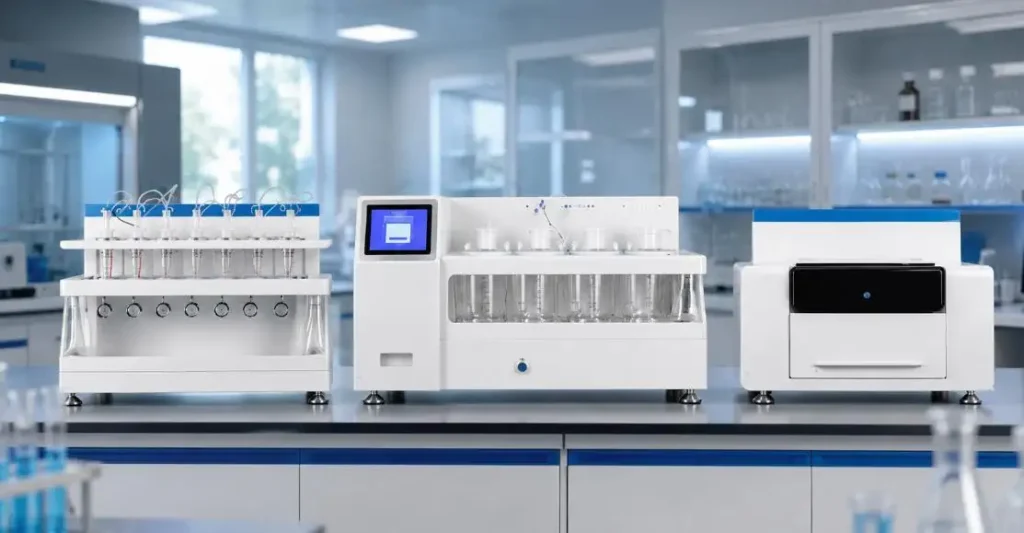
Our RT700 Flow-Through Cell Dissolution System provides open- and closed-loop operation, seven channels, two simultaneous flow-rate settings and independent channel temperature monitoring. Its filtration options, overpressure protection and leakage detection address practical fluid-handling requirements.
For Civil Engineering Dissolution research, these controls warrant evaluation against:
• Sample dimensions and particle loading.
• Required flow and temperature ranges.
• Wetted-material compatibility.
• Filtration recovery and pressure behavior.
RT700's applications are pharmaceutical. Construction-material suitability requires application-specific verification. Our accessory range and rapid customization service provide a basis for discussing those requirements. Raytor Dissolution Equipment
Reliable Civil Engineering Dissolution testing begins with a defined exposure scenario and interpretable measurements. Share your material, medium and analytical objectives with Raytor to explore whether an appropriate configuration can support your experimental plan.
FAQs
Q1. What filtration options does Raytor RT700 provide?
Raytor lists filter membranes in different materials and pore sizes, alongside a filtration design intended to reduce back pressure. For mineral or cementitious samples, membrane selection should include analyte-recovery checks and evaluation of particle retention and clogging.
Q2. Which Raytor model should laboratories review for flow-through testing?
The Raytor RT700 Flow-Through Cell Dissolution System is a relevant starting point for evaluating controlled flow experiments. Its published pharmaceutical applications do not establish validated performance for construction materials.
Q3. Does the Raytor RT700 support open- and closed-loop operation?
Yes. The RT700 supports both modes. Open-loop operation supplies fresh medium and collects effluent, while closed-loop operation recirculates medium. Laboratories should select the configuration that matches their intended exposure conditions.
Q4. Can the Raytor RT700 compare different flow rates?
The RT700 has seven channels and supports testing at two flow rates simultaneously. Its published medium-delivery range is 1–38 mL/min. Laboratories should confirm performance under their actual medium, sample loading and back-pressure conditions.
Q5. How does Raytor RT700 monitor test temperature?
The RT700 uses integrated water-bath heating and seven independent temperature sensors for real-time channel monitoring. Its published temperature-control range is room temperature plus 5°C to 50°C; experiments requiring cooling need separate assessment.