


Double Your Data: The Dual-Group Franz Diffusion Cell Apparatus for Patches
2026-04-24


The transdermal patches market is booming—$8.02 billion in 2026, rising to $13.27 billion by 2034. As labs rush to develop new patches, the Franz diffusion cell apparatus for patches remains essential. But conventional single‑group systems waste time and compromise data integrity. You lose productivity if your system runs a single study at a time.
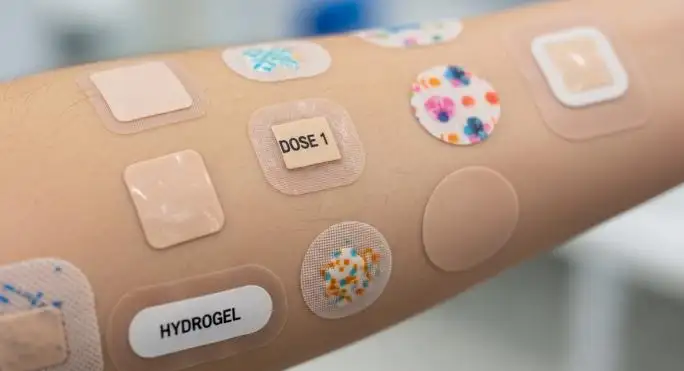
Parallel studies are a necessity, not a luxury, when USP <1724> requires your testing to be more rigorous. This is the reason Raytor's RT800 has dual independent sampling groups. Here’s why it should top your checklist.
The Hidden Bottleneck in Traditional Franz Cell Systems
Most traditional Franz diffusion cell systems operate with a single group of cells. When you’re running a time-sensitive permeation study, every minute counts. But what happens when you need to:
• Compare two different patch formulations side by side?
• Run a test article alongside a blank control for background subtraction?
• Validate a new method while maintaining ongoing QC testing?
In a single-group system, you can’t. You wait. Your team works overtime. Or worse, you make compromises that weaken your data.
As USP <1724> continues to evolve—now encompassing both IVRT and IVPT methods with expanded guidance on experimental design and validation—the regulatory expectation for robust, well-controlled studies has never been higher. Single-group systems simply weren’t designed for this new reality.
Franz Diffusion Cell Apparatus With Dual Groups
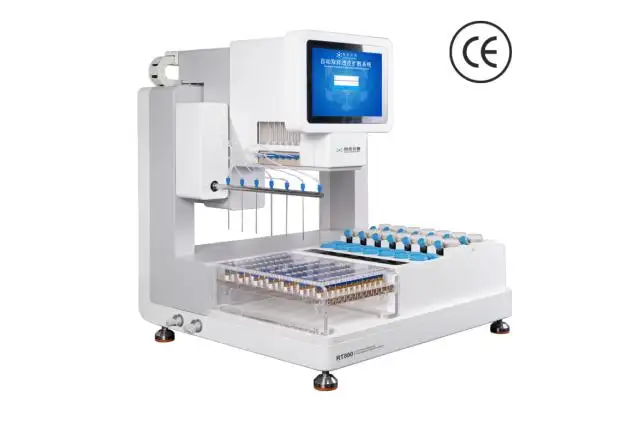
The RT800 from Raytor changes the equation entirely. With 14 diffusion cell positions configured as two completely independent groups (7 cells × 2 groups), you gain the ability to run two separate studies simultaneously without any cross-interference.
Here’s what dual independent sampling means for your lab:
• Run test and control studies in parallel: Design one group as a blank to subtract matrix interference while the second group captures active permeation, delivering cleaner, more defensible data.
• Compare two formulations side by side: Whether you’re screening prototypes or testing batch-to-batch consistency, simultaneous testing cuts study timelines nearly in half.
• Eliminate cross-contamination risk: Two independent groups means two separate sampling paths, two distinct sets of conditions—zero chance that one study compromises another.
• Maximize instrument utilization: While one group runs an overnight permeation study, the other group can handle daytime QC testing. Your instrument works as hard as your team does.
Beyond Dual Groups: The RT800 Advantage
A great Franz diffusion cell apparatus for patches is about more than just cell count. Raytor has packed the RT800 with features that address every major pain point in transdermal testing.
• Compliance from the ground up. The RT800 fully complies with USP <1724>, European Pharmacopoeia (EP9.0) General rule <2.9.4>, and 21 CFR Part 11 audit trail requirements. The diffusion cell style follows the 5th-type description in USP <1724>, and the open operating space makes loading and sampling straightforward.
• 7-channel synchronized automatic sampling. Within each group, all seven diffusion cells are sampled simultaneously at each timepoint. This eliminates the inter-cell timing bias that plagues manual sampling and ensures your timepoints remain truly comparable.
• Shorter pipeline design minimizes residue. Long sampling lines trap analyte and flatten real signals. The RT800’s condensed sampling path significantly reduces hold-up volume, cutting the risk of residue and carryover for more accurate results.
• Filling point design prevents bubbles. The filling point is marked directly on each diffusion cell. After removing bubbles, inject medium exactly to that line—no guesswork, no future bubble formation.
• Comprehensive Construction of Integrity Systems. An SQL-integrated embedded sieve of control for action, user, and method records. Test methods and user accounts of full audit readiness. The operating system has no less than 200 and 100 respectively.
Designed for 2026 Laboratories
Over the past few years, laboratories have been burdened from all sides with increasing and competing demands. Rapid turnaround times, shrinking budgets, and heightened scrutiny from regulatory bodies. A Franz diffusion cell apparatus for patches that supports dual independent sampling directly addresses all three.
Consider this real-world scenario: Your team needs to validate a new IVPT method for a novel patch formulation while simultaneously running release testing for a commercial product. With a single-group system, you’d need two instruments or two shifts. With the RT800, one instrument does both—saving capital expenditure, bench space, and technician time.
The RT800’s technical specifications deliver the performance your studies demand:
• Temperature range: room temperature to 45°C, error ≤ ±0.5°C
• Speed range: 200 to 900 rpm, error < ±10%
• Sampling range: 0.2 to 1.5 mL per draw
• Maximum sampling times: 24 per study
• Diffusion cell volumes available: 10 mL, 15 mL, 20 mL, 25 mL, 30 mL, 40 mL
These specifications handle everything from early-stage formulation screening to validated QC release testing for creams, ointments, patches, and gels.
The Bottom Line
When you evaluate your next Franz diffusion cell apparatus for patches, don’t settle for single-group limitations. The Raytor RT800 Automated Transdermal Diffusion System delivers dual independent sampling groups, full USP <1724> and EP compliance, synchronized 7-channel automation, and complete audit trail functionality.
You’ll run more studies. You’ll generate cleaner data. And you’ll be ready for whatever tomorrow’s pipeline brings.
Ready to see how dual independent sampling can transform your transdermal testing workflow? Contact Raytor today or download the RT800 product brochure to explore the full specifications.
FAQs
Q: Does the RT800 comply with both USP <1724> and EP 9.0?
A: Yes. It fully complies with USP <1724> (IVRT/IVPT) and European Pharmacopoeia 9.0, General rule <2.9.4>.
Q: Can the two independent groups run completely different test protocols?
A: Absolutely. Each group operates independently—different sampling times, volumes, or even different formulations—with zero cross-interference.
Q: What diffusion cell volumes are available?
A: Six choices: 10mL, 15mL, 20mL, 25mL, 30mL, and 40mL.
Q: Do the system supports audit trail and 21 CFR Part 11 compliance?
A: Yes. This encompasses an entire SQL database, an audit trail, and the storage of 200 test methods as well as 100 user accounts.