

In Vitro Skin Diffusion Studies Explained: Enhancing Transdermal Drug Delivery
2026-03-11


Hinges of the research into how drugs pass through human skin on a specific scientific discipline: In Vitro Skin Diffusion Studies. While the term sounds highly technical, the concept is straightforward—scientists need to know exactly how much of a drug penetrates the skin and how quickly it happens.
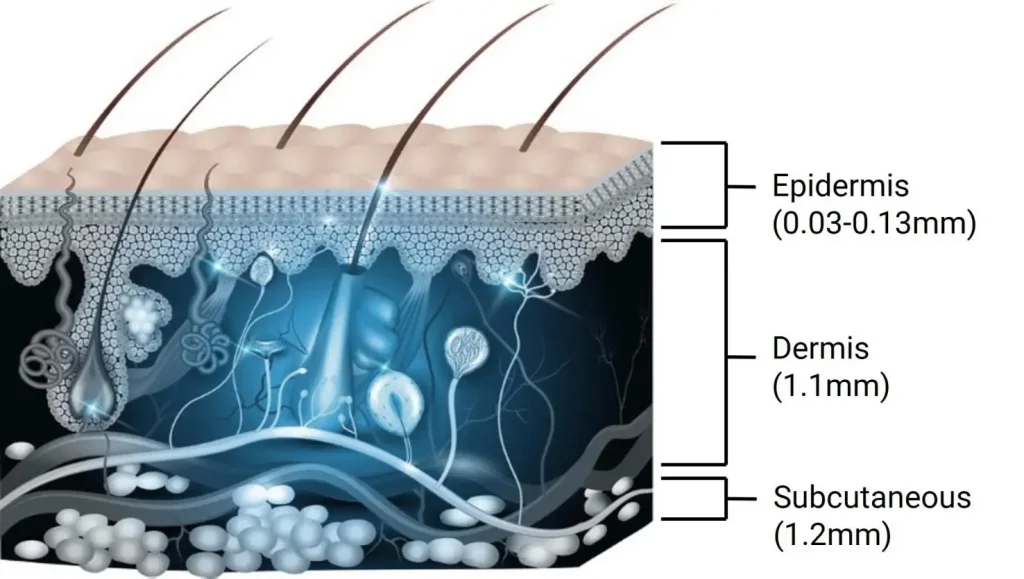
For formulators and pharmaceutical manufacturers, these studies aren't just academic exercises. They represent the difference between a product that works consistently and one that fails in the marketplace. Getting reliable data requires the right protocols, the right conditions, and increasingly, the right equipment.
At Raytor, we've spent years watching laboratories struggle with the gap between regulatory expectations and everyday practical limitations. Here's what we've learned about making these studies work effectively.
The Workhorse With a Catch: Understanding Franz Cell Methodology
Walk into almost any pharmaceutical development lab in the world, and you'll likely find a row of Franz diffusion cells humming away on a bench. These simple yet elegant devices have been the backbone of In Vitro Skin Diffusion Studies since the 1960s, and for good reason.
The setup is deceptively simple:
• A donor compartment holds the drug formulation (cream, gel, or patch)
• A membrane—sometimes synthetic, sometimes actual skin tissue—separates it from
• A receptor compartment filled with fluid that mimics bloodstream conditions
Over hours or days, scientists track how much active ingredient crosses that membrane. It's a brilliant concept that has enabled countless drug approvals.
But here's the reality that textbooks don't mention: manual Franz cell work is tedious, repetitive, and unforgiving. Anyone who has spent a weekend in the lab doing 6 AM, noon, 6 PM, and midnight sampling knows the toll it takes. Miss a time point by five minutes? That data point is compromised. Let a bubble form under the membrane? The diffusion surface area drops, and your results drift toward meaninglessness.
The challenge isn't the science—it's the execution.
Regulatory Realities: What USP and EP Actually Require
When you submit a transdermal product for approval, regulators don't just want to see that the drug works. Before regulators approve your product, they need to trust your data. And trust requires proof that your testing methods eliminate every possible ambiguity.
This is the moment when In Vitro Skin Diffusion Studies become inseparable from regulatory compliance.
The key documents read like a roadmap:
• USP General Chapter <1724> charts the course for semisolid drug products. It doesn't leave room for guesswork—every apparatus specification, every test condition, every acceptance criterion is spelled out.
• European Pharmacopoeia 2.9.4 provides the parallel guidance for transdermal patches, with requirements just as precise and just as non-negotiable.
• FDA Guidance on Nonsterile Semisolid Dosage Forms: Emphasizes the importance of in vitro release testing as a quality control tool.
Here's what many laboratories discover too late: following the written procedure isn't enough. Regulators increasingly expect evidence that your testing process eliminated variables. If your sampling technique varied by 5% between cells, or if temperature drifted during a run, your entire data package becomes questionable.
This is why the conversation around automation has shifted from "nice to have" to "how soon can we implement it."
-640X640-1768580167766-large.webp)
Where Manual Methods Fall Short
Let's be honest about what happens in busy labs. Your researchers are brilliant, well-trained, and deeply committed to their work. But they are human. And in a field demanding inhuman precision, that's the problem.
• The Consistency Paradox: We ask scientists to work like robots—repetitive, exact, timed—and then penalize them for the natural variability that follows. It's not a lack of effort; it's a lack of the right tool.
• The Blind Threat: The most damaging error is the one you can't see. Some threats are invisible, but their impact is undeniable.
• The Bubble You Can't See: It forms silently beneath the membrane, invisible to every eye in your lab, and systematically destroys data integrity from start to finish.
• The Temperature You Can't Hold: Every door opening steals heat, and with it, the stable environment your diffusion rates depend on.
• The Error You Can't Catch: Manual documentation hides mistakes in plain sight—until an auditor finds them for you.
These are the unseen barriers to efficient approvals. And they exist in every manual process, waiting to be discovered.
Why Automation Changes the Game
Forget the perceived cost and complexity. Automation isn't about replacing people; it's about removing the tasks that make them error-prone, so they can focus on what they do best. But once they've experienced an automated system, the conversation shifts to why they didn't switch sooner.
Automation addresses the fundamental problem of reproducibility by removing the biggest variable: the human hand. Consider what happens when sampling is automated:
Every cell is sampled at exactly the same moment, for exactly the same duration, with exactly the same volume. Bubbles are detected and removed before they affect diffusion. Temperature is maintained continuously, not just when someone remembers to check it. And every action generates a digital record that can be exported directly into regulatory submissions.
The practical benefits accumulate quickly:
• Fewer failed runs means less wasted API and fewer delayed timelines
• Higher data quality means fewer questions from regulators during review
• Technician time freed means more hours available for actual science instead of pipetting
The Raytor RT814: Built Around Real Laboratory Needs
When we designed the RT814 Automated Transdermal Diffusion System, we started by asking laboratory scientists what frustrated them most about their existing equipment. The answers shaped every aspect of the final product.
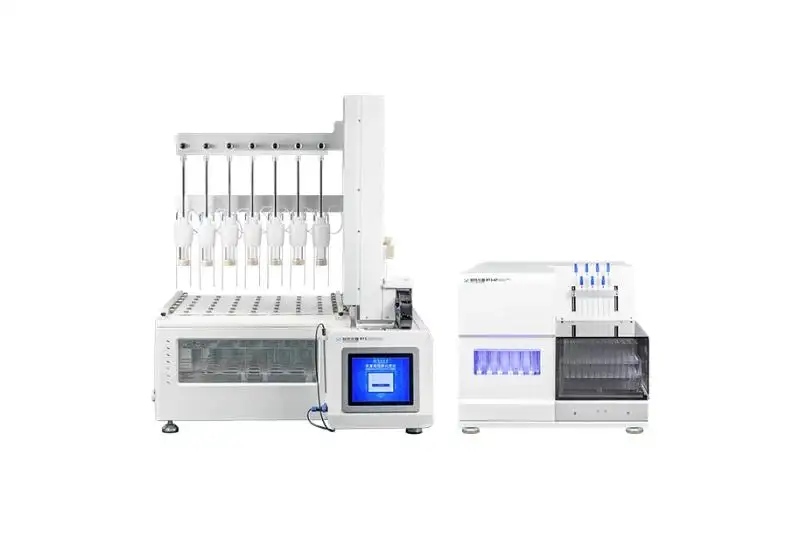
The RT814 is a 14-position fully automated system that integrates everything needed for In Vitro Skin Diffusion Studies into a single footprint. But the specifications matter less than how it addresses specific frustrations.
Engineering Out the Common Failures
• Leakage Protection
Anyone who has lost a 72-hour study to a leaking cell knows the specific despair of watching weeks of work drain away. The RT814 features an integrated glass diffusion cell structure that minimizes leak paths and maintains integrity throughout extended runs. When you're working with expensive or scarce drug compounds, this matters.
• Active Bubble Management
Bubbles are insidious because they're easy to miss and devastating to data. A bubble trapped under the membrane doesn't just reduce diffusion area—it creates variability between cells that's almost impossible to explain in a regulatory submission.
• No Bubbles.
The RT814's tilting mechanism continuously releases trapped air. Full membrane contact, guaranteed.
• No Cross-Contamination.
Independent fluid paths for each cell. Dedicated pumps. Dedicated pipelines. What happens in cell 3 stays in cell 3.
• No Rigid Protocols. Research changes.
The RT814 adapts. Flexibility isn't an add-on—it's built in.
The RT814 accommodates the unpredictable nature of formulation development through:
• Dual-zone independent control: Run two different protocols simultaneously. Test a gel in cells 1-7 while running a patch in cells 8-14. Compare formulations side by side under identical conditions, or run completely different studies concurrently.
• Multiple sampling strategies: Not every study needs the same approach. The RT814 supports both partial sampling (taking small volumes at intervals to build a permeation profile) and full sampling (collecting the entire receptor fluid at study end). Choose what fits your specific objectives.
• Wide formulation compatibility: From low-viscosity gels that flow easily to high-viscosity ointments that resist movement, from simple patches to complex multilayered systems—the RT814 handles the range without requiring configuration changes.
What This Means for Your Laboratory
Implementing automated In Vitro Skin Diffusion Studies isn't just about buying a piece of equipment. It's about changing how your lab operates and what it can deliver.
Consider the difference in a typical week:
• Monday morning: Set up a 6-cell manual study. Spend the day doing hourly samples. Stay late for evening time points.
• Tuesday: Continue sampling. Worry about whether the bubbles you saw in cell 4 will affect results. Start writing up procedures manually.
• Wednesday: Finish the run. Begin the tedious process of data entry and analysis. Wonder if the variability you're seeing is real or technique-related.
Now picture the automated workflow:
• Monday: Load. Program. Start. Done.
• Monday–Wednesday: Your team works on science. The RT814 works on sampling.
• Wednesday: Export clean data. Review with confidence. Every cell treated identically. Every sample perfectly collected. Every result trustworthy.
The difference isn't just convenience—it's capacity. It's the ability to take on more projects, generate more reliable data, and submit more compelling regulatory packages.
Looking Forward: The Evolution of Transdermal Testing
The next generation of drug delivery is already here. Nanotechnology formulations. Complex biologics. Innovative combination products. Each breakthrough brings new complexity—and new demands for precision in the data that proves they work. The labs that thrive will be those with testing methods ready for these challenges today, not just struggling to catch up tomorrow.
The laboratories that succeed in bringing these products to market will be those that have eliminated variability from their testing processes. They'll be the ones who can point to audit trails showing exactly how every data point was generated, under precisely controlled conditions.
In Vitro Skin Diffusion Studies remain the foundation of transdermal product development. But the way those studies are conducted is evolving. Manual methods that were state-of-the-art twenty years ago are increasingly becoming liabilities in a regulatory environment that demands proof of process control.
Taking the Next Step
If your laboratory is still relying on manual Franz cell methods, you're leaving money, time, and data quality on the table. The transition to automation doesn't have to be intimidating, and the return on investment typically comes far faster than most lab managers expect.
At Raytor, we've helped laboratories around the world upgrade their diffusion testing capabilities. What if regulatory pressures were easier to navigate? What if your budget could stretch further because your data was cleaner the first time? What if your daily challenges were met with a tool designed specifically to solve them?
The RT814 Automated Transdermal Diffusion System is that tool. It delivers the precision that makes compliance simpler, the flexibility that maximizes your research budget, and the reliability that turns a purchase into a long-term asset.
[CTA] Answer Your Lab's Biggest Questions.
Contact Raytor to schedule a demonstration of the RT814. Let us show you how automation provides the answers you've been looking for.