






Lab Automation Tools for Research: What Multi-Batch Testing Solves
2026-02-26


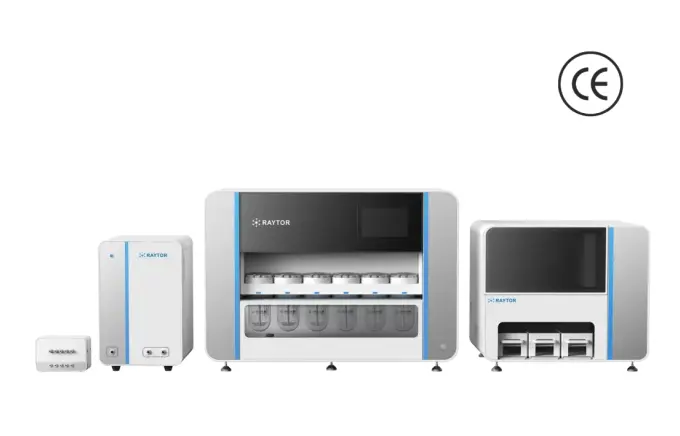
Lab Automation Tools for Research is changing what “a full day of dissolution testing” looks like, because Multi-Batch Testing turns repeated, stop-and-go work into one controlled, continuous workflow. At Raytor, we designed the RT9 Series RT900 Multi-batch Automatic Dissolution System around this exact need: help QC teams run multiple dissolution batches in a row with fewer interruptions, fewer manual handoffs, and more consistent execution.
What Multi-Batch Testing Means in a Dissolution Lab
Multi-Batch Testing means the system can run several complete dissolution batches back-to-back under a defined process logic. Instead of treating each batch as a separate “mini project” (set up → run → sample → filter → record → clean → reset), Multi-Batch Testing treats it as a scheduled sequence.
For beginners, the easiest way to understand the value is this: dissolution is a test of product behavior, but manual repetition often tests the operator’s endurance. Multi-Batch Testing reduces the number of times a person must restart the same steps, which helps the data reflect the product—not the workflow.
In Raytor’s RT900, Multi-Batch Testing is built to perform 10 consecutive batch tests with less human interaction. That number is meaningful because it supports long run plans during peak QC periods, stability pulls, or multiple strengths that must be tested with the same method.
The Real Problems Multi-Batch Testing Solves
A lab rarely struggles because it cannot run one dissolution batch. The struggle is running many batches with the same discipline every time. Multi-Batch Testing is designed to solve practical issues that appear only when volume increases.
Here are the most common problems Multi-Batch Testing addresses:
✓ Too many manual restarts: each restart is a chance to miss a step or drift from the SOP
✓ Inconsistent timing: sampling delays and handling differences can change profiles
✓ Between-batch carryover worry: residue risk grows when you repeat runs all day
✓ Workflow fragmentation: analysts must multitask, which increases interruption risk
✓ Documentation pressure: methods and records must be controlled and retrievable
In short, Multi-Batch Testing is not just about speed. It is about making repeated work behave like a controlled process.
Why 10 Consecutive Batches Matters For Planning and Throughput
When a system can complete 10 consecutive batches unattended, the biggest improvement is not only minutes saved—it is schedule stability.
Multi-Batch Testing changes how a QC manager plans:
• You can group similar products and methods into one continuous run window
• You reduce “dead time” between batches where equipment sits idle
• You minimize shift-to-shift variation because fewer handoffs are needed
• You free analysts for higher-value tasks such as review, troubleshooting, or sample logistics
This is the quiet advantage of Multi-Batch Testing: it reduces the number of times the process must be rebuilt from zero. Each rebuild adds risk. A controlled sequence reduces that risk.
How Multi-Batch Testing Protects Data Quality
When batches run back-to-back, the system must control the conditions tightly. Otherwise, results may look different for reasons unrelated to the dosage form.
Raytor’s RT900 focuses on three controls that matter most in Multi-Batch Testing:
Precise Media Handling Keeps Conditions Comparable
RT900 provides exact media distribution and controlled media removal. In Multi-Batch Testing, this is practical protection. Each batch starts with a consistent environment, so profile comparisons are more meaningful.
✓ Less variation from media volume differences
✓ Cleaner batch-to-batch comparisons for the same formulation
✓ Faster root-cause checks when an outlier appears
Temperature and Speed Control Supports Repeatability
RT900 includes precise temperature and speed control, which helps maintain stable test conditions across a long sequence. In Multi-Batch Testing, repeatability is the core value. Without it, higher throughput can simply produce inconsistent data faster.
Why Automated Cleaning Is a Non-Negotiable in Multi-Batch Testing
Multi-Batch Testing only works if the lab trusts the separation between Batch 1 and Batch 10. This is why vessel cleaning cannot be “good enough.” It must be consistent, complete, and repeatable.
RT900 performs complete vessel cleaning using optimized spray techniques designed for spraying without dead angle, with cleaning fluid and cleaning time set to reduce residue risk.
For a QC user, the benefit is direct:
✓ Lower carryover risk between consecutive batches
✓ Less re-testing caused by cleaning uncertainty
✓ More confidence when results are reviewed or audited
In other words, Multi-Batch Testing is not a throughput feature—it is a reliability feature, and cleaning is one of its foundations.
How Automated Sampling and Online Filtering Support Multi-Batch Consistency
Sampling is where manual workflows often drift. Even small differences in timing, handling, or filtration can affect what the data looks like.
RT900 includes a high-end autosampler that enables automatic online filtering, including support for secondary filter management. In Multi-Batch Testing, this supports consistent execution by reducing repetitive manual touch points.
Practically, this can help labs:
• Reduce operator-to-operator variation in sampling routines
• Keep filtration steps consistent across long sequences
• Maintain smoother run continuity during busy lab hours
This is another way Lab Automation Tools for Research turns “automation” into a result you can see: more uniform batch execution.
Multi-Batch Testing and Compliance: Why Records Matter as Much as Results
Multi-Batch Testing increases data volume. That means record control becomes more important, not less. In regulated QC, the system must support both performance and traceability.
RT900 supports FDA 21 CFR Part 11 operations, with real-time monitoring and strong data storage. It can store at least 15 years of experimental methods and records without overwriting.
For many labs, that is not just a specification. It supports real work:
✓ Quick retrieval of historical methods during investigations
✓ Stronger audit readiness across long product life cycles
✓ Better continuity when personnel change over time
Multi-Batch Testing is most valuable when it can be defended—both scientifically and administratively.
Where Multi-Batch Testing Fits Best in Routine QC
Multi-Batch Testing is especially suitable when a lab runs similar methods repeatedly under legal pharmacopoeial frameworks. Basket and paddle methods (USP Apparatus 1 and 2) remain widely used for QC of:
• General tablets
• Immediate-release tablets
• Enteric tablets
• Extended-release tablets
RT900 supports USP 1/2 method processing, which makes it practical for common dissolution programs where repeatability and documentation are critical.
CTA: How o Decide If Multi-Batch Testing Is Right for Your Lab
If your team is constantly restarting dissolution runs, ask this: How many times per day do we repeat steps that do not add scientific insight? That number usually points to where Multi-Batch Testing will pay back fastest.
Raytor’s RT9 Series RT900 is built for 10 consecutive batches, with automated vessel cleaning, online filtering support, and compliance-friendly record control. If you want to see how Multi-Batch Testing could fit your workflow, reach out to Raytor for a practical run-plan review. Share your daily batch count, dosage form type, and current pain points—and we will recommend a Multi-Batch Testing setup that targets reliability first, then throughput.