

How 21 CFR Part 11 Dissolution Software Protects Data Integrity
2026-09-21


A dissolution result is defensible only when the laboratory can reconstruct how it was generated. The final percentage dissolved must connect to the sample, approved method, instrument conditions, analytical data, calculations, and review history.

At Raytor, we assess dissolution equipment and software as a coupled system. 21 CFR Part 11 Dissolution Software helps make up a system that ensures data integrity through controlled access, traceable changes, protected records, and accountable approvals. It is a complicated system which relies on the installed configuration, validation, and the procedures of the laboratory, as well as the compliance label.
What Records Must Be Controlled?
21 CFR Part 11 Dissolution Software is an industry term, not a separate FDA software classification. Part 11 applies to qualifying electronic records maintained or submitted under FDA requirements; it does not prescribe a dissolution method. FDA Part 11 Scope and Application
A dissolution record package should capture the information needed to reconstruct the test:
•Method: Version, apparatus, medium, volume, speed, and sampling schedule.
•Execution: Batch and vessel identities, timestamps, recorded conditions, and interruptions.
•Analysis: Original signals, standards, dilution factors, calculations, and processing history.
•Review: Audit trails, deviations, signatures, and approved reports.
A PDF report alone may not preserve the dynamic records and metadata needed for meaningful review. FDA's data-integrity guidance addresses these distinctions. FDA Data Integrity Guidance
Data Risks, Software Controls, and Verification
The value of 21 CFR Part 11 Dissolution Software becomes clearer when each feature is tested against a specific failure.
| Failure Scenario | Control to Evaluate | Practical Verification |
| Analyst changes an approved method | Permissions and version control | Attempt an unauthorized edit |
| Dilution factor changes after processing | Audit trail and retained calculation history | Retrieve original and revised results |
| Failed run disappears from review | Complete record retention | Retrieve an interrupted run |
| Approval cannot be attributed | Unique identity and record-linked signature | Inspect signer, timestamp, and meaning |
| Interface assigns data to the wrong vessel | Validated sample mapping | Trace a known sample end to end |
| Archived results cannot be opened | Retention and recovery controls | Restore and review an older dataset |
Audit Trails: Reviewable Evidence, Not Just Logs
An audit trail should preserve who performed an action, when it occurred, and what changed without obscuring previous information. For laboratory review, changes to methods, processing parameters, or result status deserve particular attention.
Additionally, procedures need to cover:
•The reasons for significant changes.
•Tests that have been interrupted, repeated or invalidated.
•Privileged administrator actions.
•The escalation of unexplained events.
Recording an event does not resolve it. Reviewers must consider the effect of the event on the result reported.
Electronic Signatures: Accountability Beyond Login
Access permissions control what a user can do. Electronic signatures can indicate responsibility for a record or a decision.
Signatures must display the signer's name, signing date/time, and meaning, and remain linked to the corresponding record. A shared account or pasted signature image does not provide equivalent accountability. 21 CFR Part 11
Why Dissolution Calculations Need Specific Validation
21 CFR Part 11 Dissolution Software must be evaluated beyond passwords and signatures. A fully traceable result can still be scientifically incorrect.
Consider repeated sampling: removing medium also removes dissolved drug. Depending on whether medium is replaced, the approved calculation must account for previously withdrawn drug and the applicable vessel volume.
Validation should test:
•Sampling corrections: Replacement versus non-replacement workflows.
•Dilution factors: Manual entries vs. automated dilution settings.
•Timing: Scheduled versus actual sampling and transfer delays.
•Analytical processing: Calibration and blank correction; units of measurement.
•Reporting: Rounding of results; acceptance logic at the vessel level.
Automated acquisition minimizes transcription errors, but can not validate all configurations. Interfaces must be tested to fail in order to assess ESD data problems (missing, duplicated, delayed, or misassigned).
Raytor Design Choices and Technical Implications
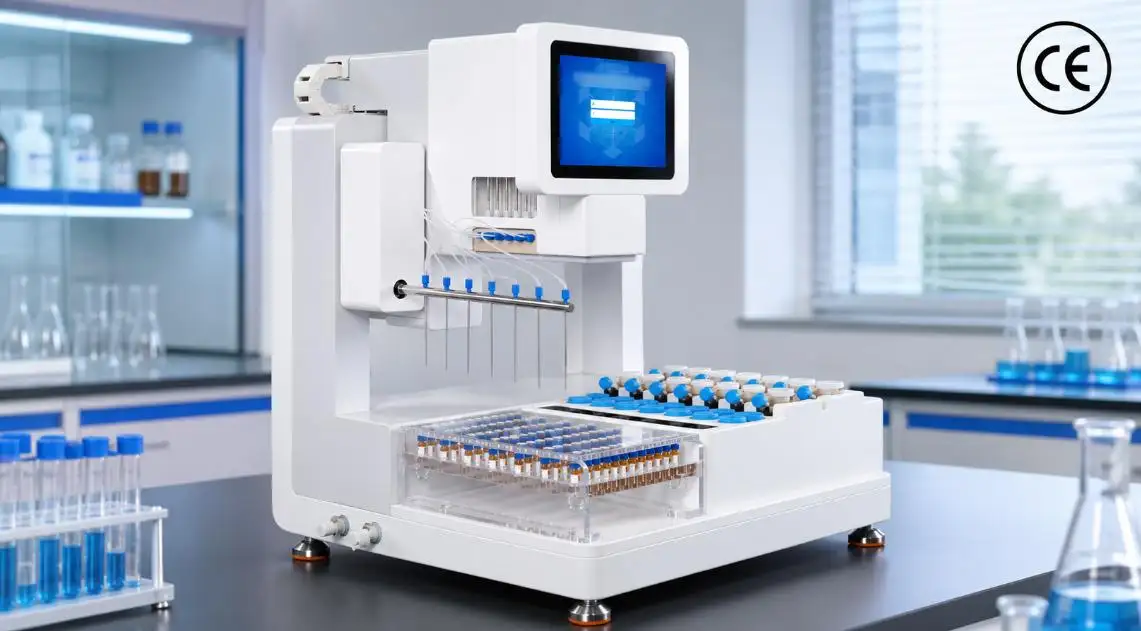
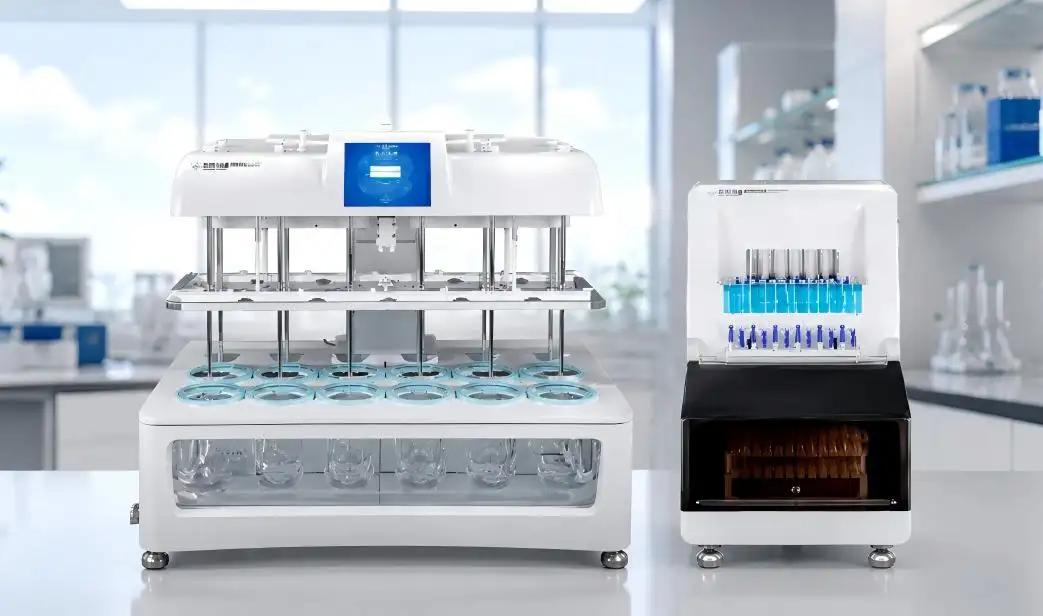
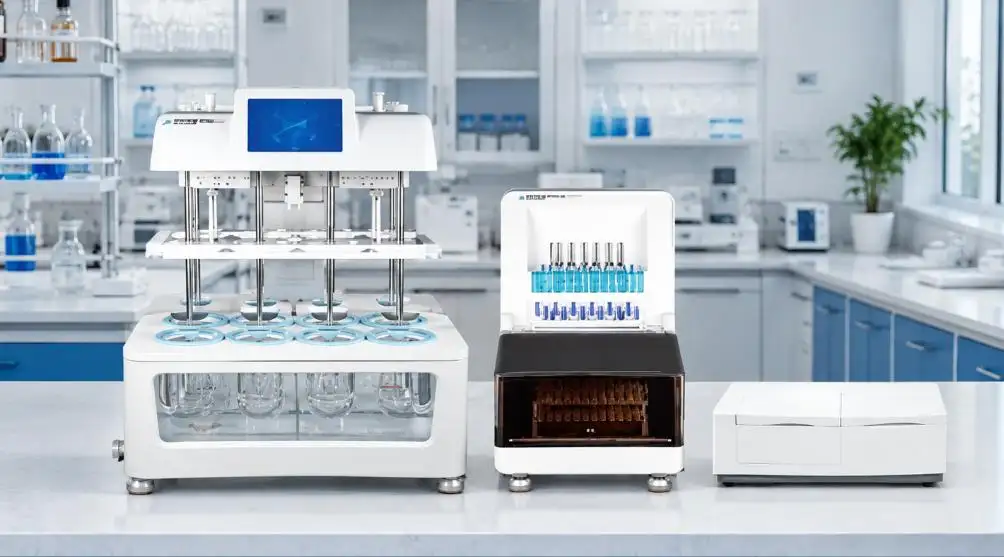
Our dissolution range provides different approaches to test execution and sample handling. Selecting 21 CFR Part 11 Dissolution Software should follow the required method and data path.
| Raytor Model | Published Design Feature | Application Consideration |
| RT600 | Covered vessels and synchronous dosing | Evaporation control and consistent test initiation |
| RT612 | Individual temperature and real-time parameter monitoring | Visibility of operating conditions |
| RT600-ST | Anti-adsorption tubing, filtration options, optional online dilution | Recovery, filter suitability, and dilution verification |
| RT600-UV | Separate vessel flow paths and flow-cell pathlength options | Carryover assessment and analytical range selection |
Our product page identifies Part 11 support for RT600-UV analysis software and describes dissolution accessories and customization services. Exact permissions, signatures, interfaces, and validation documentation should be confirmed for the proposed configuration. Hardware features support measurement quality; they do not independently establish electronic-record compliance. Raytor Dissolution Systems
Software Capability vs. Laboratory Compliance
Implementing 21 CFR Part 11 Dissolution Software requires documented controls around the technology.
| Software Capability | Laboratory Obligation |
| User roles | Authorized assignment and periodic access review |
| Audit trails | Defined review responsibilities and investigations |
| Backup functions | Recovery testing and retention procedures |
| Configurable calculations | Approved requirements and challenge tests |
| Software updates | Change assessment and regression testing |
Before purchase, confirm USP apparatus, throughput, sampling approach, and UV/HPLC/LIMS compatibility where required. Then link user requirements to risk-based tests, including appropriate IQ/OQ/PQ activities. Supplier documentation supports—not replaces—verification of intended use. Part 11 System Validation Requirements
Build a Reconstructable Dissolution Record
21 CFR Part 11 Dissolution Software should make the complete test understandable, from method selection to archived approval.
Explore Raytor's pharmaceutical dissolution systems to discuss a configuration that fits your analytical method, automation needs, and data-integrity requirements.
FAQs
Q1. Does Raytor Offer 21 CFR Part 11 Dissolution Software?
Raytor's RT600-UV dissolution analysis software supports Part 11 requirements. Confirm the software version and applicable controls for your configuration.
Q2. Which Raytor Model Supports Online UV Dissolution Analysis?
The RT600-UV combines dissolution testing with online UV analysis, using individual flow cells and lines for each vessel and pathlength options from 1–10 mm.
Q3. Which Raytor Systems Offer Automated Sampling?
Raytor lists RT600-ST, RT612-ST, and RT614-ST automated dissolution systems. Compare sampling, filtration, and collection configurations against your approved method.
Q4. What Sample-Handling Features Does the Raytor RT600-ST Provide?
The RT600-ST features anti-adsorption tubing, filtration options, and optional online dilution. Evaluate recovery and dilution accuracy with representative samples.
Q5. How Does the Raytor RT612 Monitor Test Conditions?
The RT612 provides individual temperature monitoring and real-time monitoring of key parameters. Confirm which measurements are retained in electronic records.