

High-End Laboratory Instruments: A Pharmaceutical Buyer's Guide
2026-09-21


When pharmaceutical buyers consider purchasing laboratory instruments, they must take into account how well the instrument capabilities meet the needs of the laboratory. Buyers consider quotations only after assessing the following: method compatibility, repeatability, automation, data integrity, and lifetime costs.
This guide is concerned with the dissolution, drug release, and transdermal test methods. The guide outlines the steps needed to define the required acceptance criteria and specifies when the criteria become applicable.
What Defines High-End Laboratory Instruments?
"High-end" is a commercial description, not a formal instrument classification. Its practical value depends on whether equipment consistently meets the requirements of its intended use.
Distinguishing between the following three characteristics is crucial:
•Resolution: The smallest discernible change in a physical quantity.
•Accuracy: The degree to which a measurement agrees with a true or specified value.
•Precision: The degree of agreement among multiple measurements made under the same conditions.
While it is possible to increase the displayed digits of a measurement, this does not necessarily improve the accuracy of a measurement. Prospective buyers have the right to demand evidence of performance, operating conditions, and acceptance limits for measurement systems to be used in conjunction with the proposed purchase.
When selling Instrumentation to be used in a laboratory, the accuracy, precision, and traceability of the records, as well as the support and maintainability of the hardware, should be considered throughout the lifespan of the instrument.
Match the Instrument to the Application
When designing an instrument, one should first consider the user requirements specification (URS) to determine dosage forms, sample volumes, throughput, and reporting requirements.
| Application | Instrument Direction | Critical Selection Questions |
| Routine oral dissolution | Basket or paddle apparatus | Does the configuration support the required method, mechanical conditions, and sampling schedule? |
| Complex formulation release | Method-dependent apparatus, potentially flow-through cells | Are flow control, filtration, recovery, and open- or closed-loop operation appropriate? |
| Semisolid IVRT | Diffusion cell system | Are membrane selection, diffusion area, receptor medium, and temperature suitable? |
| Skin IVPT | Diffusion system accommodating skin samples | Can mounting, skin integrity assessment, and receptor conditions support the protocol? |
| Repeated batch testing | Automated dissolution system | Can preparation, sampling, cleaning, and exception handling meet throughput targets? |
In vitro release testing (IVRT) and in vitro permeation testing (IVPT) are two different methods with particular considerations for each. IVRT tests how much a formulation is released. IVPT tests how much a formulation is able to pass through a barrier, for example, how much a formulation is able to permeate through the skin.
Flexibility is necessary during development, but not during quality control. Some examples of requirements for quality control are constant and expectable throughput from the lab and standardized procedures.
Compare Performance Under Real Test Conditions
Lab Instruments Evaluation
Some critical test variables include:
•Temperature: Check for uniformity and stability at the location(s) where the measurement is to be made.
•Mechanical or flow control: Assess the variables required by the apparatus and the method used.
•Sampling: check if the Proper volume was taken, if the sample was replaced, and if dilution was done correctly.
•Sample recovery: Investigate if the sample adsorbed to the surfaces.
•Carryover and compatibility: Check if the surfaces are cleaned and if they are resistant to the selected media.
Demonstrations should be done against your specific requirements. Recovery and cleaning performance cannot be confirmed with only water being run through the system. Method transfer also requires an evaluation of the differences between the two systems.
The Right Automation Level
Automation reduces manual labor, but only if the method and workload allow for it.
| Dimension | Manual | Semi-Automated | Fully Automated |
| Typical fit | Low volume; frequent method changes | Recurring work with selected repetitive steps | Standardized, multiple-batch workflows |
| Operator involvement | Extensive | Reduced at automated steps | Supervision, exceptions, and review remain |
| Main verification focus | Timing and operator consistency | Sampling, filtration, replenishment | Cleaning, scheduling, failure recovery |
| Changeover considerations | Relatively direct adjustments | Configuration compatibility | Setup and confirmation effort |
| Cost focus | Labor and repeat work | Labor savings versus maintenance | Utilization, downtime, overall operating cost |
Measure throughput across preparation, testing, cleaning, and data review. Vessel count alone does not describe daily capacity.
Evaluate Data Integrity and Qualification Support
For High-End Laboratory Instruments, software assessment belongs in procurement.
Request demonstrations of individual accounts, role-based permissions, audit trails, original-data retention, export, and backup restoration. Confirm which functions are included in the quoted software configuration.
Separate three activities:
•Instrument qualification: Documents suitability for intended use through an appropriate qualification approach.
•Calibration: Establishes the relationship between instrument indications and reference values.
•Method validation: Demonstrates that an analytical procedure is suitable for its purpose.
Supplier documentation supports laboratory work; buyers still need approved procedures and acceptance criteria. ICH Q14 and Q2(R2) address analytical procedure development and validation, rather than providing an instrument certification. FDA guidance
Assess Manufacturing Quality and Design Support
Manufacturing capability matters when it produces evidence buyers can evaluate.
Raytor describes an independent pharmaceutical instrument R&D platform, an application experiment center, and 6S production management. These provide useful starting points for discussions about method adaptation and manufacturing consistency. Raytor company information
Its production information also describes quality control from design through final inspection and customization capabilities. Buyers should translate these capabilities into requests for inspection records, acceptance criteria, design-change controls, and documented customization scope. Raytor production management
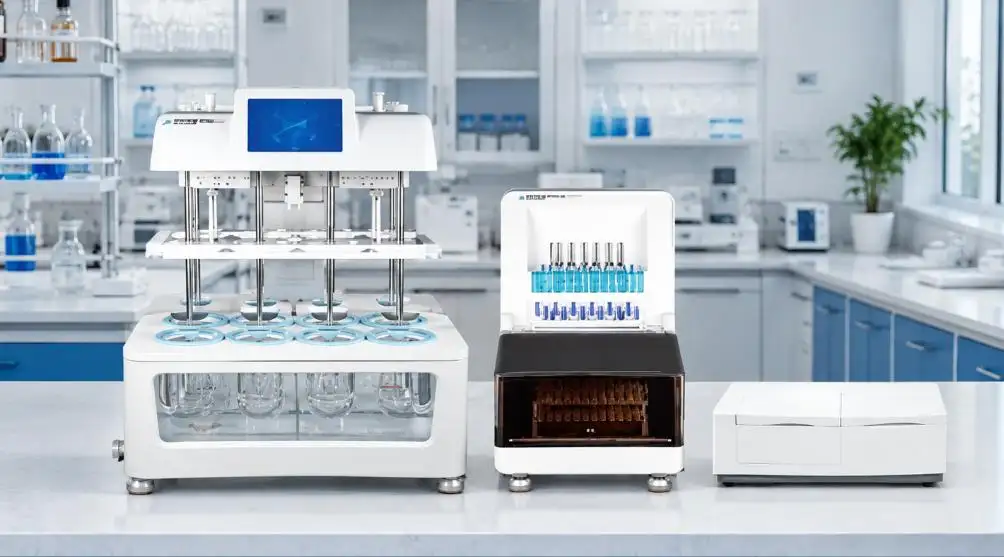
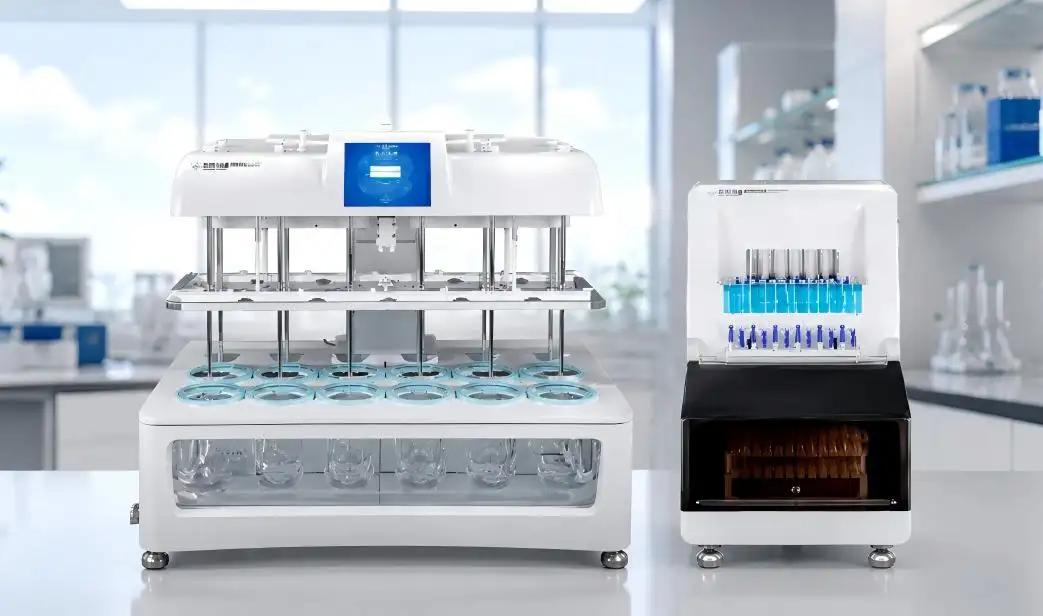
For pharmaceutical dissolution and diffusion testing, Raytor's RT600-ST, RT700, RT800, and RT900 illustrate how different instrument designs address distinct analytical needs.
Match the Instrument to the Application
Prepare a user requirements specification covering dosage forms, methods, sampling schedules, throughput, and reporting needs. Development laboratories often need configuration flexibility; routine QC typically prioritizes consistent execution.
| Testing Requirement | Raytor Example | Decision Criteria |
| Routine oral dissolution with automated sampling | RT600-ST | Apparatus compatibility, sampling intervals, filtration, and replenishment |
| Method development involving flow-through testing | RT700 | Cell selection, flow rate, open/closed-loop operation, and recovery |
| Semisolid release or skin permeation studies | RT800 | Membrane or skin suitability, diffusion area, receptor medium, and temperature |
| Repeated standardized dissolution batches | RT900 | Batch capacity, cleaning effectiveness, changeover, and interruption recovery |
These examples identify configurations to evaluate; suitability still depends on the method and sample.
RT600-ST: Evaluate the Sampling Workflow
The RT600-ST Automated Dissolution System has eight vessels and supports automated dosing, sampling, online filtration, and optional online dilution.
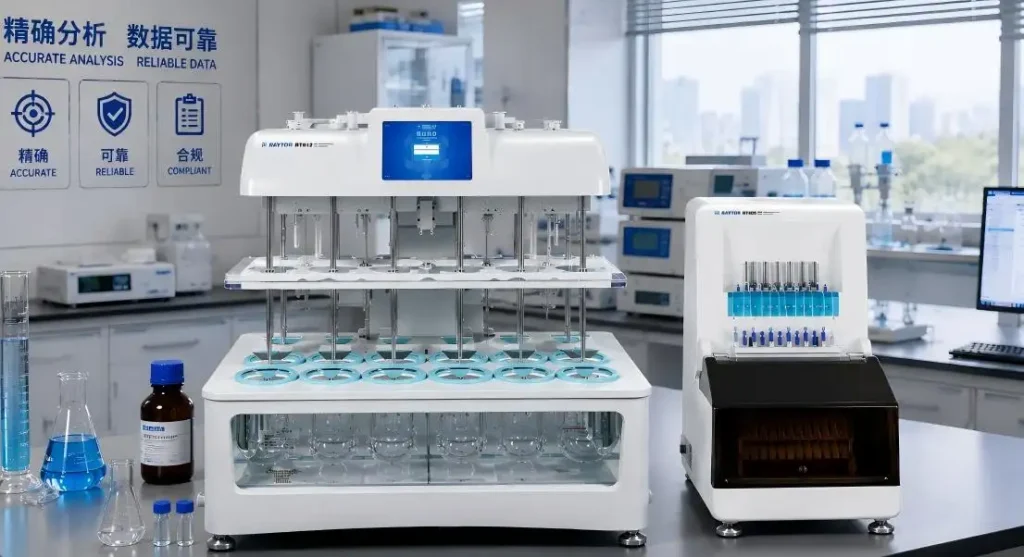
For buyers, the important question is whether the complete sampling pathway preserves representative concentrations. Assess filter adsorption, tubing recovery, sampling volume, and timing against the proposed method. Optional dilution should be included explicitly in the quotation and acceptance testing.
RT700: Compare Flow-Through Requirements
The RT700 Flow-Through Cell Dissolution System has 7 channels, open- and closed-loop operation, and a flow range of 1-38 mL/min.
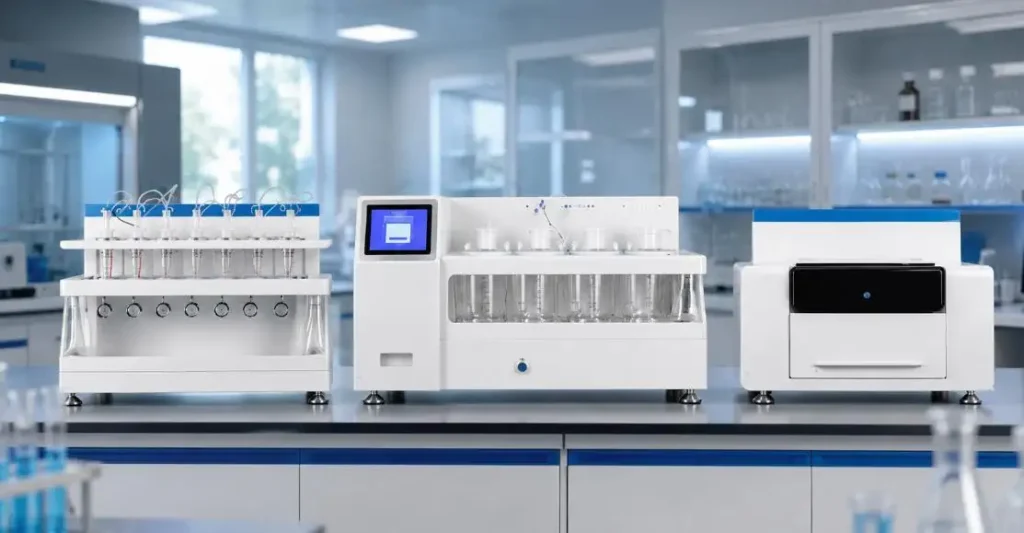
In open-loop operation, new medium is introduced with each cycle, and in closed-loop operation, a defined volume is recirculated. Medium consumption and concentration as well as calculation considerations differ depending on the operation choice. Prospective buyers should consider sink conditions, filter backpressure, sample recovery, and flow stability. Flow-through testing justifies the use of the flow-through cell and should be compared to both the basket and paddle methods.
RT800: Distinguish IVRT From IVPT
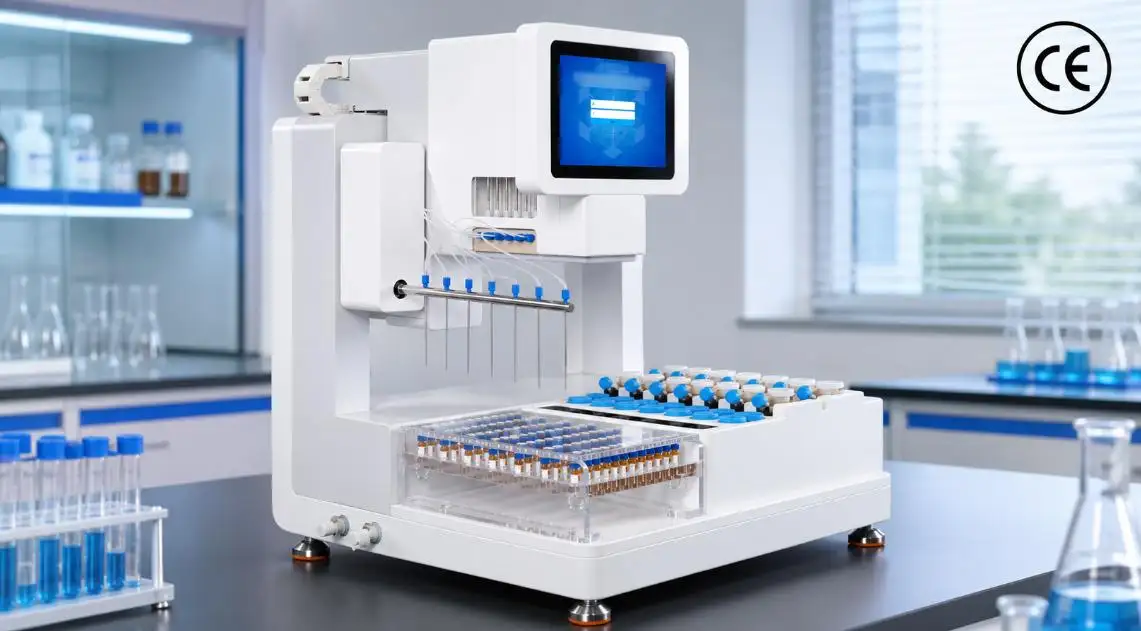
The RT800 Automated Transdermal Diffusion System combines Franz diffusion cells with automated sampling and refilling. Its published configuration includes two groups of seven cell positions and seven sampling channels.
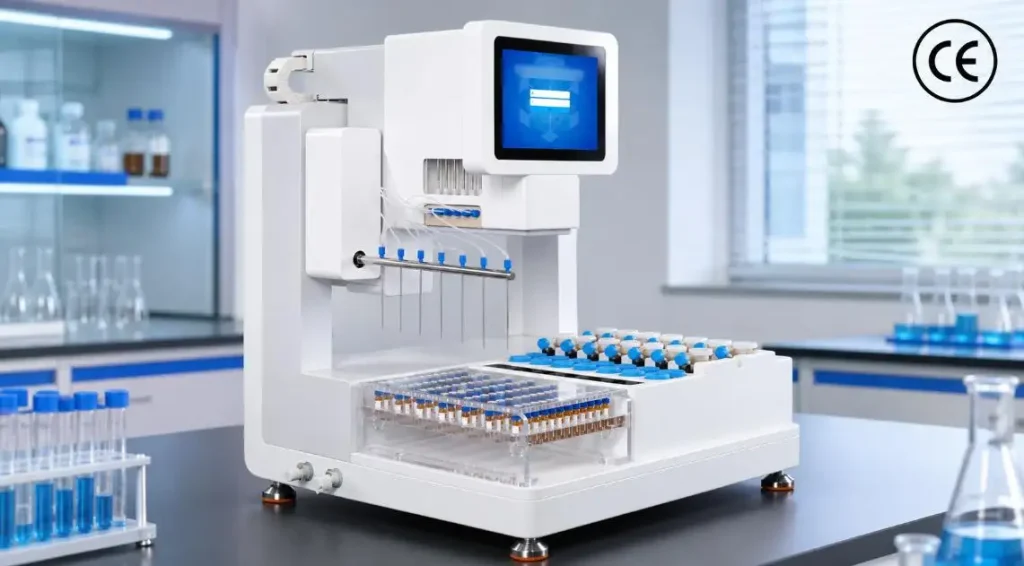
IVRT measures the rate of release of a formulation, and IVPT measures the rate of passage of a substance through a barrier, typically the skin. When thinking about potential customers, the membrane's compatibility, any skin integrity procedures, the state of the receptors, and the removal of air bubbles, must be considered. Also, you need to decide how sampling will be done in both cell groups.
The RT900 from Raytor's RT9 series allows 10 consecutive batches of automated medium handling and vessel cleaning. Raytor assigns the RT900 for paddle testing and RT910 for basket testing.
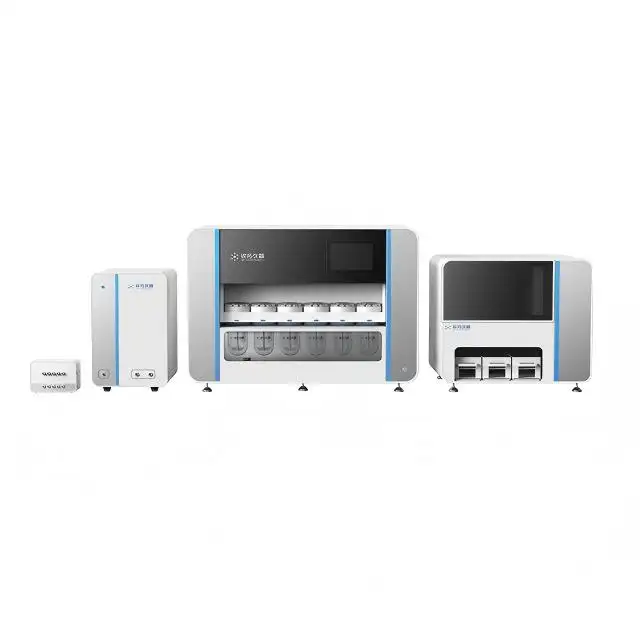
This capacity warrants evaluation where workloads are sustained. Buyers should demonstrate cleaning with representative formulations and calculate throughput including preparation, testing, cleaning, and review.
Make the Final Decision With Evidence
Before ordering, confirm method compatibility, representative sample results, acceptance tests, software scope, service responsibilities, and lifecycle costs.
Raytor's dissolution, diffusion, and automation designs offer several routes for matching equipment to pharmaceutical workflows. Visit Raytor with your dosage forms, methods, and expected workload to discuss suitable configurations and define a practical evaluation plan.
FAQs
Q1. What High-End Laboratory Instruments Does Raytor Offer?
Raytor develops pharmaceutical analytical equipment for dissolution testing, transdermal diffusion, new compound analysis, automated sample processing, titration, and disintegration testing. Its portfolio supports formulation development and pharmaceutical quality control.
Q2. Which Raytor Instrument Is Suitable for Routine Tablet Dissolution Testing?
The RT600-ST Automated Dissolution System is designed for basket and paddle testing. It provides eight dissolution positions, automated dosing and sampling, online filtration, and optional online dilution. Suitability should be confirmed against the laboratory's dosage form and validated method.
Q3. What Is the Difference Between the Raytor RT600-ST and RT700?
The RT600-ST focuses on conventional basket and paddle dissolution workflows. The RT700 Flow-Through Cell Dissolution System supports USP Apparatus 4-type testing with open-loop and closed-loop operation. The RT700 may be evaluated for sustained-release products, suspensions, liposomes, and other complex formulations.
Q4. Can Raytor Instruments Support IVRT and IVPT Studies?
Yes. The RT800 Automated Transdermal Diffusion System combines Franz diffusion cells with automated sampling and refilling. It can support in vitro release testing for semisolid formulations and in vitro permeation testing through suitable membranes or skin samples when used with an appropriate method.
Q5. Which Raytor System Is Designed for High-Throughput Dissolution Testing?
The RT900 Multi-Batch Automatic Dissolution System can automate as many as ten consecutive dissolution batches. It integrates medium handling, sampling, filtration, vessel cleaning, and data recording for laboratories with sustained, standardized testing workloads.