


Pharmaceutical Quality Control Equipment: Key Trends Shaping Modern QC Laboratories
2026-09-21


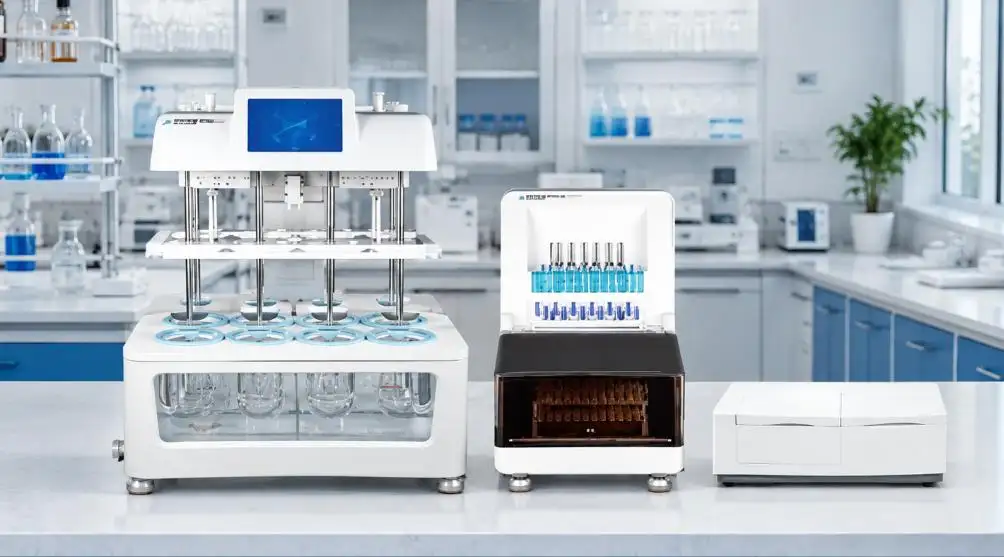
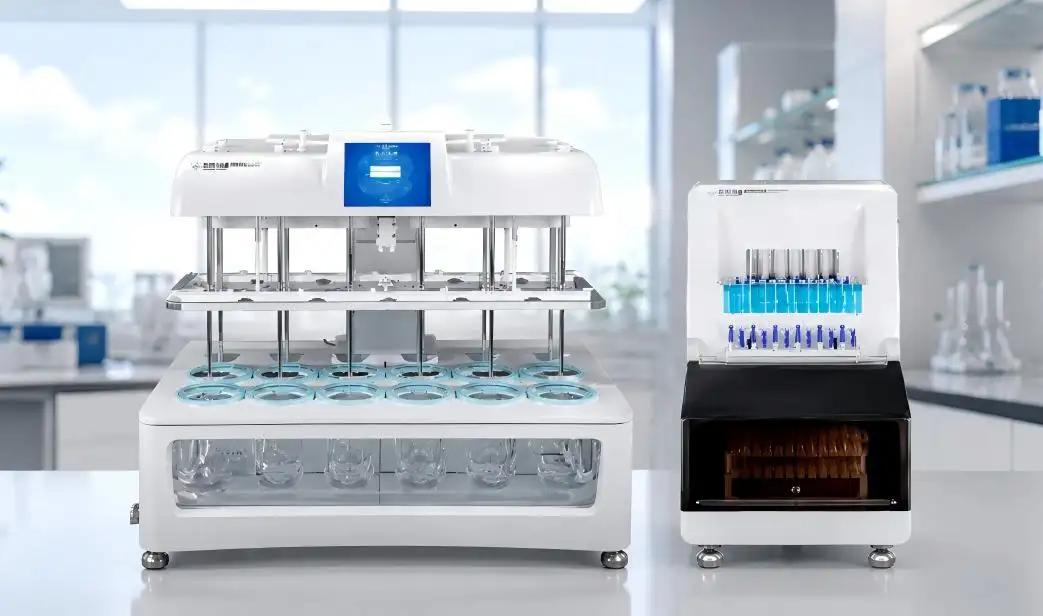
Pharmaceutical Quality Control Equipment is no longer restricted to standalone instruments. Integrated systems that control test conditions and reduce variability are needed to protect data and facilitate the testing of more complex dosage forms in the QC laboratory.
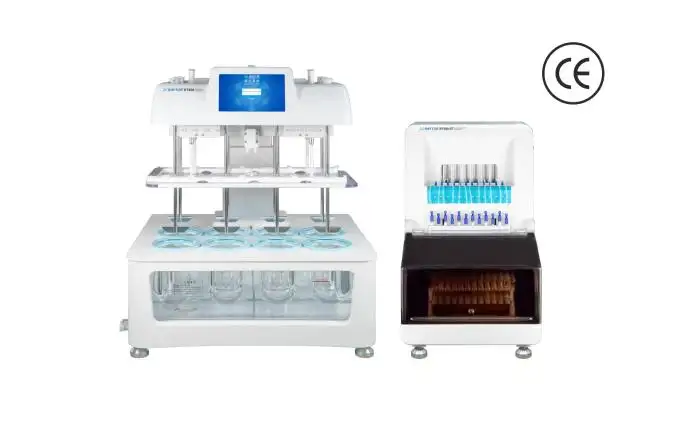
We see this trend as more than automation of the pharmaceutical laboratory. Analysis of a sample involves many steps, from the preparation of the analysis medium, through setting up the apparatus, sampling, filtration, data acquisition and review, to reporting. Automation of any of these steps would be of great benefit.
What Pharmaceutical Quality Control Equipment Must Control
Pharmaceutical Quality Control Equipment supports release testing, stability studies, formulation development, method transfer, investigations, and lifecycle monitoring. Typical systems include dissolution testers, disintegration testers, diffusion systems, automated titrators, spectroscopic analyzers, and sample-processing platforms.
For dissolution testing, the reported result can be affected by much more than the analytical detector:
•Vessel geometry and alignment
•Shaft verticality and basket or paddle height
•Rotational-speed stability
•Medium temperature and evaporation
•Dissolved gases and medium preparation
•Sampling position and timing
•Tubing adsorption and carryover
•Filter binding and extractables
•Sample dilution and data transcription
This is why equipment selection must consider the complete measurement process—not only the nominal accuracy of the instrument.
Key Trends Reshaping Pharmaceutical QC
1. Automation of Error-Prone Operations
Manual dosing, timed sampling, filtration, medium replacement, and dilution can create small variations that become significant when comparing dissolution profiles.
Automated Pharmaceutical Quality Control Equipment can improve control by coordinating:
•Synchronous dosing and test initiation
•Programmable sampling intervals
•Online filtration
•Sample collection and replenishment
•Automatic dilution
•Direct transfer to UV analysis
Automation is most valuable when it controls a recognized source of analytical variability. It should not be used to compensate for a poorly developed method.
2. Stronger Control of Dissolution Hydrodynamics
Dissolution results depend on the fluid movement created inside the vessel. Off-center shafts, vessel asymmetry, vibration, incorrect paddle height, or an unstable rotation rate may change the hydrodynamic environment around the dosage form.
A capable dissolution system should therefore support:
•Stable rotational control
•Accurate vessel centering
•Consistent component positioning
•Individual temperature monitoring
•Mechanical qualification and calibration
•Protection against excessive vibration and evaporation
These controls are particularly important for products that cone beneath the paddle, float, adhere to vessel surfaces, or release the active ingredient slowly.
3. Data Integrity by Design
Modern Pharmaceutical Quality Control Equipment must keep the connection between the method, instrument conditions, raw data, calculations, changes, and final report.
While assessing software, labs must look at:
•Groups with differing levels of access
•Time-stamped audit trails
•Control of method creation and approval
•Electronic records and signatures
•Data retention (both original and modified)
•Backup and recovery
•Synchronization of system time
•Review of tests which were abandoned or repeated
21 CFR Part 11-ready functionality can help achieve compliance, however, the software cannot make a lab compliant. Validation, procedures, training, access governance, and a variety of other things remain of utmost importance.
4. Analytical Procedure Lifecycle Management
ICH Q2(R2) and ICH Q14 encourage laboratories to connect analytical development, validation, routine use, and change management.
Within this framework, Pharmaceutical Quality Control Equipment should be selected according to the analytical target profile and the method's required performance. Important questions include:
•What accuracy and precision are required?
•Which operating parameters are critical?
•How robust is the method to temperature, speed, flow, or sampling changes?
•Can system suitability detect unacceptable performance?
•How will the laboratory monitor method performance over time?
This approach is more scientifically useful than treating validation as a one-time documentation exercise.
5. Higher Throughput Without Losing Traceability
More test positions do not automatically mean greater productivity. Actual throughput depends on preparation, instrument occupancy, cleaning, sample processing, review time, and reruns.
| Throughput factor | Operational risk | Useful equipment function |
| Frequent sampling | Timing deviation | Programmable automated sampling |
| Multiple batches | Setup inconsistency | Stored and controlled methods |
| Long release tests | Overnight intervention | Automated collection and monitoring |
| Large sample volumes | Identification errors | Traceable sample positions |
| Repeated calculations | Transcription mistakes | Integrated acquisition and reporting |
Raytor's multi-position and multi-batch designs address this broader workflow rather than focusing only on vessel capacity.
Equipment for Different Dosage Forms
No single dissolution configuration is appropriate for every pharmaceutical product.
| Dosage form | Analytical challenge | Relevant approach |
| Immediate-release tablet | Rapid release and short sampling intervals | Basket or paddle method |
| Enteric-coated tablet | Sequential acidic and buffer stages | Controlled medium-change workflow |
| Extended-release product | Long test duration | Automated, stable sampling |
| Softgel capsule | Floating or gelatin interaction | Suitable basket or flow-through cell |
| Liposome or nanocrystal | Filter binding and dispersed particles | Flow-through cell with evaluated filtration |
| Transdermal system | Defined release area and membrane behavior | Cylinder or diffusion-based system |
Method suitability must be demonstrated experimentally. Filter material, tubing type, flow-cell configuration, and sampling conditions should be assessed for recovery, adsorption, and reproducibility.
Manual vs. Automated Pharmaceutical Quality Control Equipment
| Decision factor | Manual system | Automated system |
| Initial investment | Lower | Higher |
| Timing consistency | Analyst-dependent | Program-controlled |
| Method flexibility | High for simple studies | High when properly configured |
| Sample throughput | Limited | Suitable for repetitive workloads |
| Data transfer | Often manual | Can be integrated |
| Maintenance complexity | Lower | Higher |
| Best-fit environment | Development and low volume | Routine QC and stability testing |
The decision should be based on sample volume, method complexity, compliance risk, staffing, maintenance capability, and total cost per reportable result.
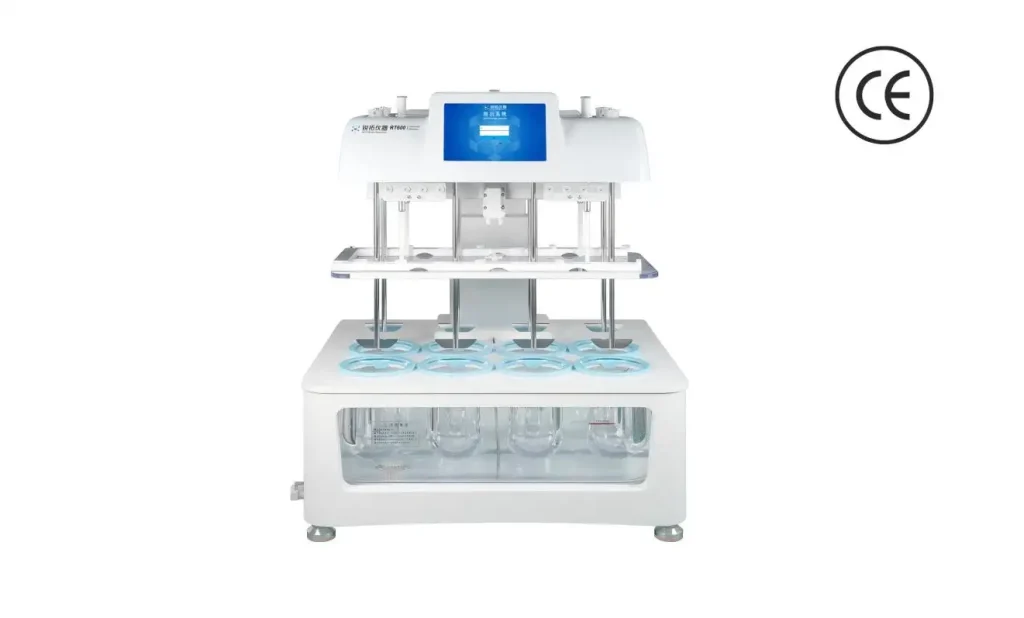
Raytor's Approach to Pharmaceutical Quality Control Equipment
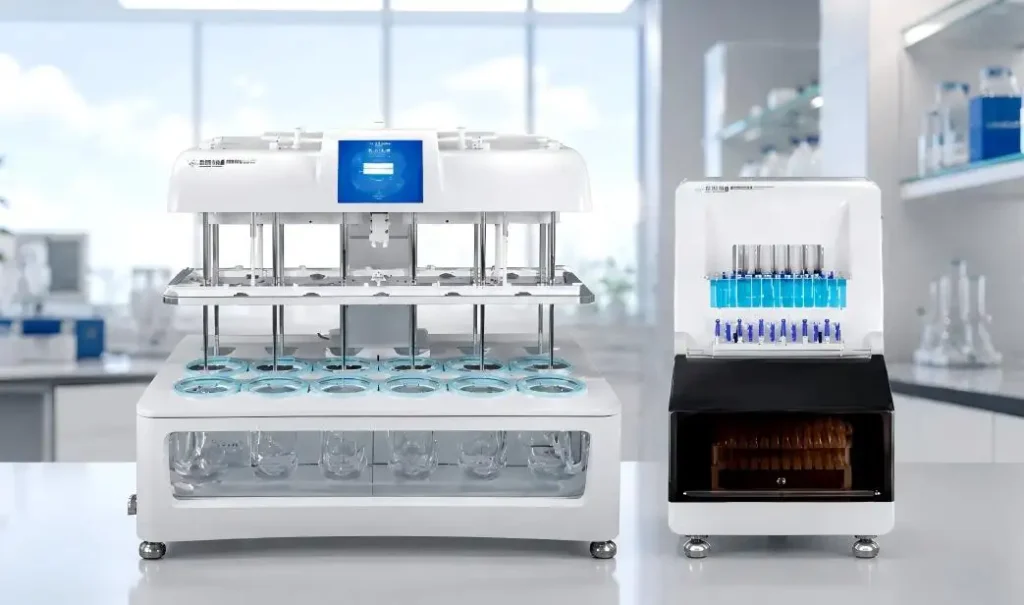
Raytor designs Pharmaceutical Quality Control Equipment around controlled dissolution conditions and practical laboratory workflows. Its dissolution portfolio includes conventional and automated systems, multi-position testing, automatic sampling and filtration, optional online dilution, UV-connected analysis, and flow-through cell configurations.
Key design priorities include:
•Multi-channel synchronized operation
•Automated temperature control
•High-precision data acquisition
•Low-adsorption sampling pathways
•Configurable filtration and sample handling
•Intelligent analysis software
•Support for GMP, GLP, 21 CFR Part 11, and multiple pharmacopoeial requirements
Conclusion
The next generation of Pharmaceutical Quality Control Equipment will be judged by its ability to produce scientifically valid, traceable, and repeatable data—not by automation alone. Laboratories should match equipment configuration to dosage form, method risk, throughput, and data-governance requirements.
For teams evaluating conventional, automated, or flow-through dissolution workflows, explore Raytor's pharmaceutical dissolution solutions and discuss the method requirements with Raytor's technical team.
FAQs
Q1. What Pharmaceutical Quality Control Equipment Does Raytor Provide?
Raytor provides dissolution testers, automated dissolution systems, flow-through cell systems, transdermal diffusion equipment, disintegration testers, automated titrators, sample processors, and related analytical solutions.
Q2. Which Dissolution Methods Are Supported by Raytor Equipment?
Raytor offers equipment configurations for basket, paddle, reciprocating cylinder, flow-through cell, cylinder, and reciprocating holder methods. Laboratories should select the configuration according to the applicable pharmacopoeial method and dosage form.
Q3. Can Raytor Provide Automated Dissolution Testing Systems?
Yes. Raytor's automated systems can integrate programmable sampling, online filtration, sample collection, medium replenishment, and optional dilution. Specific functions depend on the selected system configuration.
Q4. Does Raytor Pharmaceutical Quality Control Equipment Support 21 CFR Part 11?
Raytor offers dissolution systems and software designed to support 21 CFR Part 11 requirements, including controlled access, data management, and audit-related functions. Final compliance also depends on customer validation, procedures, and user management.
Q5. Can Raytor Equipment Be Used for USP, EP, and Chinese Pharmacopoeia Methods?
Raytor designs its Pharmaceutical Quality Control Equipment for requirements associated with the United States, European, and Chinese pharmacopoeias. Method suitability must still be verified for each product and market.