

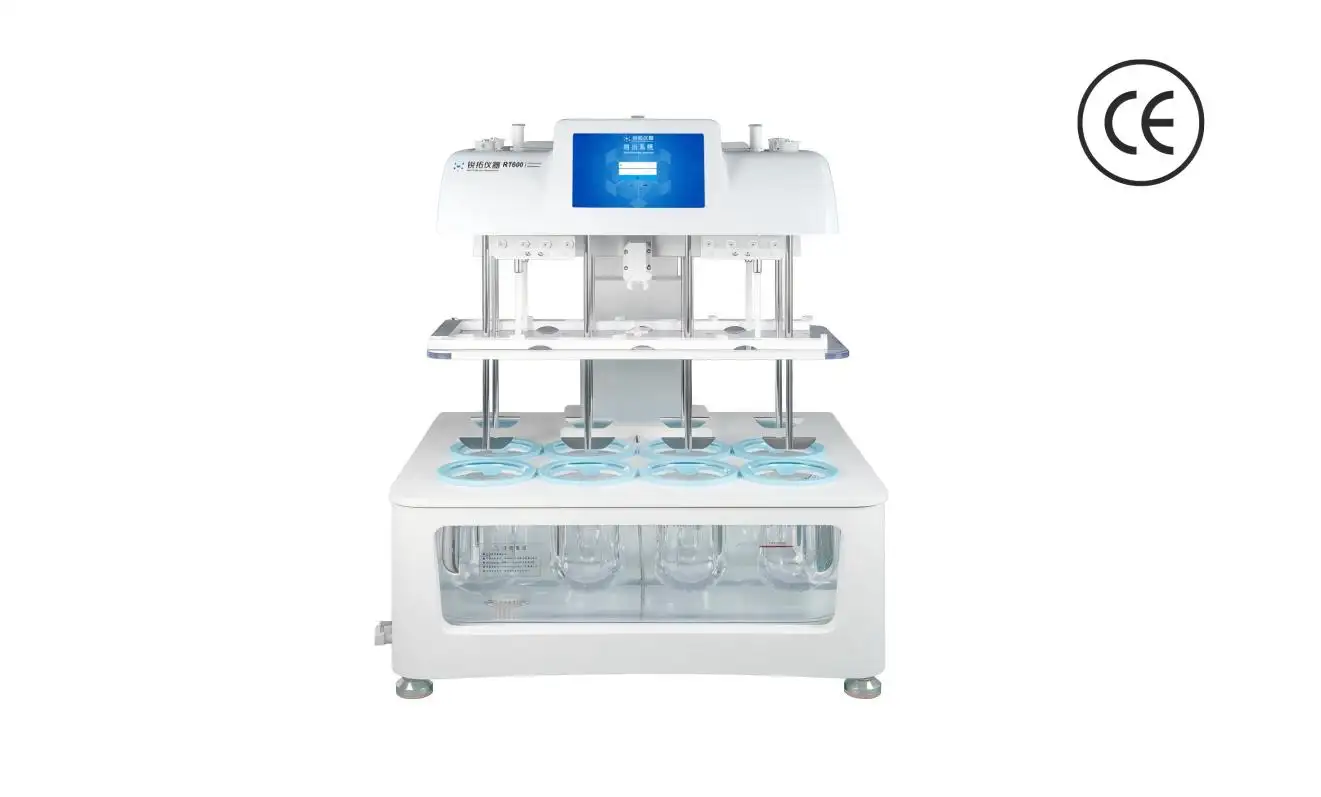
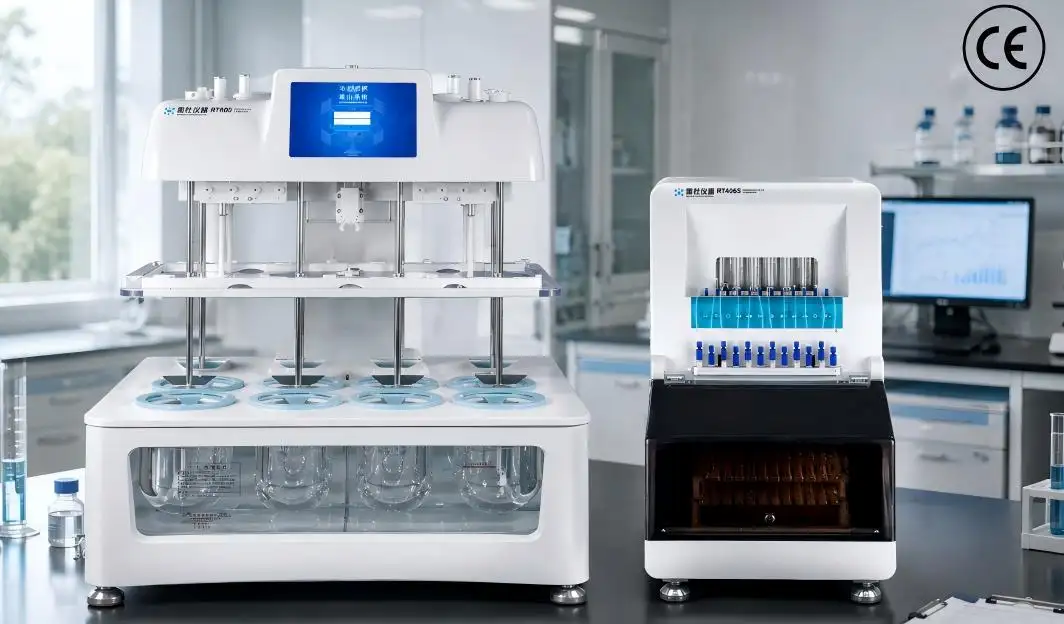
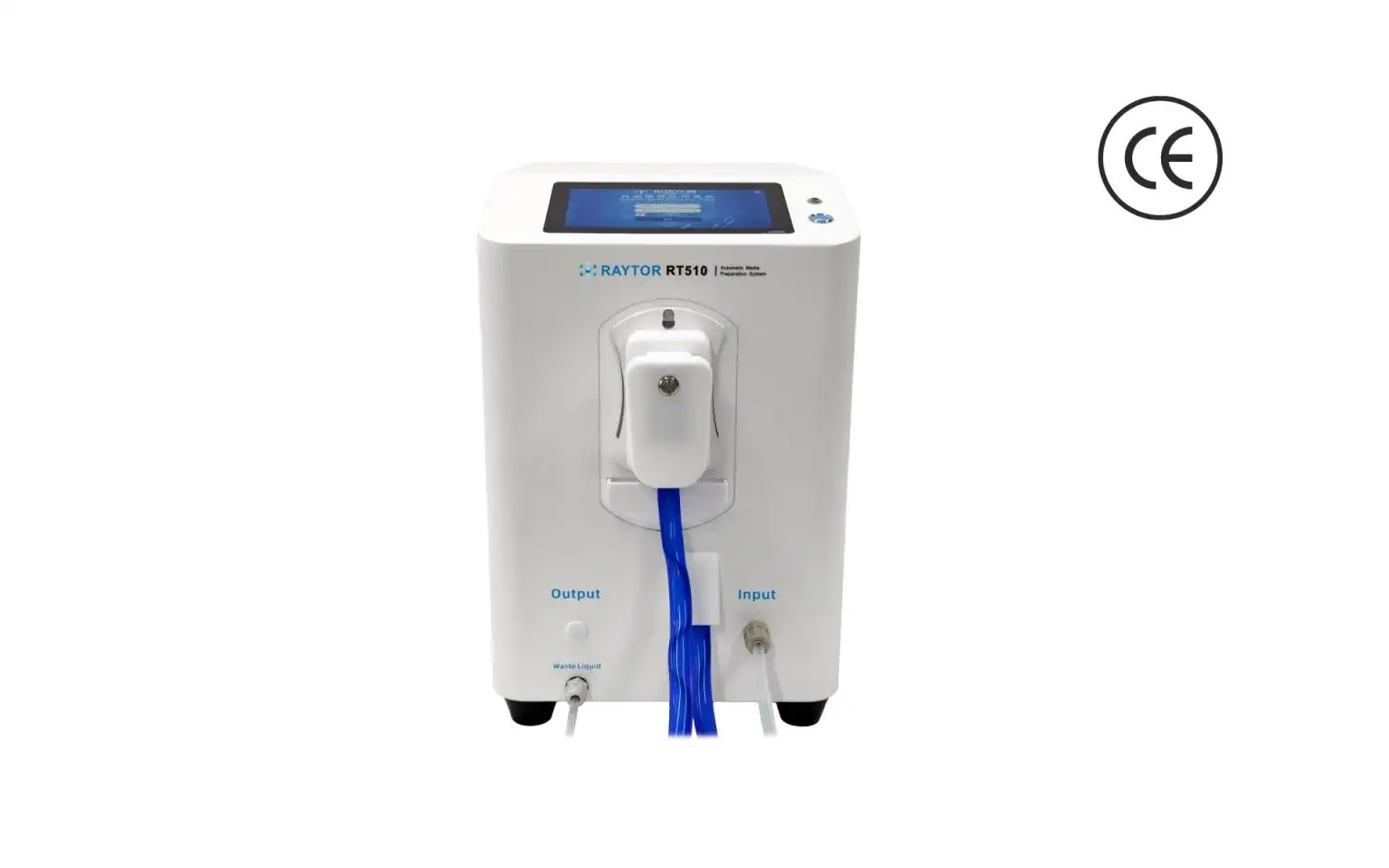
Automated Dissolution Sampling System: Sampling Time Accuracy and Dead Volume
2026-09-18


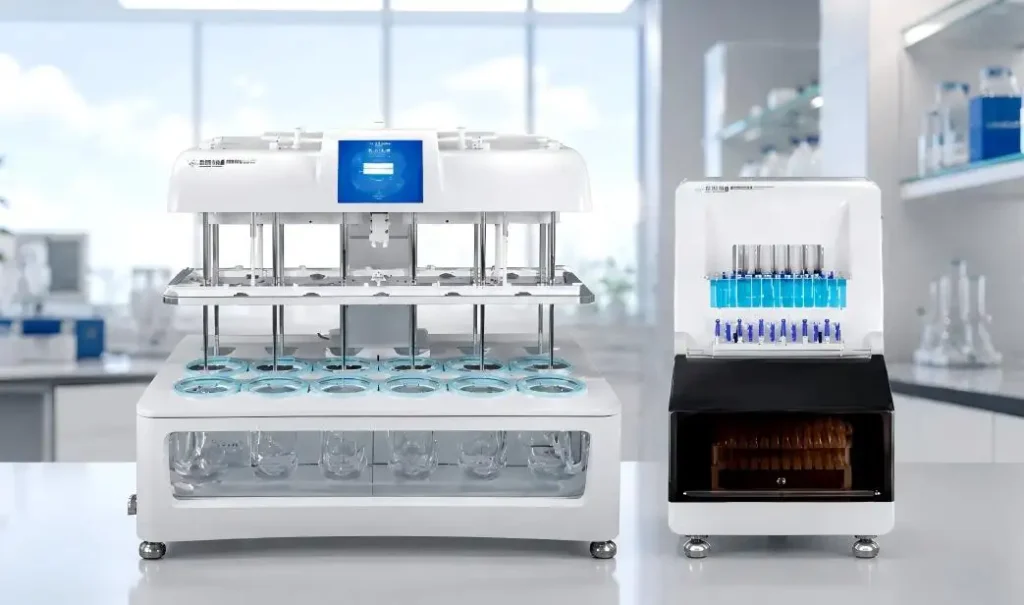
An Automated Dissolution Sampling System must deliver samples that represent the intended dissolution timepoint. Starting a pump on schedule is only one part of that requirement. Withdrawal duration, liquid-path volume, filtration, and residual sample can all influence the concentration ultimately measured.
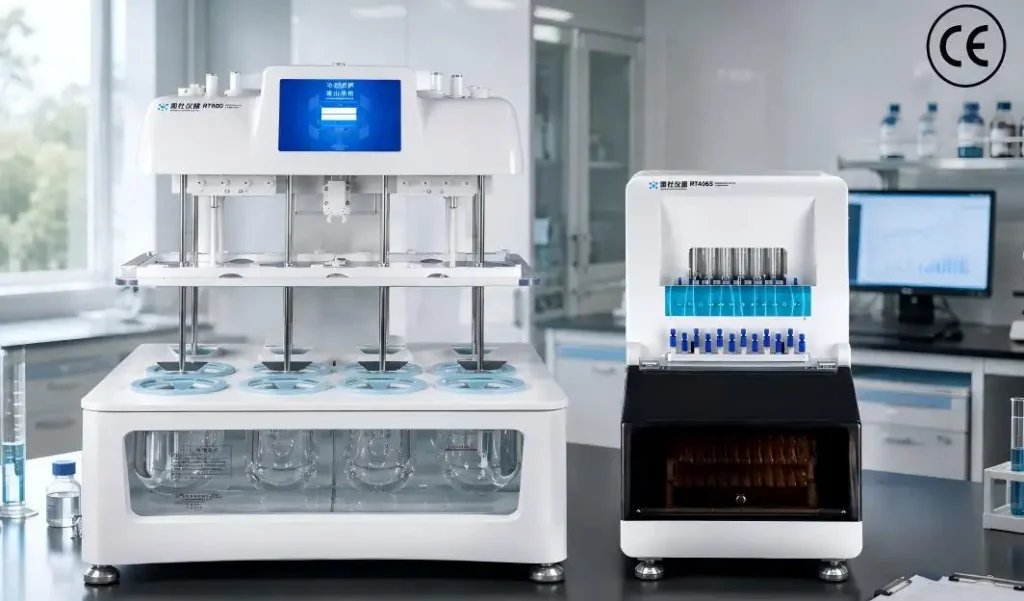
At Raytor, we approach sampling configuration by considering these factors together. For laboratories developing or transferring dissolution methods, the central question is whether the complete sampling pathway preserves both timepoint identity and analyte recovery.
Sampling Accuracy Starts with the Event Definition
An Automated Dissolution Sampling System may record several timestamps. They are not interchangeable.
| Event | What It Represents | What to Verify |
| Programmed event | Software initiates a defined action | Whether that action is flushing, withdrawal, or collection |
| Vessel withdrawal | Liquid leaves the dissolution vessel | Start time, duration, and channel sequence |
| Effective filtration | Undissolved particles are removed | Filter location and prefiltration residence time |
| Collection or detection | Sample reaches its destination | Transport delay and collection window |
A sample withdrawn over an interval represents a flow-weighted average concentration across that interval. During rapid release, even a short interval may matter.
For a small timing offset, the approximate concentration difference is:
ΔC ≈ (dC/dt) × Δt
Here, dC/dt is the local dissolution-profile slope. Consequently, identical timing offsets can produce different concentration errors at early and late timepoints.
Dead Volume: Hold-Up, Dispersion, and Carryover
Flowing Volume Versus Poorly Swept Regions
In an Automated Dissolution Sampling System, "dead volume" commonly refers to the liquid retained in tubing and components. Two mechanisms deserve separate attention:
• Flowing hold-up volume: Creates transport time between withdrawal and collection.
• Poorly swept regions: Retain liquid and can prolong carryover despite flushing.
Tubing, connectors, valves, pump chambers, filter housings, and flow cells contribute differently. Internal mixing also broadens the response to a concentration change.
Transport delay alone does not necessarily alter a filtered, stable sample's concentration. Problems arise when the system assigns the wrong timepoint, mixes samples, loses analyte through adsorption, or permits continued dissolution before filtration.
Bias Depends on the Sampling Sequence
Residual dilute liquid can lower a subsequent result; concentrated residue can elevate it. Adsorption can reduce recovery independently of either effect.
Therefore, an Automated Dissolution Sampling System should be evaluated for timing, displacement, and recovery separately.
Estimating Transport Time
For steady flow:
Transport time ≈ Liquid-path volume ÷ Actual flow rate
A 1.2 mL pathway operating at 6 mL/min gives an estimated transport time of 12 seconds. This is an illustrative calculation, not a Raytor specification.
For straight tubing:
V = πd²L/4
Volume increases with the square of internal diameter, while reducing diameter increases hydraulic resistance. Component volumes must be added separately.
Neither equation captures startup, valve switching, dispersion, or filter loading. Measure actual flow under operating conditions. Do not automatically advance withdrawal by the calculated delay: first establish which liquid fraction the instrument collects and how its software defines sampling.
Optimizing an Automated Dissolution Sampling System
| Adjustment | Intended Benefit | Associated Risk | Verification |
| Shorter tubing | Less hold-up | Restricted installation access | Installed pathway volume |
| Smaller bore | Less internal volume | Backpressure or blockage | Flow under representative conditions |
| Higher flow | Shorter transport | Filter-pressure limitations | Delivered volume and recovery |
| More flushing | Better displacement | Media loss and longer cycles | Blank response and volume balance |
| Low-adsorption materials | Better recovery | Compound-specific interactions | Recovery across the concentration range |
| Different filtration | Effective particle removal | Adsorption or clogging | Recovery and filtration time |
A fixed number of "line volumes" is not a universal flushing rule. Determine the required displacement experimentally.
For multichannel systems, distinguish simultaneous withdrawal from sequential processing. Verify channel timing and delivered volume individually.
Filtration and Volume Balance
Control the Prefiltration Interval
Particles will continue to dissolve after being withdrawn and before becoming effectively filtered. Look at the position of the filter, residence time, membrane compatibility, and discard volume. A reproducible delay can still create systematic bias.
Account for Every Withdrawal
An Automated Dissolution Sampling System may remove more medium than the final vial contains. Include relevant flush-to-waste and discarded fractions in the volume balance.
When the volume of the vessel is constant and the drug-free replacements are equal, the cumulative mass of the dissolved drug can be calculated as:
Mn = CnV0 + ∑CiVi.
This equation is based on the assumption that the sample is fully mixed and that the representative concentrations are attained. The equations provided below can be used for irregular withdrawals, no replacements, and other fluid systems.
Method Specific Verification
The following requirements for verification of each of the above mentioned criteria call for product specific studies:
• Timing: Withdrawals and collections must be assigned separate time references.
• Displacement: Characterize arrival and washout with a concentration-step experiment.
• Carryover: A blank will follow a concentrated solution if this is done in the intended order.
• Recovery: Low early time concentrates should be evaluated, as well as filters and tubing.
• Comparability: Manual and automated results should be compared for the same withdrawal and filtration conditions.
• Stability: The limit for the longest intended storage time should be assessed.
Acceptance criteria should be defined prior to the tests. The criterion was defined based on the automation of dissolution.
Raytor Design Options
Our dissolution product range provides several relevant configurations:
| Model | Published Features | Method-Development Focus |
| RT600-ST | Anti-adsorption tubing, high-precision sampling, filtration options, optional online dilution | Recovery and sample preparation |
| RT612-ST | Pressure-resistant tubing, corrosion-resistant needles, flexible sampling parameters | Medium compatibility and sequence settings |
| RT614-ST | Sampling pipeline, automatic online filtration and collection | Integrated sampling workflow |
These features support configuration choices; actual delay, carryover, and recovery require method-specific verification.
For an Automated Dissolution Sampling System matched to your workflow, explore Raytor's dissolution solutions. Discussing your medium, concentration range, sampling intervals, and analytical method with our team provides a practical starting point for configuration and verification.
FAQs
Q1. Which Raytor models should laboratories consider for automated dissolution sampling?
Raytor offers the RT600-ST, RT612-ST, and RT614-ST automated dissolution systems. Selection should consider vessel requirements, sampling schedules, filtration needs, and downstream analysis. Their published features are listed on Raytor's dissolution product page.
Q2. How should laboratories verify sampling time accuracy on a Raytor system?
Confirm what the programmed timestamp represents, then compare it with actual vessel withdrawal and sample collection. Evaluate withdrawal duration and channel sequencing under the intended method, especially when early sampling intervals are short.
Q3. Does Raytor publish a universal dead-volume specification for its systems?
The referenced product page does not state a universal dead-volume value. Ask Raytor for the liquid-path volume of the proposed configuration, including tubing, valves, and filters, then verify transport and displacement experimentally.
Q4. What makes the Raytor RT600-ST relevant to low-concentration samples?
The RT600-ST includes anti-adsorption tubing and filtration options. These features are relevant when analyte loss could affect early-timepoint results, although recovery should still be tested with the actual drug, medium, and concentration range.
Q5. Can a Raytor Automated Dissolution Sampling System filter samples automatically?
Raytor lists automatic online filtration for the RT614-ST and filtration solutions for the RT600-ST. Confirm the filter configuration for the selected model and validate membrane compatibility, adsorption, discard volume, and filtration time.