





Automated Transdermal Diffusion System: Key to Reliable BE Studies
2026-06-25


Introduction
Bringing a generic topical product to market—such as a cream, gel, ointment, or patch—requires proving it is bioequivalent (BE) to the reference listed drug. Unlike oral tablets, topical formulations act locally on or within the skin. Measuring drug levels in plasma often fails to reflect local bioavailability. This is why regulatory agencies like the FDA and EMA increasingly accept In Vitro Permeation Testing (IVPT) using Franz diffusion cells as a reliable BE method.
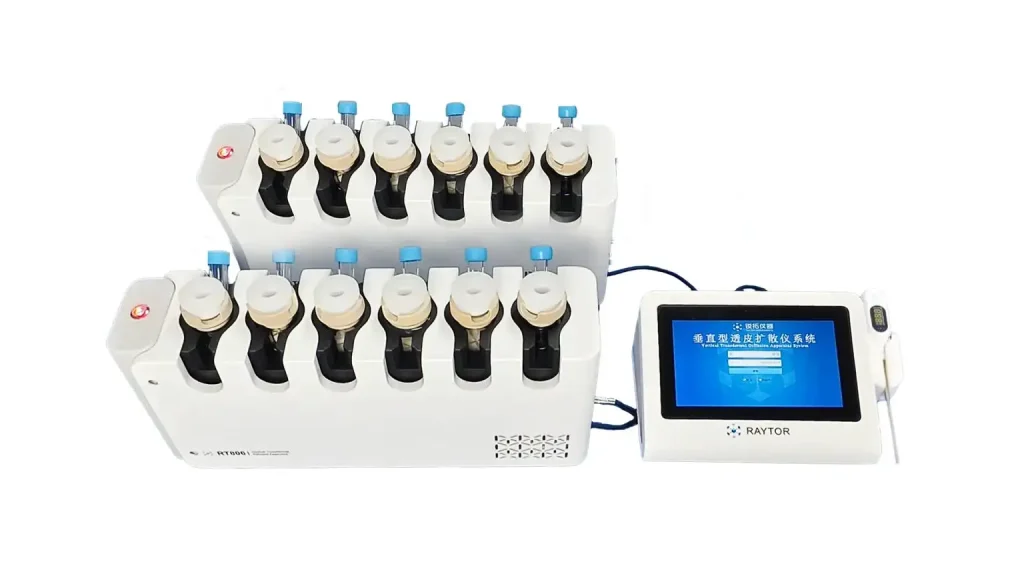
However, manual Franz cell systems introduce significant variability and are labor-intensive. The solution? An Automated Transdermal Diffusion System. This article explores how automation transforms BE studies for topical generics, compares manual vs. automated workflows, and highlights why the RT806 Vertical Franz Diffusion Cell Tester from RAYTOR is an excellent entry-point for laboratories ready to modernise.
Why Bioequivalence Studies for Topical Generics Need Automation
Traditional BE studies for semi-solid products rely on manual sampling from each Franz cell at multiple time points (e.g., 1, 2, 4, 6, 8, 12, 24 hours). With six or more cells, this becomes a tedious, error-prone process.
An Automated Transdermal Diffusion System eliminates these issues by:
• Synchronised sampling – All cells are sampled at exactly the same time, eliminating timing bias.
• Automated volume control – Each withdrawal is precise (±1%) and automatically replaced with fresh receptor medium to maintain sink conditions.
• Around-the-Clock Functioning: Time points are run overnight with no need for overnight staff.
• Less Human Error: No more labelling, pipetting or recording mistakes
• Most Important: Reproducibility is essential to the success of a BE study. An Automated Transdermal Diffusion System delivers the consistency that manual methods simply cannot match.
Industry Comparisons: Manual vs. Automated Systems
To understand the impact of automation, let's compare three common setups:
| Feature | Manual Franz Cell | Semi-Automated System | Automated Transdermal Diffusion System |
| Sampling | Operator-dependent, variable timing | Assisted pipetting, still manual | Fully programmable, synchronized |
| Sample volume accuracy | ±5–10% | ±2–5% | ≤±1% |
| Data integrity | Paper logs, high transcription risk | Basic electronic records | 21 CFR Part 11 compliant audit trail |
| Throughput (24h study) | Requires two staff, high fatigue | One staff, moderate workload | Unattended; staff sets up once |
| Bubble management | Visual check, risky | Limited automation | Integrated bubble prevention |
Horizontal comparison across brands: Many suppliers offer stand-alone diffusion cells, but few integrate full automation with temperature, stirring, sampling, and compliance software into a single validated platform. An Automated Transdermal Diffusion System from a specialised manufacturer reduces inter-laboratory variability—critical when submitting ANDAs to the FDA.
Vertical comparison over time: Five years ago, automated systems were only affordable for large pharma. Today, modular designs allow small CROs and generic developers to start with a compliant manual unit (like RAYTOR's RT806) and later add automated sampling modules—a cost-effective migration path.
How an Automated Transdermal Diffusion System Enhances Regulatory Compliance
Regulators demand robust, traceable data. The FDA's 2022 preliminary instructions for IVPT and the USP <1724> chapter established precise criteria for performance concerning:
• The control of temperature ≤±0.5 °C through all cells,
• The accuracy of the stirring speed ≤±10 %,
• The presence of documented evidence for the bubble-free operation,
An Automated Transdermal Diffusion System provides assistance for the above items through the:
• Continuous logging of temperature and speed.
• Providing electronic records with user-level access and audit trails (21 CFR Part 11 ready).
• Incorporating anti-bubble filling ports – a feature also found in high-quality manual cells like the RT806.
"Without automation, proving the absence of bubbles at every timepoint becomes nearly impossible during a regulatory inspection."
Practical Benefits for Generic Drug Developers
If you are developing a generic acyclovir cream or lidocaine patch, an Automated Transdermal Diffusion System offers tangible advantages:
• Paired design made easy – Test and reference products can be applied to adjacent cells on the same skin section, minimising biological variability.
• High-throughput screening – Some automated systems run up to 24 cells simultaneously, allowing you to test multiple batches or formulations side-by-side.
• Fewer rejected studies – Manual errors cause 15-25% of IVPT studies to fail internal QC. Automation reduces that rate to under 5%.
• Faster time to ANDA submission – Reliable data means fewer repeats, shorter development timelines, and earlier market entry.
RAYTOR's RT806: The Ideal Starting Point for Automated-Ready Laboratories
While fully automated systems represent the gold standard, many laboratories begin with a manual, yet impeccably engineered diffusion apparatus. RAYTOR's RT806 Vertical Franz Diffusion Cell Tester is a perfect example. Although its sampling method is manual, the RT806 shares the same design philosophy and regulatory compliance as advanced automated systems.
Key Features of the RT806:
• Complies with USP <1724> – Performs both in vitro release (IVRT) and permeation (IVPT) studies for creams, ointments, patches, and gels.
• Specialized Filling Point Design - an innovative filling solution that designs an exit for self-venting of encapsulated air to achieve effective results without the need for vacuum degassing.
• Precise temperature & speed management
– Temperature range: room temperature ~55 °C with error ≤±0.5 °C
– Stirring speed: 200–900 rpm, error ≤±10 %
• Portable and flexible – Small footprint, easy to place anywhere. You can connect one or more sets (6 diffusion cells per group) for simultaneous testing.
• User-friendly operation – Available with a touch screen or as an extremely simple entry-level system. Even manual operation is convenient, making it ideal for method development.
Why Choose RAYTOR for Your Transdermal Testing Needs?
RAYTOR bridges the gap between manual and automated workflows. The RT806 gives you USP-compliant, bubble-free Franz cells today. When your sample volume grows, you can upgrade to a fully Automated Transdermal Diffusion System using the same cell platform—protecting your investment.
Included in the package:
• Compliant Franz cells
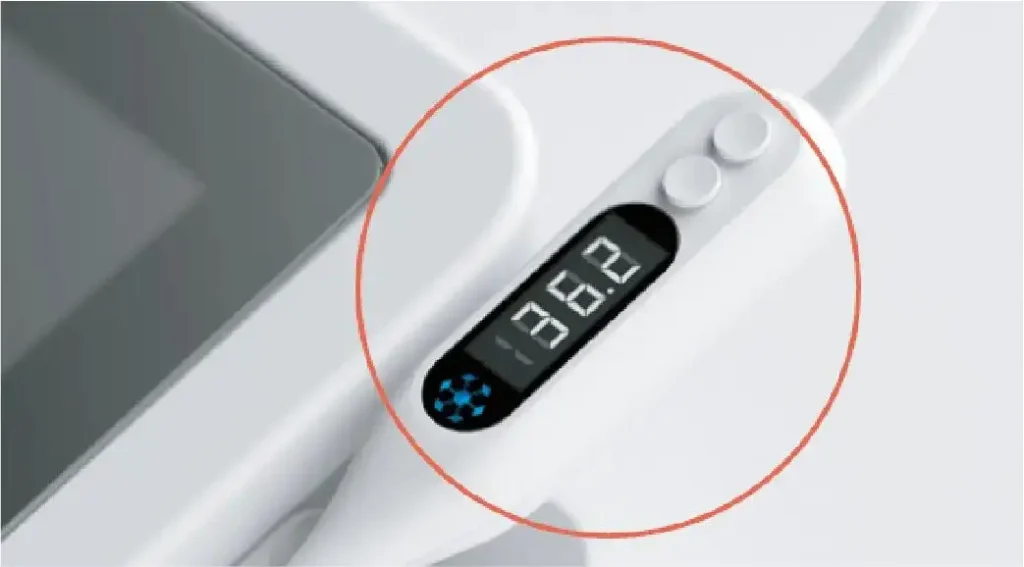
• Handheld thermometer for real-time temperature verification
• Flexible experimental configuration
• Downloadable product brochure and specification sheet
Conclusion
Automation is no longer a luxury—it is a necessity for credible, efficient bioequivalence studies of topical generic formulations. An Automated Transdermal Diffusion System reduces variability, ensures regulatory compliance, and accelerates product approval. For laboratories seeking a reliable, budget-friendly start, RAYTOR's RT806 Vertical Franz Diffusion Cell Tester delivers USP <1724>-compliant performance with proven bubble prevention. Upgrade to automation step by step, or dive in directly—RAYTOR supports your journey.
Make your transdermal testing dependable from day one.
FAQs
Q1: How many diffusion cells do I need for a topical BE study?
A: At least 6 cells per group, but 12–14 are common. Using more cells allows you to test reference and test products on the same skin block (paired design), reducing biological variability.
Q2: What does bubble formation indicate in Franz cells and bubble formation in Franz cells is a problem because?
A: Bubbles are caused, during the filling process, or caused due to the change in temperature. These bubbles obstruct the pathways of drug diffusion and lead to a declining rate of diffusion and a failed BE study.
Q3: Does the RT806 meet USP <1724> requirements?
Yes. The RT806 Vertical Franz Diffusion Cell Tester is compliant with USP <1724>, and the IVRT and IVPT requirements with temperature variations of ≤±0.5 °C, and flow rate variations of ≤±10%.
Q4: What receptor medium is appropriate for a lipophilic drug?
A: To avoid sink conditions, PBS with an intravenous solubility enhancer, e.g., albumin, PEG or cyclodextrin, is suggested.
Q5: Can I test patches and creams on the same Franz cell system?
A: Absolutely. The RT806 and similar systems are designed to evaluate all semi-solid preparations: creams, gels, ointments, patches, and lotions.