






In Vitro Permeation Testing System: Why Independent Lines Are Safer
2026-06-24


When developing semi-solid drugs (creams, ointments, gels) or transdermal patches, In Vitro Permeation Testing System (IVPT) is the gold standard for predicting how active ingredients pass through skin. But even the most sophisticated Franz cell setup can fail if one hidden risk is ignored: cross-contamination.
In regulated environments (USP <1724>, EP 2.9.4), a single contaminated sample can ruin a whole batch, trigger an FDA Form 483, or waste months of formulation work. The main culprit? Shared sampling lines – often implemented with multiport valves.
This article compares dedicated independent pipelines versus multiport valve systems from the perspective of contamination control, data integrity, and long-term reliability in automated transdermal diffusion systems.
The Hidden Risk in Automated IVPT: Shared Paths = Shared Drugs
Most automated In Vitro Permeation Testing Systems use either:
• Multiport valve assemblies – one pump plus a rotating valve that sequentially connects different diffusion cells to a common fluid path.
• Dedicated independent lines – each diffusion cell has its own pump and tubing, completely isolated from others.
The difference sounds small, but the contamination consequences are huge.
How Cross-Contamination Happens with Multiport Valves
In a multiport design, the same internal channels and tubing are used to sample cell 1, then cell 2, then cell 3… even after rinsing. Residual drug molecules (especially potent APIs like hormones, steroids, or cytotoxic compounds) can:
• Adsorb to the valve rotor and seals
• Remain in microscopic dead volumes
• Be carried over into the next cell's sample
Result: False positive peaks in HPLC, skewed permeation profiles, and rejected batches.
Dedicated Independent Pipelines: The Zero-Carryover Solution
A truly reliable In Vitro Permeation Testing System eliminates shared paths entirely. With dedicated lines, every Franz cell has:
• Its own sampling pump
• Its own tubing set
• No connection to other cells at any point
Why This Matters for Data Integrity (ALCOA+)
Under 21 CFR Part 11 and GLP requirements, every measurement must be attributable, legible, contemporaneous, original, and accurate. Shared lines introduce uncertainty:
| Feature | Multiport Valve System | Dedicated Independent Lines |
| Physical isolation between cells | No – common fluid path | Yes – each cell isolated |
| Residual drug transfer risk | High (valve dead volume) | Zero |
| Cleaning validation complexity | Very high (entire valve assembly) | Low (per-line replacement) |
| Sample-to-sample time variation | Sequential, can drift | Parallel, consistent |
Real-World Consequences: A Cautionary Tale
A CRO once tested a low-dose estradiol patch using a multiport-valve-based In Vitro Permeation Testing System. After sampling cell 1 (high concentration), the next cell (placebo) showed detectable estradiol – even after three wash cycles.
The investigation traced the contamination to the rotary valve's stator surface. The CRO had to repeat 14 days of work. After switching to a dedicated-line system, the problem disappeared.
Lesson: In percutaneous absorption studies, carryover of even 0.01% API can ruin sink condition calculations and lag time measurements.
Beyond Contamination: Other Advantages of Independent Pipelines
1. Simplified Cleaning Validation
With dedicated lines, you either clean each line separately or replace disposable tubing. Validation is straightforward: run a blank, analyze for residuals. For multiport valves, you must validate every port and every valve position – a combinatorial nightmare.
2. No Sampling Order Bias
Multiport systems sample cells sequentially. Cell 1 is sampled earlier than cell 12, introducing time skew. If sampling all cells is the goal, independent lines can gather samples in any order or all at the same time and will not introduce bias.
3. Better Support for Partial Versus Full Sampling
Independent lines allow flexible sampling volumes (1–10 mL, partial or full) without cross-contamination. Multiport systems often require longer flush cycles between full-sampling events.
Industry Standards Mandate Contamination Control
• USP <1724> Performance Tests for Semisolid Drug Products requires that the testing apparatus "does not introduce extraneous material" and that "sampling does not affect the integrity of the test."
• EP 9.0 <2.9.4> Dissolution test for transdermal patches similarly demands that the medium be sampled without altering the system.
Interpretation: A design that risks carryover (multiport valves) can be argued as non-compliant, especially under scrutiny from regulators.
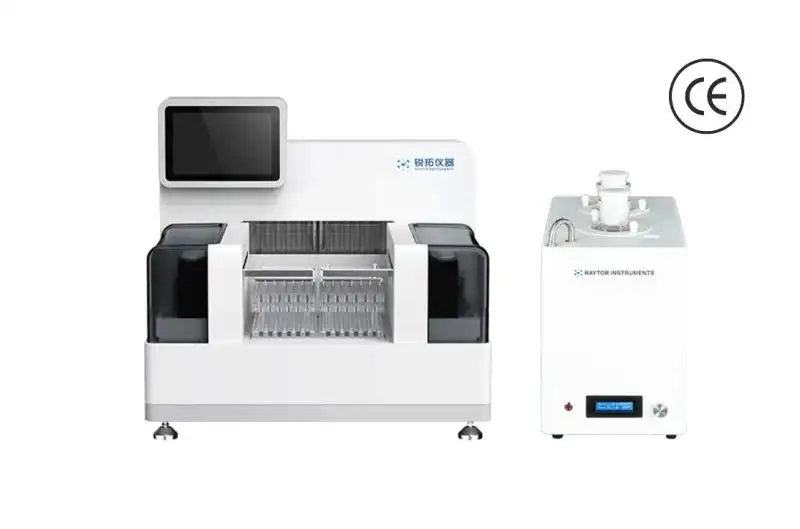
The Raytor Solution: RT814 Automated Transdermal Diffusion System
When designing a truly robust In Vitro Permeation Testing System, Raytor chose dedicated independent pipelines from the ground up. The RT814 Automated Transdermal Diffusion System takes cross-contamination control to the next level.
Key Design Advantages for Contamination Prevention:
• Separate pipeline design – Each of the 14 diffusion cells has its own dedicated pump and tubing. No shared valves, no dead volumes.
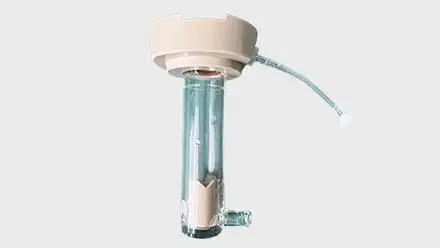
• Integrated glass diffusion cell structure – One-piece design eliminates leakage paths where contaminants could hide.
• Two independent groups (7×2) – Two sets of 7 cells run side by side without any fluid connection. You can test active drug in one group and placebo in the other simultaneously – zero risk of carryover.
• Automatic bubble removal – The mechanical structure tilts the cells and exhausts bubbles in real time, preventing air pockets that trap contaminants.
More Than Just Contamination Control
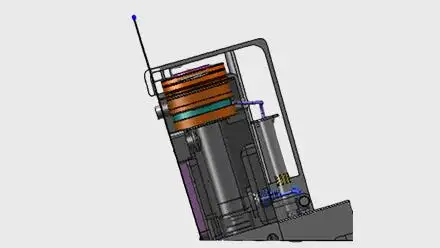
The RT814 is a fully automated 14-position Franz cell system designed to make scientific experiments easier while meeting global pharmacopoeia standards:
�� USP <1724> and EP 9.0 <2.9.4> compliant
�� Dry heating (room temp to 50°C, ±0.5°C accuracy) – no water bath contamination
�� Flexible sampling – partial or full (1–10 mL, up to 24 time points)
�� Independent temperature control for all cells
�� Real-time monitoring and recording for audit trails
Why Laboratories Worldwide Choose Raytor
Raytor understands that transdermal scientists need reproducibility, compliance, and ease-of-use. The RT814 eliminates the three biggest headaches of traditional Franz cell systems:
• Cross-contamination (dedicated lines)
• Bubble interference (automatic tilt & exhaust)
• Leakage (integrated glass structure)
"Make scientific experiments easier" – that's our promise.
Conclusion: Don't Let Shared Lines Compromise Your IVPT Data
In regulated pharmaceutical development, every permeation profile matters. Multiport valve systems may save a few dollars upfront, but the risk of cross-contamination – and the cost of repeating studies – is simply not worth it.
For laboratories running creams, ointments, patches, or gels, dedicated independent pipelines are the only defensible choice for an In Vitro Permeation Testing System.
Choose Raytor RT814. Clean data. Clean compliance. Clean conscience.
About Raytor
Raytor Technology specializes in automated transdermal diffusion systems that combine innovation with modular design. Our RT814 is trusted by QC labs and R&D centers worldwide to deliver accurate, reproducible, and compliant permeation data.
�� Phone: +86 (20) 3160 8901
✉️ Email: sales@raytor.com
�� Address: Youchegang Town, Xiuzhou District, Jiaxing, Zhejiang, China
Visit our website to download the RT814 product brochure and request a demo.
FAQs
Q1: Can a multiport valve system ever be completely free of cross-contamination?
A: No – dead volumes and rotor seals always retain trace drug residues, even after rigorous flushing.
Q2: Does USP <1724> require dedicated sampling lines?
A: Not explicitly, but it demands no carryover – which is nearly impossible with shared fluid paths.
Q3: How often should I replace tubing in a dedicated-line IVPT system?
A: Per good practice, after each study or when switching between incompatible APIs to guarantee zero carryover.
Q4: Can the Raytor RT814 handle both full and partial sampling without contamination?
A: Yes – each of the 14 cells has its own pump and lines, so any sampling volume is contamination-free.
Q5: Is dry heating better for cross-contamination control than water baths?
A: Yes – water baths can grow microbes or carry contaminants between cells; dry heating (RT814) eliminates that risk.