

Brazil Pharmaceutical Equipment Supplier: China Manufacturer vs. Local Distributor
2026-08-27


Selecting a Brazil Pharmaceutical Equipment Supplier is not simply a choice between importing equipment from China and purchasing through a Brazilian distributor. For pharmaceutical QC and R&D laboratories, the more important question is whether the supplier can support the required pharmacopoeial method, qualification strategy, analytical workload, maintenance program, and data-integrity controls.
This is particularly relevant after the 8th edition of the Brazilian Pharmacopoeia entered into force on July 1, 2026. For laboratories updating methods or equipment, country of origin should therefore be only one part of supplier qualification.
China Manufacturer vs. Local Distributor: What Actually Changes?
A Brazilian distributor can limit on-site risks with quicker Brazilian trips, local comms, and possibly shortened spares lead times. Direct sourcing from a Chinese manufacturer will bring you a lot of engineering support, FAE resources, and troubleshooting at the factory. In addition, direct sourcing will allow you to procure machines that are made to your requirements.
A Brazil Pharmaceutical Equipment Supplier should therefore be evaluated around service proximity versus engineering depth.
| Procurement Factor | China Manufacturer Direct | Local Distributor |
| Engineering access | Direct factory interaction | Depends on distributor expertise |
| Customization | Usually more flexible | Often requires factory coordination |
| Site response | Requires service planning | Usually faster |
| Spare parts | Inventory and lead time must be confirmed | May offer local stock |
| Qualification | Scope must be defined before shipment | Local execution may be easier |
| Cost structure | Factory price + import/service cost | Equipment + local service margin |
Neither model is automatically better. The laboratory must determine where its largest technical and operational risks occur.
Complex Dissolution Methods Need More Than RPM Control
Routine paddle and basket testing largely controls agitation through rotational speed. Complex enteric-coated and modified-release formulations can require changing both the mechanical stress and dissolution medium during a single test.
This is where reciprocating-cylinder technology becomes technically relevant.
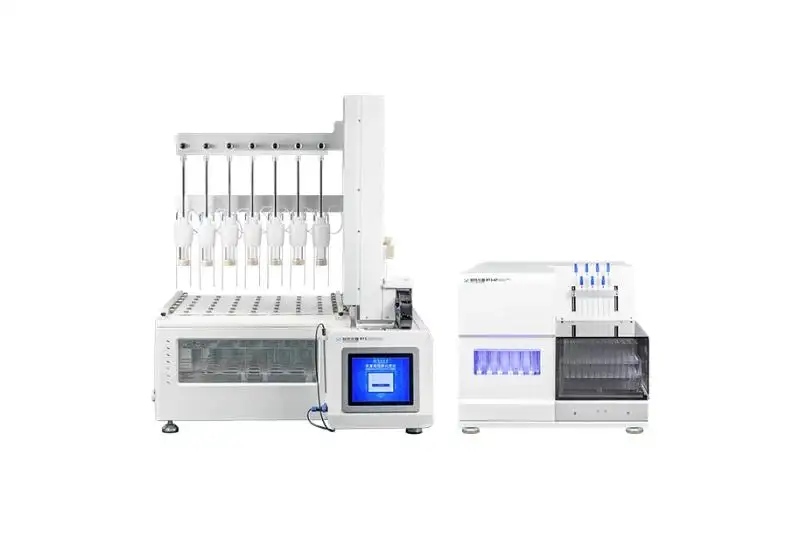
RAYTOR's RT3-AT Reciprocating Cylinder Dissolution System consists of six rows of 6 dissolution vessel positions that handle 7 manipulation cycles. It is possible to change the length of stroke from 2 to 10 cm with ± 0.1 accuracy. The reciprocating rate is adjustable from 4 to 60 DPM with a ± 5% error. The control system operates with a temperature accuracy of ± 0.2 and ensures the temperature differences for all vessels are within ± 0.5.
These parameters interact rather than operate independently:
| Controlled Variable | RAYTOR Published Range | Why It Matters |
| Reciprocating rate | 4–60 DPM | Changes hydrodynamic and mechanical stress |
| Stroke length | 2–10 cm | Alters movement through the medium |
| Temperature accuracy | ≤±0.2°C | Controls solubility and diffusion conditions |
| Vessel temperature difference | ≤±0.5°C | Supports position-to-position consistency |
| System level | ≤0.3° | Protects mechanical alignment |
| Sampling precision | ≤±1% | Reduces aliquot-volume variation |
Unlike a simple speed specification, the combination of stroke, frequency, medium composition, immersion time, and drainage time determines the actual release environment.
Why pH Transition Matters for Modified-Release Products
An enteric-coated formulation should not be assessed under a single medium if the registered method requires sequential gastrointestinal conditions.
RAYTOR offers an RT3 application sequence progressing through pH 1.2, 4.5, 5.8, and 6.8 media, demonstrating how one system can reproduce changing gastrointestinal environments during an extended dissolution profile.
This can be useful when evaluating:
•Enteric-coated tablets;
•Extended-release dosage forms;
•Soft capsules;
•Orally disintegrating tablets;
•Functional gummy formulations.
The lesson for a Brazil Pharmaceutical Equipment Supplier is important: apparatus selection should follow the dosage form and registered method—not whichever instrument has the highest specification.
Automation Should Solve a Measurable Laboratory Problem
Automated sampling becomes useful when repetitive manual operations introduce timing variation or excessive analyst workload.
RAYTOR's RT3-AT supports up to 30 programmable sampling events, 1–10 mL sampling volumes, and sampling precision of ≤±1%. A PTFE pipeline, pre-pump filtration, optional secondary filtration, and automated vessel covers are designed to address adsorption, filtration, and medium evaporation during longer tests.
However, automated sampling still requires verification of:
•Analyte adsorption to tubing;
•Filter recovery;
•Carryover;
•Replacement-medium calculations;
•Sampling-volume accuracy.
Automation reduces repetitive handling; it does not eliminate method validation.
Paddle, Reciprocating Cylinder or Flow-Through Cell?
A technically competent Brazil Pharmaceutical Equipment Supplier should distinguish between dissolution principles rather than promote one platform for every formulation.
| Test Approach | Better Suited To | Key Controlled Variable |
| Basket/Paddle | Routine tablets and capsules | Rotational speed |
| Reciprocating Cylinder | Enteric and modified-release products | Stroke, DPM, medium transition |
| Flow-Through Cell | Poorly soluble and complex formulations | Medium flow rate |
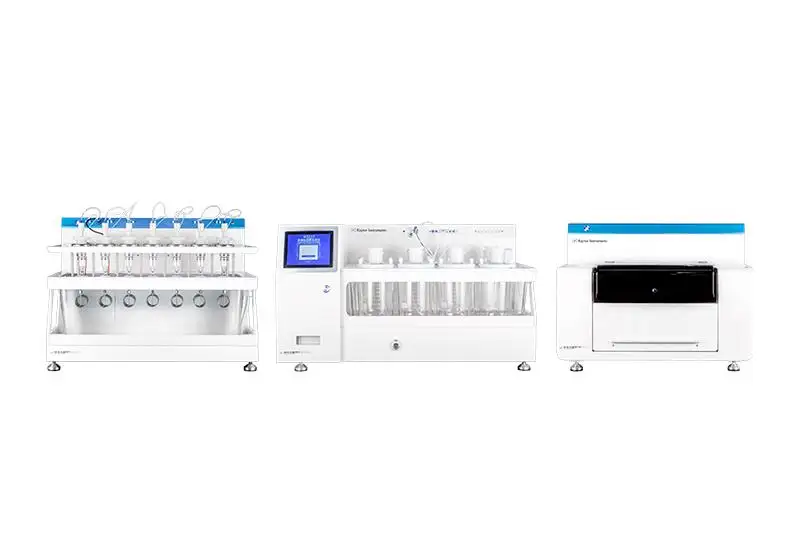
For example, RAYTOR's RT700 flow-through platform provides seven channels, a 1–38 mL/min flow range, temperature-control error below ±0.2°C, and both open- and closed-loop operation.
The correct decision sequence is:
Dosage Form → Registered Method → Apparatus → Sampling Strategy → Automation Level
Imported Equipment Must Remain Maintainable in Brazil
The URS should be completed before requesting the final quotation. Brazilian laboratories should define:
•Electrical and installation requirements;
•IQ/OQ/PQ responsibilities;
•Calibration strategy;
•Software permissions and audit trails;
•Operator training;
•Preventive maintenance;
•Critical spare parts;
•Remote versus on-site support.
This is where a local distributor can add genuine value. However, for unusual methods, customized cells, automation logic, or troubleshooting involving instrument design, direct access to the manufacturer may shorten the engineering communication chain.
Qualification Is More Important Than a Compliance Label
A supplier should not simply claim that equipment is "ANVISA certified". Pharmaceutical compliance depends on the complete laboratory system:
Instrument + Qualification + Calibration + Method + SOP + Data Controls + Trained Users
RAYTOR's RT3 platform uses an 8.4-inch touchscreen operating system with user-access control, audit-trail and electronic-record functions intended to support data-integrity requirements, including workflows associated with 21 CFR Part 11.
For Brazilian laboratories, such functionality should still be assessed against their own quality system and applicable ANVISA requirements.
Compare Lifecycle Cost Before Choosing a Brazil Pharmaceutical Equipment Supplier
Purchase price alone gives an incomplete comparison.
TCO = Equipment + Import + Installation + Qualification + Calibration + Consumables + Spare Parts + Service + Downtime
Direct purchasing from RAYTOR may be attractive when a Brazilian laboratory needs manufacturer-level engineering, specialized dissolution configurations, automated sampling, or complex apparatus such as reciprocating-cylinder and flow-through systems. A qualified local distributor may provide greater value where frequent on-site service and locally stocked parts dominate the operational risk.
For companies evaluating a Brazil Pharmaceutical Equipment Supplier, the strongest RFQ should therefore begin with the dosage form, pharmacopoeial method, medium-change sequence, throughput, sampling plan, qualification documents, and maintenance expectations. RAYTOR can then be evaluated against those requirements as a China-based pharmaceutical equipment manufacturer—not merely compared on equipment price.
FAQs
Q1. Does Raytor offer automated pharmaceutical dissolution testing?
Automated dissolution and sampling systems can be developed to control sampling volume and time, perform filtration and other tasks, and automate routine lab operations with as little analyst involvement as possible.
Q2. Which pharmaceutical equipment does Raytor offer for installation in Brazilian QC laboratories?
Raytor offers conventional dissolution testers, reciprocating cylinder dissolution systems, automatic sampling platforms, transdermal diffusion systems, suitable pharmaceutical analytical systems, and dissolution systems based on the USP Apparatus 4 design.
Q3. Would equipment offered by Raytor be suitable for Brazilian Pharmacopoeia testing?
Raytor's equipment can be evaluated for the Brazilian Pharmacopoeia. Equipment would need to be evaluated against the requirements of the apparatus, temperature, agitation, sampling, and qualification criteria for the analytical method.
Q4. Does Raytor manufacture equipment for USP Apparatus 3?
Yes, Raytor manufactures reciprocating cylinder dissolution systems based on USP Apparatus 3. These systems have programmable reciprocating rates and stroke adjustments, automated samplings, changes of medium, temperature adjustments, and can be programmed to perform a variety of sampling functions.
Q5. Does Raytor offer a USP Apparatus 4 dissolution system?
Yes, Raytor manufactures flow-through cell dissolution systems for complex, multiple independent, open- and closed-loop, and temperature-controlled automated sampling challenges.