

How an ISO9001 Certified Manufacturer Supports Pharmaceutical Supplier Qualification
2026-08-25


For pharmaceutical QC laboratories, supplier qualification is not completed by checking whether a manufacturer holds an ISO certificate. Laboratory instruments directly affect analytical data, and small deviations in speed, temperature, mechanical geometry, sampling volume, or software control can change the reliability of a test.
An ISO9001 Certified Manufacturer provides a structured quality-management framework, but pharmaceutical buyers still need evidence that the quality system reaches the actual instrument: design specifications, component inspection, calibration, final testing, change control, qualification documentation, and lifecycle service.
This is especially important for dissolution and automated pharmaceutical testing, where several controlled variables act on the same analytical result.
ISO 9001 Is the Entry Point, Not the Final Qualification
ISO 9001 helps establish controlled processes for documentation, responsibilities, nonconformance, corrective action, risk management, and continual improvement. For a pharmaceutical buyer, however, an ISO9001 Certified Manufacturer should be evaluated at three levels:
• QMS level: Is the certificate valid and does its scope cover the relevant manufacturing activity?
• Production level: Are critical components, assembly steps, measuring devices, and final inspection controlled?
• Instrument level: Can the manufacturer prove that the delivered equipment meets defined acceptance limits?
This distinction prevents a common procurement error: treating quality-system certification as product-performance certification.
Raytor's quality controls extend from product design through final inspection and that comprehensive testing is applied to finished laboratory instruments. Its manufacturing structure also incorporates 6S production management, while its technical organization includes an independent pharmaceutical analytical-instrument R&D platform and application experiment center.
Production Control Must Be Visible in Instrument Performance
The strongest evidence from an ISO9001 Certified Manufacturer is not a certificate on a wall but measurable control of critical-to-quality parameters.
Consider dissolution testing. Rotational speed affects agitation, but RPM accuracy alone cannot guarantee consistent hydrodynamics. Shaft alignment, vessel centering, paddle or basket depth, wobble, levelness, and temperature also influence the fluid field surrounding the dosage form.
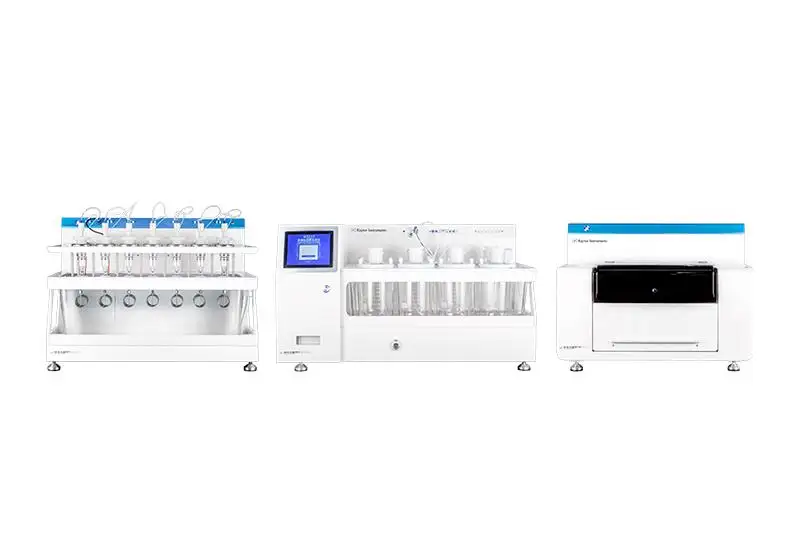
Raytor's RT612 Dissolution Tester illustrates how multiple controlled variables interact to support consistent dissolution testing performance.
| Controlled Variable | RT612 Performance | Why It Matters in Qualification |
| Rotational range | 0–300 rpm | Supports different dissolution methods |
| Speed resolution | 0.01 rpm | Enables fine setpoint adjustment |
| Steady-speed error | ≤±0.3 rpm | Limits hydrodynamic drift during the run |
| Temperature accuracy | ≤±0.2°C | Reduces temperature-driven dissolution variation |
| System levelness | <0.5° | Protects vessel/shaft geometry |
| Vessel verticality | 90°±0.5° | Helps maintain symmetric flow |
| Shaft verticality | 90°±0.5° | Maintains consistent stirring-axis geometry |
| Centering deviation | <±2.0 mm | Reduces vessel-to-vessel hydrodynamic differences |
| Depth-positioning deviation | <±1.0 mm | Maintains repeatable paddle/basket positioning |
| Shaft wobble | <±1.0 mm | Limits rotational instability |
| Basket wobble | <±1.0 mm | Helps maintain repeatable basket motion |
These figures should not be treated as isolated specifications. In the RT612 Dissolution Tester, system levelness affects vessel and shaft alignment; verticality and centering determine stirring geometry; depth positioning controls the location of the paddle or basket within the vessel; and shaft or basket wobble can disturb the hydrodynamic field. Combined with ≤±0.3 rpm steady-speed error and ≤±0.2°C temperature accuracy, these mechanical controls help reduce instrument-related variation between dissolution runs.
That relationship is what a pharmaceutical supplier audit should investigate.
Resolution Is Not the Same as Accuracy
A 0.01 rpm or 0.01°C display increment indicates resolution, not equivalent operating accuracy.
For example, Raytor publishes temperature resolution of 0.01°C while temperature accuracy is specified at ≤±0.2°C. Likewise, speed resolution is 0.01 rpm while steady-speed error is ≤±0.3 rpm.
An experienced procurement team should therefore ask:
• What parameter is actually calibrated?
• What reference instrument is used?
• What are the acceptance limits?
• Is the result recorded per instrument?
• How frequently is factory measuring equipment recalibrated?
These questions convert an ISO9001 Certified Manufacturer claim into auditable evidence.
Automated Systems Require a Deeper Supplier Review
Adding automatic sampling increases the qualification burden because mechanical performance is no longer the only risk.
Sampling accuracy depends on a chain of variables:
Sampling Time → Pump Delivery → Tubing Volume → Filtration → Sample Recovery → Medium Replacement
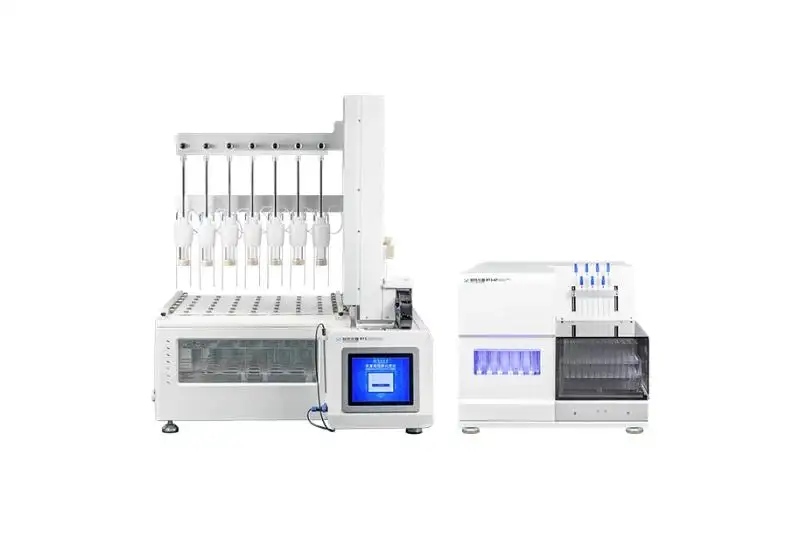
Raytor's automated sampling configurations with a 1–20 mL sampling range and sampling precision ≤±1%. Its systems also use non-resident sampling needles and controlled sampling positioning to reduce disturbance of the dissolution medium.
For an ISO9001 Certified Manufacturer, procurement should therefore evaluate not only whether the pump meets ±1%, but whether that performance remains controlled across tubing, filters, repeated sampling points, and maintenance cycles.
Manual vs. Automated Qualification
| Manual Dissolution System | Automated Dissolution System |
| Speed stability | Speed stability |
| Temperature control | Temperature control |
| Mechanical alignment | Mechanical alignment |
| Paddle/basket position | Sampling timing |
| Calibration | Pump accuracy |
| Operator technique | Carryover and filtration |
| — | Software/version control |
| — | Data access and audit trail |
Automation reduces some operator-dependent variation but introduces new controlled functions that must be qualified.
FAT, IQ and OQ Answer Different Questions
Another common mistake is accepting a factory test report as complete qualification.
• Factory inspection confirms that manufacturing specifications were met.
• FAT verifies the configured system before shipment against agreed acceptance criteria.
• SAT checks whether transport and installation affected performance.
• IQ confirms correct installation and documented configuration.
• OQ challenges operation across specified ranges.
• PQ demonstrates performance under the user's actual analytical method.
An ISO9001 Certified Manufacturer can provide valuable documentation and technical support, but the pharmaceutical laboratory remains responsible for determining whether the installed system is suitable for its intended use.
Qualification Continues Through the Instrument Lifecycle
Supplier qualification should extend beyond delivery. Motors, sensors, sampling pumps, tubing, filters, firmware, and software may change during years of operation.
A robust lifecycle therefore follows:
Installation → Calibration → Preventive Maintenance → Performance Verification → Change Assessment → Requalification When Required
This is why change control and service capability should be evaluated during procurement rather than after a problem appears.
Raytor's product portfolio spans pharmaceutical dissolution, transdermal diffusion, pharmaceutical physicochemical analysis, and laboratory automation, supported by more than 50 researchers and engineers according to its published company profile. Such resources are relevant to supplier qualification when they support controlled design, technical documentation, troubleshooting, and application-specific evaluation.
Making the Final Supplier Qualification Decision
Before approving an ISO9001 Certified Manufacturer, pharmaceutical QA and procurement teams should be able to connect four layers of evidence:
Quality Management System
→ Controlled design and production
Technical Specifications
→ Measurable instrument acceptance limits
Qualification Documentation
→ FAT, calibration, IQ/OQ and supporting records
Lifecycle Control
→ Maintenance, change management, service and requalification
ISO 9001 therefore should not be treated as the end of supplier qualification. Its real value is demonstrated when the manufacturer's quality system produces repeatable, traceable, and technically defensible equipment performance.
For pharmaceutical laboratories assessing dissolution or automated analytical systems, Raytor provides published performance data together with ISO 9001 quality management, production inspection, precision testing, R&D, and application-support capabilities. Buyers can use these documents as the starting evidence for their own URS, technical audit, and supplier-qualification process, and contact Raytor at www.raytor.com for project-specific specifications and qualification support.
FAQs
Q1. Does Raytor support FAT, IQ and OQ activities?
Raytor is able to provide technical and qualification related documentation pertaining to applicable systems. Buyers should confirm the required FAT, IQ, OQ, calibration and acceptance documents package for their project prior to placing a purchase order.
Q2. How does Raytor support Pharmaceutical supplier qualification?
Raytor provides documented product specifications, production inspection, precision testing, technical documentation and application support for supplier evaluation. This can be used by Pharmaceutical buyers in conjunction with their own supplier qualification processes and URS (User Requirement Specification) requirements.
Q3. Which pharmaceutical lab instruments does Raytor manufacture?
Raytor manufactures analytical instruments for pharmaceutical applications to include dissolution, automated dissolution systems, transdermal diffusion testing, physico-chemical analysis and lab automation.
Q4. What technical controls exist in Raytor Dissolution testers?
The RT612 Dissolution Tester operates in a range of 0 to 300 rpm with a resolution of 0.01 rpm, a steady-speed error of ±0.3 rpm, and a temperature stability of ±0.2°C. Mechanical controls also include vertical, horizontal, depth and wobble.
Q5. Why are the mechanical specifications important when qualifying Raytor dissolution equipment?
Dissolution rates and test repeatability are a function of several factors beyond rotational speeds. Verticality, centering and wobble of the vessels, depth and temperature of the shaft or basket, and wobble and rotational stability and wobble of the apparatus significantly affect hydrodynamics.