





Automated Dissolution Testing For Enteric Coated Tablets: No More Manual Errors
2026-04-20


Dissolution Testing for Enteric Coated Tablets remains a major bottleneck for QC laboratories because manual media changes and sampling create variability that masks true release profiles.
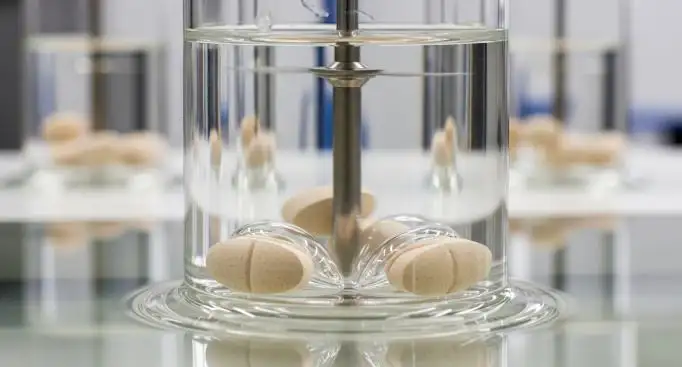
As we look to 2026, with more complex formulations and more fine regulatory hurdles to jump, automation will redefine what reproducibility means. Raytor's RT3-AT Reciprocating Cylinder Dissolution System will boast the first true (cGMP) automated dissolution for enteric coated tablets, and with the ability to change from pH 1.2 to pH 7.5 it will mirror the GIT.
The Benefits of Automated Dissolution Testing for Enteric Coatings
Automated dissolution testing represents the next generation of enteric coated tablet testing. Testing them with traditional basket and paddle methods isn't viable for enteric coated tablets. Manually changing the dissolution media, calibrating probes, and sampling at predetermined intervals introduces numerous risks, with perhaps the most significant risks being manual interventions.
•Inconsistent timing: There could even be a 30-second lag at the most critical pH 7.5 transition, which could drastically misrepresent where the enteric coating begins to rupture.
•Sample adsorption: Standard silicone tubing retains lipophilic compounds, resulting in a release reading that is falsely low.
•Evaporation losses: Open vessels during sampling will change the medium volume and concentration, which is going to change the dissolution rate calculation.
•Operator fatigue: Running a six-vessel, multi-pH protocol across three shifts amplifies transcription errors and missed audit trail entries.
For enteric-coated tablets, which are designed to resist gastric fluid (pH 1.2) and then release rapidly in the intestine (pH 6.8–7.5), these manual errors can mask failures in acid resistance or misjudge the onset of release — leading to failed batches or, worse, a product that underperforms in patients.
The Automated Alternative: Raytor's RT3-AT Reciprocating Cylinder System
Automated dissolution testing for enteric coated tablets eliminates manual interventions by design. The RT3-AT uses USP Apparatus III (the reciprocating cylinder method) with a fully programmable pH sequence: 0–60 min in pH 1.2 HCl, followed by automated medium changes to pH 6.5, 6.8, 7.2, and finally pH 7.5 PBS. No analyst needs to touch a vessel or a pipette during the run.
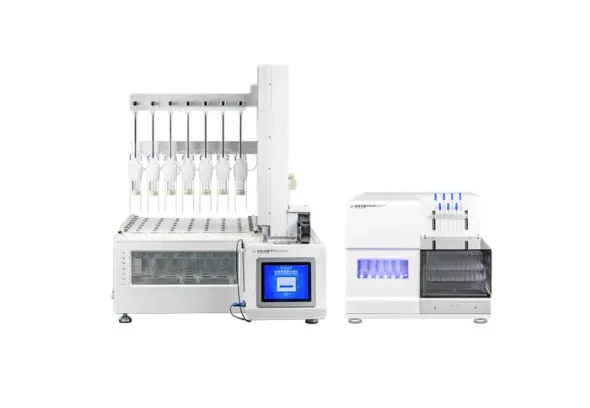
How Automation Directly Removes Error Sources:
•Automated vessel lids: Open and close synchronously with the reciprocating cylinder, reducing evaporation loss to <2% over a 180-minute test — a critical factor for long-duration enteric studies.
•Teflon pipeline system: With far superior chemical stability and anti-adsorption characteristics, the possibility of sample carryover is eliminated. Each collected aliquot truly represents concentration with no contribution from surface binding.
•High-precision sampling pump: Eliminating the guesswork in manual syringe draws, it offers ±1% sampling certainty.
•Pre-pump and on-line disk filtration: Collect samples without the delay of removing their presence, and without interfering with time-point integrity.
•One-piece rounded-corner water bath: No dead spots, uniform heating to 37 °C ± 0.5 °C and full drainability means no localized variances.
Real-World Reproducibility: Data That Speaks for Itself
To validate its automated approach, Raytor tested six enteric-coated tablets using the pH-gradient protocol described above. The results demonstrate what automated dissolution testing for enteric coated tablets can achieve when manual errors are removed:
•Acid resistance confirmed: During the first two hours (pH 1.2 HCl), all tablets showed almost no drug release — coating integrity maintained.
•Sharp pH-dependent release: Within 30 minutes of entering pH 7.5 PBS (120–150 min time window), the average cumulative release jumped from 1.91% to 92.00%, approaching full dissolution.
•Low variability across replicates: Relative standard deviation (RSD%) ranged from only 0.91% to 7.83% during the critical 120–150 minute period, meeting and exceeding typical pharmacopeial reproducibility requirements.
These numbers are not achievable with manual methods, where RSD values above 15% are common at rapid release phases. The conclusion is clear: automation delivers consistency that manual processes cannot match.
What Automated Dissolution Systems Really Offer in 2026
The ecosystem governing pharmaceutical purchasing in 2026 combines a reduction in labor costs, integrity of data, and a core biorelevant method. Automated dissolution testing for enteric coated tablets satisfies all three criteria.
•Labor Efficiency: One RT3-AT can run unattended for 3+ hours. This allows analysts to focus on data review and conduct other assays. This is a direct response to the prevailing skilled labor shortage.
•21 CRF Part 11 compliance: The 8.4-inch touchscreen allows for Raytor's dissolution operating system that includes audit trails, access control, and encrypted data export. Say goodbye to manual logs and transcription errors.
•Regulatory Acceptance: The prediction is that with guidance from the FDA in 2024-2026 on modified release products, there will be an expectation for constructive regulatory guidance on USP Apparatus III for enteric coated formulations when biorelevant media changes are needed. Automated systems like the RT3-AT align perfectly with this expectation.
Raytor's Design Philosophy: Built for Tomorrow's Lab
As a manufacturer, Raytor does not simply repurpose existing hardware. The RT3-AT incorporates features requested directly by QC managers who run enteric-coated tablet batches daily:
•Coaxial mounting bracket: Switches between reciprocating cylinders and other holders in under 30 seconds — minimal downtime between product changeovers.
•Flexible vessel sizes: Standard 300 mL or optional 1000 mL cups accommodate both low-dose potent drugs and high-dose extended-release tablets.
The following parameters are adjustable: rate of reciprocation (4–60 DPM), stroke length (2-10 cm), immersion time, and drain time, all of which can be programmed for different conditions that simulate GI motility.
These design choices reflect a deep understanding of 2026's laboratory realities: higher throughput, tighter budgets, and zero tolerance for out-of-specification investigations caused by operator error.
Conclusion: Make the Shift to Error-Free Dissolution Testing
Manual dissolution methods were never designed for today's complex enteric-coated products. The shift to automated dissolution testing for enteric coated tablets is not a luxury — it is a competitive necessity. Raytor's RT3-AT Reciprocating Cylinder Dissolution System delivers the precision, compliance, and reproducibility that manual processes cannot offer.
Ready to eliminate manual errors from your enteric-coated tablet testing? [Contact Raytor] for a technical consultation or to request a demo of the RT3-AT in your laboratory.
Frequently Asked Questions (FAQ)
Q: Why is automation critical for dissolution testing of enteric coated tablets?
A: Automated systems eliminate variables such as timing errors, evaporation, and sample retention due to manual changes and sampling. Automated systems guarantee constant pH (e.g., from pH 1.2 to 7.5) and ±1% sampling accuracy.
Q: Will the RT3-AT meet the requirements of the FDA 21 CFR Part 11 Compliance?
A: Yes. The 8.4-inch user interface is powered by Raytor's dissolution operating system and comes with full audit trail capabilities, user control access, and secure export of data, letting you go audit-ready with no paper logs to maintain.
Q: What dosage forms can be tested with the reciprocating cylinder system?
A: Other than enteric coated tablets, it can also be used for functional gummies, soft capsules, orally disintegrating tablets, and other modified-release formulations.
Q: How does USP Apparatus III differ from USP Apparatus II (paddle) for enteric coatings?
A: Apparatus III has an automated system that can move vessels through multi-step environments (pH 1.2, then 6.5, then 6.8, then 7.2, then 7.5) that mimic the gastrointestinal transit. This is not the case for paddles, as they require manual changes to the media.
Q: What is the reproducibility that I can expect from RT3-AT?
A: In the validation studies conducted with six enteric coated tablets, the relative standard deviation (RSD) was between 0.91% and 7.83% for the critical release window which is clinically acceptable.