






No Cross-Contamination: A Pharmaceutical Dissolution Equipment Supplier's 2026 Answer
2026-04-21


As a responsible Pharmaceutical Dissolution Equipment Supplier, Raytor knows that even trace carryover invalidates results, triggers costly OOS investigations, and harms regulatory credibility. By 2026, highly potent APIs and low-dose products will make contamination risks even more critical.
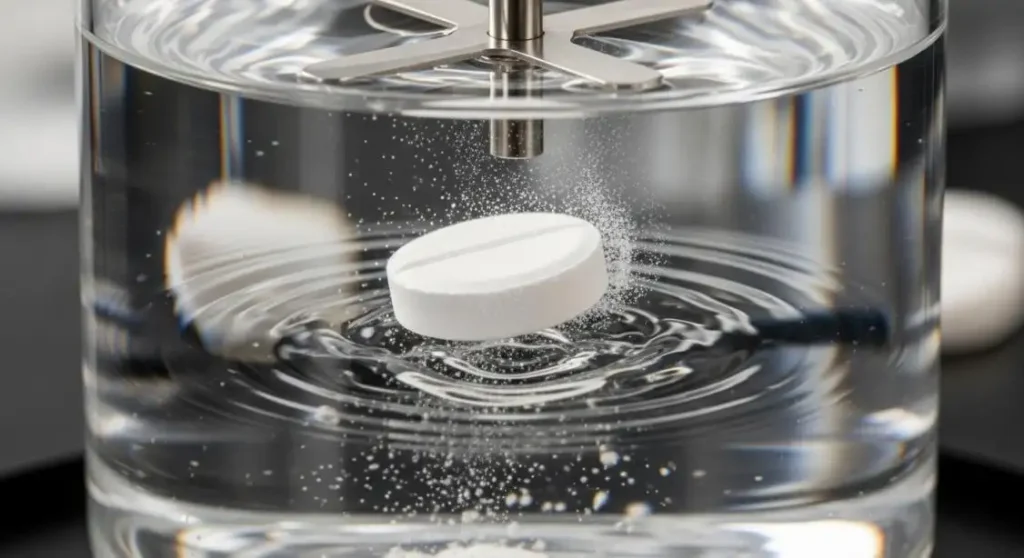
Smart buyers now demand absolute sample integrity—not just speed. Raytor's RT600-UV Online UV Dissolution System answers this need, minimizing cross-contamination while delivering real-time, audit-ready data.
Understanding the Costs of Contamination in the Dissolution Laboratory
Dissolution testing is not an activity where contamination risks and cross-contamination can be easily identified. More often than not, contamination risks become an issue when a laboratory experiences:
•Unexplained variability: Minor alterations in a dissolution testing profile that do not appear to be the result of the tested drug product.
•Concentration drifts that appear to be carryover that are, in fact, a result of product performance: Gradual, subtle, or incremental drifts in concentration readings.
•OOS results that cannot be traced to the drug product, and that waste hours of investigation: Specification failures that remain untouched by the pharmaceutical stimulus.
•Traditional dissolution laboratory systems that employ the same pumping, filtering, sampling, or recirculating path components across multiple vessels carry persistent risk.
Laboratories that are subject to the requirements of 21 CFR Part 11 and the various international pharmacopoeias, any potential contamination is a compliance risk. Therefore, a true Pharmaceutical Dissolution Equipment Supplier has no alternative than to design their hardware and software, essentially, to segregate and isolate each sample path. Raytor firmly stands on this compliance issue.
Raytor's Zero-Cross-Contamination Architecture: The RT600-UV System
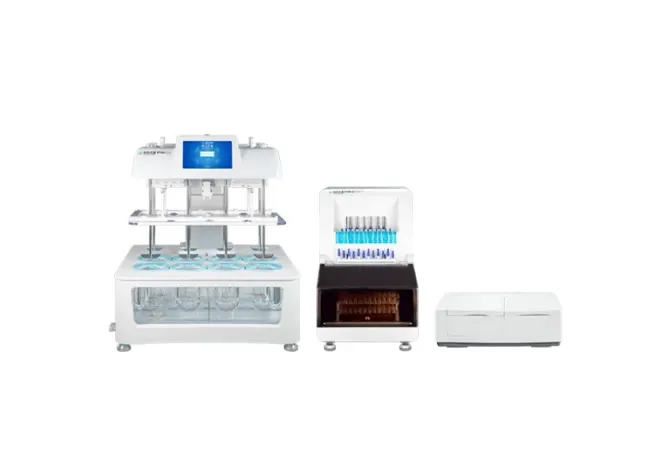
Raytor's RT600-UV Online UV Dissolution System is based on the principle of isolation on an individual inter-vessel level. Far from the standard procedure of multiplexing a single detector and using multiple shared tubing, Raytor applies separate individual flow cells and separate dedicated tubing lines for each dissolution vessel. This architecture leads to retention, migration, and crossover chemicals dissolved in a sample.
The following describes the confidence features of this system for contamination-free dissolution testing for 2026:
•Separate flow cells and lines for each vessel: Physically eliminates carryover between samples.
•Versatile flow cells with a range of pathlengths from 1 to 10 mm: Allows testing of various concentration ranges of the drugs without the need for cross calibration and avoids using common optical paths.
•Tubing with high anti-adsorption properties: Lowers the drugs binding on tubing surfaces.
•Fully automated closed-loop UV measurement: Eliminate the manual/purpose steps that involve a sample which introduce risk of contamination and variability.
•21 CFR Part 11 compliant dissolution software: Assures the system of secure audit trails, user role management, and electronic signatures along with the tracking of each individual fluidic action.
None of the above features should be considered ancillary. They are the features that place Raytor among the Pharmaceutical Dissolution Equipment Suppliers operating to the most rigorous demands of quality for 2026.
Cross-contamination control is of little value if the equipment does not address the official compendial requirements. Raytor's dissolution systems, including the RT600-UV, are fully compliant with Chinese, U.S., and EU Pharmacopoeia requirements. Specifically, the system covers:
•USP 1 (basket), USP 2 (paddle), USP 3 (reciprocating cylinder), and USP 4 (flow-through cell): All dissolution test devices mentioned in the regulations.
•Mechanical performance test kits and solvent handling equipment: Complete validation support for pharmacopoeial methods.
•21 CFR Part 11 audit trail requirements: Every online measurement is recorded, time-stamped, and attributable to a specific operator.
For laboratories that must switch between different dosage forms—from immediate-release tablets to transdermal patches—this flexibility is essential. The RT600-UV ensures that compliance and contamination control work together, not against each other.
Systems for Cleaner Lab Testing
The dissolution testing market evolves each year, and by 2026, it's estimated that over 60% of new QC installations will include online or at-line UV analysis, as the demand for real-time release testing (RTRT) with decreased manual intervention continues to grow. While the early online systems had issues with carryover, specifically with shared flow cells, Raytor's independent-channel design aims to address this issue.
Purchasing teams are now assessing suppliers based on three new categories: the ability to mitigate contamination, ensure data integrity, and manage total cost of ownership. The RT600-UV has the advantage in all three categories.
•Lower OOS rates: No cross-contamination means less rework and fewer unexplained failures.
•Faster batch release: Real-time UV data allows for trend analysis and quick decision-making.
•Easier cleaning validation: Dedicated lines on each vessel simplify the cleaning process and reduce the validation burden.
•Scalable for high-potency APIs: Physical isolation permits safe testing of highly potent compounds, which would typically require extensive cleaning.
Beyond Hardware with Swift Customization
Dissolution labs are all unique, which is why Raytor, as a responsive Pharmaceutical Dissolution Equipment Supplier, goes above and beyond with a multitude of dissolution test accessories along with customization options. This includes:
•Tailored vessel shapes for atypical dosage forms.
•Custom flow cell design with pathlengths beyond the conventional 1–10 mm.
•Specialized sampling probes for difficult formulations.
•Expedited engineering to meet stringent deadlines.
This benefit is especially important for contract research organizations (CROs) and developers of generic drugs who tend to use different methods stemming from different pharmacopoeias. Instead of purchasing generic equipment that requires them to change the methods, consumers can alter Raytor systems to be consistent with pre-existing validated methods — without the risk of contamination.
Design and Technology Trends That Define Raytor's 2026 Roadmap
What makes Raytor different from other manufacturers of dissolution equipment? Raytor is one of the few companies in the field of Analytical Chemistry that, from the outset, recognizes a challenge and envisions a solution. This is what inspired the founding of the company in 2015 with the goal: to make the lives of scientists easier.
This goal has been, and continues to be, translated into the following design changes:
•An embedded, simple user-interface: This decreases both the training period for new employees and the number of user-related mistakes.
•Lean management with the 6S method: This guarantees quality, consistent, and rapid production.
•An international sales network: A sales network that can offer support to customers without considering time zones.
•A center for experimental applications manned by experienced and certified pharmaceutical professionals: This gives aid to both method development and troubleshooting.
This is not a marketing spiel. These are just some of the results of Raytor's internal product development research platform, and partnerships with top universities and pharmaceutical companies. By selecting Raytor as your Pharmaceutical Dissolution Equipment Supplier, you gain a partner that appreciates both the dissolution business and the world of compliance.
Conclusion: Invest in Certainty, not Contamination
In 2026, the fallout from cross-contamination will be a lot higher. Regulators demand flawless data, patients want to trust the safety of what they consume, and lab managers require equipment that operates with no unexpected outcomes. Raytor's RT600-UV Online UV Dissolution System promises to provide testing that is free from contamination, full pharmacopoeial compliance and the automation that modern QC labs demand.
From individual flow cells to 21 CFR Part 11 software, every detail is engineered for integrity. For pharmaceutical buyers ready to eliminate cross-contamination from their dissolution workflow, Raytor provides the clear answer.
Learn more about Raytor's dissolution solutions at www.raytorinstruments.com — and experience dissolution testing as it should be: clean, compliant, and confident.
Frequently Asked Questions (FAQ)
Q: Does the RT600-UV system completely eliminate cross-contamination between dissolution vessels?
A: Yes, they are designed in such a way that they are completely physically separated, preventing any carryover.
Q: What are the dissolution systems by Raytor compliant to in Chinese, US and EU's Pharmacopoeias?
A: These systems are compliant to all the above-mentioned Pharmacopoeias including Chinese and US (USP) as well as EU Pharmacopoeias and 21 CFR Part 11 the audit trail.
Q: Will I be able to set the flow cell pathlength to comply with my method requirements?
A: Yes, that's correct. Raytor provides a wide range of flow cells with pathlengths of 1-10 mm, and you can also quickly request a custom flow cell.
Q: Is the RT600-UV designed to be used with high-potency active pharmaceutical ingredients (HPAPIs)?
A: Yes, It is. The design of the unit is such that it has a completely enclosed, vessel-isolated, and cross-contamination-free design, so it is safe to use with HPAPIs without having to do extensive complicated cleaning validations.
Q: What can I expect in terms of support after purchase the systems?
A: Raytor provides 24 hour support from our global sales team and offers access to certified pharmaceutical experts for method development and troubleshooting.