


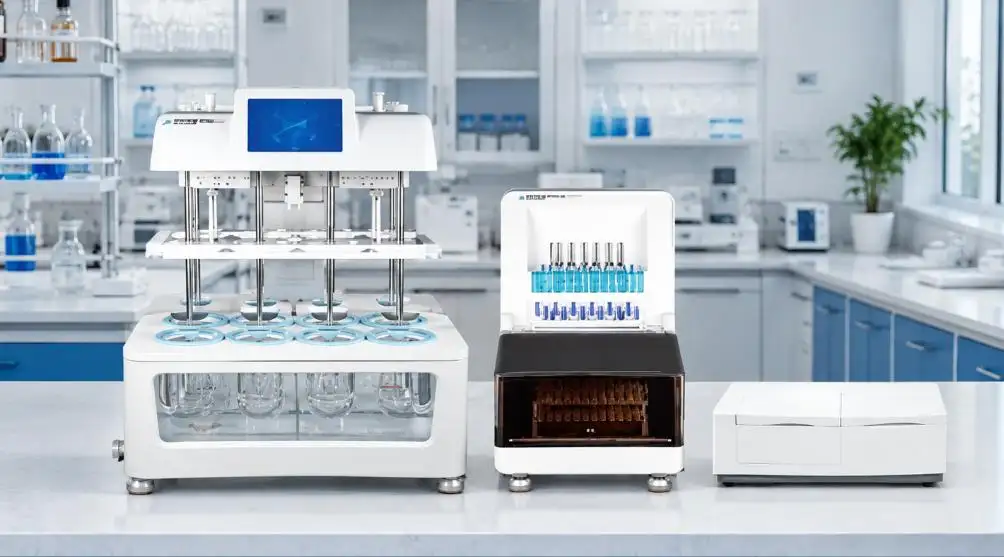
Dissolution Testing System for Softgel Capsules: Solving Lipid Formulation Challenges
2026-08-20


As use of softgel capsules in the delivery of poorly water-soluble compounds and delivery of lipid-based drug delivery systems, vitamins and nutraceuticals increases, there is a need to develop reliable assessment methods for formulations as the assessment of these formulations requires more than measuring disintegration and dissolution.
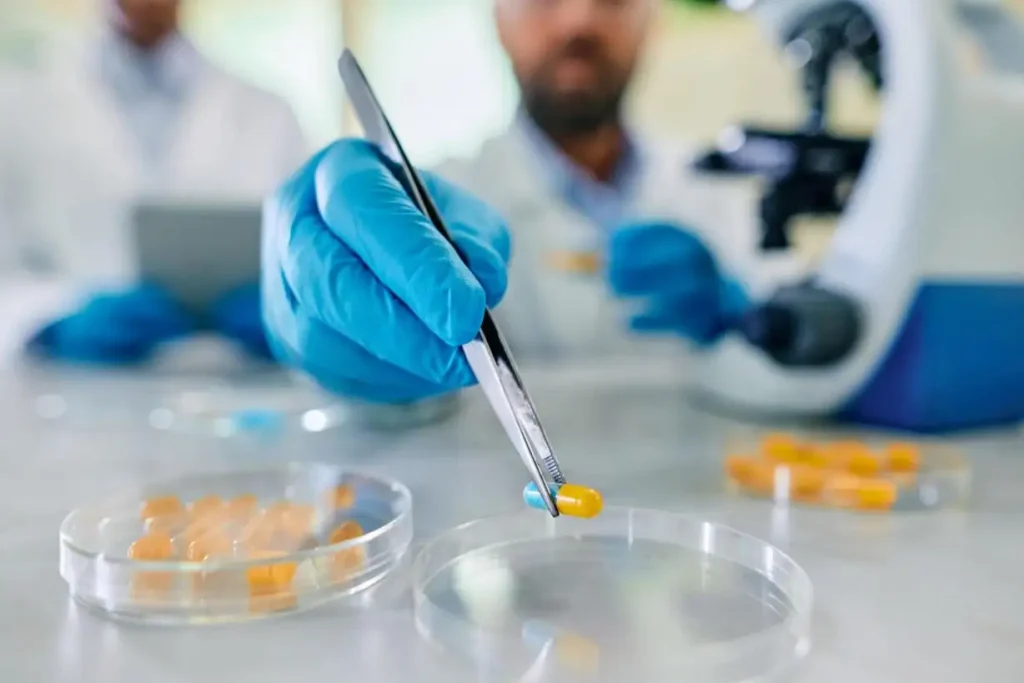
Designing analytical methods to assess softgel capsules requires understanding of the interactive nature of gelatin shell rupture, lipid dispersion, drug solubilization, and transport of the dissolution medium. Compared to the conventional tablet, lipid-based softgel formulations may demonstrate considerable differences between the experimental results and real-life release behavior if the testing system cannot provide appropriate hydrodynamic conditions.
The key problem for research and lab services in the development and control of pharmaceuticals is not only the determination of the dissolution curve, but the determination of a curve that reflects the performance of the formulation.
Challenges of Testing Lipid-Based Softgel Capsules
The dissolution of soft gel capsules is a combination of several physical processes and, therefore, may include:
• Hydration of the gelatin shell
• Dispersion of the fill
• Formation of a system of emulsion or a dispersed liquid
• Transfer of the drug from the lipid phase to the aqueous phase.
A soft gel capsule may appear to dissolve rapidly as the shell breaks. However, due to the confinement of the active ingredient in the lipid phase, this may present challenges in the application of the traditional dissolution methods.
The issues with testing softgels in order of importance are:
| Issue | Impact on Test Result |
| Insolubility of the API in water | Sub-optimal measurement of drug release |
| Behavior of lipid-based filler materials | Difficult to dispense and emulsify |
| Limited sink conditions | Artefactual limitation of dissolution rate |
| Various Shell properties | Increasing batch variation |
| Fluid medium conditions | Reduced test method precision |
For these reasons, a Dissolution Testing System for Softgel Capsules must incorporate controlled flow and temperature and a varied testing environment.
Potential Limitations of Conventional Paddle Methods to Model Softgel Release Mechanisms
Generally, USP Apparatus 2 paddle systems are suitable for most conventional formulations, but for lipid-based soft gel formulations some considerations may be necessary.
Accumulation of solubilized compounds occurs around dosage forms in a fixed volume reservoir. For poorly soluble drugs, this may reduce concentration gradients and slow down dissolution, even if the formulations exhibit elevated release potential.
The use of mechanical agitation for lipid formulations is problematic for the following reasons.
Extensive agitation can result in:
• Artificial dispersion
• Undue change of lipid droplet behavior
• Unrealistic release.
Insufficient agitation can result in:
• Slow lipid dispersion
• Loss of release potential of the drug.
For complicated formulations, many pharmaceutical laboratories use a Dissolution Testing System for Softgel Capsules based on USP Apparatus 4 Flow-Through Cell Technology.
How Flow-Through Cell Technology Facilitates Softgel Dissolution Assessment
Flow-Through Cell Technology is based on the principle of assessing dissolution with the movement of test medium, rather than vessel agitation, as is the case with other technologies.
The principle is simple. A medium in motion is allowed to enter the cell and pass through, and the researcher can control the fluid and mass transfer, as well as the release medium.
This is particularly applicable to:
• Low-solubility APIs
• Lipid formulations
• Self-emulsifying drug delivery systems
• Improved control over hydrodynamic conditions
Flow rate impacts:
• Boundary layer thickness
• Drug diffusion
• Mass transfer
• Dissolution profile
Thus, flow control is not restricted to the limitations of equipment; it alters the interpretation of the formulation performance.
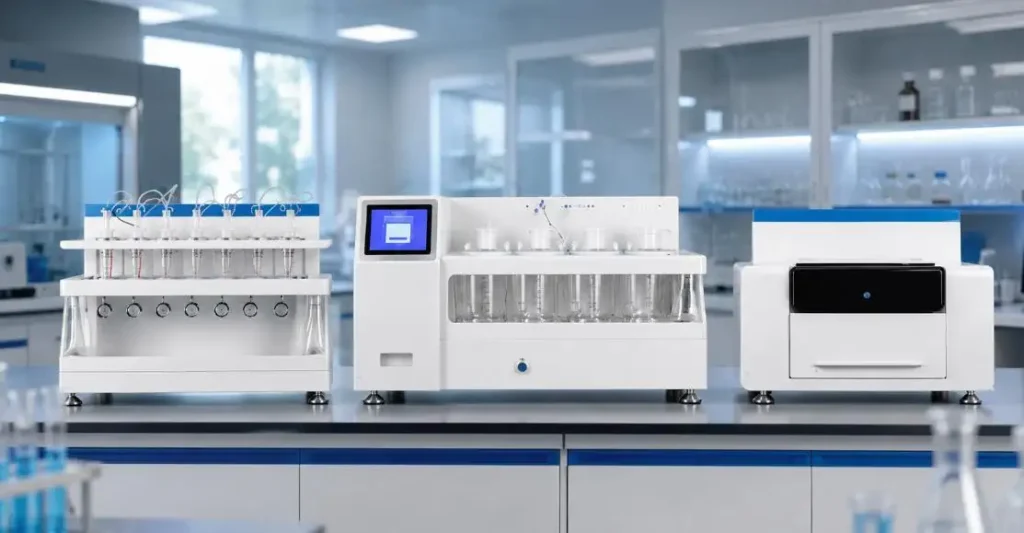
USP 2 vs. USP 4 Dissolution Testing: Flow-Through vs. Paddle Cell
USP 2 vs. USP 4: Characteristics of Softgel Lipid Formulations
| Factor | USP Apparatus 2 (Paddle) | USP Apparatus 4 (Flow-Through Cell) |
| Medium/Environment | Fixed volume | Continuous controlled flow |
| Suitability | Requires method optimization | Better for complex formulations |
| Constructing the Partition/Sink Condition | Harder | Easier |
| Control Flow | Limited | Adjustable |
| Primary Focus | Conventional tablets/capsules | Poorly soluble drugs / advanced drug delivery systems |
When selecting between USP Apparatus 2 and USP Apparatus 4, preference should be given to the characteristics of the formulation, not the equipment. For lipid-based softgel formulations, the ability to control the flow of the medium is often the most important factor in achieving reproducible results.
Critical Parameters When Selecting a Dissolution Testing System for Softgel Capsules
A professional Dissolution Testing System for Softgel Capsules should integrate several control functions as opposed to addressing individual specifications.
Flow Rate Control
Flow rate affects how quickly a dissolution process occurs.
If the flow is not stable:
• Gradients may appear in the concentration of the drug
• Drug release profiles may shift
• Repeatability may decrease
Raytor's Flow-Through Cell technology uses a unique design to test drug release at two different flow rates using a single apparatus. This cell technology provides users the ability to control medium flow with dual flow rate capability and allows laboratories to study release profiles under different controlled conditions.
Temperature Control
Softgel dissolution studies require the use of physiological temperatures.
Raytor systems incorporate immersion thermostatic water bath technology. The systems also include independent temperature control and monitoring to provide users the ability to set desired temperatures to maintain constant testing conditions.
Sampling Accuracy and Automation
Manual sampling affects the accuracy of sampling:
• Automation decreases sampling variability.
• Software controls sampling volumes.
• Automation of sampling helps maintain repeatability.
Raytor's automated sampling configuration provides sampling flexibility for multi-channel operations, covering step sampling, timed sampling, and event sampling for open-loop or closed-loop control.
Technical Features That Support Reliable Softgel Testing
Some technology features are beneficial for labs creating methods for lipid-based formulations:
| Analytical Feature | Benefit |
| Multiple channels | Allows for parallel evaluation of formulations |
| Adjustable conditions | Supports multiple release mechanisms |
| Real-time temperature control | Minimizes the effect of the surroundings |
| Low back-pressure filtration | Sustains stable sample processing |
| Automated sampling | Enhances repeatability |
The Raytor Flow-Through Cell system incorporates seven flow cells, dual flow rates, patented filtration, and integrated temperature control within a system to support the evaluation of complex formulations, such as poorly soluble drugs and advanced drug delivery systems.

Long-term Accuracy Considering Installation and Maintenance
Even the most advanced Dissolution Testing System for Softgel Capsules requires maintenance to achieve analytical reliability.
Regularly the following are important considerations:
• Verification of flow accuracy
• Cleaning of tubing and flow cells
• Filter inspection
• Temperature calibration
• Validation of servicing
To reduce adsorption and residue build-up, Raytor incorporates Teflon tubing, while the filtration design helps control back pressure during operation.
Validation and Compliance Before Buying
A dissolution system must fulfill the comprehensive pharmaceutical quality requirements.
Before buying, the following must be evaluated:
• Accommodation of the USP dissolution methodology
• Support for IQ/OQ/PQ documentation
• Data integrity
• Flexibility in method development
• Ability to provide support/service longer term
The most appropriate system is the one which harmonizes laboratory's formulation challenges and regulatory hurdles, over the system with the most features.
Final Words
Both capability of the system and application experience need to be accounted for when selecting a Dissolution Testing System for Softgel Capsules.
A suitable manufacturer should have a good command of:
• Challenges with lipid-based formulations
• Principles of flow-through dissolution
• Requirements of a QC lab
• What is required to validate a process
Raytor has developed unique solutions for Flow-Through Cell dissolution with complex softgel pharmaceutical formulations. They have assembled controlled flow technologies and automated sampling with the flexibility to operate in multiple modes to offer an impressive solution for research and quality control dissolution.
Pharmaceutical companies developing or testing lipid-based softgel formulations would benefit from working with an expert in dissolution equipment. Raytor has developed complete systems and offers turn-key solutions for custom-configured systems that meet a lab's current and anticipated future needs.
FAQs
Q1. Why does Raytor suggest their Flow-Through Cell technology for softgel capsule dissolution testing?
Raytor designed their Flow-Through Cell solutions for softgel capsule testing for formulations that are difficult to evaluate using traditional paddle methods. Their solution uses a continuous flow of medium for more controlled release studies on lipid-based softgel formulations.
Q2. Can Raytor's dissolution system be used for poorly soluble drug formulations?
Yes. Raytor's Flow-Through Cell technology can be used for poorly soluble drug formulations and challenging delivery systems.
Q3. How does Raytor enhance dissolution testing accuracy for softgel capsules?
Raytor has developed a system with controlled flow management, temperature control, automation of sampling, and multi-channel testing to diminish variability in operation while maintaining consistency for the testing of softgel capsule dissolution.
Q4. Does Raytor's system meet the criteria for USP Apparatus 4 dissolution testing?
Raytor has designed their Flow-Through Cell dissolution systems based on the principles of USP Apparatus 4 for use in advanced dissolution studies of complex dosage forms.
Q5. What flow control features does Raytor offer for the dissolution of softgels?
Raytor systems provide the capability to test two different formulations at different flow rates, allowing researchers to evaluate the effects of hydrodynamic control on the release of different formulations.