


GMP-Compliant Diffusion Testing Equipment for India: Revised Schedule M Readiness
2026-09-16


A diffusion profile can look consistent while concealing systematic error: an incorrect exposed area, drug adsorption in tubing or uncorrected sample removal. Selecting GMP-Compliant Diffusion Testing Equipment for India therefore requires evidence that the complete measurement process remains controlled.
At Raytor, we connect equipment design with the variables that laboratories must qualify. For Indian topical-product manufacturers, the objective is reproducible performance supported by defensible methods, traceable records and documented lifecycle controls.
Revised Schedule M: Define the Evidence Required
India's government confirmed implementation of revised Schedule M in its March 2026 update. Laboratory readiness now involves closing existing gaps and maintaining control. Government update.
Its emphasis on quality systems, risk management, qualification, validation and computerized systems provides the framework for equipment assessment. CDSCO overview.
For GMP-Compliant Diffusion Testing Equipment for India, translate that framework into approved acceptance criteria:
• Intended use: Dosage form, IVRT or IVPT, development or QC application, and throughput.
• Performance evidence: Temperature verification, stirring checks, sampling accuracy and recovery.
• Traceability: Equipment identity, method version, operator, timestamps and original data.
• Lifecycle control: Calibration, cleaning, maintenance, deviations and change assessment.
A supplier's specification supports this assessment; laboratory qualification establishes suitability under actual conditions.
IVRT and IVPT Require Different Method Decisions
IVRT: Measure Formulation Release
IVRT commonly uses a synthetic membrane to evaluate drug release from semisolid formulations. Establish membrane compatibility, low binding, receptor-medium solubility and analyte stability. Where justified, evaluate cumulative release per unit area against square-root time; a strong regression alone does not demonstrate discriminatory ability.
Challenge the method with relevant formulation variations and assess precision, robustness and analytical performance. These topics appear in FDA's October 2022 draft IVRT guidance, a technical reference for ANDA development rather than an Indian GMP requirement. FDA draft guidance.
IVPT: Measure Skin Permeation
IVPT adds biological variability. Control skin integrity, donor allocation, thickness where relevant, dose application and exposure conditions. Define cumulative permeation and flux calculations in advance. Equipment selection must accommodate the protocol; IVRT, IVPT and patch-release tests cannot be substituted solely because they involve diffusion.
Critical Parameters for GMP-Compliant Diffusion Testing Equipment for India
| Parameter | Potential Bias | Verification Approach |
| Temperature | Altered release or permeation kinetics | Verify relevant test-location temperatures after equilibration and during sampling |
| Exposed area and sealing | Incorrect area normalization or leakage | Check cell geometry, mounting consistency and membrane condition |
| Membrane-side bubbles | Reduced receptor contact | Inspect after filling and assess bubble removal during operation |
| Stirring and medium | Poor mixing, saturation or instability | Establish mixing suitability, solubility margin and analyte stability |
| Fluid path | Adsorption, dilution or carryover | Test recovery, dead volume and cleaning effectiveness with the actual analyte |
Sampling Corrections Matter
For a well-mixed receptor of constant volume (V), with equal aliquots (v) replaced immediately by drug-free medium, cumulative recovered mass at sample (n) is:
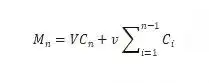
Divide by exposed area for mass per unit area. Variable sampling volumes, full replacement, evaporation or line-flushing losses require an appropriate alternative calculation. Verify the implemented calculation against the actual fluid-handling sequence.
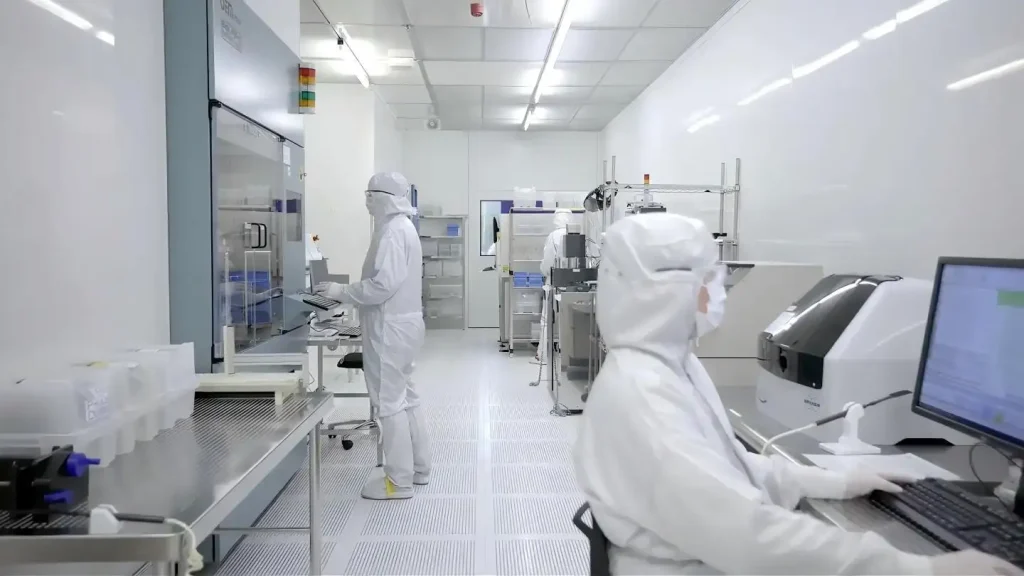
Manual vs. Automated Diffusion Testing
When specifying GMP-Compliant Diffusion Testing Equipment for India, compare operational burden and validation scope together.
| Decision | Manual Workflow | Automated Workflow |
| Timing | Depends on staffing and coordinated sampling | Programmed sequence; verify actual collection times |
| Recovery | Evaluate syringes, filters and containers | Also evaluate tubing, pumps and residual volume |
| Records | Controlled contemporaneous entries | Validate relevant software, access and record handling |
| Total cost | Purchase plus recurring operator time | Purchase, validation and maintenance against throughput gains |
Automation can reduce repetitive handling. It also introduces fluid-path and software functions that require verification. Lower-throughput laboratories may reasonably retain a controlled manual method.
Qualification Must Cover Intended Use
Define user requirements (URS) and assess design suitability (DQ). Verify installation (IQ), challenge operating functions and relevant limits (OQ), then demonstrate performance under routine conditions (PQ).
Calibration, equipment qualification and method validation answer separate questions. Acceptance criteria should reflect the method's sensitivity to variation, rather than simply reproduce brochure limits.
For electronic records, examine permissions, audit trails where applicable, method changes, data review, retention and tested backup recovery. Assess 21 CFR Part 11 separately when applicable to the laboratory's regulatory scope.
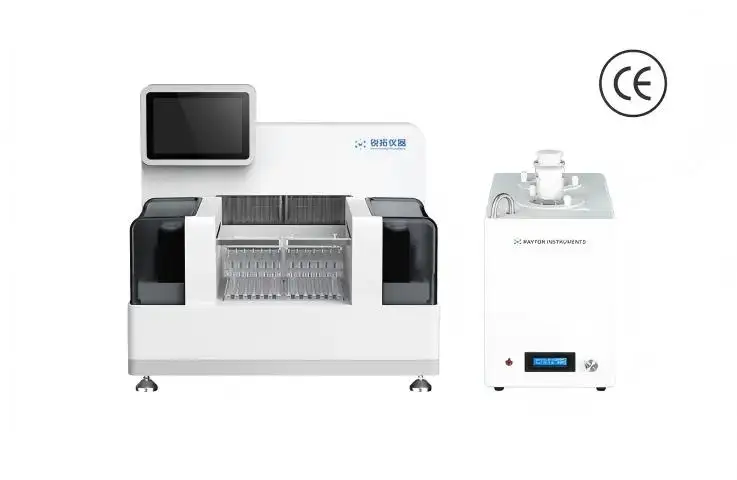
Raytor RT814: Engineering Controls with Verifiable Outcomes
Our RT814 Automated Transdermal Diffusion System comprises 14 positions, individual control of cell temperatures, automatic tilt for bubble removal, integrated glass cells, separate pipelines and pumps, and full or partial sampling. Each of these features is compatible with specific controls in an experiment design. For additional information on the RT814, please refer to the product specifications.
• Integrated cells: Used to evaluate the integrity of seal and the repeatability of membrane installation.
• Automatic bubble removal: Evaluated by the choice of medium and membrane.
• Separate fluid paths: Used to investigate channel recovery and carryover.
• Flexible sampling: Used to evaluate sampling logic, sampling volume delivery and sampling system replenishment.
Through supplier documentation, we can evaluate the uniformity of manufacturing for dimensional inspection, factory testing, calibration traceability and the control of replacement parts. Qualification support and training must be scheduled prior to purchase.
Maintain Readiness Throughout Operation
For GMP-Compliant Diffusion Testing Equipment for India, readiness is maintained after acceptance. Operator training and the approval of cleaning procedures are also part of readiness. Trending performance is used to evaluate deviations. Membrane and tubing changes, as well as changes to software and methods, are evaluated prior to use.
Explore Raytor's pharmaceutical testing solutions to discuss GMP-Compliant Diffusion Testing Equipment for India against your dosage form, sampling protocol and qualification needs. A technically defined requirement gives both the laboratory and equipment manufacturer a sound basis for the next decision.
FAQs
Q1. Which Raytor System Can Laboratories Evaluate for IVRT and IVPT?
The Raytor RT814 Automated Transdermal Diffusion System supports semisolid IVRT and IVPT applications. Laboratories should confirm configuration suitability for their membrane, receptor medium and sampling protocol.
Q2. Does Purchasing Raytor Equipment Establish GMP Compliance?
Equipment purchase alone does not establish laboratory GMP compliance. Laboratories must qualify the installed system, validate applicable methods, control records and maintain approved operating procedures.
Q3. How Many Diffusion Positions Does the Raytor RT814 Provide?
The RT814 provides 14 diffusion positions arranged in two groups of seven, with 14 sampling channels.
Q4. How Does the Raytor RT814 Manage Bubbles?
The RT814 uses automatic tilting to help remove residual bubbles. Laboratories should verify bubble removal under their actual test conditions.
Q5. How Does Raytor Address Cross-Contamination Between Diffusion Cells?
The RT814 uses separate pipelines and pumps for each cell. Method-specific recovery, carryover and cleaning checks remain necessary.