

Reciprocating Cylinder Dissolution System for India: Modified-Release Generic Method Development
2026-09-16


Selecting a Reciprocating Cylinder Dissolution System for India laboratories can use effectively starts with the formulation's release mechanism. For modified-release generics, a useful dissolution method must distinguish relevant formulation and process changes while controlling variability introduced by the test itself.

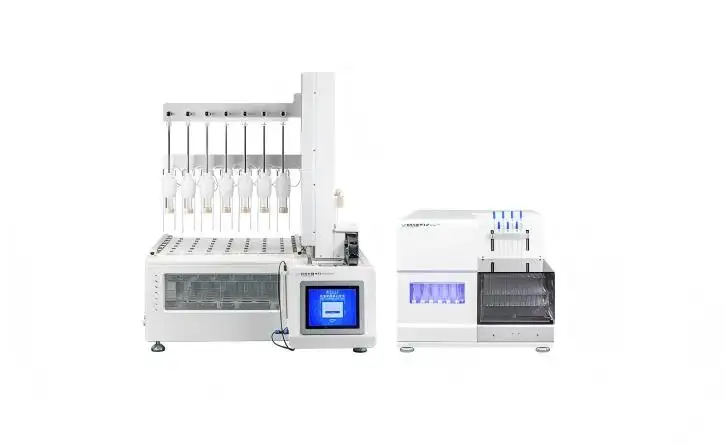
At Raytor, we approach equipment selection through these analytical requirements. Our RT3-AT provides configurable reciprocation, staged exposure and automated sampling capabilities that laboratories can evaluate against their intended methods.
Identify the Release Mechanism Before Selecting Conditions
Modified-release products present different analytical challenges. Enteric protection, matrix erosion and membrane-controlled diffusion should not be evaluated using an interchangeable set of conditions.
| Formulation | Development Question | Variables to Investigate |
| Enteric-coated tablets | Does acid protection persist, followed by appropriate release? | Coating weight, curing, acid exposure and buffer capacity |
| Hydrophilic matrix tablets | Is release controlled consistently by swelling, diffusion and erosion? | Polymer grade, polymer content, compression and mechanical conditions |
| Coated pellets | Does the coating control release consistently across particles? | Coating distribution, agglomeration, screen retention and particle loss |
Final percentage released is only one endpoint. Release onset, intermediate slope and unit-to-unit variability may reveal differences that disappear once both formulations approach complete release.
Reciprocating Cylinder Dissolution System for India: USP 3 or USP 2?
USP Apparatus 3 moves a screened cylinder vertically through dissolution medium and transfers the dosage form between prepared media. Its suitability depends on the analytical question; it does not automatically supersede paddle testing.
| Decision Dimension | USP 3: Reciprocating Cylinder | USP 2: Paddle |
| Medium changes | Transfers the sample between vessel rows | Requires justified medium addition or replacement |
| Hydrodynamics | Influenced by reciprocation, stroke and screens | Influenced by rotation, geometry and sample location |
| Sample-related risks | Mesh blockage, particle escape and mechanical contact | Floating, settling and coning |
| Operational demands | Stage timing, drainage and screen control | Vessel setup and management of medium changes |
| Method continuity | Requires justification and transfer evaluation | May preserve an established validated procedure |
DPM and RPM are not directly convertible. Similar numerical settings do not imply equivalent hydrodynamic conditions.
Develop Conditions That Reveal Meaningful Differences
1. Define the Method's Intended Purpose
State whether the procedure supports formulation screening, stability assessment, manufacturing-change evaluation or routine release.
Select challenge batches accordingly—for example, different coating weights or polymer levels. The method should detect relevant changes without responding excessively to minor operational variation. This is consistent with ICH Q14's science- and risk-based development principles.
2. Design the Medium Sequence
For a Reciprocating Cylinder Dissolution System development programme, provide more than nominal pH buffers:
• Buffer capacity: Is the amount of a buffer that resists changes in pH.
• Solubility and volume: Help determine if the desired sink conditions are met.
• Ionic strength: Can impact the hydration of a polymer and the subsequent drug release.
• Stage duration: Determines the time of exposure before the next change.
• Drainage: Affects the amount of liquid that carries over to the next receiving medium.
A sequence intended to investigate gastrointestinal transitions must remain distinguishable from a validated routine QC method.
3. Evaluate Mechanical Sensitivity
Study dip rate, stroke and screen mesh together. Increased agitation may accelerate erosion or coating damage rather than improve analytical discrimination.
Use a structured robustness study to distinguish formulation effects from method sensitivity. Record screen material, aperture and installation consistently; "same apparatus" does not ensure equivalent test conditions.
Sampling and Mass Balance Require Particular Attention
Automation may standardize a process, but experimental recovery can still vary.
Prior to batch comparison, ensure you have addressed:
Whether the filter is suitable for adsorption and retention of the particulates, along with any required discard volume.
• Recovery from the tubing: Losses, carryover and the efficiency of flushing.
• The sample: Stability during the time between collection and analysis.
• Volume accounting: Withdrawals, replacements and evaporations.
• Cumulative release: The drug measured in all the previous steps and the current step.
Do not estimate the total release from the final vessel concentration alone. Investigate low recovery before assuming that the formulation accounts for the incomplete release.
Raytor RT3-AT: Design Features Linked to Method Control
For Reciprocating Cylinder Dissolution System for India projects, we recommend evaluating the RT3-AT against the proposed method rather than its maximum specifications.
| RT3-AT Feature | Laboratory Application | Verification Required |
| 4–60 DPM; adjustable 2–10 cm stroke | Mechanical-condition screening | Suitability of selected settings for the method |
| Programmable immersion and drainage | Consistent stage transitions | Timing and medium carryover |
| Automatic vessel covers | Reduced evaporation | Volume stability over the test duration |
| Automated sampling and filtration options | Scheduled sample collection | Timing, recovery and carryover |
| Teflon tubing | Chemically resistant sample pathway | Drug-specific adsorption assessment |
| One-piece rounded water bath | Cleaning and drainage access | Cleaning procedures and temperature checks |
These engineering features support experimental control; they do not replace qualification or method validation. Raytor RT3-AT product specifications
Interpret Profiles and Prepare for Transfer
Compare individual profiles, variability, release onset and intermediate release before selecting a similarity metric. Confirm that its assumptions apply.
Dissolution similarity alone does not establish bioequivalence. A predictive IVIVC requires additional development and evaluation. FDA IVIVC guidance
For transfer into Indian QC laboratories, define instrument qualification, method validation, acceptance criteria, SOPs and electronic-record controls. Keep domestic and target-export requirements distinct. Confirm documentation, training and service arrangements before procurement.
A Reciprocating Cylinder Dissolution System for India laboratory adopts should fit both its formulation science and daily workflow. At Raytor, we welcome discussions grounded in dosage form, media sequence, duration and sampling requirements. Review the RT3-AT Reciprocating Cylinder Dissolution System to explore how its configuration could support your next modified-release development programme.
FAQs
Q1. Which Raytor system should Indian laboratories evaluate for reciprocating cylinder dissolution testing?
Raytor's RT3-AT Reciprocating Cylinder Dissolution System is a relevant option for laboratories developing sequential-media dissolution methods. Selection should consider the dosage form, release mechanism, sampling requirements and applicable analytical procedure.
Q2. How can Raytor RT3-AT support modified-release generic development?
The RT3-AT provides adjustable reciprocation and exposure settings for investigating formulation behavior under different test conditions. Laboratories can use these capabilities to assess whether a method distinguishes relevant coating, polymer or manufacturing changes.
Q3. Can Raytor RT3-AT support multi-pH dissolution studies?
Yes. The system supports sequential exposure to different dissolution media. Laboratories should define each medium's composition, exposure duration and drainage conditions according to the formulation and study objective.
Q4. What reciprocating settings does Raytor RT3-AT offer?
Raytor specifies a reciprocating rate of 4–60 DPM and an adjustable stroke of 2–10 cm. Immersion and drainage times are also programmable. Selected settings must be appropriate for the intended method; the full adjustment range is not a universal testing recommendation.
Q5. What vessel configurations are available for Raytor RT3-AT?
The product page lists a standard 300 mL vessel arrangement of seven tubes across six rows, with optional 1000 mL vessels. Vessel capacity should not be confused with validated working volume. Confirm the required configuration with Raytor before ordering.