






Laboratory Automation Platforms: A Practical Guide to Smarter Lab Workflows
2026-03-09


A few years ago, if you mentioned automating a lab, most people would picture a futuristic, high-budget scene: robotic arms moving in silence behind glass walls, tended only by white-coated PhDs in Fortune 500 facilities. For the typical quality control or analytical lab, that kind of setup felt distant—something you might see in a trade show brochure but never in your own workspace.
That picture has changed. Today, automation isn't about pushing scientists out of the process. It's about removing the friction that bogs down everyday work. It's the tool that connects a sharp research question to a solid, reproducible answer—without the all-nighters.
In modern labs, time is short, samples are more complicated than ever, and mistakes are expensive. Whether you're working on a novel drug formula or running standard batch release tests, doing things by hand often turns into the slowest part of the workflow. When you shift those repetitive jobs to automated systems, your team gets something better than just time. They get room to think, troubleshoot, and push work forward. This article walks through how practical use of today's technology can reshape your daily routine, sharpen accuracy, and help your whole team work with more focus and less wasted effort.
What's Driving Change in Pharma Analysis
Pharmaceutical work isn't what it used to be. The days of simple pills and standard syrups are fading fast. Now, labs are dealing with extended-release formulas, multi-layer tablets, and targeted delivery systems that demand near-perfect precision. Testing these products manually isn't just hard—it's a fast track to inconsistent results.
Think about a standard dissolution test. In a manual setup, it takes constant attention. Someone has to prep the media, pipette at exact time points, clean the glassware, and scribble down results. Every one of those steps is a place where things can go wrong. A shaky hand, a half-second delay, or leftover residue in a vessel can quietly ruin a whole dataset.
That's why Laboratory Automation Platforms have stopped being a luxury and started being a practical must-have. They offer a level of consistency and accuracy beyond the reach of human effort. By removing the burden of repetitive mechanics, they unlock researcher potential for high-impact work: recognizing critical trends, optimizing formulas, and successfully finalizing projects. This redefines the lab as a strategic center for progress, rather than a place for routine chores.
The Real Drag of Manual Work
To see why automation is a game-changer, look at the bottlenecks that quietly drain energy from labs every single day. These aren't just small headaches—they're real barriers that slow down timelines and create openings for error.
•Lost Time: Running through a standard set of tests manually can eat up days. By the time you've set up, monitored, and broken down multiple runs, there's hardly any time left to actually think about the data.
•Human Limits: Even the most careful scientists have off moments. A little fatigue or rushing can introduce small variations that snowball into bigger issues—and they're nearly impossible to trace later.
•Messy Records: Notebooks and loose files might work in the short term, but when it's time to audit or track down an old result, it becomes a full-blown hunt.
•Wasted Talent: When a skilled researcher is stuck washing beakers or mixing buffer by hand, that lab is burning its most valuable resource: brainpower. That expertise belongs in analysis, not janitor work.
Fixing these isn't about buying a shiny new machine and hoping for the best. It's about rethinking how work actually flows through the lab—making it stronger, faster, and more reliable.
A Closer Look: How the Raytor RT9 Series Rethinks Workflow
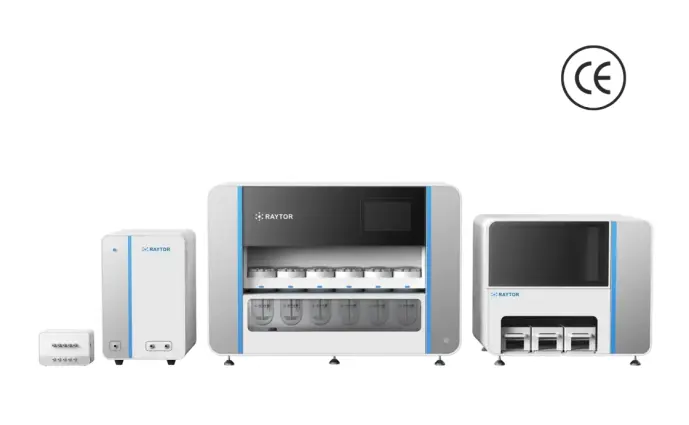
When we looked at what labs really need, we saw a clear gap. There's huge demand for high-throughput testing, but most places don't have the tools to deliver it consistently. The Raytor RT9 Series Multi-batch Automatic Dissolution System was built to fill that gap. It's not just a small upgrade. It's a different way of thinking about what dissolution testing can be.
Picture this: Monday morning, you load the system with samples from ten different batches and hit start. From there, the machine does the rest. Media prep, sampling, cleaning, data logging—all handled. You walk away to meetings, look over weekend results, or brainstorm the next formula. That kind of unattended operation is where the RT9 Series really shines.
Built to handle the strict demands of USP 1 and USP 2 methods, it works across a wide range of products—from quick-release tablets to tricky extended-release capsules. The idea is simple: let the machine do the heavy lifting so people can do the thinking.
•Real 24/7 Throughput
The RT9 Series runs up to ten batch tests in a row without anyone in the room. That one feature can double or triple what a lab gets done, putting overnight hours to work that would otherwise sit empty.
•Sampling You Can Trust
A high-precision autosampler manages the whole collection process. It handles online filtering and stores secondary filters, so the sample moving from the vessel to analysis stays clean—no contamination, no degradation.
•Data Built for Scrutiny
In a regulated space, data security is everything. The RT9 Series keeps experimental methods and records for at least 15 years, with built-in protection against accidental overwrites. It's designed with FDA 21 CFR Part 11 in mind, giving you a secure, audit-ready digital trail.
How Automation Strengthens Data Integrity
In pharma, data integrity is the whole foundation. Regulators now look beyond just final results—they dig into how those results were reached. A missing signature, a fuzzy timestamp, or a hint of possible cross-contamination can throw a whole submission into doubt.
Modern Laboratory Automation Platforms act like a digital witness. They log every step with surgical detail. When the RT9 Series runs a test, it records temperature, rotation speed, exact sampling time, even cleaning cycle data. That information is locked in, unchangeable, and always there when you need it.
By cutting out manual transcription, you also cut out typos and mislabeled samples. The result is a cleaner audit trail and more confidence in your data. When an inspector asks, "How do you know this sample was clean?", you have the digital proof ready.
Cleaning: The Overlooked Key to Reproducibility
It's easy to focus on the exciting parts of an experiment—the mixing, sampling, analyzing. But in reality, one of the biggest factors in reproducibility is how well you clean up after. If a vessel isn't perfectly clean, residue from a previous compound can sneak into the next sample and quietly twist your results.
Manual cleaning is a gamble. It depends entirely on the tech's focus and technique that day. The RT9 Series tackles this head-on with an advanced, automated cleaning protocol. Using optimized spray tech, it makes sure every surface of the dissolution cups and vessels gets fully rinsed.
•Full Coverage: The system is built to leave no residue behind, eliminating dead spots.
•Flexible Cycles: Wash settings can adjust based on the compounds being tested, so aggressive drugs are fully removed.
•Always a Fresh Start: By automating media dispensing and removal, the system guarantees every new test starts from a clean, neutral baseline.
This "clean-in-place" feature saves hours of manual labor every week. More importantly, it protects the basic validity of your results.
Building a Lab That's Ready for What's Next
Investing in automation isn't just about fixing today's workflow problems. It's about getting ready for tomorrow. As drug formulas get more complex and regulations keep tightening, the labs that stay ahead will be those that have built smart technology into their foundation.
By adopting a platform like the Raytor RT9 Series, you're moving toward a model where efficiency is part of how things run. Your team can dedicate themselves to more meaningful work. Data security is guaranteed. Your throughput reaches its maximum.
The conversation has shifted. It's no longer about whether your lab should automate. It's about how fast you can start. Ready to push past the bottlenecks and let your team do what they do best?
[Contact Raytor Today] to set up a personalized walkthrough of the RT9 Series. See for yourself how integrating advanced Laboratory Automation Platforms can turn your dissolution testing from a daily grind into a smooth, efficient, and reliable process.