

New Drug Development Tools for Early-Stage Dissolution and Permeation Screening
2026-07-31


A new chemical entity may show strong pharmacological activity yet fail because of poor solubility, slow dissolution, rapid precipitation, or limited intestinal permeation. Early-stage screening should therefore examine how much drug enters solution, how concentration changes under gastrointestinal conditions, and whether the dissolved fraction remains available for membrane transport.
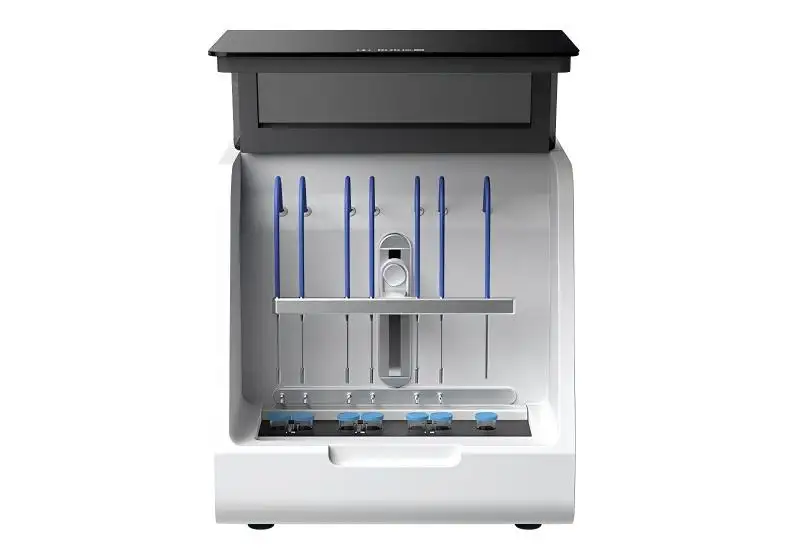
Effective New Drug Development Tools combine real-time concentration monitoring, controlled pH transitions, low-sample-volume testing, permeation models, and integrated data analysis. They can reveal biopharmaceutical risks before major formulation resources are committed.
What Are New Drug Development Tools?
New Drug Development Tools include analytical instruments, in vitro models, automated control modules, and software used in candidate screening and NCE preformulation research.
| Tool Category | Primary Function |
| Solubility screening | Measures solubility across media and pH conditions |
| Dissolution testing | Tracks the rate and extent of drug entering solution |
| pH shift systems | Simulates gastric-to-intestinal transitions |
| Permeation models | Evaluates transport across a simulated barrier |
| Fiber-optic monitoring | Records concentration continuously |
| Analysis software | Compares candidates and formulations |
Their value lies in connecting these functions. A final result may conceal supersaturation, precipitation, or a mismatch between dissolution and permeation.
Why Dissolution Testing Alone Is Not Enough
Dissolution is necessary for absorption, but it does not fully define absorption potential. A compound may dissolve rapidly and permeate poorly, or show high permeability while remaining dissolution-limited. A weakly basic drug may dissolve in gastric conditions, become supersaturated after a pH increase, and then precipitate.
| Test Approach | Main Question | Limitation |
| Solubility test | How much can dissolve? | Does not describe dynamic behavior |
| Dissolution test | How quickly does drug enter solution? | Does not measure membrane transport |
| Permeation test | Can dissolved drug cross a barrier? | May ignore upstream dissolution |
| Combined screening | How do both processes interact? | Requires synchronized control |
Advanced New Drug Development Tools therefore increasingly integrate dissolution and permeation within one workflow.
Key Challenges in Early-Stage Screening
Limited NCE Material
Early synthesis batches are often small, while repeated sampling and separate experiments consume scarce material. Low-sample-volume New Drug Development Tools allow more screening conditions while preserving API for other preformulation studies.
Loss of Time-Resolved Information
Offline sampling may miss:
• Rapid initial dissolution
• Short-lived supersaturation
• Precipitation onset
• Changes after medium adjustment
• Small kinetic differences between formulations
Real-time monitoring produces a continuous concentration-time profile rather than a few snapshots.
Reproducing Gastrointestinal Transitions
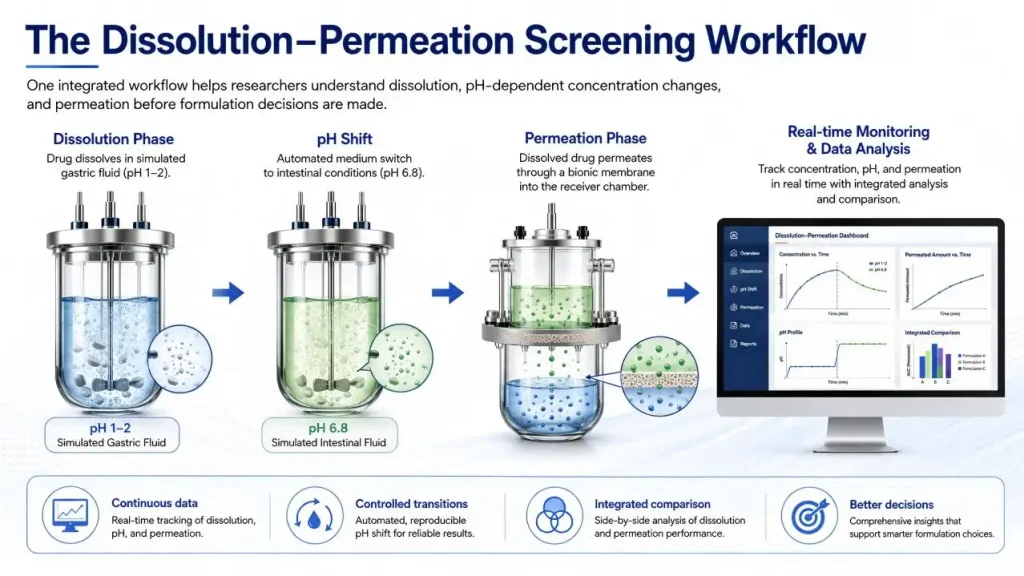
Oral drugs do not remain in one static medium. Automated pH shift testing improves control over medium addition, timing, temperature, and stirring. This matters for ionizable compounds whose solubility changes sharply between gastric and intestinal conditions.
Choosing an Appropriate Permeation Model
Barriers, membrane integrity, donor concentration, and hydrodynamics can impact permeation. Intestinal permeation models are reproducible and can be used to aid the interpretation of permeation/dissolution behavior. These models help to rank candidates and formulations, but substitute pharmacokinetic models.
Capabilities to Look for in New Drug Development Tools
| Capability | Research Value |
| Real-time monitoring | Detects rapid dissolution and precipitation |
| High acquisition frequency | Resolves short-lived events |
| Parallel channels | Supports matched formulation comparisons |
| Automated medium switching | Standardizes pH shift timing |
| Integrated permeation model | Links dissolved concentration with transport |
| Low sample consumption | Preserves limited NCE material |
| Graphical analysis software | Simplifies kinetic comparison |
The specifications should be assessed based on the defined process. These include parameters such as wavelength range, absorbance linearity, acquisition frequency, liquid addition, channel capacity, and compound compatibility. UV methods are affected by data quality and compound compatibility, and therefore, validation is necessary to demonstrate specificity, linearity, and medium or excipient interference.
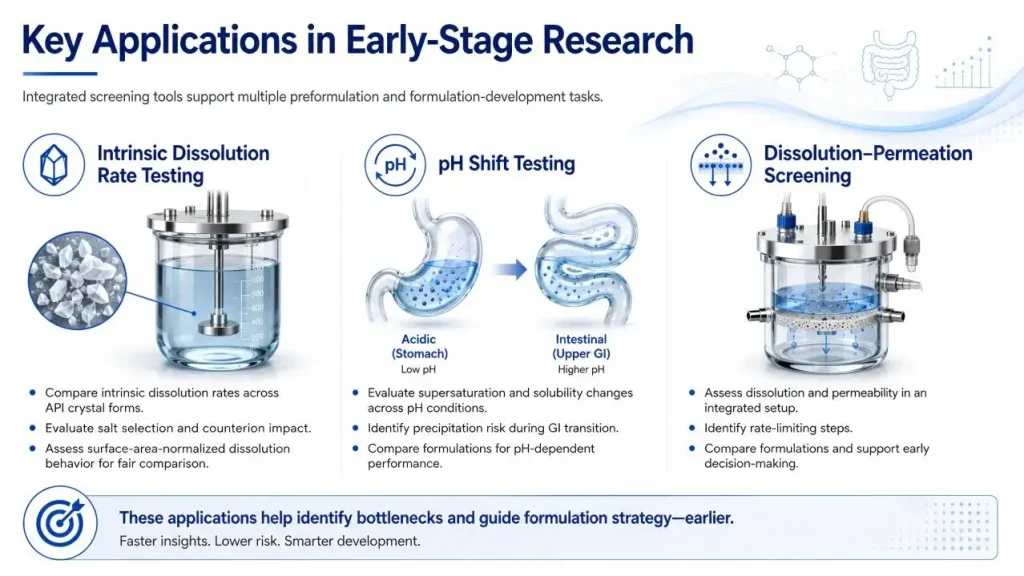
Important Applications
Intrinsic Dissolution Rate Testing
Intrinsic dissolution rate testing evaluates dissolution from a defined API surface area. It supports crystal-form comparison, salt selection, solid-state screening, and assessment of API-specific dissolution behavior.
pH Shift Testing
pH shift models examine whether an ionizable drug maintains supersaturation after transfer from gastric to intestinal conditions or precipitates before meaningful permeation occurs.
Dissolution–Permeation Screening
Integrated screening can distinguish among:
• Release-limited performance
• Solubility-limited exposure
• Precipitation after pH transition
• Permeation-limited absorption
• Formulations that raise dissolved concentration without increasing permeable drug availability
These distinctions guide salt selection, particle engineering, solubilization, and precipitation-inhibition strategies.
How Raytor Addresses Early Screening Challenges
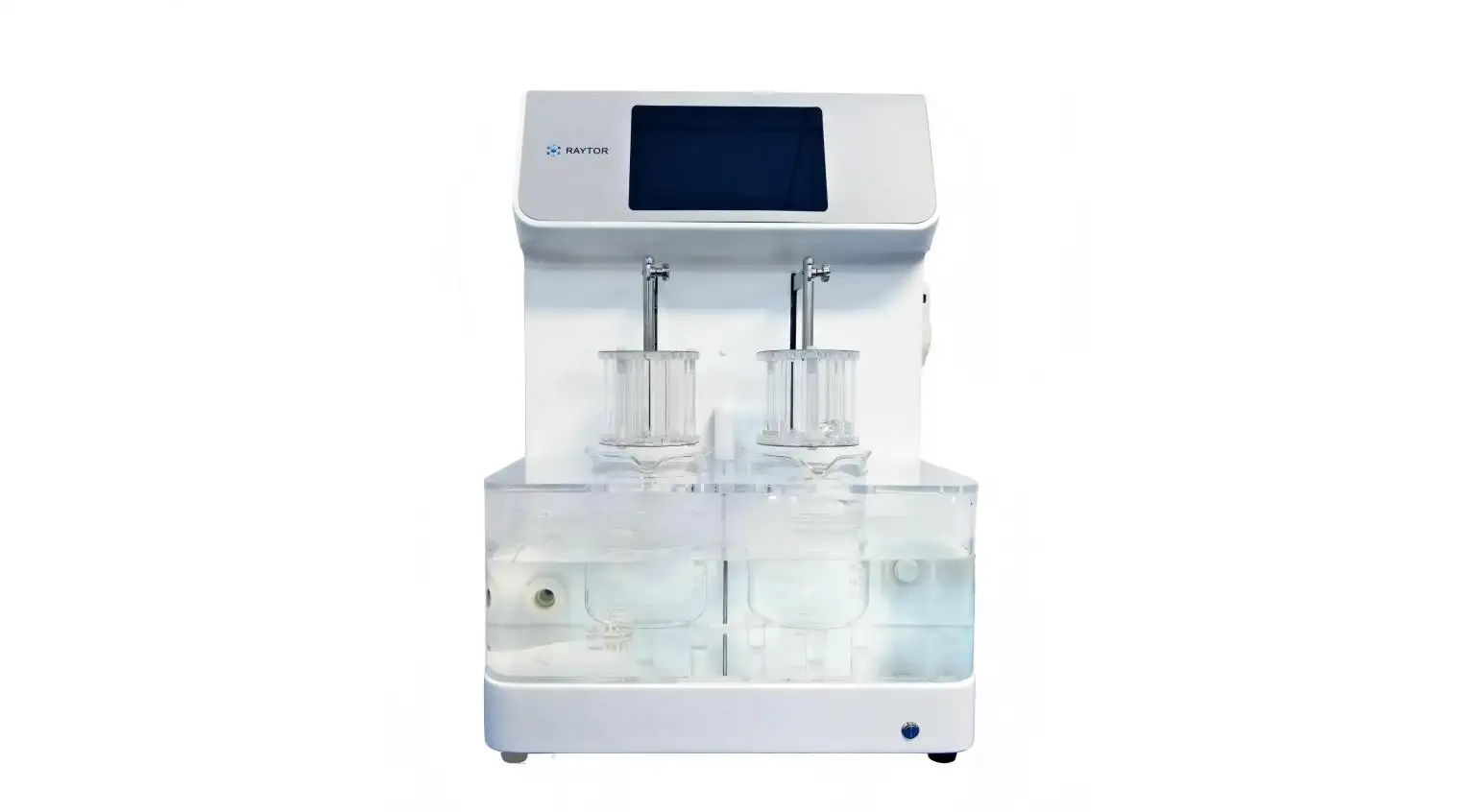
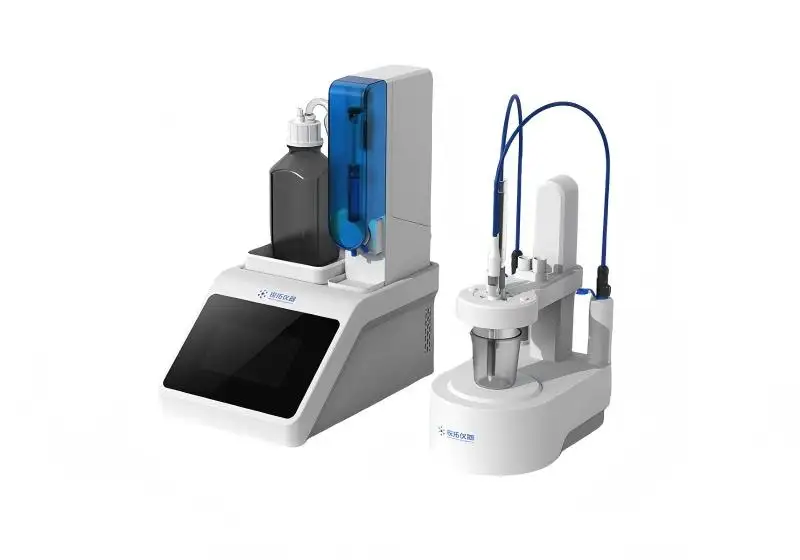
Raytor develops integrated New Drug Development Tools that connect dissolution behavior, pH-dependent concentration changes, and in vitro permeation within a controlled workflow.
There are six reactor channels and six fiber-optic channels for parallel monitoring. Data acquisition happens every second. This allows the detection of rapid dissolution, supersaturation and precipitation which cannot be seen with standard sampling.
The capabilities are as follows:
• 0.01-3 AU absorbance linear range
• 1 nm wavelength accuracy
• ±0.001 AU absorbance accuracy
• Control temperature from ambient to 40°C
• 100-1000 rpm stirring range
• Automate liquid addition within 1% of volume
The medium addition is automated with set amounts which enables studies of pH to be done reproducibly with less variation. The difference in concentration in donor and the permeation can be analyzed using a bionic membrane model.
Raytor's Accurate Inside data-processing technology and auxiliary software generate graphical profiles and support comparison across APIs, salt forms, crystal forms, and formulations. The low-sample-volume design also helps laboratories expand screening while conserving valuable NCE material.
Conclusion
Early drug development should treat dissolution, supersaturation, precipitation, pH response, and permeation as connected processes. Endpoint data alone may not explain why a candidate underperforms.
Advanced new drug development tools should easily facilitate the flow of research data across a controlled experimental design, support efficient parallel testing, and incorporate data on dissolution, pH-dependent behavior, and permeation. This allows researchers to identify formulation challenges, analyze formulation strategies to aid in decision-making, and make evidence-based formulation decisions.
Raytor offers customized systems and support to assist pharmaceutical laboratories in their design and configuration as well as the development of applications and provision of technical services for dissolution, pH-shift, and in vitro permeation studies. To design a screening workflow to meet the needs of your compounds, methods, and early researches, reach out to Raytor.
FAQs
Q1. What drug development tools does Raytor provide?
Raytor offers integrated analytical tools for early-stage dissolution testing, pH shift studies, intrinsic dissolution rate testing, in vitro real-time concentration monitoring, and in vitro permeation testing.
Q2. What are the early-stage benefits of Raytor's New Drug Development Tools?
With Raytor's tools, researchers are able to create a controlled workflow for evaluating dissolution, supersaturation, precipitation, and permeation, as well as the risks that may be present in formulations during the development process.
Q3. Can Raytor's system monitor drug concentration in real time?
Yes. It employs multiple fiber-optic channels that allow for the continuous monitoring of absorption and concentration during the course of an experiment. Data acquisition can be set to once every second if so desired.
Q4. How many samples can be concurrently evaluated?
The analytical system includes six reactor channels and six fiber-optic channels, thus allowing researchers to perform multiple parallel tests or to assess multiple formulations in a controlled comparative setting.
Q5. Does Raytor conduct pH shift testing?
Yes. Raytor's New Drug Development Tools facilitate automation of medium addition and removal at preset timing intervals, making the simulation of the switching from a gastric to an intestinal environment easier and more consistent.