

Tablet Disintegration Tester for Large Tablets and Capsules: When Is a Type B Basket Required?
2026-07-30


Large tablets and capsules, high doses, nutraceuticals, and oversize capsules can prevent disintegration for testing and cause problems for disintegration testing. Disks, capsules, and nutraceuticals can be too large and get stuck in a test tube and/or remain in contact with the test tube. They can also trap fragments of disintegrated tablets.
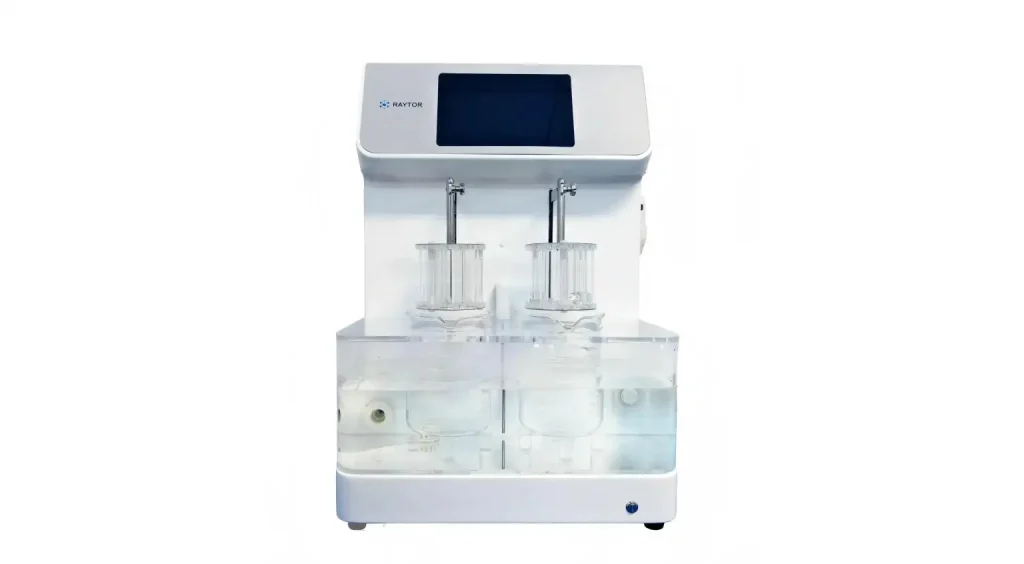
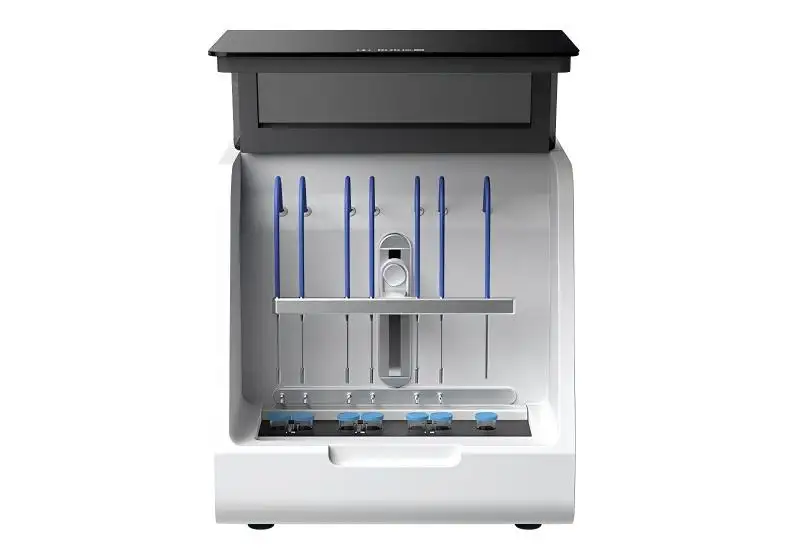
A Type B basket is generally used when a tablet or capsule measures more than 18 mm along its longest axis, unless the applicable pharmacopoeial monograph or approved analytical procedure specifies otherwise. Compared with a Type A six-tube basket, a Type B basket uses three larger tubes to provide sufficient space for oversized dosage forms to move, swell and disintegrate without unnecessary mechanical restriction.
What Does a Tablet Disintegration Tester Measure?
A Tablet Disintegration Tester determines whether a tablet, capsule or similar solid dosage form breaks down within a specified time under controlled test conditions.
The test typically controls:
•Test medium and volume
•Medium temperature
•Basket stroke frequency
•Vertical stroke height
•Test duration
•Basket and mesh configuration
•Use of disks, where required
Disintegration should not be confused with dissolution. A disintegration test evaluates the physical breakdown of the dosage unit, while a dissolution test measures the release of the active pharmaceutical ingredient into the test medium.
Therefore, a Tablet Disintegration Tester does not confirm complete drug dissolution. It confirms whether the dosage form reaches the specified physical endpoint within the required time.
Type A Basket vs. Type B Basket
The main difference between the two basket configurations is the space available for each dosage unit.
| Comparison Point | Type A Basket | Type B Basket |
| Typical dosage-form size | Longest axis up to 18 mm | Longest axis over 18 mm |
| Number of tubes | 6 | 3 |
| Tube configuration | Standard smaller tubes | Larger-diameter tubes |
| Typical applications | Conventional tablets and capsules | Large tablets and oversized capsules |
| Units tested per basket | 6 | 3 |
| Primary purpose | Routine disintegration testing | Prevent mechanical restriction |
| Selection basis | Size and approved method | Size, swelling behavior and approved method |
A Type B basket is not intended to accelerate disintegration. Its purpose is to provide a suitable physical test environment for larger dosage forms.
The larger tube diameter helps prevent the result from being influenced by:
•Sample jamming
•Continuous wall contact
•Restricted vertical movement
•Inadequate fragment dispersion
•Expansion of the formulation during immersion
When to Use a Type B Basket?
There are four technical factors to take into account when selecting a basket for use with the Tablet Disintegration Tester beyond what the product looks like.
1. The Longest Axis Exceeds 18 mm
If the external length of the tablet or capsule is greater than 18 mm, a Type B basket is required.
In this instance, the product monograph, the registered analytical procedure or the approved laboratory method maintained precedence.
2. The Dosage Unit Cannot Move Freely
Type A tubes may have mechanical constraints on samples in the approximate range of 18 mm, even if they are in the lower range.
Some of the symptoms of mechanical constraint may be:
•Obstruction of the tablet from entering the tube.
•Capsule impaction occurs during system movement.
•Tablet is in contact with the tube wall.
•A tube block is present in the lower section of the tube.
•Remnants of core tablets are adhered to the tube wall.
These situations can result in measured disintegration times that are artificially long.
3. The Approved Method Specifies an Apparatus
Before changing basket configurations, the laboratory should review:
•Relevant pharmacopoeial general chapters
•Product-specific monographs
•Registered test methods
•Internal standard operating procedures
•Method transfer documentation
•Validation or verification records
A laboratory should not replace Type A with Type B only because the larger basket appears more convenient.
4. The Formulation Expands During Testing
Certain formulations absorb substantial amounts of liquid during immersion. Examples may include high-load nutraceutical tablets, botanical formulations, hydrophilic matrices and large hard capsules.
A product may initially fit inside a Type A tube but become restricted after swelling. For this reason, basket selection should consider both the original dimensions and the sample’s behavior in the test medium.
How to Measure Dosage-Form Size?
Use a calibrated caliper to measure representative samples from the batch. Depending on the dosage form, laboratories should record:
•Longest axis
•Diameter
•Thickness
•Total capsule length
•Maximum dimension of irregular shapes
Nominal tooling dimensions should not replace actual sample measurements.
A practical decision framework is:
•Longest axis ≤18 mm: normally evaluate with Type A
•Longest axis >18 mm: normally evaluate with Type B
•Approved method specifies otherwise: follow the approved method
The selected configuration should be clearly documented in the test method and laboratory SOP.

How Dose the Wrong Basket Affect Results?
Incorrect basket selection may not trigger an obvious equipment alarm. Instead, it may appear as poor repeatability, prolonged disintegration or inconsistent results between laboratories.
| Testing Issue | Potential Effect |
| Oversized tablet in a narrow tube | Restricted movement or jamming |
| Swelling sample contacts the wall | Artificially prolonged disintegration |
| Fragments cannot disperse | False incomplete-disintegration result |
| Incorrect disk selection | Unintended mechanical pressure |
| Basket does not match the method | Method compliance risk |
| Unstable medium temperature | Variable sample behavior |
| Incorrect stroke movement | Reduced result repeatability |
When an unexpected result occurs, analysts should inspect the interaction between the dosage unit, tube, disk and mesh before concluding that the formulation has failed.
Does a Type B Basket Change the Sample Number?
A Type B basket contains three tubes, but the test procedure may still require six dosage units.
Laboratories can generally complete the test by:
•Operating two Type B baskets in parallel; or
•Repeating the procedure with one three-tube basket
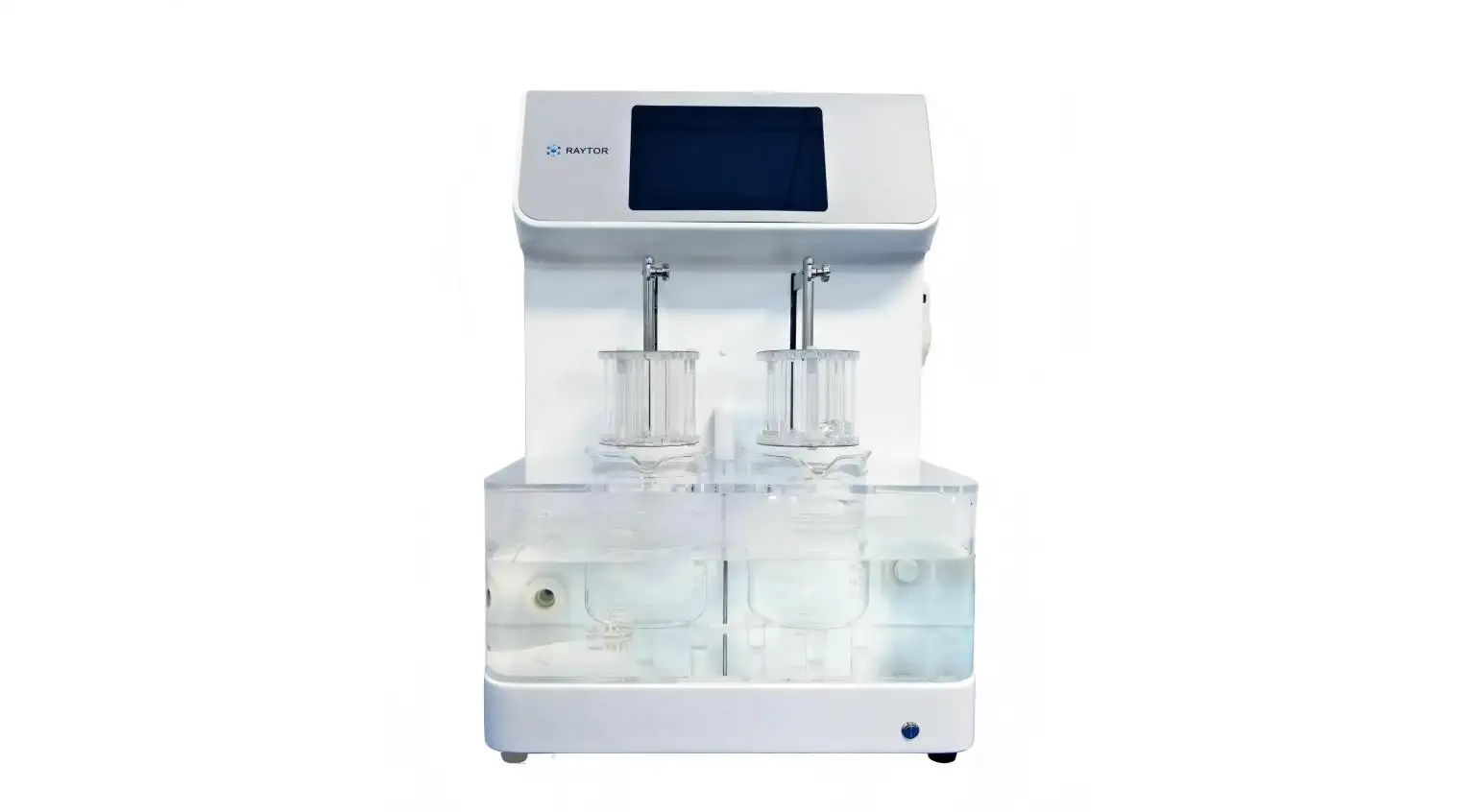
A Tablet Disintegration Tester with two independently operating basket groups can simplify large-dosage-form testing. Two three-tube baskets can be used to process six units without requiring a second test cycle, provided this arrangement is consistent with the approved method.
Important Tablet Disintegration Tester Parameters
Basket type is only one part of instrument selection.
| Parameter | Technical Importance |
| Water-bath stability | Maintains consistent medium conditions |
| Temperature accuracy | Reduces thermal variation |
| Stroke frequency | Standardizes basket movement |
| Stroke height | Controls immersion and vertical travel |
| Replaceable baskets | Supports different dosage-form sizes |
| Independent test groups | Enables parallel or separate testing |
| Illumination | Improves endpoint observation |
| Mesh options | Supports method-specific requirements |
| Printing functions | Assists routine documentation |
Typical pharmacopoeial conditions may include a medium temperature near 37 ± 2°C, approximately 29–32 strokes per minute and a vertical travel of approximately 53–57 mm. Exact conditions must always be confirmed against the applicable monograph or approved method.
How Raytor Supports Large-Dosage-Form Testing
Laboratories testing both conventional and oversized products require a configurable Tablet Disintegration Tester that can support different basket assemblies without complicating routine operation.
Raytor addresses this requirement through:
•Replaceable Type A six-tube and Type B three-tube baskets
•Two independently operating test groups
•Room-temperature-to-50°C temperature control
•Temperature resolution of 0.1°C
•Temperature accuracy of ±0.2°C
•Basket movement of 30–32 strokes per minute
•Stroke height of 55 ± 2 mm
•Integrated water-bath illumination
•Human-machine interaction interface
•USB-connected A4 printing or optional dot-matrix printing
•Standard 2 mm mesh with other sizes available
The independent basket groups are particularly useful when two Type B baskets are required to test six large dosage units. The replaceable basket design also allows the same Tablet Disintegration Tester to support conventional tablets, large tablets, capsules and other solid dosage forms.
Conclusion
A Type B basket is generally considered when a tablet or capsule exceeds 18 mm along its longest axis or requires additional space to move, expand and disintegrate freely. Final basket selection should also account for the applicable monograph, registered method, disk requirements and formulation behavior.
Raytor offers customizable Tablet Disintegration Testing Systems that have baskets that can be replaced, and units that allow the user to define the temperature and motion profile of their testing and provide sample observation and independent test groups. Labs can reach out to Raytor for help analyzing the basket configuration and the needs of their particular disintegration testing operation.
FAQs
Q1. Does Raytor provide Type A and Type B baskets?
The Raytor Tablet Disintegration Tester can be fitted with either a Type A (six tube) or a Type B (three tube) basket.
Q2. When should laboratories use a Type B basket?
The Type B basket is typically selected when the length of the largest dimension of the tablet or capsule is greater than 18 mm. The choice of basket should be in accordance of the pharmacopoeial monograph, the registered method and the laboratory’s SOP.
Q3. Could the Raytor Tablet Disintegration Tester be used to test six large dosage units?
Yes. The instrument has two independent basket groups. Therefore, if the methodology permits, two Type B three tube baskets can be used to test six large dosage units in a parallel test.
Q4. Could the two basket groups operate independently?
Yes. The two basket groups can be operated independently which makes it easier to perform different sample tests and offers greater throughput in a routine test.
Q5. What type of dosage forms can the Raytor system test?
The Raytor Tablet Disintegration Tester is designed for the test of tablets, capsules, pills and other similar solid dosage forms. This includes regular, immediate release, enteric coated, and other controlled release products.