

Analytical Instrument Manufacturer for High-Throughput Quality Control Laboratories
2026-07-29


High-throughput quality control laboratories must analyze exponentially more samples, manage more complex analytical methods, and meet aggressive timelines for delivering accurate results. Simply purchasing more instruments or hiring more analysts is rarely a viable solution to these problems. Even the most progressive labs can suffer from bottlenecks caused by manual bead addition and sporadic mixing, repeated and fragmented data entry, and poor data management.
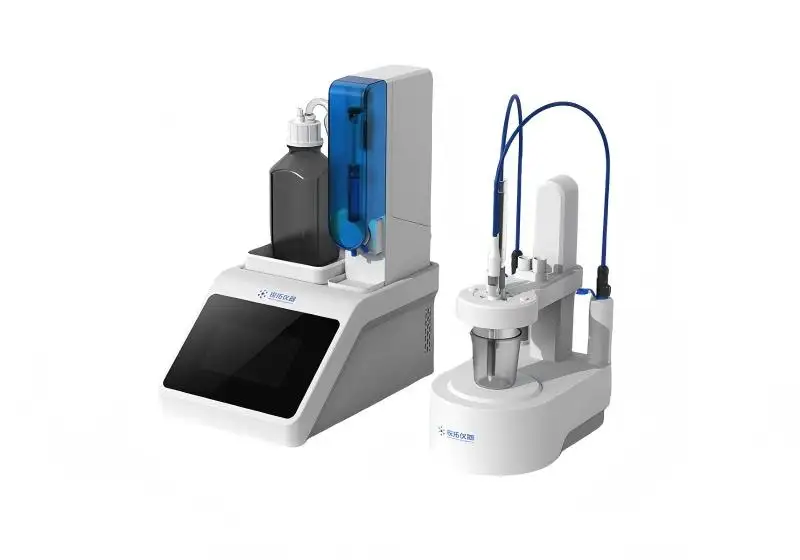
A reputable manufacturer of analytical instruments can automate the whole process from titration to sample mixing, method execution, and real-time process control. The aim should be not to simply increase the number of tests but to increase the pace of testing while improving overall control of the analytical process with increased repeatability and traceability.
Choosing the right Analytical Instrument Manufacturer is therefore an important part of pharmaceutical quality control and modern laboratory workflow planning.
What Defines a High-Throughput QC Laboratory?
High-throughput quality control is not determined only by daily sample volume. It also involves the complexity and frequency of laboratory operations.
A high-throughput laboratory typically handles:
• Multiple products, raw materials or formulations
• Frequent routine and release testing
• Different titration methods and sample matrices
• Short result-reporting deadlines
• Several analysts sharing the same instrument
• Large numbers of stored methods and test records
• Regular result review, investigation and archiving
These requirements are common in pharmaceutical QC, chemical manufacturing, food and beverage testing, environmental analysis, raw material inspection and contract laboratories.
For these facilities, an Analytical Instrument Manufacturer must provide more than basic measurement hardware. The system must fit into the complete analytical workflow.
Major Bottlenecks in High-Volume Titration
Repetitive Manual Operations
Manual titration often requires analysts to add titrant, control the dosing rate, stir the sample, observe endpoint changes and record the result. Repeating these tasks throughout a full shift increases operator workload and the possibility of procedural variation.
Automation can reduce repetitive work associated with:
• Titrant delivery
• Endpoint detection
• Curve recording
• Result calculation
• Method selection
• Report preparation
Analysts still have to handle electrode maintenance, method suitability, and assessing deviations from results. Automation can standardize steps, but it can't replace scientific analysis.

Inconsistent Test Conditions
Results from titration are impacted by minor differences in lab practice, for example:
• Uneven adding of titrant
• Poor circulation of solution
• Different stirring
• Variation in electrode response
• Subjective determination of endpoint
• Typographical errors
• Uncontrolled selection of method
An experienced Analytical Instrument Manufacturer should design tools to control as many of the above variables as is possible considering instrument technology and method standardization.
Multiple Titration Requirements
High-throughput labs often run several different types of reactions:
• Acid - base titrations
• Redox titrations
• Complexometric titrations
• Precipitation titrations
Separate systems and procedures for each titration method increase training, maintenance, and square footage of the lab. A multi-method platform largely addresses these issues by maintaining consistency in operation and integration of data.
What Should an Analytical Instrument Manufacturer Provide?
The features that add the most value are those that specifically address workflow issues.
| Lab Requirement | Instrument Capability | Operational Value |
| Faster throughput | Automated titration and method recall | Minimizes setup time |
| Multiple modes of titration | Diverse methods on a single system | Limits switching of instruments |
| Repeatable operation | Dosing, mixing, and endpoint detection | Minimizes variability |
| Visible process | Continuous display of titration curves | Helps in identifying abnormal reactions |
| Uniformity in methods | Fixed test conditions and controls | Decreases operator variation |
| Stored data | Local storage of data and reports, USB export | Eases review and storage |
| Easily installed | Compact, module instruments | Lowers installation and service disruption |
In addition to providing these features, an Analytical Instrument Manufacturer should outline the connection of these features to specific processes within a lab.
The Benefits of Automated Potentiometric Titration
Potentiometric titration utilizes the electrical potential change in a titration reaction to determine sample concentration or sample purity. The endpoint of the reaction is determined by the signal measured rather than relying on the traditional visible color change.
Automated potentiometric titration offers a number of benefits for routine QC:
• Standardized titrant addition
• Less dependence on visual indicators
• Automatic recording of the titration
• Explicit documentation of the endpoint
• Improved operator replicability
• Faster acceptance of previously established test methods
Due to these benefits, potentiometric titration is a valuable technique in laboratories performing repeat-testing of acid-base, redox and complexometric titrations, as well as other types of precipitation titrations.
Real-Time Curves as an Analytical Control Tool
A real-time titration curve is not simply a display feature. It allows analysts to evaluate how the sample responds throughout the test.
Curve monitoring can help users:
• Check electrode response stability
• Identify unexpected inflection points
• Observe slow or irregular reactions
• Compare different batches
• Optimize dosing and endpoint parameters
• Review questionable results
A professional Analytical Instrument Manufacturer should therefore treat process visualization as part of result evaluation and method development.
Why Mixing Design Affects Titration Results
Before an electrode can respond to the overall conditions of a solution, the titrant must be uniformly distributed throughout the sample. Poor mixing can cause momentary concentration gradients, resulting in delayed endpoint detection.
This can be worse when you have:
• Low or no fluidity in the liquid
• Trapped particles
• Complicated recipes
• Slowly reacting samples
• Large volumes
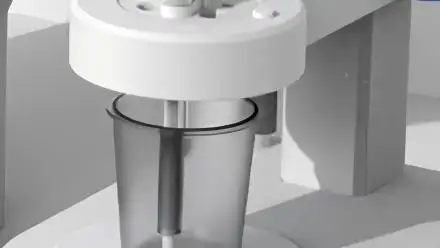
Paddle stirrers with a stir bar, whenever possible, will enhance circulation in your vessel as opposed to just mixing the surface of your sample. This will also help minimize local concentration gradients and facilitate measurement of a more representative sample.
Method Storage and Data Management
Reducing variation alone will not substantially help meet the demands of high-volume testing. Convenience and rapid testing are greatly assisted when an instrument can store 200 or more methods. Method storage will:
• Reduce repetitive parameter entry
• Increase consistency among analysts
• Facilitate compliance to SOP
• Reduce preparation time
• Help manage a wide variety of test samples
Test data can be automatically generated and stored for printing and reviewed in various formats (USB or PDF) and help fulfill your data management needs.
Exporting data, however, will not ensure you are compliant. User access, audit trails, backup, record retention, and integration with your QMS ar er also essential to consider.
Performance Indicators Buyers Should Compare
| Indicator | What It Describes | Why It Matters |
| Repeatability | Agreement between repeated results | Indicates suitability for routine batch testing |
| Titration error | Accuracy of dosing or control performance | Influences result reliability |
| Input impedance | Ability to measure high-resistance electrode signals | Important for stable potential measurement |
| Input current | Electrical loading on the electrode system | Lower current reduces signal interference |
| Method capacity | Number of methods that can be stored | Supports multi-product laboratories |
| Curve display | Visibility of the complete titration process | Assists monitoring and investigation |
| Report functions | PDF, USB and printing capabilities | Supports documentation and review |
Raytor systems offer repeatability of ≤0.2%, an oscillometric error of ±0.05, storage for more than 200 methods, input current of ≤1 × 10⁻¹² and input impedance of ≥3 × 10¹².
Actual method performance will also depend on electrode condition, reagent quality, sample characteristics, environmental conditions and method parameters.
How Raytor Supports High-Throughput QC
As an Analytical Instrument Manufacturer, Raytor combines four titration methods, automated process control and practical data handling within a compact modular platform.
Key workflow advantages include:
• Seamless switching between major titration methods
• Large touchscreen operation
• Dynamic real-time curve monitoring
• Reusable test conditions and stored methods
• Vertical stirring for effective sample circulation
• Local result storage
• PDF reporting, USB export and direct printing
• Compact design for flexible laboratory deployment
The instrument design also follows the relevant technical requirements and verification methods of JJG 814-2015, supporting measurement performance evaluation for applicable laboratories. This should not be interpreted as automatic compliance with every international regulatory framework.
Conclusion
High-throughput quality control requires more than faster testing. Laboratories must also control method execution, sample mixing, endpoint detection, data storage and result review.
When evaluating an Analytical Instrument Manufacturer, buyers should compare analytical performance, method capacity, process visibility, reporting functions, application support and long-term service.
Raytor has been producing analytical devices and solutions for application-testing automation for the preformulation study and quality control since 2015. Labs that want to set an automated titration workflow can contact Raytor to assess the types of samples they use, what methods they employ, their target
throughput, and what data management is required to identify workflow solutions that will increase efficiency without sacrificing analysis.
FAQs
Q1. What types of laboratories can use Raytor analytical instruments?
Raytor analytical instruments can be used in pharmaceutical quality control, chemical testing, food and beverage analysis, raw material inspection, environmental laboratories and contract testing services.
Q2. How does Raytor support high-throughput quality control?
Raytor uses an automated titration, reusable test methods, real time curve monitoring, mixing of samples, and storage of structured data to reduce routine tasks of laboratory work.
Q3. Which titration methods does Raytor support?
Raytor supports the following four major methods:
• Acid-base titration
• Redox titration
• Complexometric titration
• Precipitation titration
With this, laboratories can use one analytical platform to manage different types of samples.
Q4. Can Raytor instruments display the titration process in real time?
Yes. This system displays titration curves in real time enabling analysts to have full control of electrode response, identify atypical inflection points, and determine behavior at endpoints.
Q5. How many test methods can be stored?
Raytor's analytical systems allow storage of more than 200 titration methods and test conditions. This means that once a titration method is set, operators can be saved from repeatedly entering the same parameters for every test.