

Quality Control inside a Transdermal Diffusion Tester Factory in China
2026-08-23


For pharmaceutical companies, CRO laboratories, and research institutions choosing a Transdermal Diffusion Tester Factory in China, choosing based on equipment models or basic specifications is only the primary consideration. The more critical consideration is whether the manufacturer controls the factors that will determine the reliability of the IVPT (In Vitro Permeation Test) and the IVRT (In Vitro Release Test).
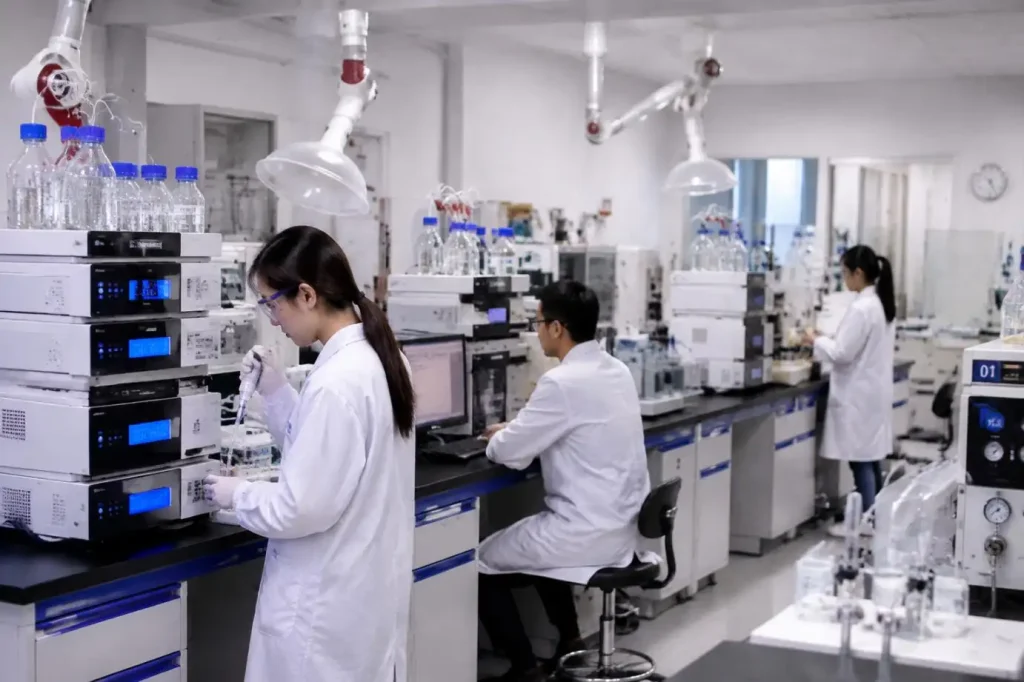
A professional Transdermal Diffusion Tester Factory in China should have the capability to perform precision manufacturing, system integration, performance assessment, and support of application. The quality of diffusion cells, temperature control, sampling accuracy, hydrodynamic stability and data management will determine the degree of repeatability of the experiments and the integrity of the evaluation of the formulation.
Established in 2015, Raytor Instrument, headquartered in Shenzhen, Guangzhou and Jiaxing respectively, is a provider of instruments and services for pharmaceutical analysis with an emphasis on design and manufacture of drug dissolution, permeability analyzers and transdermal diffusion test systems.
With background in pharmaceutical laboratory systems, Raytor Designs transdermal diffusion systems for IVPT and IVRT workflow and research on topical drug formulations, semi-solid and transdermal drug delivery systems.
Why Quality Control Defines a Reliable Transdermal Diffusion Tester Factory in China
TCS (Transdermal Diffusion Testing) assesses the release of drugs from a formulation and their subsequent permeation through a membrane in laboratory conditions.
In most laboratory instruments, the output is a function of measurement accuracy. In diffusion testing, however, a number of multiple, interacting factors need to be controlled.
A professional Transdermal Diffusion Tester Factory in China needs to control:
•Diffusion cell dimension
•Uniformity of temperature among all testing positions
•Stability of stirring speed
•Timing and accuracy of sampling
•Bubble removal
•Traceability of data
Deviations in any of these can affect:
•Drug release
•Permeation rate
•Flux
•Repeatability of parallel samples
Because of this, the quality of the equipment should be assessed on the entirety of the process of the manufacturing and verification of the equipment, and not on specifications of individual components.
| Quality Control Area | Influence on IVPT / IVRT Results |
| Diffusion cell precision | Ensures consistent diffusion area and receptor volume |
| Temperature control | Maintains stable drug diffusion conditions |
| Fluid handling system | Reduces sampling variation |
| Mechanical alignment | Improves consistency between test positions |
| Software management | Supports traceable experimental records |
Precision Manufacturing of Franz Diffusion Cells
A transdermal diffusion system's backbone is the Franz diffusion cell. A professional Transdermal Diffusion Tester Factory in China must manufacture every diffusion cell with uniform geometry and sealing performance.
Critical manufacturing factors are as follows:
•Effective diffusion area
•Receptor chamber volume
•Membrane positioning accuracy
•Sealing stability
•Connection consistency
These factors affect the calculation of permeation parameters.
If the diffusion areas of cells vary, permeation profiles under similar testing conditions may not be the same, even if the formulation is the same.
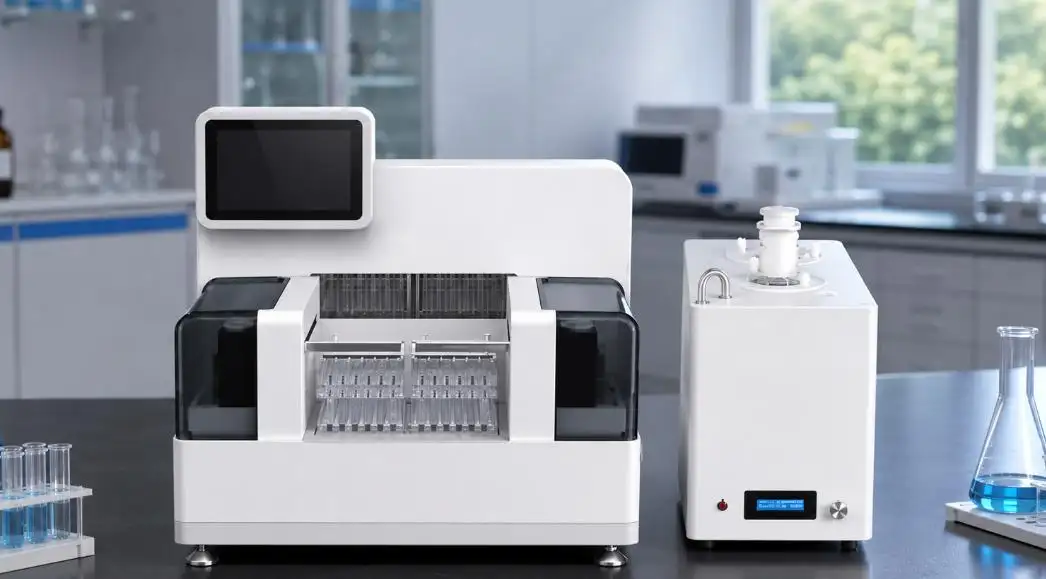
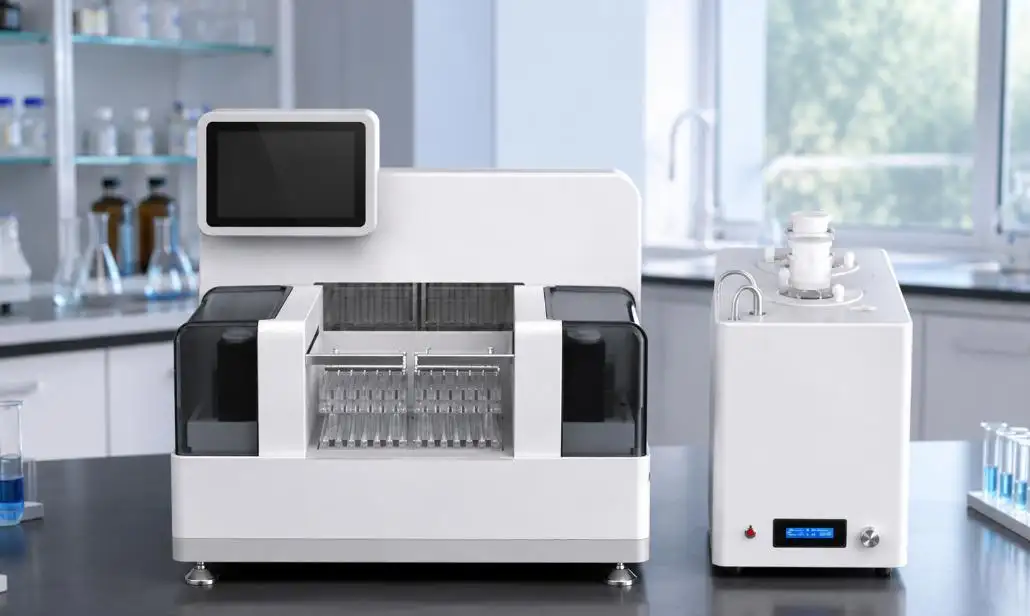
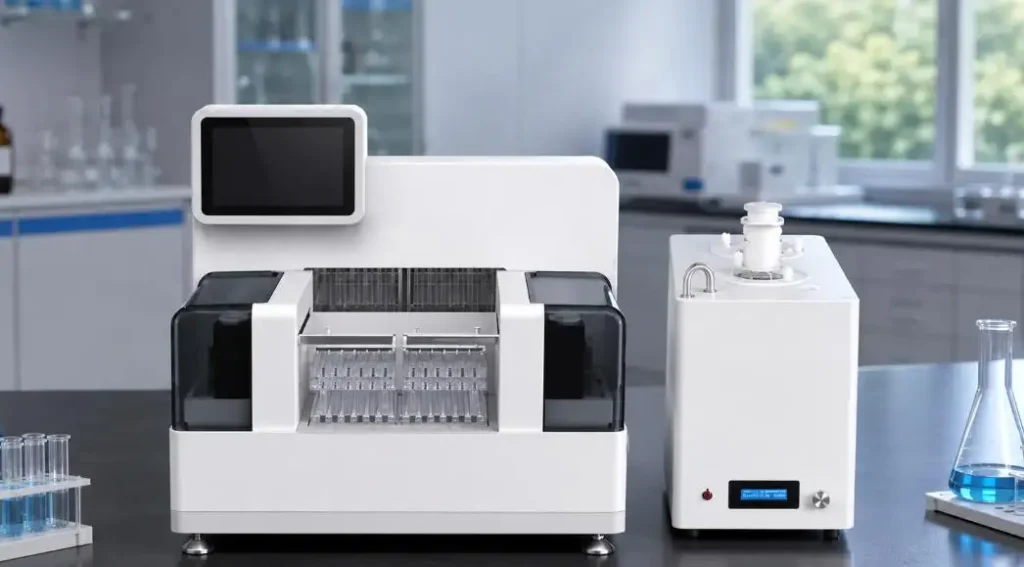
Raytor uses a modular design and a precision manufacturing approach for its transdermal diffusion systems. The RT814 Automated Transdermal Diffusion System has a 14-position vertical Franz diffusion cell with selectable diffusion cell volumes of 9 mL, 10 mL, and 12 mL. Laboratories can easily adjust the configuration of the system for testing various diffusion cell volumes.
Temperature Stability and Hydrodynamic Control During Diffusion Testing
Of the various factors that influence molecular diffusion, temperature is the most important variable. A professional Transdermal Diffusion Tester Factory in China must confirm not only if the system can achieve the desired temperature, but also if the diffusion positions have similar, uniform conditions.
Raytor's transdermal diffusion systems allow for user-adjustable, stable testing environments. The RT814 system is adjustable from 25°C to 50°C with temperature control of ± 0.5°C. The diffuser also has a stirring range from 200 to 900 rpm with an error of ± 10%.
These factors affect the test performance in the following ways:
•Maintaining a constant temperature ensures that the rate of diffusion is not falsified.
•Controlled stirring helps maintain consistent boundary layer conditions.
•Repeatability of the tests is improved due to better control of hydrodynamics.
| Technical Factor | Testing Impact |
| Temperature deviation | May change release and permeation behavior |
| Stirring variation | Influences drug distribution in receptor medium |
| Medium volume stability | Affects concentration calculation accuracy |
Manufacturing Quality Inspection Inside a Professional Factory
A good Transdermal Diffusion Tester Factory in China would apply quality control measures at the manufacturing stage over the final inspection.
Component-Level Verification
Before assembly:
•Dimensional accuracy checks are performed on components
•Integrity and consistency checks are performed on glass diffusion cells
•Reliability checks are performed on electronic modules
Assembly and System Integration
During production:
•Diffusion cells are position verified
•Heating systems are calibrated
•Sampling pathways are checked
•Control systems are verified
Final Performance Validation
Prior to shipment:
•Tests are performed to verify temperature stability
•Stirring performance check is performed
•Accuracy of sampling tested
•Tests are performed to verify software functionality
Raytor, with their established application centers, combines R&D services, manufacturing, and application labs to support the development of pharmaceutical instruments and devices.
How Automation Increases Repeatability in Transdermal Diffusion Testing
There are drawbacks to manually doing Franz diffusion testing. The most challenging part of this method is repeated sampling. Some errors caused by the operator in repeated sampling include:
•Inconsistent sampling time intervals
•Variation in volume of sampling
•Failing to fully replace the medium
•Losing data
Remaining issues can be resolved by automating the transdermal diffusion process. These systems can include:
•Programmable sampling schedules
•Sampling channels
•Automatic medium replacement
•Easy-to-use data logging
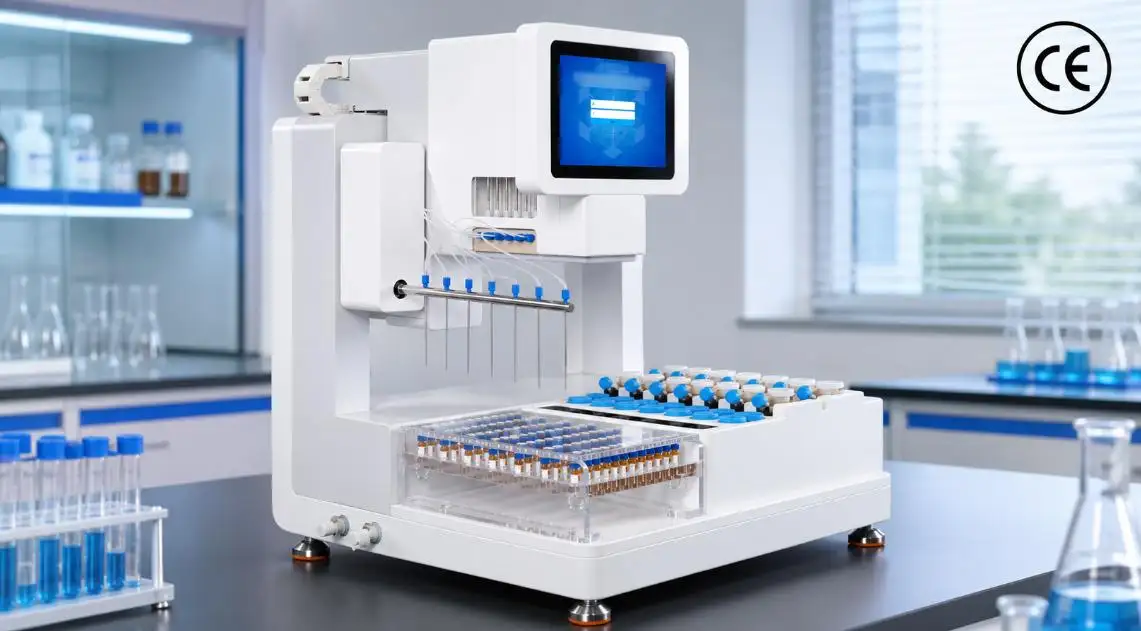
Automation of sampling and fluid control is one of the features of Raytor's automated diffusion systems. The RT814 model provides up to 24 automated sampling events that are sampled simultaneously through 14 sampling channels. This model also has a mechanism to automate the sampling mode selection and to remove any air bubbles that may be present.
There are other factors that need to be considered. The automation of the systems does not guarantee reliable results. A qualified system needs all the following:
•Correct setup
•System checks and calibrations
•Validation of the proposed method
•Scheduled checks
Comparing Different Quality Levels of Transdermal Diffusion Testing Systems
When evaluating Transdermal Diffusion Tester suppliers from China, it is important to consider the manufacturing capability and technical support, as opposed to focusing on the equipment prices.
| Evaluation Factor | Basic Supplier | Professional Factory |
| Diffusion cell consistency | Limited inspection | Controlled manufacturing process |
| Temperature verification | Basic functional test | Performance validation |
| Automation integration | Simple functions | Integrated sampling and control |
| Application support | Product delivery only | Testing workflow guidance |
| Long-term service | Limited | Continuous technical support |
A professional manufacturer provides not only equipment but also knowledge of pharmaceutical testing requirements.
Standards and Documents to Verify Before Purchasing
A machining company that is capable enough to produce a device for assessing transdermal diffusion must have the ability to integrate equipment design and pharmaceutical testing.
Some key references:
•USP <1724>:Semisolid Drug Products—Performance Tests
•EP 2.9.4:Dissolution Test for Transdermal Patches
•IQ/OQ/PQ qualification procedures
•Calibration and traceability documentation
•Data integrity requirements
Raytor transdermal diffusion systems are designed for IVPT and IVRT applications based on USP <1724> and other related pharmaceutical tests.
Final Words
Several aspects need to be assessed to choose the right manufacturer:
•Expertise in the design of pharmaceutical instruments
•Ability to manufacture and inspect
•Know-how of IVPT and IVRT
•Flexibility to customize
•Assistance after installation
Raytor Instruments has been active in the manufacturing of analytical pharmaceutical instruments since 2015, providing solutions for drug dissolution research, permeability studies, and transdermal diffusion. We have engineering teams, application laboratories, and manufacturing in China providing equipment for research and quality control to laboratories.
For organizations considering a Transdermal Diffusion Tester Factory in China, working with a manufacturer that has both the ability to fabricate and the knowledge of pharmaceutical applications can help reduce testing risks and enhance the overall efficiency of a laboratory in the long run.
Raytor is focused on providing automation and simplified solutions for the challenges that researchers face in performing IVPT and IVRT studies.
FAQs
Q1. Does Raytor offer automated transdermal diffusion testing systems?
A: Yes. Raytor offers automated solutions for transdermal diffusion with features such as programmable sampling, multiple diffusion positions, automation of fluid handling, and digital flow process management, thereby reducing operator-related variability.
Q2. Where is the factory of Raytor's Transdermal Diffusion Tester located in China?
A: Raytor Instruments is located in Shenzhen, China. Its operations are also in Guangzhou and Jiaxing. The company has integrated R&D, production, inspection, testing, and technical service for pharmaceutical laboratory instruments.
Q3. When was Raytor started?
A: In 2015, Raytor Instruments was founded, and since then, the company has focused on the development of pharmaceutical laboratory instruments, specifically the formation of dissolution testing and transdermal diffusion.
Q4. What kinds of formulations can the Raytor transdermal diffusion systems test?
A: Transdermal diffusion systems made by Raytor can test topical and transdermal formulations like creams, gels, ointments, lotions, and semisolid preparations as well as transdermal patches.
Q5. How does Raytor ensure the accuracy of its transdermal diffusion testers?
A: Raytor controls the IVPT repeatability by focusing on critical factors, such as the diffusion cells, temperature, stirring, sampling accuracy, and verification of system performance.