






Advanced Pharmaceutical Instruments for Modern Topical Drug Testing
2026-10-21


A topical cream can pass its assay specification yet produce an unexpected in vitro release profile. The difference may originate in the emulsion's microstructure, but it may also come from air trapped beneath the membrane, drug adsorption onto sampling tubing, or a receptor medium that cannot maintain the required concentration gradient.
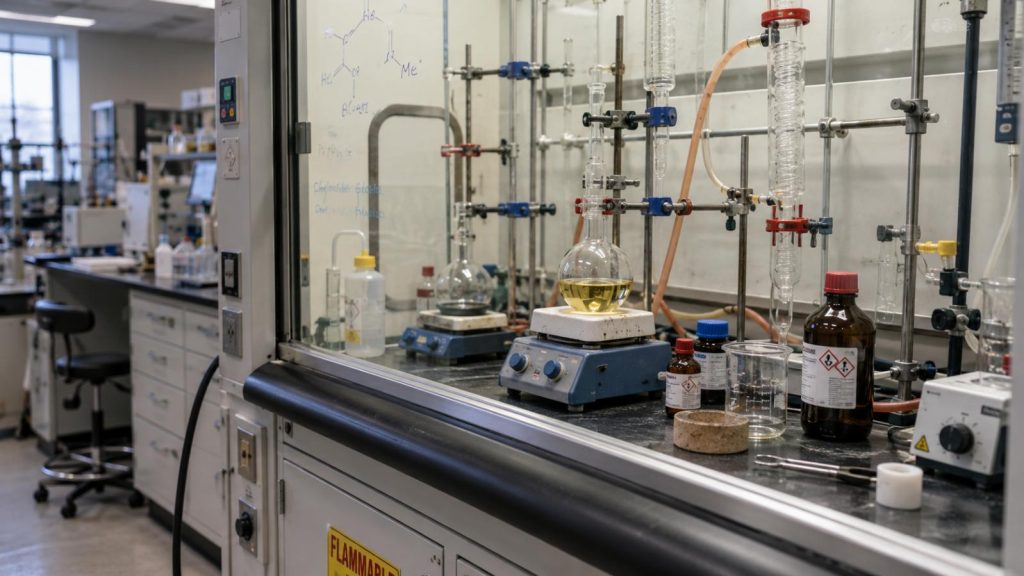
Distinguishing formulation behavior from test-system error is a central challenge in topical drug development.
At Raytor, we develop advanced pharmaceutical instruments for laboratories conducting in vitro release testing (IVRT) and in vitro permeation testing (IVPT). Equipment selection starts with the transport mechanism being investigated, then moves to diffusion-cell geometry, sampling architecture, and method-specific performance verification.
1. IVRT vs. IVPT: Which Measurement Answers the Formulation Question?
Both methods can use vertical Franz diffusion cells, but they evaluate different barriers.
IVRT examines drug release from the dosage form. A synthetic membrane separates the formulation from the receptor medium. Ideally, membrane resistance remains sufficiently low that the measured release rate reflects formulation behavior rather than membrane transport.
For suitable semisolid formulations, cumulative drug release per unit area is evaluated against the square root of time. Changes in emulsion structure, drug solubility, or API particle size may alter the resulting release profile.
IVPT examines drug permeation through skin. Here, the stratum corneum introduces a biological barrier governed by partitioning, diffusion, and skin integrity.
Relevant endpoints include cumulative permeated amount and maximum flux (Jmax). Lag time may also be evaluated when the permeation profile supports its determination.
The distinction affects equipment qualification and experimental design:
• IVRT requires a membrane that does not mask formulation differences.
• IVPT requires qualified skin samples, controlled donor allocation, and appropriate barrier-integrity assessment.
• Neither method independently establishes therapeutic equivalence.
For topical products not addressed by applicable FDA product-specific guidance, laboratories should consult FDA's October 2022 draft guidances on In Vitro Release Test (IVRT) and In Vitro Permeation Test (IVPT) studies. Both documents remain in draft form and provide nonbinding recommendations rather than legally enforceable requirements.
2. Membrane Contact and Receptor Conditions: Where Diffusion Errors Begin
A programmable temperature diffusion cell can maintain its programmed temperature while producing misleading data. Similar attention should be given to the transport interfaces.
Synthetic Membranes and Skin Compatibility
Synthetic membranes can adsorb or partition APIs and hence retain them, resulting in an apparent delay in release, despite the formulation being unchanged.
Prior to method validation, laboratories should assess membrane adsorption and the recovery of the API, and consider whether membrane resistance limits the release.
IVPT introduces further complications. Skin thickness, source, and storage can affect the integrity of the barrier. Electrical resistance measurements or transepidermal water loss measurements (if the respective validated methods are available) may be used to assess the barrier integrity.
Receptor Medium and Dose Control
The receptor medium should be chosen to ensure the drug remains in solution.
Adding surfactants or cosolvents may provide sink conditions, but can also change the partitioning of the drug, and affect the skin barrier. Thus, solubility of the drug in the medium and the stability of the drug in the medium should also be assessed.
Dose conditions must correspond to the purpose of the study. Finite doses can result in the evaporation of the vehicle, depletion of the API and changing thermodynamic activity. These should not be attributed to instrument error without further evaluation.
3. How Sampling Architecture Changes the Release Profile
Manual and automated Franz systems can use the same diffusion principle while producing different operational risks.
In manual testing, small differences in withdrawal timing become relevant when concentration changes rapidly. Automated sampling improves timing consistency, but adds tubing, pumps, and additional wetted surfaces.
There are three effects worth noting:
• Sample Retention: The drug may remain in the tubing, and contaminate subsequent samples, and/or affect sample recovery.
• Volume Replacement: Replacement volume, and receptor concentration, are altered. Mass calculations for cumulative release are also affected.
• Air Entrapment: Reduces membrane contact area. Irregular release profile.
In the case of partial sampling with fresh-medium replacement, the calculations for cumulative release must account for the mass of drug removed during previous sampling events. The latest measured receptor concentration does not represent total released mass.
Stirring also changes receptor-side boundary-layer resistance. Consequently, increasing stirring speed may change the measured rate without any formulation modification.
Verification should include sampling recovery, carryover, effective receptor volume, and temperature measured under actual operating conditions.
4. Selecting Raytor Advanced Pharmaceutical Instruments for Topical Testing
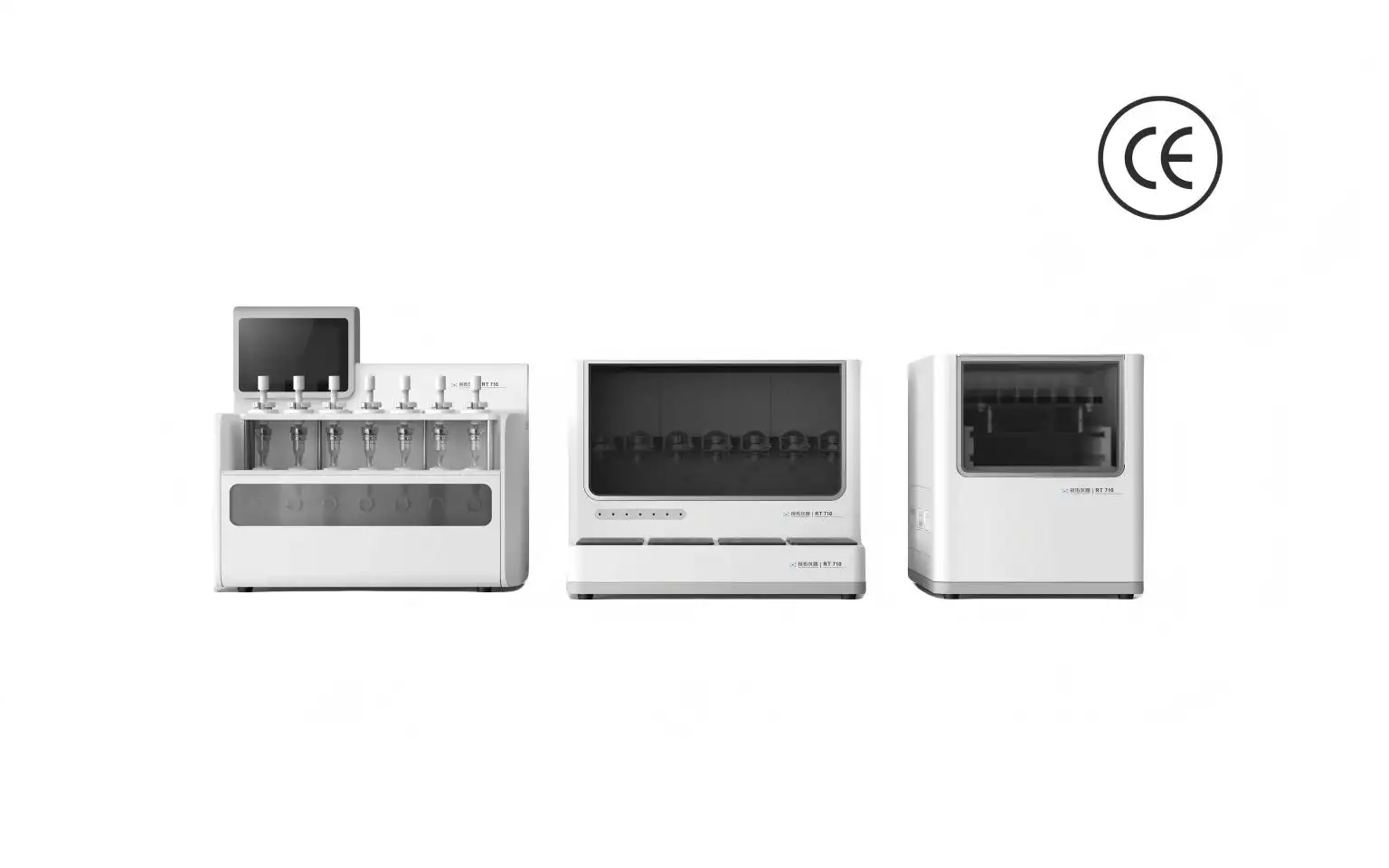
Raytor offers manual and automated Franz diffusion systems with different sampling configurations. The correct choice depends less on the maximum number of diffusion cells than on the method's sample-volume requirements, sampling frequency, and acceptable operator involvement.
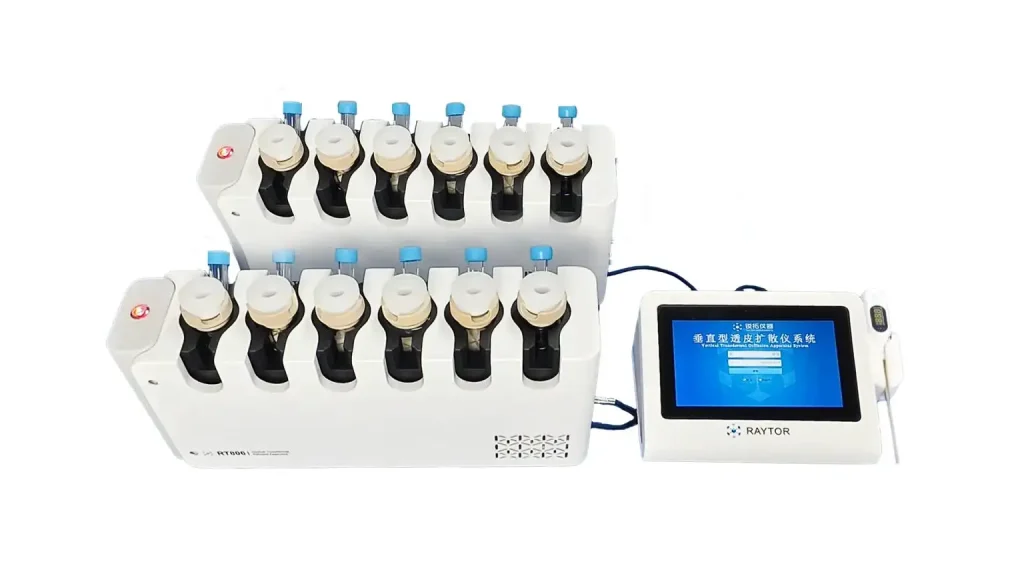
The following configurations are based on Raytor's published product information.
| Equipment | Configuration | Engineering advantage | Selection consideration |
| RT806 | Six cells per group; manual sampling | Flexible operation during method development | Operator timing and sample handling require control |
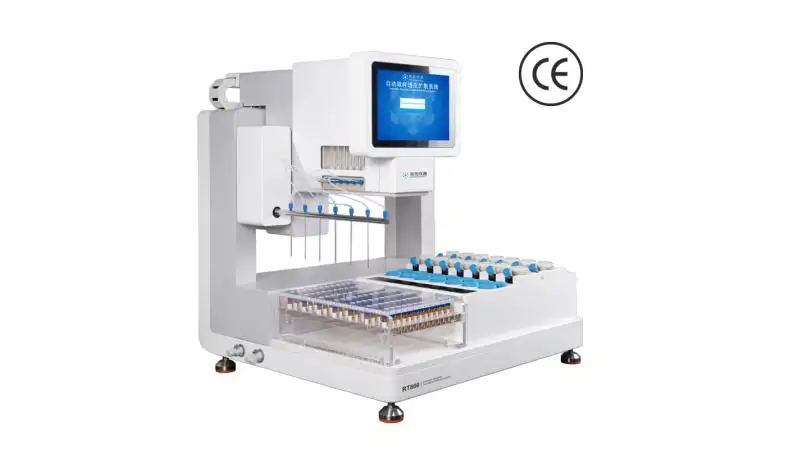
| RT800 | Two seven-position groups; seven synchronized sampling channels | Synchronized withdrawal within a group; shortened sampling pathways | Verify sample-volume compatibility and tubing recovery |
| RT814 | Fourteen positions and sampling channels; individual pipelines and pumps | Reduced shared-path carryover risk; automatic bubble removal | Confirm full or partial sampling requirements and system qualification |
When Is Automation Worth the Additional Complexity?
The RT806 suits laboratories that need direct control over experimental conditions and can manage manual sampling consistently.
For repeated time-point studies, the RT800 provides synchronized sampling within a seven-cell group. Raytor also specifies audit-trail functionality and a shortened sampling pathway intended to reduce residual sample.
The RT814 uses separate pipelines and pumps for individual cells, allowing greater sampling-path separation. Its mechanical design supports automatic bubble removal and both partial and full sampling.
Certain features address known types of error, but their impact will depend on the specific API, receptor medium, cleaning procedure and validated method.
5. What Should Buyers Verify Before Equipment Acceptance?
A supplier's stated temperature control accuracy or suitability with respect to USP <1724> does not validate the suitability for all types of topical formulations.
Prior to procurement, it is appropriate for the Laboratory to request evidence for:
• Thermal Performance: Equilibration of the receptor cell with the pharma equilibration time and a variation between receptor cells.
• Sampling Performance: Sampling time, volume withdrawn, and API recovery, as well as carryover.
• Data Integrity: Audit trail operation, and user permissions for electronic records.
Thermal Performance and Sampling Performance should be assessed for relevant cells used. Data Integrity should be evaluated for the instrument and all connected systems.
Installation and Operational Qualification should be followed by Performance Qualification.
For automated systems, challenge testing should include the intended sampling schedule, not merely a demonstration that the pumps operate.
A diffusion instrument cannot correct unsuitable membrane selection, poor sink conditions, or compromised skin samples. Those controls belong in method development and validation.
Raytor provides RT806, RT800, and RT814 transdermal diffusion systems for laboratories evaluating topical formulations. Share your required diffusion-cell configuration, receptor volume, and sampling protocol with our technical team to assess instrument compatibility before purchasing.
FAQs
Q1. What Advanced Pharmaceutical Instruments does Raytor offer for topical drug testing?
Raytor offers RT806 manual, RT800 automated, and RT814 automated Franz diffusion systems for IVRT and IVPT studies of topical formulations.
Q2. Can Raytor instruments perform both IVRT and IVPT?
Yes. Raytor's RT806, RT800, and RT814 support IVRT and IVPT applications. Membrane selection, receptor medium, and testing protocols must be validated for each study.
Q3. What is the difference between Raytor RT806 and RT800?
RT806 is a manual-sampling Franz diffusion system with six cells per group. RT800 provides automated sampling, with two seven-position groups and seven synchronized sampling channels.
Q4. How many diffusion cells does the Raytor RT814 support?
RT814 supports 14 diffusion-cell positions and 14 sampling channels, with separate pipelines and pumps for individual cells.
Q5. Which Raytor system supports automatic bubble removal?
Raytor RT814 features automatic bubble removal through its mechanical diffusion-cell design. RT806 and RT800 use filling and bubble-management procedures.