





Affordable Pharma Lab Equipment in 2026: Key Trends for Budget-Conscious Labs
2026-10-19


An eight-vessel dissolution tester may be less expensive than an automated system, but justifying the cost difference becomes difficult when analysts have to collect multiple samples at closely spaced intervals. A twelve-vessel automated system provides little economic benefit if only six positions are regularly used.
For 2026, the challenge for laboratories purchasing Affordable Pharma Lab Equipment will be matching the capacity of instruments, sample reliability, qualification and maintenance costs to the actual testing demand.
At Raytor, we see the most practical purchasing decisions beginning with analytical methods rather than equipment feature lists.
1. Right-Sized Equipment Is Replacing Capacity-First Purchasing
Match Instrument Functions to Testing Workloads
Vessel count alone is a poor indicator of productivity. A dissolution system may have twelve positions, but throughput still depends on test duration, sample preparation, media equilibration, cleaning, and analyst availability.
For routine tablet quality control, an 8-position tester may be sufficient. Labs that handle multiple product batches, or labs that perform concurrent method comparisons, may require additional vessels.
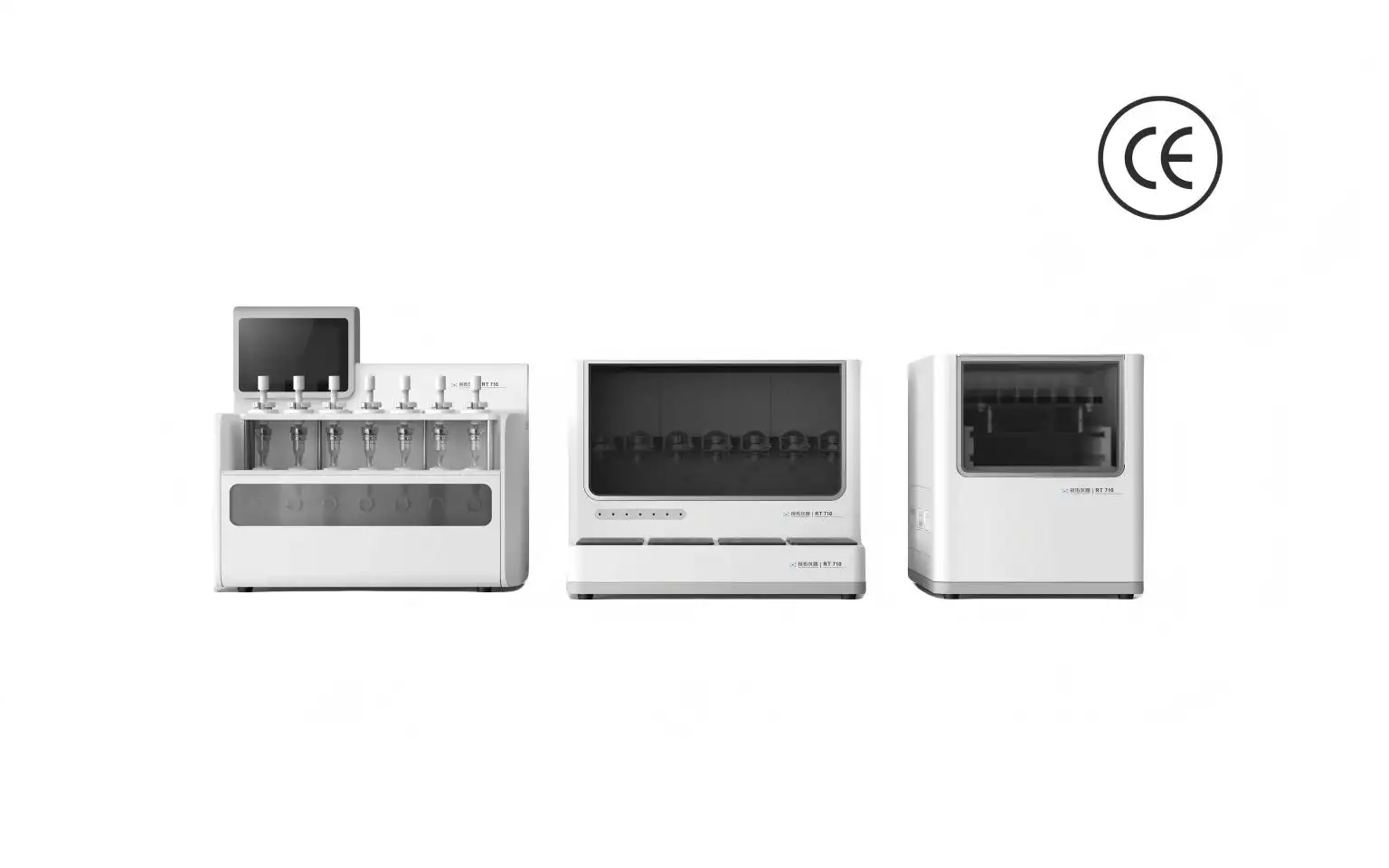
Raytor offers several configurations to satisfy different analytical requirements.
| Raytor Equipment | Technical Configuration | Purchasing Consideration |
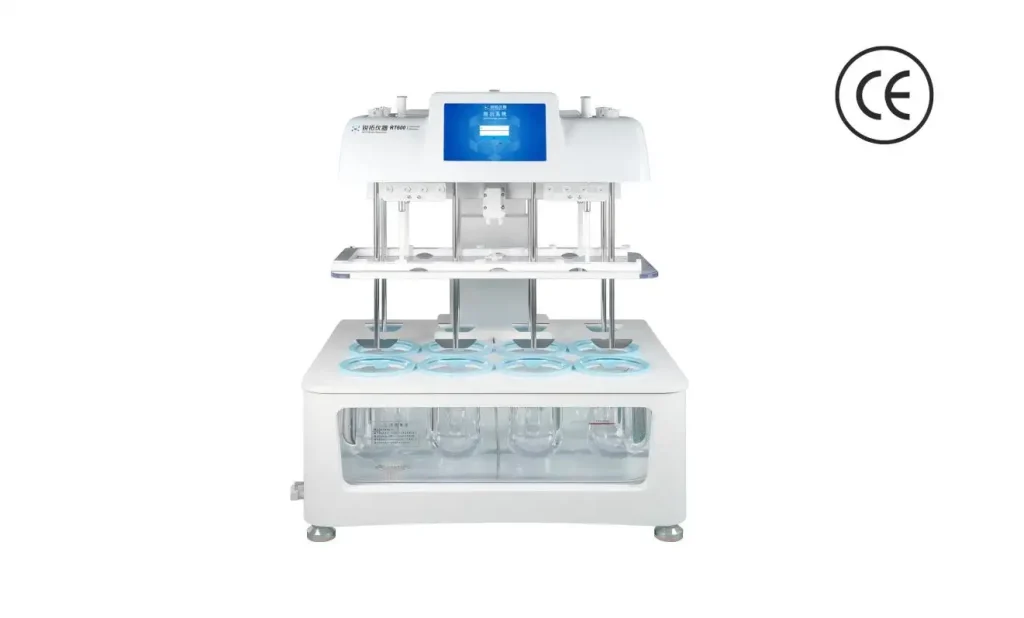
| RT600 | 8-position dissolution apparatus, manual sampling | Suitable for moderate testing workloads |
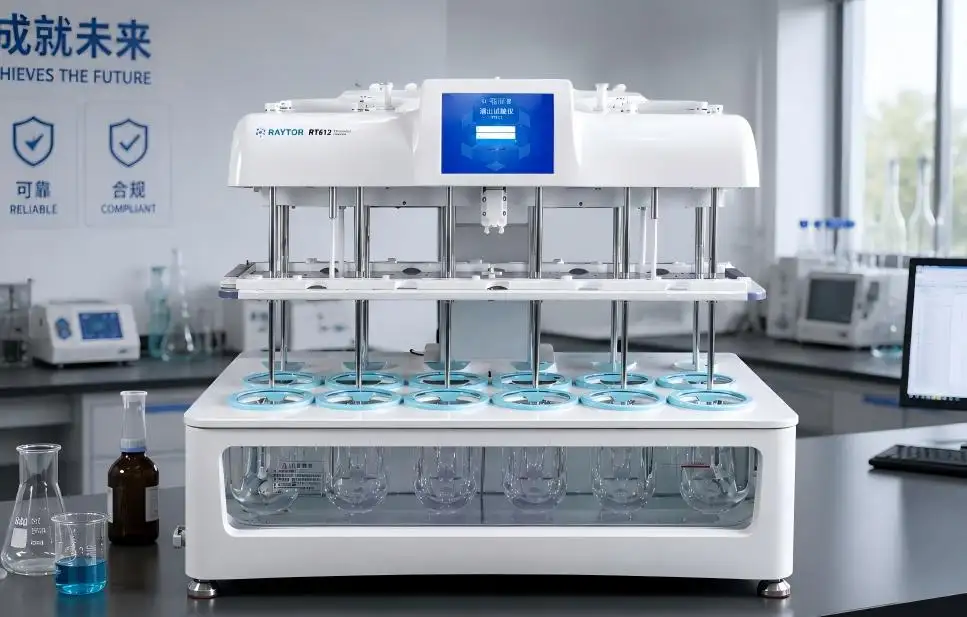
| RT612 | 12-position dissolution apparatus | Additional vessel capacity for concurrent testing |
| RT600-ST | 8-position system with automated sampling | Reduces repeated, manual sampling |
| RT700 | USP Apparatus 4 flow-through system | Supports methods requiring controlled medium flow |
| RT806 / RT800 | Manual / automated Franz diffusion systems | Different sampling workloads for IVRT and IVPT |
Before specifying the equipment, the procurement team should assess the average daily runs, sampling frequency, duration of each method, and expected vessel occupancy.
An unused testing position generates no return on investment.
2. Sampling Automation Must Address More Than Labor Cost
Where Manual Sampling Creates Analytical Variability
Automated sampling is becoming increasingly popular for laboratories with diminished staff. The value added, however, is dependent on the sampling process creating a significant level of uncertainty.
During dissolution testing, three factors deserve consideration:
• Variation in sampling times: During drug release testing, if there is a deviation in the collection time from the target collection interval, variability can increase.
• Sample volume errors: If the volume is not properly accounted for or replaced, this can also adversely affect the cumulative dissolution.
• Adsorption and carryover: If not properly cleaned and/or purged, adsorbed drug molecules can be transferred to the next sample.
Raytor's RT600-ST includes automated sampling, online filtration, and optional online dilution. The sampling circuit uses chemically resistant tubing designed to reduce adsorption.
These design features do not eliminate the need for method-specific verification.
Laboratories must verify that filtration and tubing do not contribute loss at relevant levels, that sampling probes do not disturb hydrodynamics, and that differences in sample recovery for filtered vs. unfiltered samples are acceptable.
It is less expensive to automate repetitive tasks. A manual injection into a sampler, for example, can be replaced by an automated sampling system. Automated diluters can further replace manual operations.
3. Regulatory Readiness Is a Hidden Equipment Cost
Mechanical Qualification Comes Before Routine Testing
Even a highly automated apparatus can display the correct rotational speed and bath temperature and still provide variable test results.
Hydrodynamics are influenced by many factors including misalignment of the rotating vessel, excessive shaft wobble, paddle height, and dissolved gases in the medium.
According to USP standards, apparatus suitability for dissolution testing requires mechanical verification and a performance qualification approach.
For USP Apparatus 1 and 2, a performance verification test employs a reference standard to assess the overall performance of the system. The FDA has issued guidance to identify enhanced mechanical calibration of instruments as an alternative approach to verify performance, among other things, under certain conditions.
It is incumbent upon the purchaser to stipulate which qualification procedures are appropriate to their laboratory and to inspect evidence of such procedures supported by the vendor.
The purchasing review for Raytor dissolution systems should cover:
• Mechanical calibration procedures and required accessories.
• Installation and Operational Qualification.
• Temperature, rotational speed, and position verification.
• Calibration and maintenance requirements.
If qualification failures result in extended downtime and repeat service calls, then a cheap instrument may be a bad investment in the long run.
4. Data Integrity Features Need Practical Verification
Audit Trails and Complete Compliance Are Not the Same Thing
Electronic records will also be part of the purchase considerations for 2026, especially for labs switching from paper to computerized record keeping.
Raytor offers audit-trail software for laboratory instruments. Each case needs to be evaluated based on the intended use by the laboratory.
As per the requirements of 21 CFR Part 11, potential buyers need to assess if the software:
• Allows access restriction and user role assignment.
• Maintains data integrity for changes to electronic records.
• Retrieves complete electronic records for the duration of the retention period.
• Establishes record links to the methods and actions of operators.
Practical data integrity can be evaluated through a supplier demonstration by modifying an authorized method parameter, obtaining the change history, and exporting the associated record.
5. Consumables and Maintenance Affect Total Cost of Ownership
The Economics of Flow-Through Testing
Often, the comparison of purchase prices does not include the cost of medium and sampling system consumables, and maintenance.
An open-loop configuration in USP Apparatus 4 testing continuously recirculates medium and provides a sink. However, maintaining the sink requires continuous removal of the waste.
A closed-loop configuration recirculates a defined volume of medium, and maintains sink conditions.
However, a buildup of drug in the medium may adversely affect the release profile.
Raytor's RT700 supports both closed-loop and open-loop configurations.
Other costs include filters, tubing, pumps, temperature control systems, and instrument downtime.
Filter blockage increases the resistance of the fluid in sampling systems. Incomplete flushing can result in carryover. Both must be assessed with actual operating conditions.
A thorough evaluation of the cost of ownership will include the initial purchase price, qualification, consumables, analyst time, preventive maintenance, anticipated repeat testing costs, and a fair assessment of the expected cost of ownership.
6. Verify the Actual Method Before Choosing Equipment
A Reasonable Pre-Purchase Evaluation
Pricing for Pharma Lab Equipment should mean that equipment sold is capable of performing a valid test without un-necessary operational complexity.
Prior to final approval of equipment by your team, test the method to represent your desired end state.
Review recovery for sampling, mechanical qualification, temperature stability and equipment cleaning for dissolution systems. Review sampling for Franz diffusion systems for volume correction and trapped air as well as membrane integrity.
Acceptance criteria should be defined by the targeted analytical method and the user requirement specification, not by a supplier's nominal specification.
Raytor's offers systems for flow through, dissolution and transdermal diffusion testing, to align with your lab's resource constraints. For further evaluation of systems or to discuss requirements with our technical team, visit: www.raytor.com.
FAQs
Q1: What affordable pharma lab equipment does Raytor offer?
Raytor offers dissolution testers, automated sampling systems, USP Apparatus 4 flow-through systems, and Franz diffusion instruments for pharmaceutical R&D and quality control.
Q2: Which Raytor dissolution tester is suitable for budget-conscious QC laboratories?
Raytor's RT600 is an eight-position dissolution tester with manual sampling. It is worth evaluating when routine testing workloads do not justify automated sample collection.
Q3: What is the difference between Raytor RT600 and RT612?
The RT600 has eight dissolution positions, while the RT612 has twelve. Selection depends on batch throughput, available laboratory space, and testing frequency.
Q4: Does Raytor provide automated dissolution sampling equipment?
Yes. Raytor's RT600-ST supports automated sampling, online filtration, and optional online dilution. Laboratories should verify sampling recovery and carryover for their methods.
Q5: Does Raytor offer equipment for USP Apparatus 4 testing?
Yes. Raytor's RT700 flow-through cell dissolution system supports open-loop and closed-loop operation. Buyers should evaluate flow control, medium consumption, and filtration requirements.