

Durable Laboratory Instruments in 2026: How to Reduce Total Cost of Ownership
2026-07-27


Instrument durability in a laboratory setting means lower total cost of ownership for a variety of reasons, from stability in measurements to decreased unplanned interruptions, and from simplified calibration to extended utility. For lab instruments used in pharmaceutical applications, the price is just one of the perspectives that should be employed in evaluating instrument durability. Others include application suitability, manufacturing consistency, serviceability, adequate documentation, spare parts availability, and post-sale performance.
Purchase Price Is Only the First Cost
The lowest-priced instrument is not always the most economical choice. After purchase, laboratories must account for installation, qualification, training, calibration, preventive maintenance, repairs, consumables, downtime, and eventual replacement.
A low-cost instrument may create higher lifecycle costs when it:
•Requires frequent recalibration
•Produces unstable or inconsistent results
•Is difficult to clean or maintain
•Lacks accessible replacement parts
•Causes repeated experiments or sample loss
•Provides insufficient application support
•Remains out of service while technical issues are resolved
For pharmaceutical R&D and quality control laboratories, downtime can delay method development, create sample backlogs, consume analyst time, and disrupt project schedules. The correct purchasing question is therefore not simply "What does the instrument cost?" but "What will it cost to operate reliably throughout its useful life?"
What Are Durable Laboratory Instruments?
Durable Laboratory Instruments are designed to maintain reliable performance, accurate results, and a serviceable condition under their intended workload and operating environment.
Durability is not determined only by enclosure material or equipment weight. It is a combination of mechanical, analytical, thermal, chemical, and operational characteristics.
| Durability Dimension | What It Means in Practice |
| Mechanical durability | Components are robust against wear from repeated use |
| Measurement stability | Key components yield the same result when tested multiple times and maintain performance over the duration of a measurement |
| Thermal stability | Temperature control systems function consistently |
| Chemical compatibility | Sample-contact components remain unaffected from the media, solvents or the cleaning agents |
| Maintainability | Components are easy to access, inspect or remove for servicing |
| Application reliability | The instrument performs consistently when used in a prescribed manner |
In regulated laboratories, Durable Laboratory Instruments must also support controlled calibration, maintenance records, performance verification and reliable data generation.
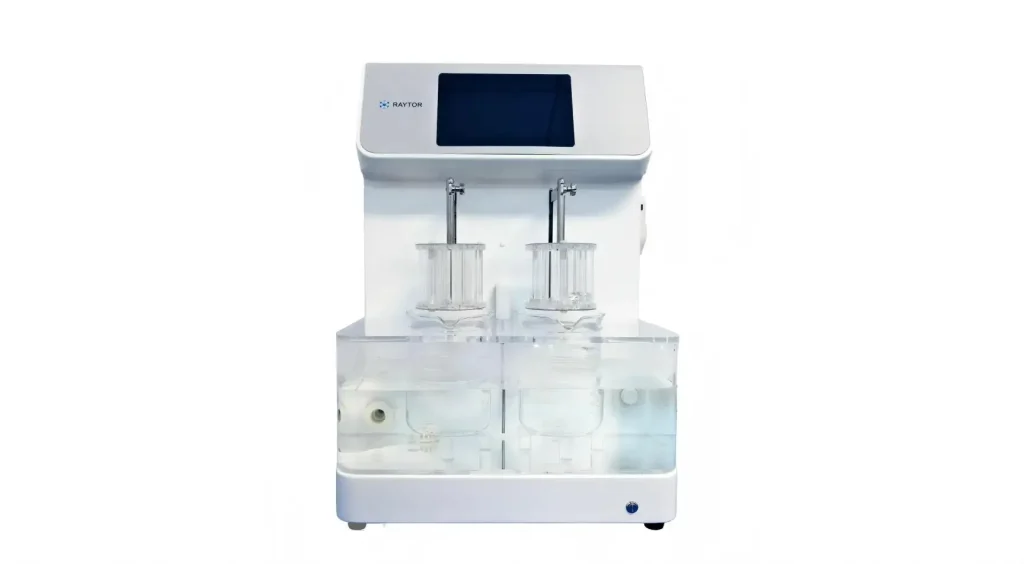
What Is Included in Total Cost of Ownership?
A practical laboratory instrument total cost of ownership model is:
TCOPurchase + Installation + Training + Qualification + Calibration + Maintenance + Downtime + Consumables + Replacement
| Cost Area | Typical Requirements | Commonly Overlooked Risk |
| Acquisition | Instrument and accessories along with freight and tax | Focusing only on unit cost |
| Installation | Setup and site preparation along with the commissioning | Incompatibility of power, space and environment |
| Qualification | Complete Implementation of IQ, OQ, PQ, and associated evidence | Additional work caused by incomplete documentation |
| Training | Training on operation, maintenance and application | Staff turnover |
| Calibration | Arrange Calibration and Verification | Performance drift |
| Maintenance | Clean, inspect, service and replace wear items | Focus on reactive maintenance instead of planned (preventive) maintenance |
| Downtime | Delays in testing and repair | The loss of capacity is not considered |
| Replacement | Part replacement, upgrade or full system replacement | Obsolescence and long lead times |
Durable Laboratory Instruments achieve this by offering predictable operation and maintenance with extended effective service life.
Why Durability Matters More in 2026
Higher Laboratory Throughput
Increased throughput from labs means that, with the same number of staff and instruments available, the number of studies and experiments that can be completed simultaneously will increase. An important machine that fails can disrupt not just one study, but several. The impact can ripple out and affect even more analysts and sample schedules.
More Complex Pharmaceutical Applications
Dissolution, solubility, permeability, transdermal diffusion, and subcutaneous drug delivery research may involve different media, temperatures, sampling intervals, and experiment durations. Durable Laboratory Instruments must remain stable under actual application conditions rather than only under short factory tests.
Greater Documentation Requirements
Laboratory equipment must support more than routine operation. Teams also require:
•Calibration and verification procedures
•Maintenance and cleaning instructions
•Qualification documentation
•Traceable equipment records
•Clear operating limits
•Controlled service histories
Longer Equipment Replacement Cycles
Capital budgets are often planned over several years. Laboratories therefore need reliable laboratory equipment that remains maintainable, serviceable, and technically supported throughout a longer lifecycle.
Seven Factors That Determine Instrument "Real" Durability
1. Long-Term Measurement Stability
While an instrument may be accurate when purchased, it may not be stable. Buyers should assess repeatability and the stability of an instrument over changing temperatures. They should also assess an instrument's long-term performance and the verifiability of various parameters. Precision tends to drift over time, so calibration and testing become necessary.
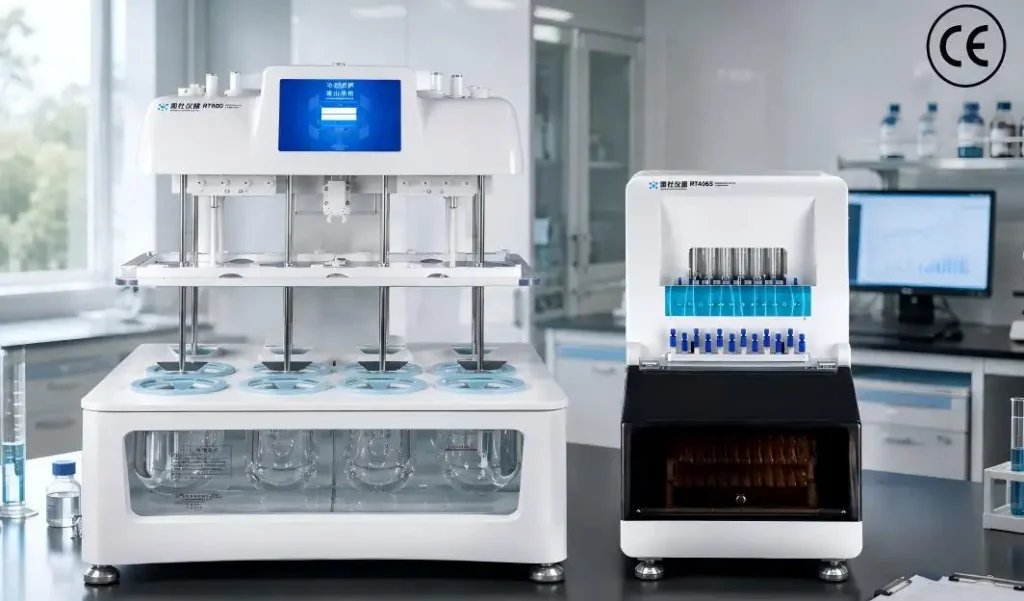
2. Application Compatibility
The instrument selected should be compatible with the dosage form, sample type, sample medium, sample temperatures, sampling procedure, and the duration of the test. Poor compatibility may lead to overloading of the instrument, failure of the method, and need for unnecessary modification of the instrument.
3. Continuous Operating Capability
A drive system, pumps, sensors, heating elements, and/or moving assemblies should be designed to withstand the expected service requirements. Instruments used in long duration studies and those used in frequent, repeated studies will be subjected to more service requirements than those used infrequently.
4. Cleaning and Maintainability
Instruments of a laboratory should have sample-contact parts that are easily removable and/or accessible, should have practical cleaning instructions, and should have known (easily identifiable) wear parts. Furthermore, they should have straightforward preventive maintenance instructions.
5. Calibration Stability
Laboratories should be able to easily verify the key parameters of the instrument. Stability of calibration reduces the unplanned service calls and aids in compliance with good records practices.
6. Spare-Parts and Service Support
The vendor should provide a reasonable inventory of spare parts. Service support should include not only hardware replacement, but also troubleshooting and preventive maintenance.
7. Manufacturing Consistency
Standardization of assembly and inspections of instruments significantly reduces the variation encountered in multiple locations.
How Durable Laboratory Instruments Can Lower Life Cycle Costs
| Life Cycle Phase | Contribution | Operational Value | Potential Cost Reduction |
| Selection | Better method and sample matching | Decrease wrong equipment purchases | Lower procurement waste |
| Installation | Site and operation requirements | Shorten equipment set up and start up time | Reduced labor and downtime costs |
| Method Development | Stable application performance | Lessen the need to adjust the method | Fewer rework and validation cycles |
| Routine Testing | Consistency in results and performance | Lessen the need to test samples | Reduced reagent and labor consumption |
| Calibration | Less chance of drifting | Allow calibration to be scheduled and performed | Minimized unplanned downtime |
| Maintenance | Less obstructed cleaning and servicing | Lessen the planned maintenance time | Lower maintenance labor costs |
| Repair | Customer support and availability of spare parts | Lessen the time to resolve a fault | Reduced production interruption losses |
| Replacement | Equipment have longer useful lives | Delay the need for a capital replacement | Deferred capital expenditure |
How Raytor Addresses Lifecycle Challenges
While hardware with good durability helps, it also requires expertise with the application, consistency with manufacturing, R&D, and responsive communication with customers to achieve low cost of ownership.
Raytor has built a pharmaceutical analytical instrument R&D platform and has unified research, development, manufacturing, and technical services to cover the application and after-sales needs of the system.
Its Application Experiment Center works with experienced pharmaceutical professionals, universities, and pharmaceutical companies. The center supports research involving new compound identification, drug permeability, dissolution, solubility, and transdermal diffusion across oral, transdermal, and subcutaneous dosage forms. This application-focused approach helps laboratories reduce trial and error caused by unsuitable instrument or method selection.
Raytor has a 24-hour rapid-response system for dealing with customer queries. The service network addresses the evaluation of requirements, communication during installation, routine operations, and technical troubleshooting.
Raytor uses 6S lean management to standardize processes and improve the organization of production and the consistency of manufacturing within the context of production. Founded in 2015, the company combines instrument R&D, application test, production, sales, and service in the pre-formulation research and pharmaceutical quality control fields.
Choose Long-Term Value, Not the Lowest Initial Price
Durable Laboratory Instruments should be evaluated through performance stability, application suitability, calibration requirements, maintenance complexity, spare-parts availability, manufacturing consistency, and technical support.
Laboratories planning new equipment investments should begin with their workload, dosage form, testing method, documentation requirements, and expected service conditions. Raytor combines independent R&D, pharmaceutical application expertise, lean production management, and responsive support to help laboratories establish practical analytical workflows for long-term research and quality control.
Contact Raytor to discuss your application requirements and laboratory workflow.
FAQs
Q1. What measures does Raytor take to ensure the reliability of laboratory instruments?
Raytor combines independent product R&D with application testing, production management, and technical services. As a result, the entire development and manufacturing process can be planned from the structure of the instruments, to the requirements of their use, the process for operating them, and their maintainability.
Q2. How does the use of Raytor Durable Laboratory Instruments reduce the total cost of ownership?
Raytor uses independent development of instruments, support in pharmaceutical applications, standardized production management, and technical communication to approach the total cost of ownership. This can help laboratories avoid wrong instrument choices, repeated changes in test methods, unnecessary downtime, and preventive maintenance.
Q3. Which pharmaceutical research areas does Raytor cover?
Raytor assists in:
Identification of new compounds
Study of drug dissolution and drug solubility
Research of drug permeability and transdermal drug diffusion
Research of drug permeability and diffusion through various oral and transdermal dosage forms as well as diffusion through various drug delivery systems
Pre-formulation studies and pharmaceutical quality control
Application requirements should be assessed based on the form of the drug, the goal of the study, the characteristics of the samples, and the methods of analysis.
Q4. How does Raytor evaluate the suitability of applications before selecting instruments?
Raytor works together with customers on the form of the drug (dosage form), the type of sample, the testing medium, the range of temperature, the duration of the experiment, the sampling requirements, and the flow of work in the laboratory. An application-oriented evaluation is performed to determine if the chosen laboratory instrument is suitable for the required research.
Q5. Does Raytor offer application testing support?
Yes. Raytor owns an Application Experiment Center, which is staffed by experienced pharmaceutical personnel. In addition, the company has established collaborations with universities and pharmaceutical companies to expand application research and provide assistance to laboratories confronted with challenges of method development and instrument selection.