

Sample Types Supported by an Automated Sampling Transdermal Diffusion System
2026-07-30


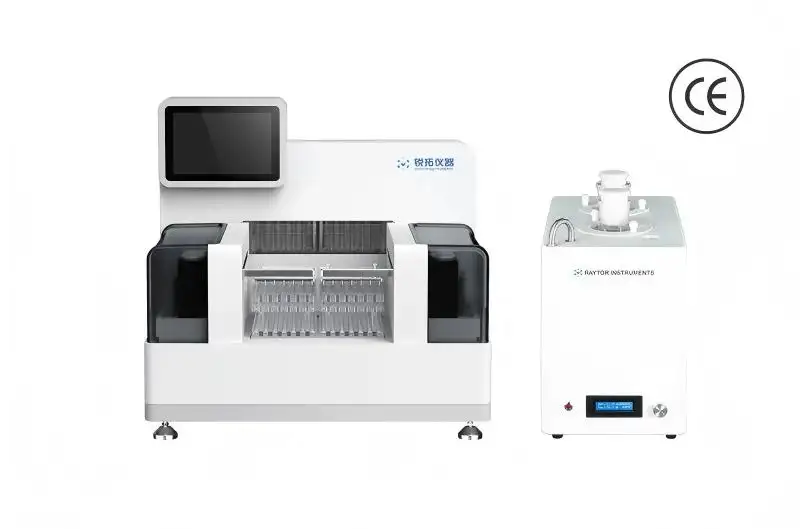
An Automated Sampling Transdermal Diffusion System can test creams, gels, ointments, lotions, transdermal patches, topical solutions, sprays, ophthalmic semisolids, cosmetic formulations, and other products designed to release an active ingredient through a membrane or biological tissue.
However, sample suitability cannot be determined by dosage-form name alone. Viscosity, drug solubility, release mechanism, membrane type, receptor medium, sampling frequency, and analytical sensitivity all influence the required test configuration.
Automated sampling can improve sampling-time accuracy, receptor-volume control, and workflow consistency. It does not replace appropriate membrane selection, method development, or system suitability evaluation.
What Does an Automated Sampling Transdermal Diffusion System Measure?
An Automated Sampling Transdermal Diffusion System measures the release or permeation of an active ingredient from a donor compartment into a receptor medium.
Depending on the configuration, the system may:
•Collect receptor-medium samples at programmed time points;
•Replace the removed volume automatically or semi-automatically;
•Maintain controlled temperature and stirring conditions;
•Support multiple parallel diffusion cells;
•Generate samples for HPLC or UV analysis;
•Support calculations of cumulative release, release rate, permeated amount, or flux.
Two common applications are in vitro release testing and in vitro permeation testing.
| Test Type | Main Purpose | Typical Membrane |
| IVRT | Assesses drug release from the formulation | Artificial or inert membrane |
| IVPT | Assesses drug permeation through tissue | Human or animal skin, or any validated biological membrane |
IVRT focuses on the performance of the formulation, whereas IVPT focuses on the permeation of the formulation through the biological barrier. The same Automated Sampling Transdermal Diffusion System may be used for both methods, provided that the compatible cells, membranes, and sampling conditions are obtained.
Which Sample Types Can Be Tested?
Creams
Both IVRT and IVPT can be used to assess oil-in-water and water-in-oil emulsions. Comparative testing can be conducted on formulation composition, emulsifier systems, different methods of manufacture, or different batches for consistency.
Key controls are:
•Sample homogeneity;
•Dose and thickness of sample;
•No air voids;
•Complete contact with membrane;
•Diffusion area is constant.
These include medicated and functional skin products, as well as antifungal, analgesic, and other medicated topical products.
Gels and Hydrogels
Gels are often easier to spread uniformly than high-viscosity ointments, making them suitable for parallel-cell studies.
An Automated Sampling Transdermal Diffusion System is particularly useful when a gel releases drug rapidly and requires several early sampling points.
Applicable samples include:
•Hydrogels;
•Carbomer-based gels;
•Topical pharmaceutical gels;
•Transdermal delivery gels;
•In situ gel formulations.
Polymer concentration, viscosity, solvent evaporation, and drying at the donor surface can affect the results. A donor compartment with a sealed or covered design may be required for volatile formulations.
Ointments and High-Viscosity Semisolids
The use of ointments can lead to slower drug release due to the use of dense, hydrophobic or highly viscous bases. For these formulations, longer testing durations may be required, as well as the use of specific receptor media.
The following considerations should be addressed.
•Consistent sample loading.
•Flat sample surfaces.
•Stable membrane contact.
•Adequate drug solubility in the receptor fluid.
•Extended sampling intervals.
The receptor fluid should be capable of maintaining sink conditions and should not alter the membrane or formulation contact.
Lotions, Emulsions, and Topical Solutions
Testing is possible for low-viscosity lotions, emulsions, suspensions and topical solutions, however, sample containment is critical.
Leakage, sedimentation, phase separation, and loss of solvent are possible complications. It may be necessary to provide tailored donor chambers and/or sealing components and accessories to regulate evaporation.
For suspensions, sample preparation should provide consistent distribution of particles prior to dosing.
Transdermal Patches
An Automated Sampling Transdermal Diffusion System can support testing of reservoir, matrix, and drug-in-adhesive patches.
The method must account for:
•Patch dimensions;
•Exposed diffusion area;
•Patch fixation;
•Adhesive contact;
•Extended test duration;
•Leakage around the sample holder.
Testing may involve drug release from the patch, drug permeation through skin, or comparison of finished-product batches. Patch holders and diffusion cells should match the product geometry and intended study objective.
Sprays, Foams, and Aerosol-Delivered Products
Sprays and foams may be tested, but their dosing procedure is generally more complex than that of creams or gels.
The method should control:
• Delivered dose;
• Spray distance and angle;
• Deposition area;
• Foam collapse time;
• Propellant or solvent evaporation;
• Time between application and cell assembly.
Customized donor chambers or application fixtures may improve dosing reproducibility.
Ophthalmic and Specialized Semisolid Products
Ophthalmic gels, ophthalmic ointments, in situ gel systems, and some mucosal formulations may be evaluated using diffusion-based methods.
These products often require:
• Low-volume diffusion cells;
• Small and accurately controlled doses;
• Product-specific membranes;
• Carefully selected receptor media;
• Sensitive analytical methods.
An Automated Sampling Transdermal Diffusion System provides the testing platform, but the method must still be developed around the product's intended route, composition, and release mechanism.
Cosmetic and Personal Care Formulations
Diffusion systems may also support comparative testing of sunscreens, serums, skincare gels, functional creams, and scalp-care formulations.
Such studies can compare formulations or investigate ingredient release. However, diffusion-test results alone should not be presented as direct proof of clinical efficacy.
Sample Comparison Table
| Sample Type | Typical Test | Key Challenge | System Consideration |
| Cream | IVRT/IVPT | Emulsion uniformity | Consistent dosing and membrane contact |
| Gel | IVRT/IVPT | Drying or solvent loss | Sealed donor and early sampling |
| Ointment | IVRT | Slow release | Longer test duration |
| Lotion | IVRT | Low viscosity | Leakage control |
| Transdermal patch | Release/IVPT | Fixation and long duration | Suitable patch holder |
| Spray or foam | IVRT | Dose reproducibility | Specialized donor setup |
| Ophthalmic gel | IVRT | Small dose | Low-volume cell compatibility |
| Cosmetic formulation | Comparative release | Complex composition | Method-specific membrane |
Match the System to the Sample
An Automated Sampling Transdermal Diffusion System can accommodate a broad range of topical, semisolid, patch-based, and specialized formulations. Nevertheless, each sample requires a suitable combination of diffusion cell, membrane, receptor medium, temperature, stirring rate, and sampling schedule.
System selection should therefore begin with the actual dosage form and study objective rather than channel number or automation level alone.
Planning to test creams, gels, ointments, transdermal patches, or other topical formulations? Share your sample type, IVRT or IVPT objective, membrane, receptor medium, sampling schedule, and analytical workflow with Raytor. Raytor can help evaluate the appropriate Automated Sampling Transdermal Diffusion System, diffusion-cell options, sampling configuration, and qualification requirements for your laboratory.
FAQs
Q1. What samples can Raytor's Automated Sampling Transdermal Diffusion System test?
This system can perform tests on a variety of formulations, including but not limited to, creams, gel, ointments, lotions, topical solutions, transdermal patches, sprays, foams, and semisolid ophthalmic preparations as well as some cosmetic preparations.
Q2. Can Raytor's system be used for both IVRT and IVPT?
Yes. The system can be used for both in vitro release testing and in vitro permeation testing depending on the configuration of the diffusion cells, the choice of membranes, the receptor medium, and the analytical technique employed.
Q3. Does the system automatically replace the sampled receptor medium?
Raytor can offer configurations with automated or semi-automated replacement of the receptor medium. This system would help to reduce the receptor medium and would allow calculation of the cumulative release with greater accuracy.
Q4. Can Raytor's system test transdermal patches?
Yes. The system can be designed for testing of reservoir, matrix, and drug-in-adhesive transdermal patches given the appropriate selection of diffusion cells, patch holders, exposed surfaces and methods of fixation.
Q5. Is the system suitable for high-viscosity ointments?
Yes. The system can test high-viscosity ointments, but this may need longer test times and demand stable contact with the testing membrane and receptor media. The receptor media must be capable of maintaining a sufficient solubility interfacing the membrane. The sample may need to be loaded with care.