

China Transdermal Diffusion Apparatus Manufacturer for Transdermal Patch Testing to USP <1724> and EP 2.9.4
2026-07-29


Selecting a Transdermal Diffusion Apparatus Manufacturer requires more than comparing the number of Franz cells. Air bubbles, leakage, temperature differences, sampling-time deviations, and shared fluid paths can all increase test variability. A suitable system should therefore control the complete workflow, including heating, mixing, bubble removal, sampling, medium replacement, and process recording.
A Transdermal Diffusion Apparatus Manufacturer in China now offers integrated automated platforms rather than basic manual Franz cell assemblies. USP 〈1724〉 must be evaluated separately from Ph. Eur. 2.9.4 as they describe different forms of dosage and purposes for the testing.
What Should a Transdermal Diffusion Apparatus Manufacturer Provide for USP 1724?
USP 〈1724〉 provides general information for developing in vitro performance tests that evaluate drug release or skin permeation from topical and transdermal semisolid and liquid-based dosage forms. These include creams, gels, ointments, pastes, suspensions, lotions, and foams. For drug-release testing of transdermal delivery systems, USP directs users to General Chapter 〈724〉.
For USP 〈1724〉-related IVRT or IVPT workflows, a Transdermal Diffusion Apparatus Manufacturer should provide:
•Stable cell geometry and a defined diffusion area
•Reproducible receptor-chamber volume
•Secure membrane or skin positioning
•Controlled temperature and mixing
•Repeatable sampling intervals and volumes
•Low leakage and cross-contamination risk
•Traceable operating records
Equipment capability alone does not validate a method. Suitability still depends on the dosage form, receptor medium, membrane or skin model, analytical endpoint, laboratory SOP, and qualification status.
What Does EP 2.9.4 Cover?
Ph. Eur. 2.9.4 concerns dissolution testing for patches. The revised European framework applies the related patch monograph and dissolution method to both cutaneous and transdermal patches.
Reliable patch testing depends on consistent patch positioning, exposed area, apparatus dimensions, medium temperature, fluid movement, sampling time, and sample replacement.
Therefore, when a Transdermal Diffusion Apparatus Manufacturer states that equipment supports EP 2.9.4 testing, this should mean that the system can be configured for methods referencing the chapter—not that purchasing the instrument automatically makes a test compliant.
How Does the RT814 Control Common Test Variables?
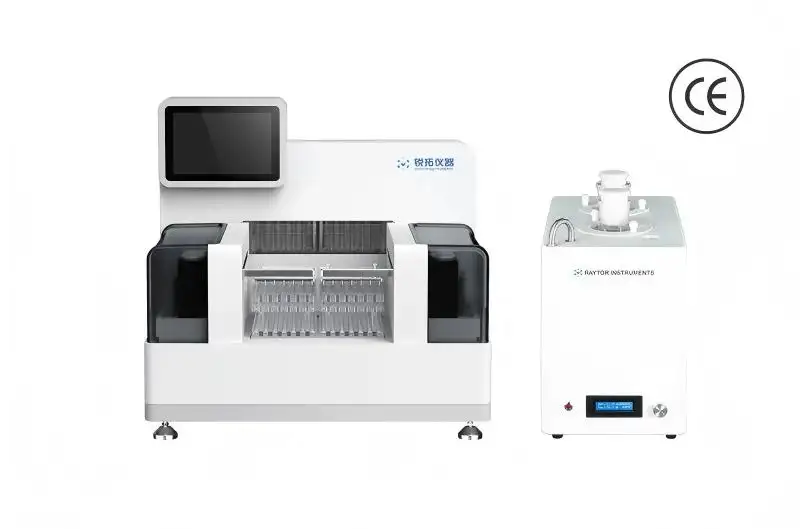
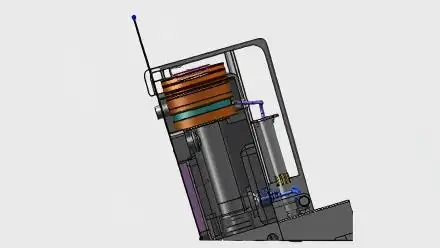
Raytor's RT814 is a fully automated 14-position system arranged as two independent seven-cell groups. It combines integrated glass diffusion cells, automatic sampling, dry heating, individual temperature control, and real-time monitoring and recording.
| Test risk | RT814 design | Practical purpose |
| Residual bubbles | Mechanically tilts cells to discharge trapped air | Helps maintain contact between the membrane and receptor medium |
| Leakage | Integrated glass cell structure | Reduces potential leakage points |
| Cross-contamination | Separate pump and pipeline for each cell | Helps isolate samples between channels |
| Temperature variation | Independent cell temperature control | Supports more consistent test conditions |
| Sampling error | Automated sampling module | Improves sampling-time and volume consistency |
| Limited flexibility | Partial or full sampling | Supports different analytical workflows |
| Single-batch operation | Two independent groups | Allows two tests to run without interference |
These functions are designed to reduce operator-dependent variation. Laboratories must still evaluate pump calibration, cleaning, carryover, software controls, and preventive maintenance.
Why Automatic Bubble Removal and Integrated Cells Matter?
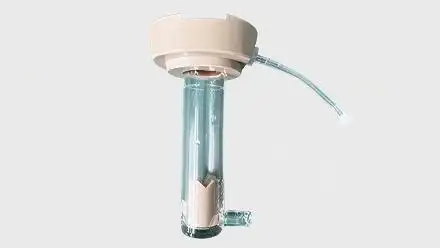
A trapped bubble can reduce the effective diffusion area, interrupt contact with the receptor medium, and produce an abnormal release or permeation profile. Manual removal depends heavily on operator inspection and may disturb an installed membrane or skin sample.
Automatic tilting provides a more consistent method of removing bubbles during operation. An integrated glass cell also reduces joints and potential leakage points.
However, laboratories should still assess:
•Cleaning access
•Glass handling requirements
•Replacement costs
•Compatibility with established cell dimensions
•Availability of spare cells
Partial Sampling vs. Full Sampling
A capable Transdermal Diffusion Apparatus Manufacturer may provide both modes because they support different test designs.
| Factor | Partial sampling | Full sampling |
| Operation | Removes part of the receptor medium | Removes or replaces a larger volume |
| Calculation | Usually requires correction for previous withdrawals | Depends on the replacement strategy |
| Typical use | Multi-time-point release profiles | Selected low-volume or complete-medium workflows |
| Automation focus | Accurate withdrawal and replacement | Controlled drainage, collection, and medium handling |
The appropriate mode depends on receptor volume, analytical sensitivity, number of time points, and mass-balance calculations.
Automation Levels: The Comparison That Matters
International systems should be compared by automation level rather than country or purchase price alone.
| System level | Typical strengths | Main considerations |
| Manual Franz cells | Low complexity and flexible setup | Manual sampling, timing, and bubble removal |
| Semi-automated systems | Reduced sampling workload | Shared pathways or limited bubble control may remain |
| Fully automated systems | Programmed sampling and higher throughput | Greater maintenance, training, and qualification needs |
| 👉 Raytor RT814 | 14 positions, independent groups, isolated pipelines, and cell-level temperature control | Requires cleaning assessment, pump calibration, and service planning |
A manual system may remain suitable for early formulation screening, low-volume research, or frequently changing methods. Semi-automated equipment can support moderate throughput, while fully automated systems may be appropriate for routine IVRT or IVPT, method transfer, QC, and CRO/CDMO workloads.
More automation is not automatically better. Selection should reflect test frequency, method maturity, sampling complexity, data requirements, and maintenance resources.
Final Selection
Laboratories evaluating a Transdermal Diffusion Apparatus Manufacturer should first define the dosage form, diffusion area, receptor medium, sampling schedule, temperature range, and analytical workflow.
Contact Raytor and evaluate whether the Raytor RT814 fits your IVRT or transdermal testing workflow. Its 14-position design, automatic bubble removal, independent temperature control, separate sampling pipelines, and partial or full sampling options support flexible method development, routine testing, and higher-throughput laboratory applications.
FAQs
Q1. What is the Raytor RT814 used for?
The RT814 performs automated transdermal diffusion, IVRT, IVPT, semisolid, and patch-release testing for Franz diffusion cells.
Q2. How many test positions does the RT814 provide?
The RT814 has 14 diffusion-cell positions and allows for two independent test programs, meaning no interference between test programs.
Q3. Does the RT814 support USP <1724> testing?
This system supports testing of semisolid and liquid topical products as described in USP <1724>. However, methods are subject to laboratory validation, standard operating procedures, and qualification requirements.
Q4. Can the RT814 be used for EP 2.9.4-related testing?
The RT814 is able to be used for workflows related to EP 2.9.4 patch-release testing, within the limits of the validated test method and selected cell configuration.
Q5. How does the RT814 remove air bubbles?
The RT814 has a mechanical structure that allows it to tilt diffusion cells. This aids in the removal of air bubbles and residual air, while ensuring that the membrane and receptor medium are in contact.