





CDSCO Compliant Dissolution Apparatus: What's New Under IP 2026?
2026-10-05


With the new revision of IP 2026, a previously validated dissolution method must undergo re-evaluation, even if the current tester still meets its original mechanical specifications. The situation becomes even more complex if the new revised monograph calls for liquid chromatography instead of UV analysis. Other sampling techniques, the compatibility of filters used, analytical recovery and other sampling procedures may also require requalification.
The first requirement for laboratories procuring a CDSCO Compliant Dissolution Apparatus is to determine which of the method requirements have altered. Blindly replacing an instrument without checking if other requirements of the method have changed may lead to a premature and unnecessary expense.
What Has Changed in IP 2026 Dissolution Testing?
The Indian Pharmacopoeia Commission (IPC) identifies General Chapter 2.5.2, Dissolution, among the chapters upgraded in IP 2026. Its published introduction also describes the extension of liquid chromatography to dissolution and other analytical tests in existing monographs where greater specificity is needed.Introduction to IP 2026
Revisions to procedures will affect laboratory operations as follows.
2.5.2 Review the revised apparatus and procedures against existing standard operating procedures (SOPs) and qualification records.
• Monograph-specific changes: Apparatus selection, medium composition, rotational speed, sampling time, analytical procedure, and acceptance limits.
• Chromatographic testing: If liquid chromatography replaces another analytical method, review sample preparation and filtration and determine adequacy of method and the stability of the analytes.
The introduction to the IPC explains where the changes have been made. However, it does not provide all the modified technical requirements. It is advisable that laboratories review the complete chapters of IP 2026 and the individual monographs prior to revising their procedures.
Why Mechanical Qualification Still Determines Dissolution Reliability
Dissolution results depend partly on the hydrodynamic environment surrounding the dosage form. Shaft misalignment, vessel eccentricity, and inconsistent paddle positioning can change local fluid velocity without producing an obvious instrument alarm.
Accumulation of disintegrated particles can be seen under the rotating paddle during paddle testing. This leads to coning behavior and ultimately reduces drug release for certain formulations. Differences in shaft centering and the shape of the vessel used in each test may lead to variations in flow patterns and be the reason for the differences in test results between different laboratories.
Temperature also adds variability. It changes the viscosity of the medium, drug diffusivity and solubility. Display resolution may not indicate the temperature control accuracy.
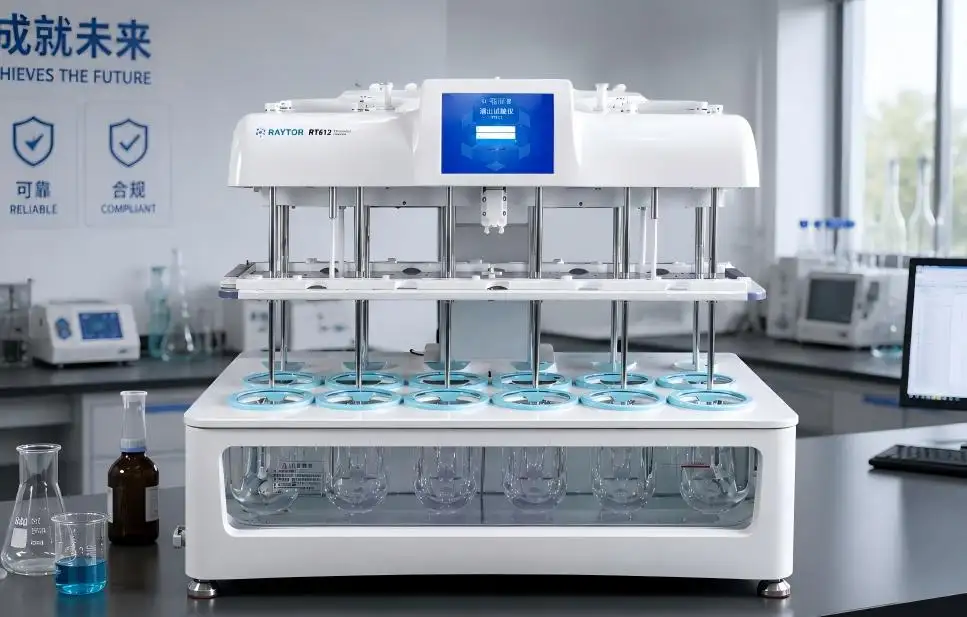
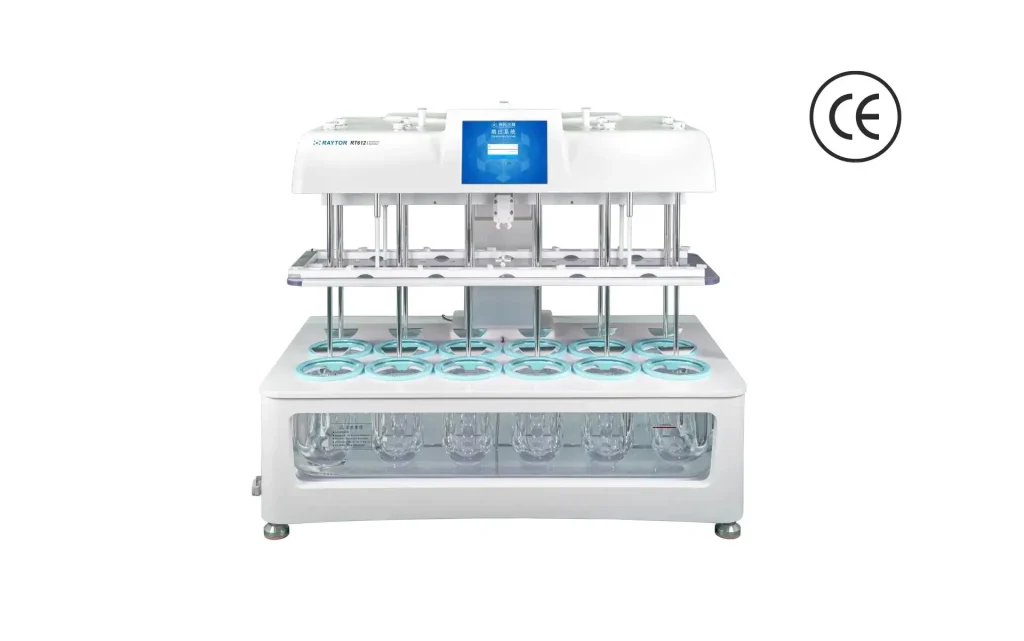
Raytor's RT612 Dissolution Apparatus has specifications including:
• Steady-speed error: ≤±0.3 rpm
• Temperature accuracy: ≤±0.2°C
• Speed setting range: 0–300 rpm
• Paddle-basket coaxial design for method switching
These are equipment specifications, not evidence of IP 2026 certification. Actual performance must be verified after installation.
What Should Qualification Testing Measure?
Mechanical qualification should include independently measured shaft speed, vessel and shaft verticality, centering, wobble, paddle or basket position, and medium temperature at the specified operating conditions.
A tester that passes calibration at one speed or temperature setting has not necessarily demonstrated suitability across every method it will perform.
How Does Liquid Chromatography Change Sampling Requirements?
Moving from UV measurement to HPLC can improve analytical specificity, particularly when excipients, degradation products, or multiple active ingredients interfere with direct absorbance measurements.
However, HPLC cannot compensate for errors introduced before the sample reaches the detector.
Three failure mechanisms merit consideration.
• Filter adsorption: A membrane may retain part of the dissolved drug, giving an artificially lower apparent concentration. Compare filtered samples with appropriately prepared reference samples and access recovery using the actual dissolution medium.
• Sampling-line retention: Drug molecules may interact with surface of the tubing. Raytor's automated systems use PTFE based sampling pipelines, however, chemical resistance does not always guarantee negligible adsorption with all formulations.
• Timing and volume errors: Sampling line dead volume, transport delay and inaccurate medium replacement may impact the calculations of release over time. These effects are more pronounced for small sampling time intervals.
Verification Before Method Transfer
For an automated sampling system, establish:
• Sample recovery before and after filtration
• Carryover following high-concentration samples
• Actual sampling time relative to the programmed time point
• Sampling volume accuracy and line dead volume
• Analyte stability during collection, storage, and HPLC analysis
Where multiple samples are withdrawn from the same vessel, cumulative release calculations must account for removed drug and any replacement medium.
Which Raytor Dissolution Apparatus Fits IP 2026 Workflows?
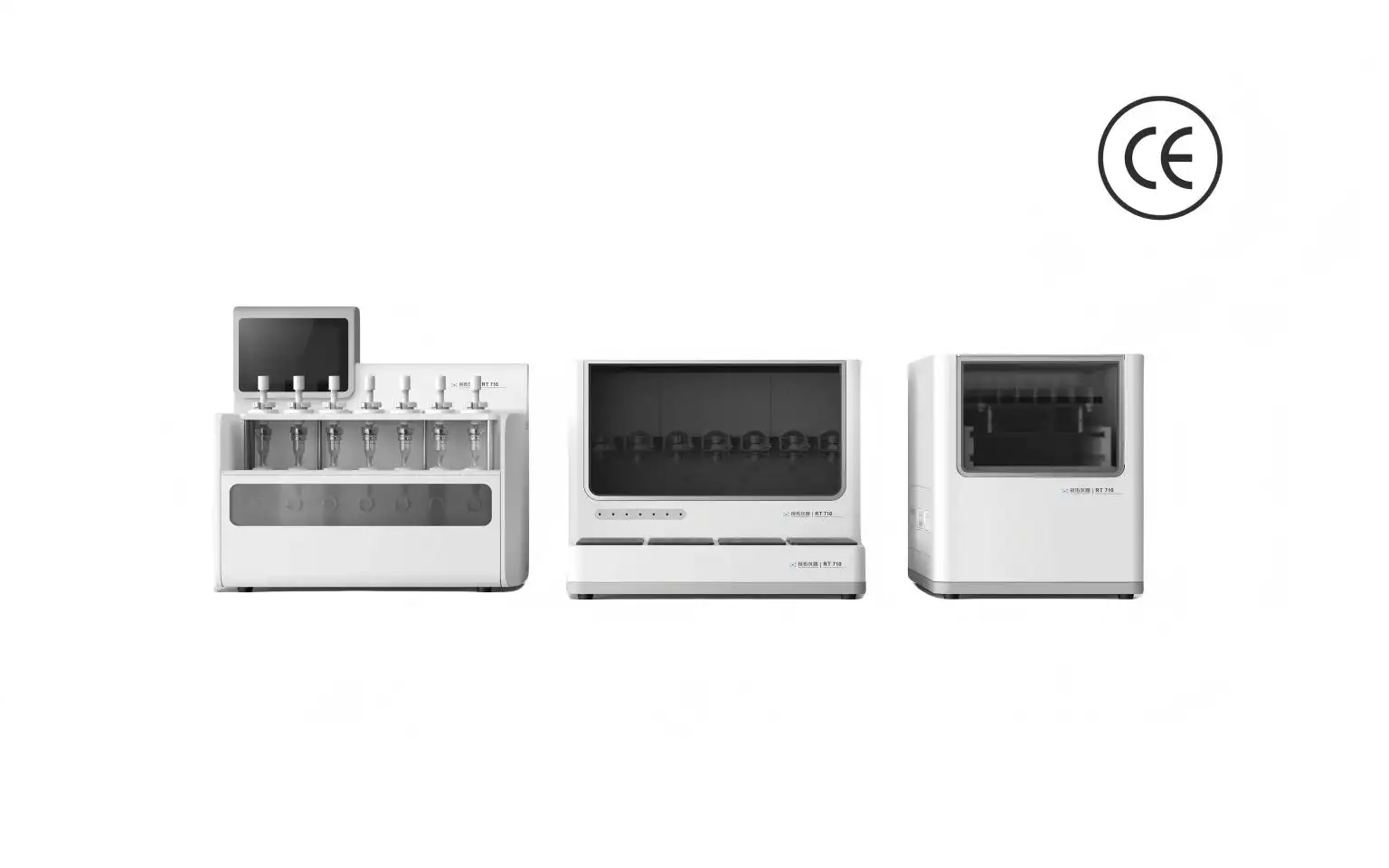
Raytor offers manual and automated dissolution configurations. Vessel count matters for throughput, but sampling architecture often has a greater influence on analytical workflow compatibility.
| Raytor Model | Configuration | Technical Advantage | Verification Priority |
| RT600 | 8 vessels, manual sampling | Suitable for routine methods with manageable sampling schedules | Manual sampling reproducibility |
| RT612 | 12 vessels, optional dual-drive control | Supports larger test batches and different speed settings between shaft groups | Independent drive performance |
| RT600-ST | 8 vessels, automated sampling and filtration | Reduces repetitive sampling operations; optional online dilution | Filter recovery and sampling accuracy |
| RT612-ST | 12 vessels, automated sampling and collection | Supports larger automated testing workloads | Carryover, timing, and sample-transfer performance |
For laboratories operating numerous dissolution methods, automated sampling may reduce timing variability and repetitive manual work. It also introduces additional components requiring qualification.
A manual instrument can remain suitable for IP 2026 testing when its mechanical performance and analytical procedures satisfy the applicable method.
How Should Buyers Establish CDSCO Compliance?
As described in IP 2026, the Pharmacopoeial standards established different quality parameters for manufacturing processes and methods. The Central Drugs Standard Control Organization (CDSCO) of India is responsible for implementation of pharmaceutical regulations in the country. A manufacturer's statement that a device supports the methods of a particular pharmacopoeia should not be regarded as a CDSCO approval.
The qualification of an instrument should be based on the needs of the laboratory.
Installation Qualification (IQ) ensures that the delivered configuration, installation conditions, utilities and documentation meet the approved requirements.
Operational Qualification (OQ) includes testing of controlled functions of the equipment, e.g. rotation, temperature control, mechanical positioning, sampling, operation of the controls, and/or operation of the software, if any.
Performance Qualification (PQ) is demonstrated through testing of the system to perform in accordance with the required methods and to be consistent under routine operating conditions.
Raytor has equipment related to 21 CFR Part 11 in its product line. However, buyers should ensure that audit trails and user access controls are implemented, and the equipment is validated to handle electronic records. Such features do not automatically satisfy the requirements of Indian GMP.
Prior to issuance of a purchase order, buyer should request specific technical documentation, qualification and calibration documents, and relevant information to support intended IP 2026 requirements pertaining to dissolution methodologies.
Raytor has both manual and fully automated dissolution systems for labs wanting to comply with IP 2026. Buyers can see configurations based on requirements. Raytor's technical staff can assist buyers in reviewing qualification documents to support their testing.
FAQs
Q1. What changed in IP 2026 dissolution testing?
IP 2026 updates General Chapter 2.5.2, Dissolution, and introduces liquid chromatography methods into certain existing monographs. Raytor users should review the applicable methods before changing equipment or testing procedures.
Q2. Is Raytor's dissolution apparatus officially CDSCO approved?
Raytor publishes pharmacopoeial compatibility and technical specifications, but separate CDSCO equipment approval has not been verified. Compliance depends on the applicable methods, instrument qualification, and laboratory procedures.
Q3. Which Raytor dissolution apparatus is suitable for Indian pharmaceutical laboratories?
Raytor offers the 8-position RT600 and 12-position RT612 for manual sampling, alongside RT600-ST and RT612-ST automated systems. Selection depends on test volume, sampling requirements, and method compatibility.
Q4. Do Raytor dissolution testers support paddle and basket methods?
Yes. Raytor's RT600 and RT612 systems feature a coaxial paddle-basket design for method switching. Laboratories must verify mechanical positioning and apparatus suitability against the applicable pharmacopoeial method.
Q5. What are the speed and temperature specifications of Raytor RT612?
The RT612 has a speed range of 0–300 rpm, steady-speed error of ≤±0.3 rpm, and temperature accuracy of ≤±0.2°C. Actual performance requires laboratory qualification.