

How a Data Integrity Dissolution System Improves Traceability in Dissolution Testing
2026-08-18


A dissolution result is only as defensible as the test history behind it. Reporting 82% dissolved at 30 minutes is inadequate unless a laboratory can reconstruct when the dosage unit entered the medium, what the actual rotational conditions were, whether temperature remained controlled, where the sample was withdrawn, and which method version generated the result.

A Data Integrity Dissolution System addresses this problem by linking physical test events with electronic records. For pharmaceutical QC, traceability should extend from sample identification and dosing through mechanical conditions, sampling, review, and long-term data retrieval.
Why Dissolution Traceability Breaks Down
Traditional dissolution workflows often combine automated measurement with manual actions. Those actions create gaps that may only become visible during an OOS or OOT investigation.
Typical risks include:
•Sequential dosing that gives different vessels different effective start times;
•Recording nominal RPM instead of verifying actual rotational stability;
•Inconsistent sampling depth between analysts or vessels;
•Delayed transcription of temperature or sampling times;
•Mechanical qualification records stored separately from analytical results;
•Incomplete linkage between operator, method version, sample and test record.
For example, if eight vessels are dosed sequentially at four-second intervals, the final vessel begins approximately 28 seconds after the first. That difference may be significant for rapidly dissolving formulations or early sampling points.
A Data Integrity Dissolution System should therefore capture the conditions that created the result—not merely store the result itself.
Traceability Begins at the Exact Dosing Time
For an individual vessel:
Effective Dissolution Time = Sampling Time − Actual Dosing Time
This relationship explains why synchronized dosing matters. If every vessel is assigned one nominal start time despite staggered dosing, the calculated exposure duration may not represent the physical test.
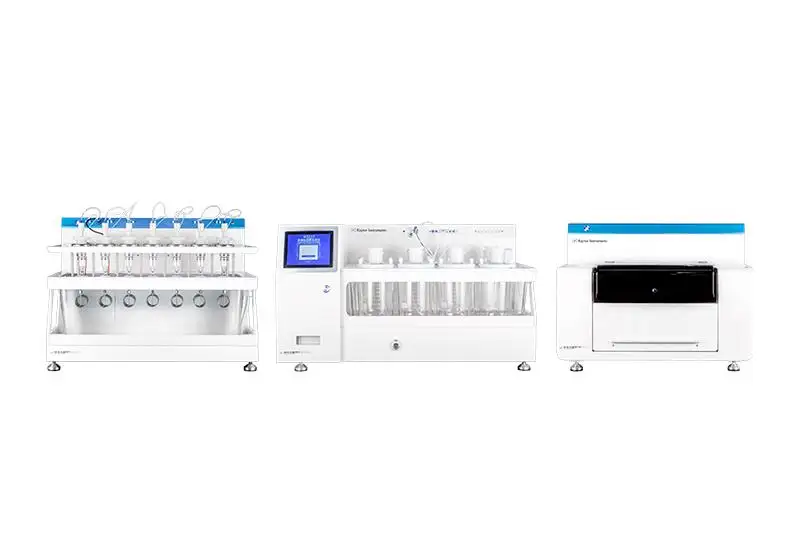
Raytor's eight-position dissolution platform uses automatic synchronous dosing, designed to eliminate dosing-time differences while retaining the dosing time point for traceability. This reduces an important operator-dependent variable before the first sample is even collected.
The Test Record Should Reconstruct the Whole Sequence
A robust Data Integrity Dissolution System should allow reviewers to follow a chain such as:
Operator → Method → Sample → Dosing → RPM/Temperature → Sampling → Result → Review → Archive
Breaking any of these links makes root-cause analysis more difficult.
RPM Accuracy Alone Does Not Control Dissolution Hydrodynamics
Rotational speed is critical, but dissolution behavior also depends on mechanical geometry. Vessel centering, shaft verticality, paddle or basket depth, and wobble all influence the flow field around the dosage form.
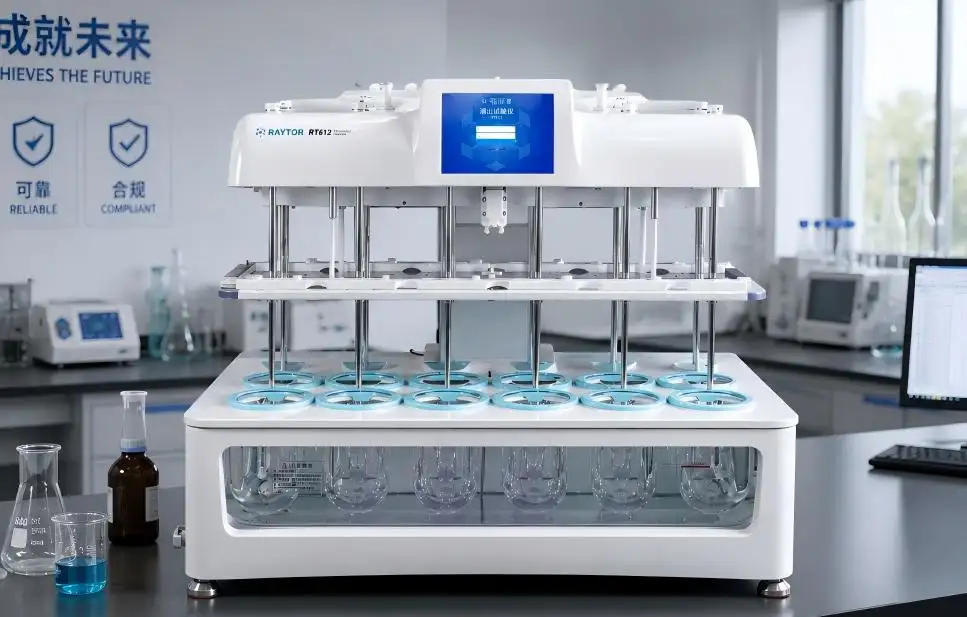
Raytor specifies a 0–300 rpm operating range, 0.01 rpm resolution, and steady-speed error of ≤±0.3 rpm. Importantly, 0.01 rpm resolution should not be interpreted as ±0.01 rpm accuracy; resolution describes display or setting granularity, while steady-speed error describes actual rotational control.
Its mechanical specifications further show how several variables work together:
| Control Variable | Raytor Specification | Why It Matters |
| Vessel/shaft verticality | 90°±0.5° | Supports symmetrical agitation |
| Centering deviation | <±2.0 mm | Limits off-axis hydrodynamics |
| Depth positioning | <±1.0 mm | Controls paddle/basket location |
| Shaft wobble | <±1.0 mm | Reduces unintended agitation |
| Basket wobble | <±1.0 mm | Supports Apparatus 1 consistency |
This is why data integrity and mechanical integrity should not be treated independently. A perfectly preserved electronic record can still describe a mechanically invalid test.
Temperature Must Be Linked to the Test Timeline
Temperature influences fluid viscosity, diffusion and dissolution kinetics. The important question is therefore not simply whether the bath was set to 37°C, but whether the test remained within the validated thermal condition.
Raytor specifies temperature accuracy of ≤±0.2°C with 0.01°C resolution and provides real-time speed and temperature display. Its automatic medium preheating can also start water-bath heating at a programmed time, helping stabilize conditions before dosing.
In a Data Integrity Dissolution System, temperature information is most useful when associated with:
•The specific test run;
•The time at which it was measured;
•Dosing and sampling events;
•Any deviation requiring investigation.
Manual Sampling and Controlled Sampling Create Different Risk Profiles
Automation should be evaluated according to the variability it removes—not simply because it is automated.
| Test Step | Manual Workflow | Controlled Workflow |
| Dosing | Sequential operator action | Synchronous dosing |
| Sample depth | Analyst positioning | Volume-based positioning |
| Probe presence | May remain immersed | Retracted between samples |
| Timing | Manual recording | Event-linked timing |
| Review | Multiple records reconciled | More unified test history |
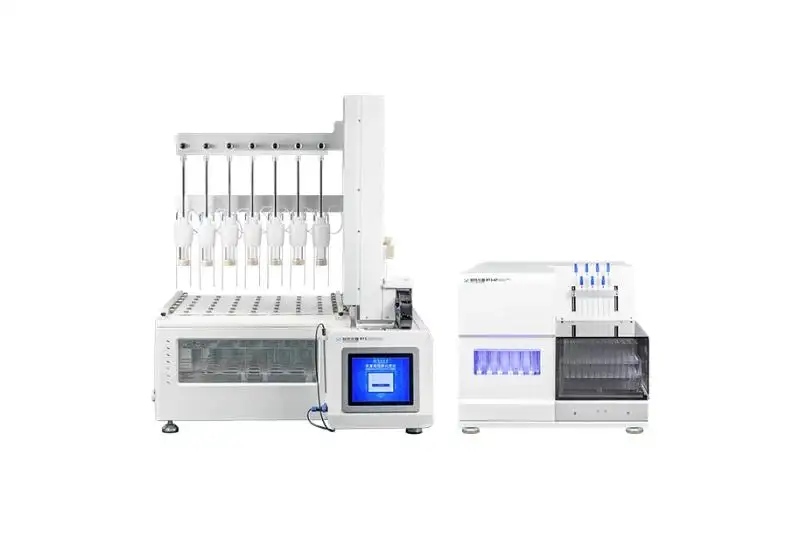
Raytor uses non-resident sampling needles intended to reduce turbulence between sampling events. Needle position can be automatically adjusted according to the selected solvent volume, reducing vessel-to-vessel variation caused by manual depth positioning.
Automation, however, does not eliminate the need to qualify sampling volume, timing, tubing, filter recovery, carryover and medium replacement where these factors apply.
Match the Data Integrity Dissolution System to the Method Risk
Greater automation and traceability become particularly valuable for:
•Immediate-release products with early sampling points;
•Multi-vessel tests requiring synchronized dosing;
•Extended-release studies requiring long thermal stability;
•Repeated multi-time-point sampling;
•High-throughput pharmaceutical QC;
•Laboratories where OOS reconstruction and electronic review are frequent.
For simpler development work, manual intervention may still be appropriate. The important purchasing question is whether the level of automation matches the method's actual critical control points.
Installation and Qualification Remain Part of Data Integrity
Routine checks should cover more than software access controls. Levelness, centering, verticality, rotational performance, temperature, sampling position and wobble should remain within defined acceptance criteria.
Raytor specifies instrument levelness below 0.5° and uses automatically centered vessels, a paddle-basket coaxial structure, and a one-piece rounded water bath designed to support consistent installation, heating and cleaning.
USP notes that mechanical parameters are critical to apparatus suitability, while its Performance Verification Test evaluates the performance of the assembled dissolution system; mechanical calibration alone does not provide the same holistic evidence.
Separate Pharmacopeial Performance From Electronic-Record Compliance
A common mistake is treating pharmacopeial conformity, apparatus qualification and electronic data integrity as interchangeable.
They answer different questions:
•Mechanical qualification: Is the apparatus physically operating correctly?
•Performance verification: Can the assembled system produce suitable dissolution performance?
•Electronic data controls: Can electronic records be attributed, retained, retrieved and reviewed?
•Method validation: Is the analytical procedure suitable for its intended purpose?
FDA states that 21 CFR Part 11 applies to applicable electronic records that are created, modified, maintained, archived, retrieved or transmitted electronically. Raytor's dissolution operating system meets FDA 21 CFR Part 11 and that its platform supports testing requirements referenced to ChP 0931, USP 711/724 and EP 2.9.3/4.
What to Verify Before Purchasing
Before selecting a Data Integrity Dissolution System, laboratories should ask whether the exact configuration can demonstrate:
•Traceable dosing and sampling events;
•Stable actual RPM and temperature performance;
•Controlled vessel and shaft geometry;
•User, method and sample linkage;
•Appropriate electronic record retention and retrieval;
•Qualification and validation support for the installed configuration.
The strongest system is not simply the one with the most automation. It is the one that allows the laboratory to reconstruct both what the instrument physically did and how the resulting data were created and controlled.
Raytor combines synchronized dosing, controlled sampling positioning, high-precision mechanical specifications, real-time operating information and electronic-record functionality within its dissolution platform. Laboratories evaluating a Data Integrity Dissolution System can consult Raytor for detailed specifications and configuration information to determine how these controls fit their QC, validation and traceability requirements.
FAQs
Q1. What is a Data Integrity Dissolution System?
A system built to incorporate controlled dissolution testing along with documentable operating events such as adding, RPM, temperature, sampling, and electronic test records. This provides pharmaceutical labs the ability to determine how dissolution results were obtained.
Q2. How does Raytor improve dosing-time traceability?
Raytor uses an automatic synchronized dosing technology that decreases time discrepancies among the vessels. This is very beneficial for rapid dissolving products or for early sampling time points. Small time discrepancies in the dosing can lead to large discrepancies in the calculated time of dissolution.
Q3. What rotational performance does Raytor provide for dissolution testing?
Raytor's rotational platform operates between the limits of 0 rpm and 300 rpm, with 0.01 rpm resolution and steady speed of ±0.3 rpm. Resolution is very important when considering the real performance at the operating speed.
Q4. How accurately does Raytor control dissolution temperature?
Raytor specifies temperature accuracy of ≤±0.2°C, while temperature resolution is as much as 0.01°C. Raytor is designed to provide stable temperature control, thus reducing the variability in temperature and, consequently, the variability in viscosity, in the diffusion behavior, as well as the dissolution.
Q5. How does Raytor control vessel and shaft geometry?
Raytor specifies vessel and shaft verticality of 90°±0.5°, shaft centering deviation < ±2.0 mm, and shaft depth-positioning deviation of < ±1.0 mm. These mechanical controls allow us to improve hydrodynamic conditions.