






What Is A Flow Through Cell Dissolution System? A Complete Guide To USP Apparatus 4
2026-06-23


If you are involved in pharmaceutical R&D or quality control, you have likely encountered dissolution testing. It is one of the most critical analytical procedures for ensuring drug quality, batch-to-batch consistency, and regulatory compliance. But what happens when a standard paddle or basket method simply cannot handle your formulation challenges?
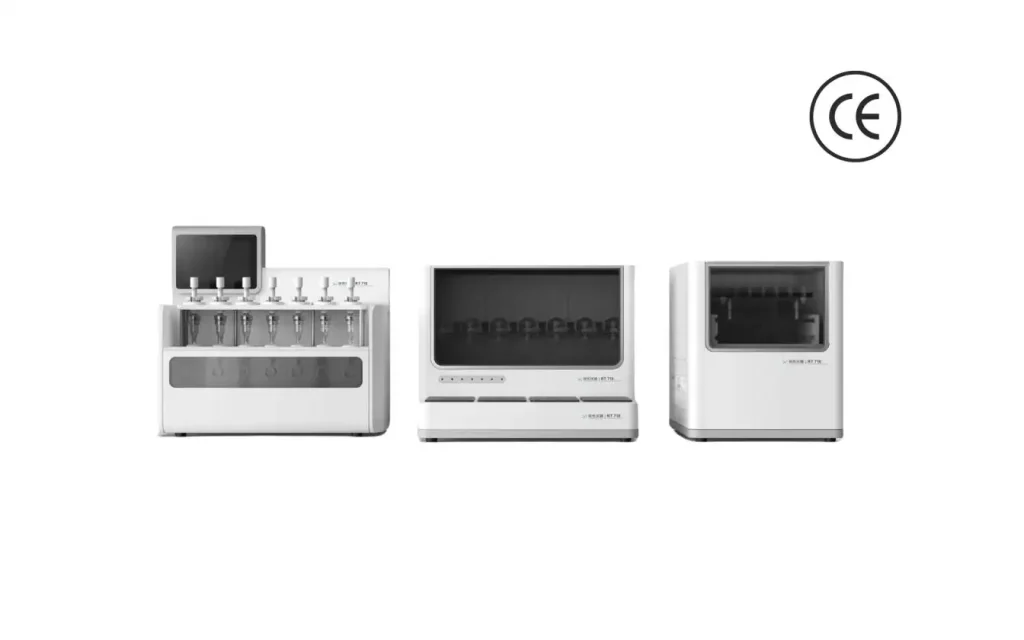
Enter the flow-through cell dissolution system — also known as USP Apparatus 4.
This guide explains everything you need to know: how it works, why it outperforms traditional dissolution methods in many cases, and what the latest technology brings to your lab.
What Is A Flow Through Cell Dissolution System?
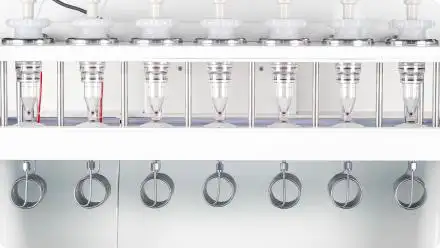
A flow-through cell dissolution system is a dissolution testing apparatus where the dissolution medium continuously flows through a cell containing the dosage form, rather than being stirred in a fixed vessel. Designed as USP Apparatus 4, it was first introduced into the United States Pharmacopeia in 1990, though the concept dates back to 1957.
The system consists of three main components:
•A pump that propels the dissolution medium through the cell at controlled flow rates (typically 2–50 mL/min)
•A flow-through cell (available in 12 mm and 22.6 mm internal diameters, plus specialized cells for powders, suppositories, implants, and more)
•A filter system at the outlet to remove undissolved particles before sample collection or online analysis
Dissolution medium enters from the bottom of the cell, flows upward through the dosage form, and is either collected for analysis or sent directly to a spectrophotometer.
How It Differs From Conventional USP Apparatus 1 & 2
Conventional dissolution procedures (USP Apparatus 1 and 2) depend on a stirred-tank static system. The dosage form sits in a fixed volume of medium, agitated by a rotating element. While simple and well-understood, these methods have inherent limitations.
| Aspect | Traditional (USP 1 & 2) | Flow-Through Cell (USP 4) |
| Medium volume | Fixed (usually 500–1000 mL) | Flexible (from 50 mL to no upper limit) |
| Sink conditions | May require large volumes for poorly soluble drugs | Easily maintained with continuous fresh medium |
| pH changes | Difficult and slow | Rapid and seamless stepwise changes |
| Floating dosage forms | Require sinkers or additional devices | Naturally held in place by upward flow |
| Powders / granules | Difficult to contain | Dedicated cell prevents escape |
| Long-term testing | Medium evaporation and degradation issues | Well-suited for extended-release products |
Research has consistently shown that the flow-through method offers better reproducibility across a wide range of flow rates compared to the paddle method. It also provides a more discriminative evaluation of drug release, as demonstrated in comparative studies on carbamazepine immediate-release products.
Why Pick A Flow-Through Cell System? Main Benefits
The increase in popularity of USP Apparatus 4 has many drivers as they relate to modern formulation challenges.
1. Infinite Sink Conditions
Traditional methods are limited by the volume of dissolution medium they can hold. For poorly soluble compounds (BCS Class II and IV), maintaining sink conditions often requires impractically large volumes. The flow-through cell can use unlimited fresh solvent, continuously removing dissolved drug and preventing saturation. This infinite sink better mimics the continuous absorption that occurs in the gastrointestinal tract.
2. Seamless pH Profiling
The low internal volume of a flow-through cell (10–30 mL) means the medium is exchanged extremely rapidly. You can easily perform stepwise pH changes during a single test, simulating the journey from stomach (pH 1.2) to intestine (pH 6.8) without complex manual interventions.
3. Flexibility With Dosage Forms
Handling a wide variety of sample types is a real strength for USP Apparatus 4:
•Tablets and capsules (standard cells of 12 mm or 22.6 mm)
•Powders and granules (specialized powder cell, preventing floating and filter obstruction)
•Suppositories and soft gelatin capsules
•Implants and drug-eluting stents (low-volume cell with ultra-low flow rates)
•Suspensions, liposomes, and microspheres
•Injectable formulations
The ability to replace several dedicated systems with one can simplify multiple steps in the laboratory workflow.
4. Physiological Relevance
The flow-through cell provides hydrodynamic conditions — including both laminar and turbulent flow regimes — that more closely replicate the human GI tract. This improves the likelihood of establishing meaningful in vitro-in vivo correlations (IVIVC). Biorelevant dissolution leads to more successful IVIVC development, a critical goal for regulatory submissions.
5. Long-Term Testing Compatibility
For extended-release products that require testing over 24 hours, days, or even weeks, the flow-through apparatus offers considerable advantages. The continuous flow of fresh medium prevents degradation, and the closed system option recycles a fixed volume when cumulative release data is needed.
Open-Loop vs. Closed-Loop Configurations
One of the most distinctive features of a flow-through cell dissolution system is its ability to operate in two modes.
1. Open-Loop Mode
Fresh dissolution medium continuously flows from a reservoir through the cell and is collected for analysis without being recycled. This mode is particularly useful for:
•Poorly soluble drugs requiring infinite sink
•Drugs with very low detection limits
•Long-term studies where the total medium volume is not a constraint
In open-loop configuration, the USP Apparatus 4 has demonstrated more discriminatory power than Apparatus 2 when assessing dissolution release from suspension products.
2. Closed-Loop Mode
A fixed volume of medium is recycled through the cell continuously. This mode:
•Provides cumulative release data (concentration increases over time)
•Uses a smaller total medium volume
•Is the most commonly used setup for routine quality control
The closed loop setup allows complete flexibility of volume from 15 mL to 4,000 mL and is ideal for dosage forms that are difficult to position reproducibly in a conventional vessel.
Pharmacopoeia Compliance and Global Standards
USP Apparatus 4 is recognized by all major global pharmacopoeias:
•United States Pharmacopeia (USP) — General Chapter <711>
•European Pharmacopoeia (Ph. Eur.) — method 2.9.3
•Chinese Pharmacopoeia (ChP) — Sixth method for dissolution and release determination
Regulatory bodies currently require validation of two key parameters: flow rate and cell temperature. Temperature must be maintained at 37 °C ± 0.5 °C throughout the test.
Market Growth and Industry Trends
There is a steady increase in the market for dissolution testing equipment, as there is an increasing need for testing with high accuracy and precision for the release of drugs. The market is anticipated to grow from USD 3.79 billion in 2025 to USD 5.69 billion in 2032, with a compound annual growth rate (CAGR) of 5.94 %.
In the dissolution equipment market, the in vitro dissolution testing sector is anticipated to grow from USD 499.32 million in 2025 to USD 538.21 million in 2026, with a CAGR of 7.60 % to USD 834.32 million by 2032.
Factors which are driving the rate of investment in the sector are:
•Complexity of drug formulations (nanoparticles, liposomes and long-acting injectables)
•Regulatory requirement for advanced and more realistic dissolution testing
•Increased automation and data integrity (21 CFR Part 11 regulations)
•Greater focus on IVIVC for biowaivers
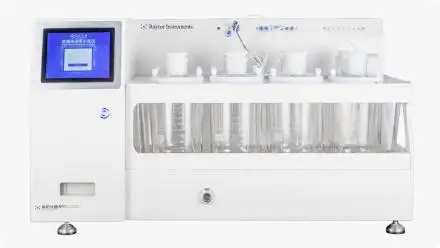
RT710 Flow-Through Cell Dissolution System by RAYTOR
RAYTOR has specialized in high-precision and high-compliance global dissolution testing systems for the last 8 years. The RT710 Flow-Through Cell Dissolution System delivers accuracy, flexibility, and regulatory readiness.
✔ System includes: 7-channel flow-through cell apparatus, high-precision syringe pump (1–40 mL/min), solvent heating workstation, and automatic sampling workstation.
✔ Key specs: 7 channels, temperature error ≤ ±0.5 °C, closed-loop sampling error ≤ ±2%, open-loop ≤ ±5%.
✔ What makes RT710 stand out:
• Effortless open/closed-loop switching – no need to replace sampling workstation.
• Dual flow rate testing – test two rates simultaneously across 7 channels.
• Real-time temperature monitoring – 7 independent sensors.
• Pharmacopoeia compliance – meets ChP 2020, USP 4, and Ph. Eur. 4.
• Advanced materials – Teflon tubing avoids adsorption/residue.
• Patented filtration – reduces back pressure.
• Flexible sampling – accommodates 70 mL vials, 10 mL tubes, and vials.
• Cloud support – auto backup and sync.
• 21 CFR Part 11 – audit trail, access control, data integrity.
✔ Applications: oral preparations, enteric-coated tablets, soft capsules, topicals, ophthalmics, injectables.
Closing Words
The flow-through cell system (USP 4) is essential for poorly soluble drugs, extended-release forms, complex dosages (suspensions, implants, liposomes), and IVIVC development. With the dissolution market projected to exceed $5 billion by 2032, systems like the RT710 offer dual-mode operation, real-time monitoring, and full compliance.
Learn more: www.raytor.com
FAQs
Q1: What is USP Apparatus 4?
It's the flow-through cell dissolution system, where medium continuously flows through a cell containing the dosage form.
Q2: When should I use a flow-through cell instead of paddle/basket?
For poorly soluble drugs, powders, implants, extended-release forms, or when you need rapid pH changes and infinite sink conditions.
Q3: What is the difference between open-loop and closed-loop?
Open-loop uses fresh medium continuously (infinite sink), closed-loop recycles a fixed volume (cumulative release data).
Q4: Is RT710 complying with any kinds of pharmacopoeias?
Yes. It fulfills the standards of Chinese Pharmacopoeia 2020 (Method 6), USP Apparatus 4, and European Pharmacopoeia Apparatus 4.
Q5: How many channels does RT710 offer?
There are Seven channels; it supports dual flow rate testing at the same time.