





IVPT Testing System Manufacturer: What FDA Expects in Generic Topical Drug Testing
2026-10-16


Two topical creams with identical API concentrations can produce different permeation profiles through excised human skin. The difference may originate from formulation microstructure, but receptor-medium saturation, compromised skin integrity, or inconsistent sample recovery can produce similar results.
For laboratories developing generic topical drugs, the challenge is determining whether the measured difference reflects drug delivery or the test method itself.
As a provider of manual and automated Franz diffusion systems, Raytor manufactures IVPT testing equipment to assist customers with topical formulation studies. Customers are advised to select IVPT testing equipment aligned to the applicable analytical method, sampling requirements and planned bioequivalence study design and not limited by the instrument's capacity.
1. What Does FDA Actually Expect From IVPT Studies?
FDA's draft guidance, In Vitro Permeation Test Studies for Topical Drug Products Submitted in ANDAs (October 2022), provides methodologies for performing IVPT studies to compare generic topical products to reference products.
FDA issued its final guidance on Physicochemical and Structural (Q3) Characterization of Topical Drug Products Submitted in ANDAs in March 2026. While this guidance provides recommendations for physicochemical and structural characterization, it does not establish a universally applicable IVPT bioequivalence methodology. FDA's separate draft guidance on IVPT studies (October 2022) provides recommendations for method development, validation, and study conduct. Laboratories should therefore establish and document the suitability of their IVPT methodologies for assessing drug permeation, taking into account relevant FDA guidance and applicable product-specific recommendations.
There are three main focus areas:
- Method discrimination: The sensitivity to changes in the formulation that affects drug permeation and delivery and the ability to select amongst formulations of different permeation characteristics.
- Experimental control: Skin membranes, conditions of the receptor phase, geometry of the diffusion cells, temperature and timing of sampling.
- Statistical evaluation: A comparison of maximum flux (Jmax) and total cumulative amount permeated (AMT) is made using an appropriate design.
Jmax and AMT are not reliable endpoints when cell volume and effective diffusion area, or sampling recovery, is not adequately characterized.
It is FDA's product-specific guidance that will determine if IVPT is appropriate for the intended generic drug.
2. Why Can Skin and Receptor Conditions Distort Bioequivalence Results?
Skin is not a uniform diffusion membrane. Factors including the donor, storage conditions and the integrity of the stratum corneum, can affect drug transport.
When a barrier is damaged, transport is facilitated. However, insoluble drugs may not be able to drive transport by creating an adequate concentration gradient.
The FDA's draft guidance recommends utilizing excised human skin and evaluating the barrier integrity of the skin section.
Potential controls may include:
• Barrier integrity: Assess skin barrier's integrity prior to study by measuring TEWL or electrical resistance/impedance.
• Donor variability: Randomize placement of test and reference formulations across skin sections from same donor for replicate studies.
• Receptor suitability: Evaluate the solubility and stability of the API and determine if transport occurs at the conditions and duration of the study.
For hydrophobic APIs, surfactants may be added to the receptor to maintain sink conditions. Organic solvents to improve the receptor's solubility should be evaluated for control of skin permeability.
An IVPT receptor may not always be the best solvent to dissolve the API.
3. Which Franz Cell Parameters Affect Permeation Accuracy?
Diffusion-cell specifications become meaningful only when their effects on calculated flux and experimental reproducibility are understood.
FDA's draft guidance describes approximately 32°C ± 1°C at the skin surface as an example of a qualified operating condition. Controller accuracy alone cannot establish this temperature at the tissue interface.
| Parameter | Failure mechanism | Verification method |
| Skin surface temperature | Changes diffusion kinetics and barrier behavior | Measure surface temperature during representative test runs |
| Effective diffusion area | Incorrect area normalization shifts calculated flux | Measure individual cell openings |
| Receptor volume | Volume errors propagate into permeated-mass calculations | Determine actual volume for each cell |
| Stirring performance | Poor mixing creates concentration gradients | Verify agitation consistency under loaded conditions |
| Bubble formation | Air reduces effective membrane-to-liquid contact | Inspect mounted cells and validate bubble removal |
| Sampling pathway | Retained drug contaminates subsequent samples | Perform blank, recovery, and carryover checks |
These measurements should be documented during equipment qualification.
An example of a diffusion system with a published temperature error of ±0.5°C still requires verification that the skin maintains the method's temperature specification throughout the study.
4. Full-Volume Sampling vs Partial Sampling: Which Method is More Suitable?
A sampling strategy can affect mass balance and interpretation of profile flux.
In partial sampling, a small sample of the receptor is removed and replaced with a fresh medium. This minimizes disruption to the system, but requires correction for drug removed in previous sampling events. Low API and assay variability can result in negative apparent flux.
Full-volume sampling replaces the receptor contents at each sampling interval, and as such supports sink conditions. This allows for simplification of calculations of drug recovery and mass balance at the sampling interval. This method requires, however, qualification of both receptor replacement and sample recovery.
Full-volume replacement also requires more precision in:
• Complete removal and replacement of receptor medium.
• Recovery of temperature after each sampling.
• Retention of sampling line and API adsorption.
• Consistency of timing between administration of next dose and sample collection.
In the draft guidance from FDA, full-volume replacement is cited as one potential method of maintaining sink conditions, though this is not always necessary.
The most appropriate method would depend on the solubility and permeation of the Active Pharmaceutical Ingredient (API), the sensitivity of the analytical method and the sampling frequency.
5. How Do Raytor's IVPT Systems Address Different Testing Requirements?
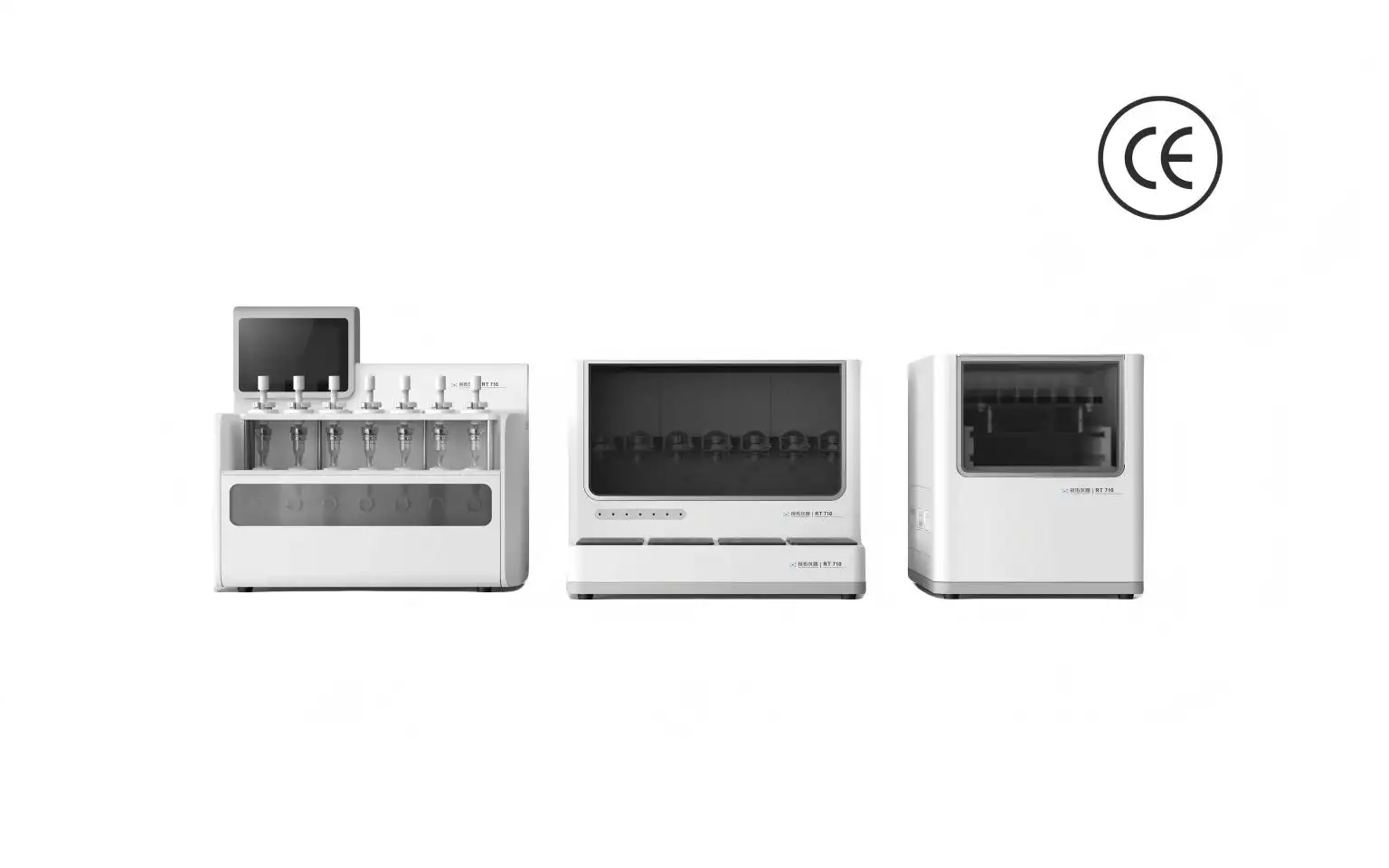
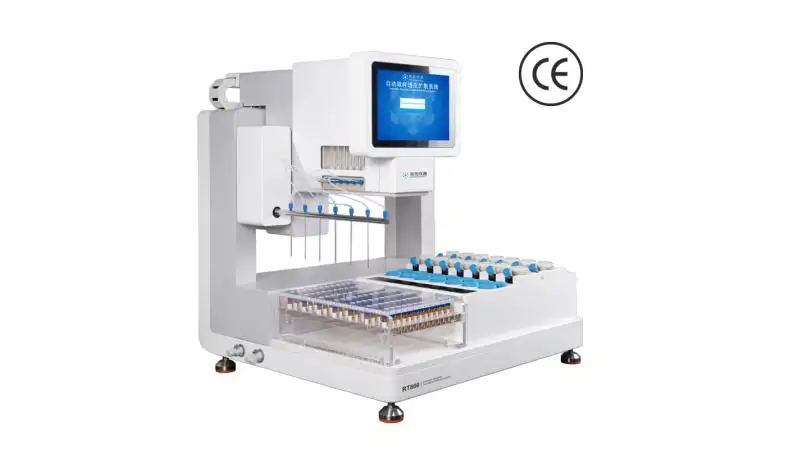
While Raytor's RT806, RT800 and RT814 systems all utilize a similar vertical Franz diffusion cell design, their sampling arrangements are different.
| System | Configuration | Selection consideration |
| RT806 | Six diffusion cells per group; manual sampling | Flexible method development and smaller experimental batches |
| RT800 | 14 positions; seven automated sampling channels; 0.2–1.5 mL sampling range | Repeated small-aliquot sampling with synchronized collection within groups |
| RT814 | 14 positions; 14 sampling channels; full- or partial-volume sampling | Studies requiring flexible receptor replacement and independent sampling pathways |
The RT800 features shortened sampling pipelines to reduce potential residual material and includes audit-trail functionality.
The RT814 uses independent pipelines and pumps to reduce the risk of shared-path contamination. Its automatic tilting mechanism is used to remove residual bubbles. Glass diffusion cells reduce leakage.
These are published equipment design features, not evidence that a particular IVPT method has been validated.
6. What Should Procurement Teams Verify Before Equipment Acceptance?
A manufacturer's datasheet establishes the available configuration. Laboratory qualification establishes whether that configuration supports the intended method.
• Before purchasing, request documentation or a representative demonstration addressing:
• Cell qualification: Measured diffusion area, receptor volume, and temperature stability.
• Sampling performance: Volume accuracy, repeatability, residual drug recovery, and carryover under relevant operating conditions.
• Study compatibility: Donor allocation, sampling intervals, receptor replacement, and control-cell capacity.
• Electronic records: Audit-trail operation, access controls, data export, and applicable computerized-system validation requirements.
USP <1724>-oriented equipment design does not constitute FDA approval of an IVPT study. Method validation, statistical planning, and product-specific bioequivalence justification remain separate responsibilities.
For laboratories comparing manual and automated IVPT platforms, Raytor provides technical specifications for the RT806, RT800, and RT814 at www.raytor.com.
FAQs
Q1: What IVPT testing systems does Raytor manufacture?
Raytor offers RT806 manual, RT800 automated, and RT814 fully automated Franz diffusion systems for topical drug permeation and release studies.
Q2: Are Raytor IVPT systems FDA-approved?
FDA does not generally approve individual IVPT instruments. Raytor designs systems with reference to USP <1724>, while laboratories must independently qualify equipment and validate their methods.
Q3: Which Raytor system is suitable for manual IVPT testing?
Raytor RT806 provides six diffusion cells per group, manual sampling, integrated heating, and stirring control for smaller-scale studies and method development.
Q4: What is the difference between Raytor RT800 and RT814?
RT800 offers 14 diffusion cell positions (7 × 2) with seven automated sampling channels. RT814 provides 14 diffusion cell positions (7 + 7) and supports both full-volume and partial-volume automated sampling.
Q5: How does Raytor RT814 reduce cross-contamination risks?
RT814 uses separate sampling pipelines and pumps for individual diffusion cells. Laboratories should still verify drug carryover and cleaning effectiveness.