





Pharmaceutical Diffusion Testing Equipment Manufacturer: Improving Sampling Accuracy
2026-10-14


A diffusion cell can maintain its programmed temperature and stirring speed yet produce inconsistent IVRT results. When replicate release profiles diverge, the formulation is not necessarily responsible. A small volume of receptor solution left inside a sampling tube, an unmixed sampling arm, or a delay between withdrawals can change the measured drug concentration.
These deviations become particularly problematic when comparing topical formulations with similar release rates. At Raytor, we focus on fluid-path design, sampling synchronization, volume control, and bubble management when developing diffusion testing equipment.
For laboratories evaluating a Pharmaceutical Diffusion Testing Equipment Manufacturer, the relevant question is not simply whether sampling is automated, but whether the collected aliquot accurately represents the receptor medium at the intended time.
1. Where Does Sampling Accuracy Break Down?
In a Franz diffusion cell, the analytical result depends on the condition of the receptor solution when the sample is withdrawn. Errors introduced during collection cannot necessarily be corrected by subsequent HPLC analysis.
Three mechanisms deserve special attention:
•Residual solution and carryover: Liquid retained in sampling tubing can mix with subsequent aliquots and cause apparent changes in concentration in the sampled aliquot.
•Non-representative sampling: The solution in a stagnant sampling arm of a conveyor sampling system may not be representative of the solution in a stirred receptor chamber.
•Sampling time differences: Rapid changes in drug concentrations may result in different drug concentration profiles with sequential samplings. drug concentration profiles might be obtained if sampling is performed during a long enough period of time.
The results can also be affected by carryover effects. The irregular sampling of the time axis also influences the evaluation of the drug release profile.
The FDA's draft guidance on IVRT studies, published in October 2022, refers to sampling from volume and from well-mixed receptor compartments.
2. How Does the Design of the Sampling Pipeline Impact Drug Recovery?
Dead Volume, and Adsorption
Sampling can lead to biased drug concentration estimates.
Longer fluid pathways can increase dead volume and surface area for drug-tubing interaction.
Some APIs may adsorb to Tygon tubing, particularly with receptor media of low drug concentration or in the presence of amphiphilic substances or other components that may influence the interface.
Flushing can remove adsorbed drug, but excessive flushing can increase reagent consumption.
The Raytor RT800 Automated Transdermal Diffusion System has a sampling pipeline of shorter length, and automates samplings, cleanings, and replenishings. This design reduces carryover and should improve recovery.
Before final selection of tubing design, laboratories must verify:
•The lack of carryover at high drug concentration.
•The absence of major deviations in the assay, and in intermediate and finished product specifications for concentrations of the API over the expected range.
•Ability to interface with receptor media that contain alcohols, surfactants, and/or other solubilizing agents.
•Does flushing remove drug residue while keeping sample volumes the same?
A fluid path appropriate for one hydrophilic compound may behave differently for a lipophilic API. Method-specific recovery testing is warranted.
When Independent Pipelines Are Preferable
The RT814 uses a design that routes separate pipelines and pumps to each of the diffusion cells. This design reduces the risk of cross contamination. Each channel, however, still must be qualified for volume accuracy, drug recovery and losses due to tubing.
Differences in channels may also occur with independent fluid paths, which would also need qualification.
3. Why Sampling Synchronization and Replenishment Matter
For IVRT, cumulative drug release is commonly plotted against the square root of time. The resulting slope represents the release rate over the evaluated interval.
If six cells are sampled sequentially but recorded at one nominal timestamp, their concentrations may represent different exposure periods. This is particularly consequential during rapidly changing initial release conditions.
The RT800 provides synchronized automatic sampling across seven channels within a group, reducing operator-dependent timing differences.
Actual collection timestamps should nevertheless be verified during method qualification, including when two groups operate independently.
Receptor Volume Changes During Repeated Sampling
Partial sampling removes receptor medium and dissolved drug. Replenishment with fresh medium restores volume but dilutes the remaining drug concentration.
To maintain the receptor medium constant in volume and with the immediate replacement of equal aliquots with drug-free medium, the cumulative released mass per unit area can be computed by:
[Q_n=\frac{V_r C_n+V_s\sum_{i=1}^{n-1}C_i}{A}]
Where:
•(V_r): Receptor volume
•(V_s): Volume withdrawn at each sampling point
•(C_n): Drug concentration at the current sampling point
•(A): Effective diffusion area
The above-mentioned equation assumes complete mixing, constant volumes and no drug contribution from the replacement medium. Depending on the sampling technique, mass-balance equations, should be appropriately modified.
Even accurate analytical concentrations cannot compensate for incorrect withdrawal-volume records.
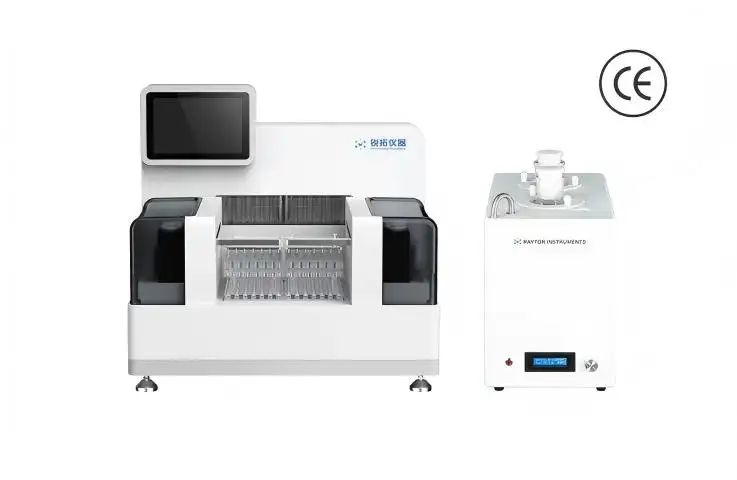
4. Which Raytor System Fits the Sampling Method?
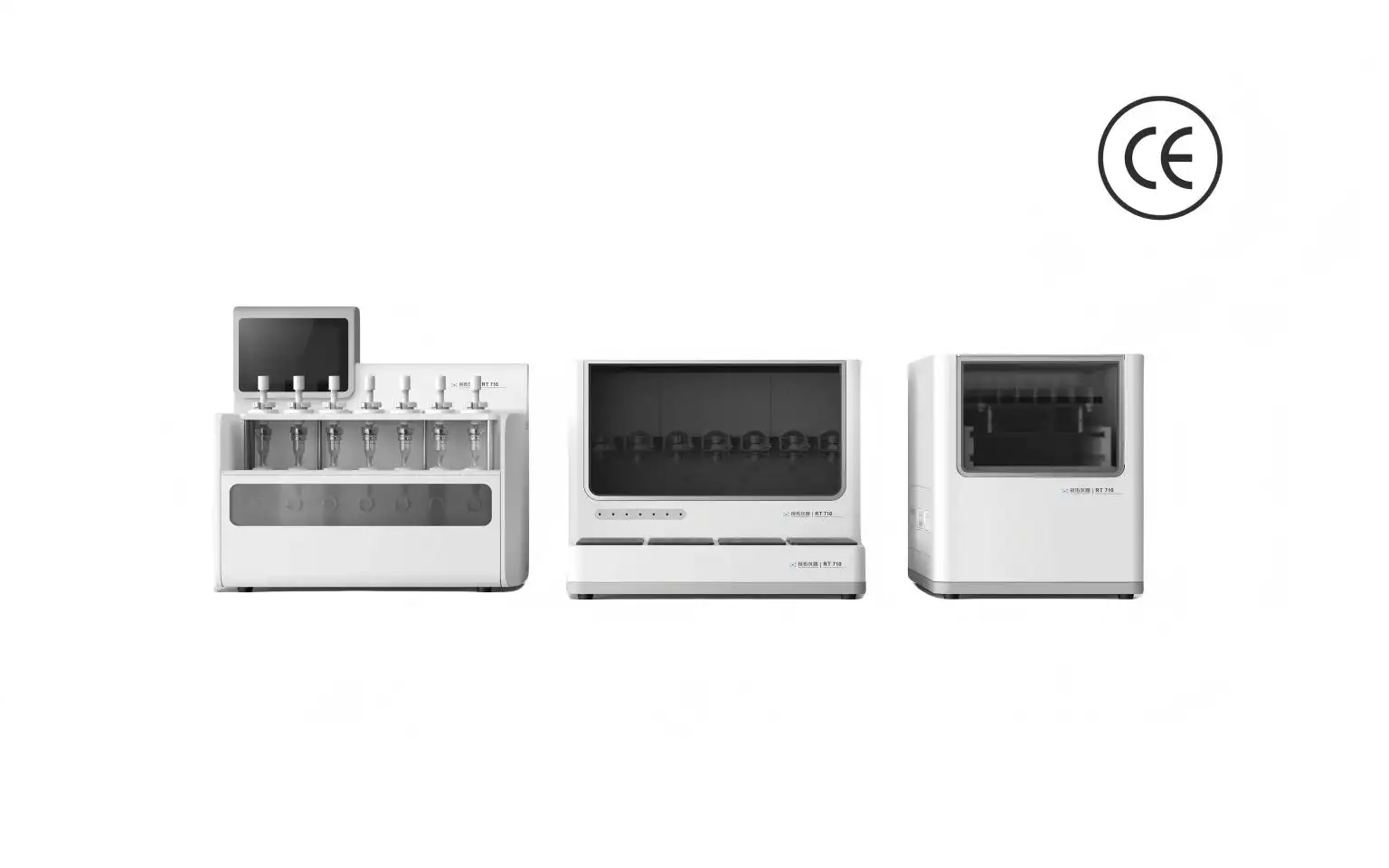
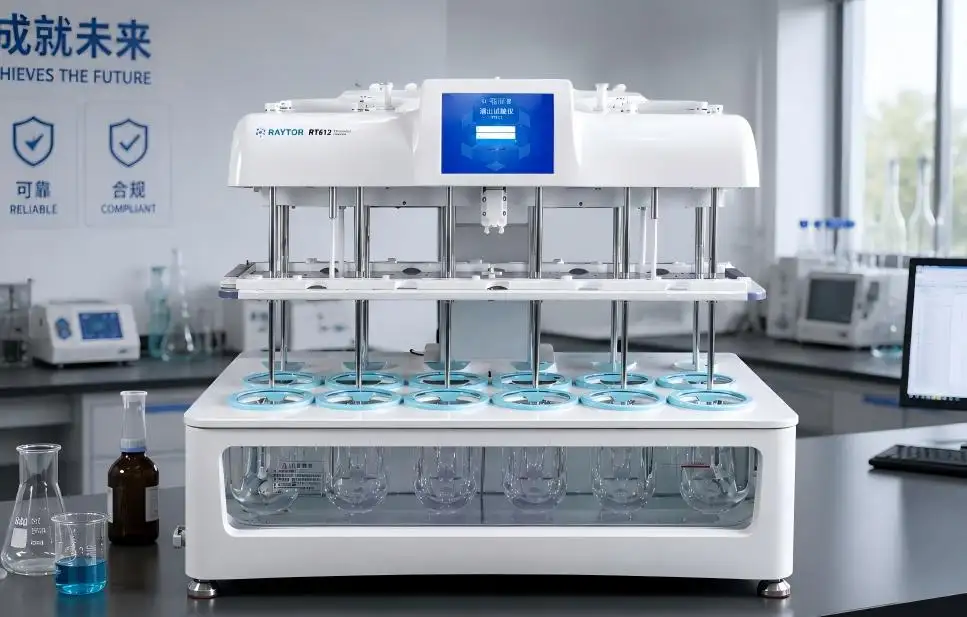
Raytor offers different sampling architectures for manual and automated diffusion testing.
| Model | Sampling configuration | Relevant capability | Verification priority |
| RT800 | 7 sampling channels; 0.2–1.5 mL range | Synchronized sampling and shorter pipelines | Timing, recovery, and carryover |
| RT814 | 14 independent sampling channels; 1–10 mL range | Separate fluid paths, partial/full sampling, automatic bubble removal | Channel variability, volume accuracy, and recovery |
| RT806 | Manual sampling; 6 cells per group | Direct operator control during method development | Withdrawal timing, representative sampling, and repeatability |
These are equipment configurations, not comparative accuracy measurements.
Sample collection is synchronized with the RT800. However, smaller aliquots are possible with the RT814.
For sampling to be less frequent, the RT806 may be adequate if procedures can be adequately controlled.
Bubble management also affects choice. Air trapped under the membrane reduces effective contact area and can cause apparent release variability that is unrelated to sampling-pump performance. The RT814 uses an automatic cell-tilt feature for bubble removal, whereas the RT800 uses a manual feature for bubble removal.
5. How Should Sampling Accuracy Be Qualified?
Equipment selection should be followed by testing, not merely demonstration, under the intended experimental conditions.
A qualification protocol should include the following five questions.
- Is the collected volume reproducible?
Actual aliquot volumes should be determined gravimetrically over the sampling range of interest and across the various sampling channels.
- Does the sampling path retain the API?
Aliquot samples passed through the complete sampling system should be compared with sample controls of the same concentration.
- Is carryover detectable?
After a high concentration sample, include a blank or a low concentration sample, and test for residual drug.
- Does the aliquot represent the receptor chamber?
Assess the adequacy of the mixing. Assess the differences in concentrations between the sampling arm and the receptor chamber.
- Can the complete sampling sequence be reproduced?
Run the method as programmed using the actual receptor medium and note the times and volumes of sample collections and medium replenishments. Note and explain any interruptions of the flow of the method and/or deviations that occur.
Acceptance criteria should be established based on the analytical method, the intended use of the test, and regulatory requirements.
Discuss Your Sampling Method With Raytor
Raytor is a manufacturer of both manual and automated Franz diffusion cells systems. To help evaluate a system to meet your needs, we would also need to know the composition of your receptor medium, the API and concentration range, the sampling schedule, and withdrawal volumes.
FAQs
Q1. What pharmaceutical diffusion testing equipment does Raytor manufacture?
Raytor offers three Franz diffusion cell systems: RT800 and RT814 automated transdermal diffusion systems, and the RT806 manual vertical Franz diffusion cell tester.
Q2. How does the Raytor RT800 improve sampling consistency?
The RT800 uses seven-channel synchronized sampling within each group and shorter sampling pipelines to reduce timing differences and residual solution. Actual accuracy requires method qualification.
Q3. What is the sampling volume range of Raytor RT800?
The RT800 supports automatic sampling volumes from 0.2 to 1.5 mL, with up to 24 programmed sampling points.
Q4. How does Raytor RT814 reduce cross-contamination?
The RT814 uses separate sampling pipelines and pumps for its 14 diffusion cell positions, reducing cross-contamination risks associated with shared fluid paths.
Q5. Does Raytor offer automated bubble removal?
Yes. The RT814 uses an automatic cell-tilting mechanism to remove trapped air bubbles. The RT800 provides manual bubble removal.