

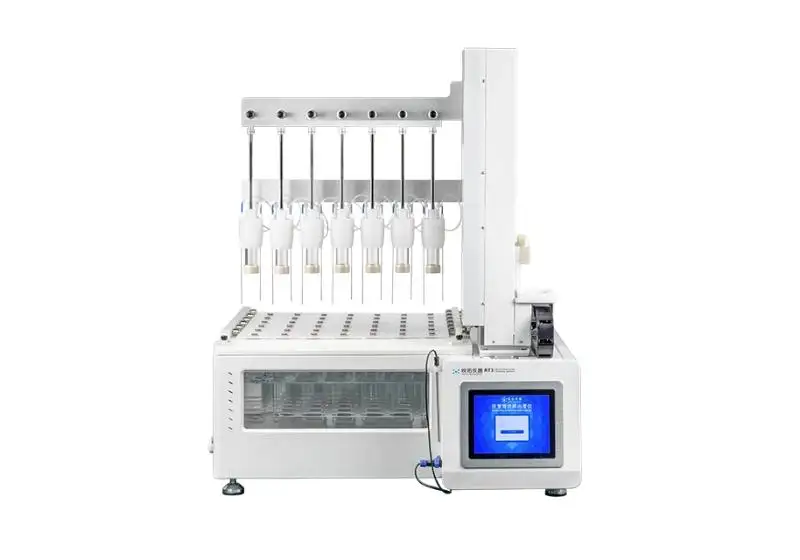
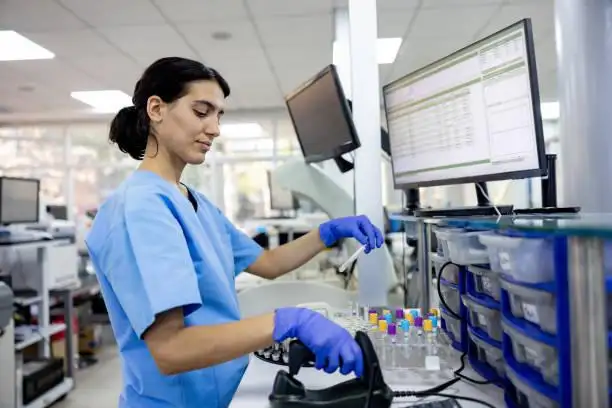
Pharma Lab Solution Provider for High-Throughput Dissolution Testing
2026-09-22


High-throughput dissolution testing relies on a lab's ability to efficiently convert scheduled tests to reviewable results. There are a few factors which include the capacity of the vessels, the sample performance, analytical turnaround times, and the batch changeover times.

As a Pharma Lab Solution Provider, we integrate instrument design and method requirements to select equipment. This allows us to achieve a significant improvement in capacity through automation, sampling, and controlled ownership.
Define the Workload Before Specifying Capacity
Prior to recommending automation, a Pharma Lab Solution Provider requires a profile of the workload. This includes
• Demand: routine and peak tests per shift, dosage forms, and method diversity.
• Method conditions: apparatus, medium, volume, temperature, speed, and duration.
• Sampling load: time points, withdrawal volumes, replacement requirements, and analytical method.
• Operating constraints: staffing, available hours, cleaning time, and review capacity.
For example, if we have 12 vessels with six sampling points each, we would end up with 72 collected samples. Assuming we have chromatographic injectors which can take a 10 minute injection, we would need the instruments for a total of 12 hours to analyze all the samples, as well as take standard and blank injections and perform repeat analyses.
Consequently, a dissolution upgrade can shift the bottleneck downstream. Track completed tests per shift, hands-on minutes per test, and sample-to-reviewed-result turnaround alongside vessel utilization.
Locate the Constraint in the Complete Cycle
Ask your Pharma Lab Solution Provider to evaluate preparation, testing, sampling, analysis, cleaning, and review separately.
Distinguish elapsed time from analyst time. Automated sampling may free personnel while leaving the prescribed dissolution duration unchanged. Automated cleaning may shorten changeover only if the cleaning cycle is effective for the product and medium.
Measure the current process before estimating savings. Include warming, deaeration, setup checks, waste handling, and unsuccessful runs.
Compare Automation Against Method Diversity
A Pharma Lab Solution Provider should compare operating models using consistent criteria.
| Configuration | Best-Fit Workload | Main Throughput Benefit | Technical and Cost Trade-Off |
| Manual testing | Low volume; frequent method changes | Flexible setup and lower initial investment | Greater analyst dependence and time-point coordination |
| Parallel vessels with automatic sampling | Repeated methods; substantial sampling demand | Parallel testing and reduced sample handling | Sampling-cycle limits, collection capacity, and downstream analytical queues |
| Multi-batch automation | Mature methods; recurring batches | Reduced intervention during batch transitions | Higher investment, cleaning qualification, consumables, and exception management |
More vessels only help if methods and resources allow for parallel operation. One challenge with automating more than one batch at a time is finding a way to incorporate media handling, dosing, and cleaning as well as the next test in the assay.
Online UV may eliminate the need for offline analysis as long as selectivity is sufficient. For chromatographic separations, you need to verify the stability of the samples you are collecting.
Addressing Sampling Bias When Increasing Analysis Throughput
Analysis of Fluid Path Recovery and Timing
When shifting from a manual to an automated sampling system, you must consider things like tubing adsorption, filter suitability, the settings of the pumps used for both cleaning and sampling, sampling bias, the probe position, and the hydrodynamics of the vessels. These are the major challenges of an automated sampling system that must be addressed during system validation.
A Pharma Lab Solution Provider should be able to explain:
• Recovery: How long it took to concentrate the sample, and possible adsorption from the tubing and filter
• Timing: The time the sample was withdrawn and the time it was taken to be in the collection vial
• Volume balance: The sample volume, flush volume, and volume of the replacement medium
• Carryover: The adequacy of the cleanup method using a representative product and medium
Establish acceptance criteria for the method, and then compare manual and automated results.
Equipment and Electronic Records
Verify mechanical setup and operating conditions through the laboratory's qualification and maintenance program. For electronic records, evaluate sample identity, original data, access controls, audit-trail review, and retrieval.
Supplier software claims do not replace assessment of the configured workflow, procedures, and user responsibilities.
Raytor Design Choices for Different Bottlenecks
RT612-ST: Parallel Testing and Automated Sampling
Our RT612-ST combines 12 vessels, automatic preheating, synchronized dosing, online filtration, and sample collection. Its coaxial paddle-and-basket arrangement permits method changes without readjusting dissolution-unit height, reducing a setup task while retaining required checks.
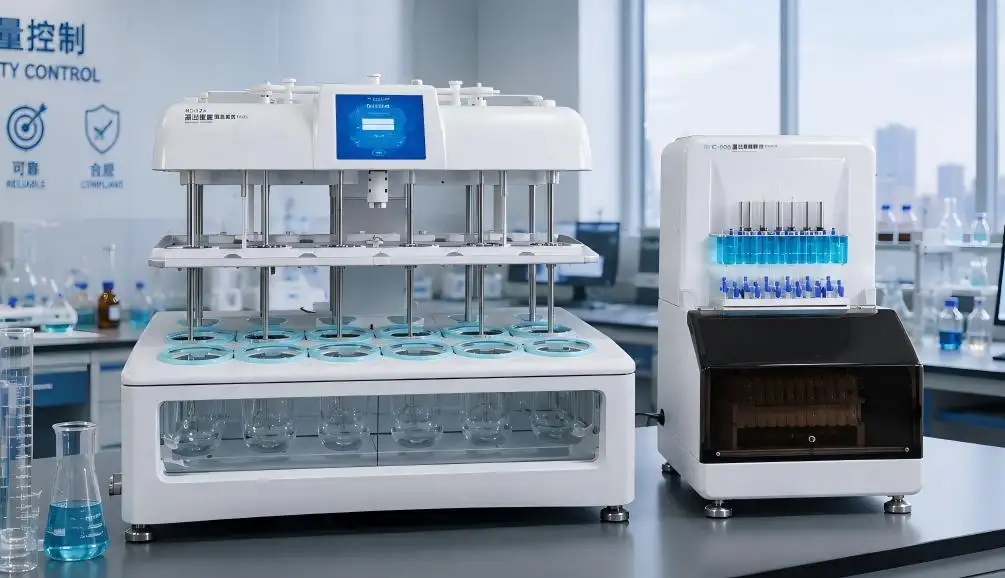
Sampling schedules need particular attention: the published specification lists a three-minute first sampling point and five-minute subsequent routine sampling intervals. Confirm compatibility with the intended method before selection. RT612-ST product specifications
RT900 and RT910: Successive Batch Processing
Our RT9 series includes RT900 for paddle methods and RT910 for basket methods. Published features include ten consecutive batch tests, automated media distribution, and vessel cleaning.
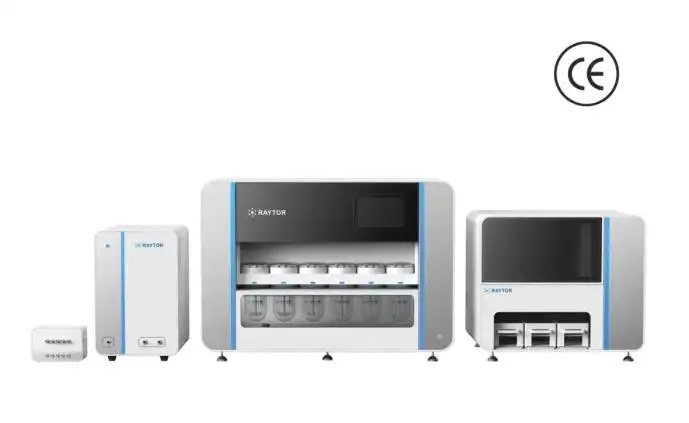
These designs address repeated batch handling. Actual unattended operating time depends on method duration, consumable capacity, cleaning requirements, and fault handling. RT9 series product information
As a Pharma Lab Solution Provider, Raytor also offers dissolution accessories and customization services. This supports configuration discussions around the application; project-specific scope should be confirmed. Raytor dissolution solutions
Qualify the Investment Before Purchase
Evaluate a Pharma Lab Solution Provider through a representative workflow demonstration and documented acceptance criteria.
Request:
• A user requirements specification covering current demand and planned expansion.
• Defined equipment qualification, method-transfer, and validation responsibilities.
• Demonstrated sampling, cleaning, interrupted-run recovery, and data export.
• Training, service coverage, spare-part availability, and maintenance requirements.
Compare annualized equipment costs, software, consumables, service, qualification, labor, and downtime per completed test. Use realistic utilization rather than maximum advertised capacity.
Discuss Your Workflow with Raytor
Selecting a Pharma Lab Solution Provider starts with the method and the bottleneck. Explore Raytor's dissolution testing solutions and share your workload, sampling schedule, and analytical requirements with our team. We can discuss a configuration that supports practical capacity growth and dependable routine operation.
FAQs
Q1. What does Raytor offer as a Pharma Lab Solution Provider?
Raytor provides dissolution apparatus, automated sampling systems, online UV dissolution systems, and multi-batch automation. Its product range allows laboratories to evaluate configurations based on dosage forms, method requirements, sampling demand, and available analytical capacity.
Q2. Which Raytor systems should laboratories consider for high-throughput dissolution testing?
The RT612-ST supports 12-vessel testing with automated sampling, filtration, and collection. For successive batch processing, the RT9 series includes RT900 for paddle methods and RT910 for basket methods. Selection depends on whether the bottleneck is parallel capacity, sampling, or batch changeover.
Q3. Does the Raytor RT612-ST automatically double laboratory throughput?
No. Its 12-vessel configuration provides parallel testing capacity, but actual output depends on method compatibility, run duration, preparation, cleaning, and downstream analysis. Laboratories should compare completed and reviewed tests per shift rather than infer throughput directly from vessel count.
Q4. What sampling intervals should buyers check for the RT612-ST?
Raytor's published specifications list a three-minute first sampling point and five-minute subsequent routine sampling intervals. Laboratories with closely spaced time points should confirm configuration-specific capabilities and compatibility with their approved methods before purchase.
Q5. How does the RT612-ST support routine method changes?
The RT612-ST uses a coaxial paddle-and-basket design that allows switching without readjusting dissolution-unit height, according to Raytor's product information. This reduces a setup task, although operators must still perform the checks required by their laboratory procedures.