





Why Choose a Pharmaceutical Dissolution Apparatus Manufacturer in China?
2026-10-07


A poorly soluble drug may show an apparently slow release profile in USP Apparatus 2, even when dissolution is limited partly by medium saturation rather than formulation performance. Increasing paddle speed changes hydrodynamics; adding surfactant may change the dissolution mechanism. Neither adjustment necessarily produces a more discriminating method.
USP Apparatus 4 offers another approach: controlled upward flow through a cell containing the dosage form, with the option to continuously replace the medium.
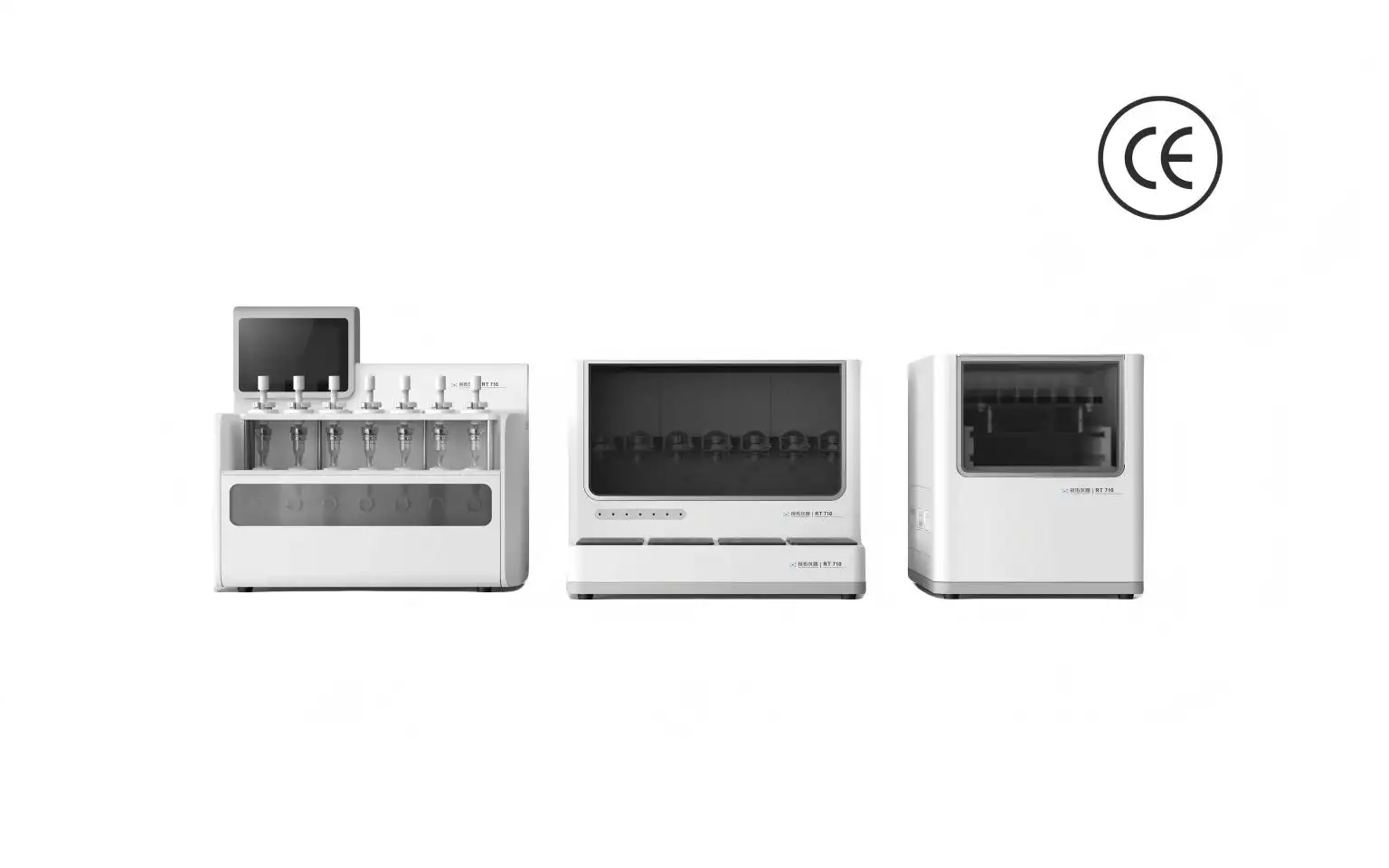
For laboratories evaluating a Pharmaceutical Dissolution Apparatus Manufacturer in China, the purchasing question is whether the system can maintain the required flow, temperature, filtration, and sampling conditions throughout the test. Raytor addresses these requirements through its RT700 and RT710 flow-through cell dissolution systems.
Why Choose USP Apparatus 4 Over a Paddle Dissolution System?
In USP Apparatus 4, the dissolution medium enters from the bottom of the vertically-oriented cell and flows over/through the sample and exits via a retaining filter.
In contrast to a stirred vessel, its hydrodynamic environment is dependent on many factors including the dimensions of the cell, the packings of glass beads, and where in the cell the sample is placed.
This design can be used to study the following:
•Poorly Soluble Compounds: Constant delivery of fresh medium can maintain sink conditions, if the dissolution medium contains a sufficient solubilizing agent.
•Modified-Release Tablets: The controlled flow of Apparatus 4 can be used to study the release behavior of modified-release tablets over a period of time.
•Liposomes and Suspensions: If the design of the cell and filtration system is appropriate, Apparatus 4 can be used to study the release of liposomes and suspensions.
•pH-sensitive Formulations: Medium change can be used to study release behavior under different, successively controlled chemical conditions.
Apparatus 4 by itself does not enable better bioavailability predictions. A validated method should show reproducibility and sensitivity to changes in formulations to be useful.
Open-Loop or Closed-Loop: Which Produces More Useful Data?
Both operating modes use a flow-through cell, but their mass balances differ.
| Parameter | Open-loop operation | Closed-loop operation |
| Medium supply | Continuous fresh medium | Recirculating reservoir |
| Sink conditions | Easier to maintain | Limited by medium volume and solubility |
| Release calculation | Concentration × collected fraction volume | Reservoir concentration × volume, corrected for sampling |
| Main limitation | High medium consumption | Drug accumulation and possible saturation |
| Typical use | Poorly soluble APIs, medium transitions | Selected extended-release methods, limited medium volumes |
At 8 mL/min, a four-hour open-loop experiment consumes approximately 1.92 L of medium per channel. For seven channels, the laboratory must account for preparation capacity, solvent storage, and waste collection.
Closed-loop operation reduces medium consumption but requires careful correction for withdrawn samples and any replacement medium.
Raytor's RT700 and RT710 support both configurations. The RT710 product documentation specifically describes switching between operating modes without replacing the automatic sampling workstation.
How Do Flow Rate and Cell Geometry Affect Dissolution Accuracy?
USP <711> describes Apparatus 4 with flow rates of 4, 8, and 16 mL/min, and cell diameters of 12 and 22.6 mm.
Smaller cells results in greater average velocities of the fluid. This may influence the diffusion boundary layer and how the drug is released.
The manner in which the glass beads are packed also plays a role. A properly packed cell will help distribute the flow.
There are three aspects of the apparatus that require closer attention during qualification:
•Verification of flow delivery: Verify actual flow against the specified limits of ±5%, taking into account the effects of temperature and humidity of the environment.
•Pump pulsation: The pump can be operated in a pulsatile manner at a frequency of 120 ± 10 pulses/min. Also, the pump can be operated non-pulsatile. Confirm the type of operation employed using the method.
•Stability of temperature: Compare the temperature of the medium in the place of operation with the specified limit of 37±0.5°C.
A pump's adjustable range is not proof of compendial performance at every setting. Flow stability should be measured with the intended cell, tubing, and filtration assembly installed.
How Can Filtration Distort Drug-Release Results?
Filtration is a frequent source of analytical error, particularly with particulate and poorly soluble formulations.
A membrane must retain material excluded by the analytical method without removing a significant amount of dissolved API.
Two competing problems can occur:
• Membrane adsorption: Dissolved drug binds to the filter surface, causing artificially low recovery.
• Progressive obstruction: Particles lodge, increasing backpressure and possibly interfering with the delivered flow rate.
Raytor's RT710 are described as using multi-stage filtration designed to reduce backpressure. Different membrane materials and pore sizes are available, along with chemically resistant PTFE tubing.
These features do not eliminate method-specific adsorption.
Before routine use, laboratories should perform filter-recovery studies, compare filtered and unfiltered reference solutions where appropriate, and check concentration recovery after passage through the complete fluid path.
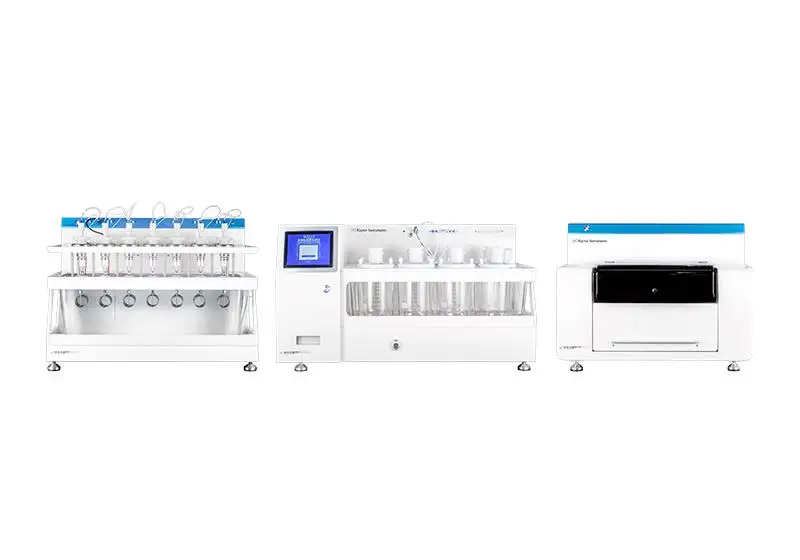
What Can Raytor's RT700 and RT710 Offer?
Raytor's published technical information identifies several features relevant to USP Apparatus 4 method development.
| Features | Engineering significance |
| Seven flow-through channels | Supports parallel sample testing |
| Two simultaneous flow rates | Allows different flow conditions within a run |
| Open-loop and closed-loop operation | Accommodates different medium strategies |
| Adjustable flow range of 1–40 mL/min | Provides method-development flexibility |
| Independent channel temperature monitoring | Helps identify channel-specific thermal deviations |
| Automatic sampling workstation | Supports timed fraction collection |
| Overpressure protection and leak detection | Helps identify abnormal fluid-path conditions |
The RT700 documentation also specifies multiple sampling-container formats and integrated medium heating.
These are manufacturer-published capabilities, not independently verified performance results. Buyers should confirm the exact model configuration, accessory compatibility, and acceptance criteria before ordering.
Discuss Your USP Apparatus 4 Requirements with Raytor
Raytor's RT700 and RT710 flow-through dissolution systems are designed for pharmaceutical research and quality control. For assessment of your requirements, sample your dosage form, provide details of flow conditions and sample protocols to us.
FAQs
Q1: Does Raytor manufacture USP Apparatus 4 dissolution systems in China?
Yes. Raytor offers the RT700 and RT710 flow-through cell dissolution systems for pharmaceutical drug-release testing and method development.
Q2: What is the difference between Raytor RT700 and RT710?
Both support seven-channel testing and open-loop and closed-loop operation. Buyers should compare their sampling configurations, accessories, and model-specific specifications before selection.
Q3: Can Raytor USP Apparatus 4 systems test poorly soluble drugs?
Yes. Open-loop testing continuously supplies fresh medium, helping maintain sink conditions when the selected medium and flow rate are appropriate.
Q4: What flow-rate range do Raytor RT710 support?
Raytor specifies an adjustable flow-rate range of 1–38 mL/min,adjustable flow rate, with an accuracy of ±5%. The selected rate must be verified for the intended dissolution method.
Q5: How many testing channels are available?
Both RT700 and RT710 provide seven flow-through channels.