

One Touch, Reliable Data: Transdermal Drug Diffusion Apparatus For 2026
2026-05-25


The Transdermal Drug Diffusion Apparatus has long been the cornerstone for in vitro release and permeation studies, from creams and gels to advanced patch formulations. As we enter 2026, we can predict that lab equipment will have more precise temperature control, be more error-resistant, and be able to accommodate different lab bench configurations more easily and frequently.
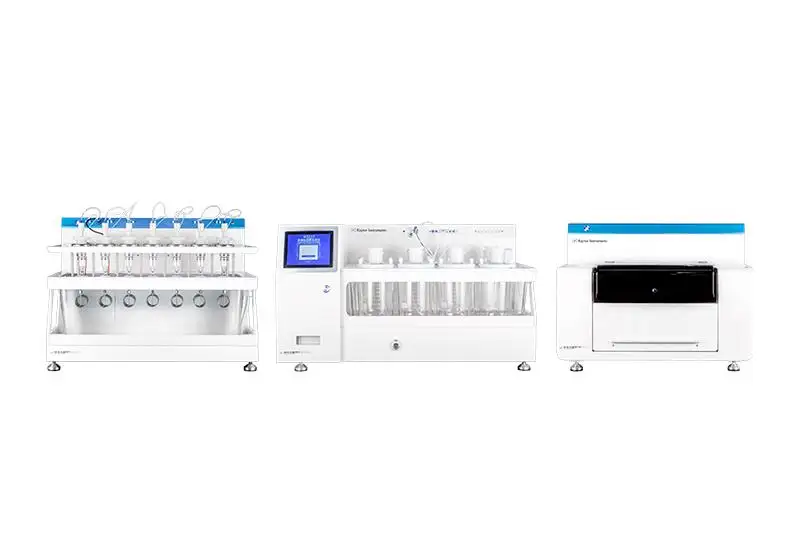
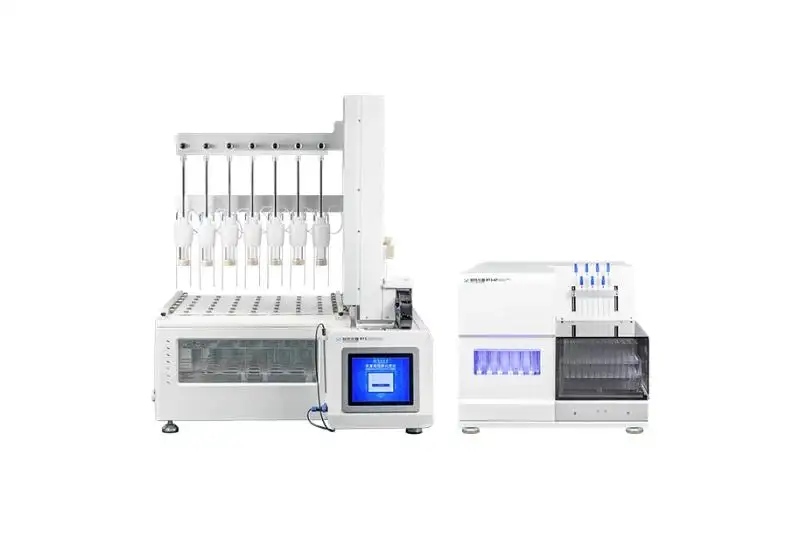
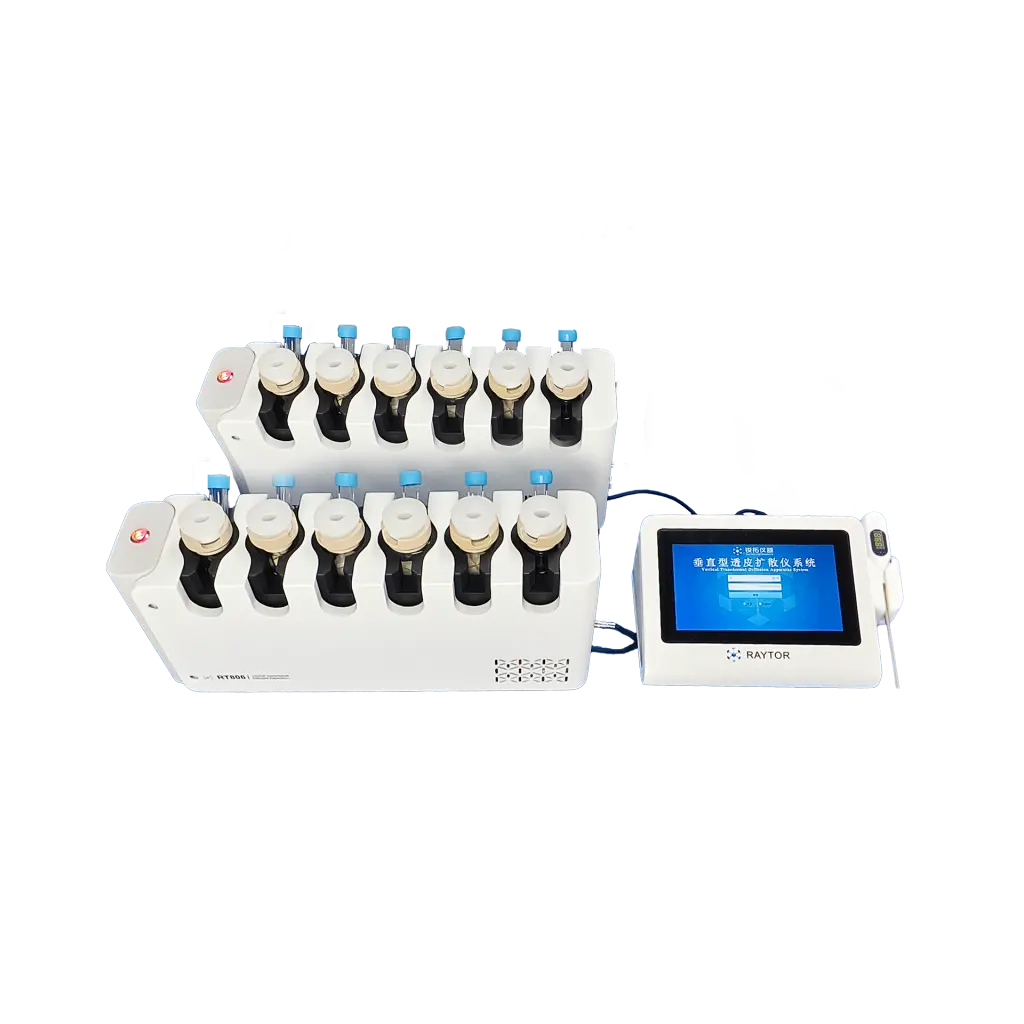
Considering these specifications, RAYTOR, manufacturer of dissolution and diffusion systems, has developed the RT806 Vertical Franz Diffusion Cell Tester. The RT806 has been designed with a focus on positive research outcomes by offering ease of use with a built-in touchscreen, USP<1724> compliance, and a convenient size to operate anywhere.
Designed for 2026: Where Precision Meets Simplicity
Modern formulation development is about speed and consistency. Instruments that require regular maintenance and lead to variability are no longer suitable for modern laboratories. The RT806 is designed to provide reliable transdermal testing data from the first run.
•A built-in touchscreen means setup is easier: The display is designed to be user-friendly so that temperature, speed, and other inputs are easier to control. With this setup, the user is brought to a temperature range of room temperature to 55 °C, and stirring at rates between 200 and 900 rpm.
•The system leverages time-efficient validation: USP<1724> is a system that describes parameters and test methodology. Users can expect that the system operates within the review consensus, increasing their confidence.
•The RT806 system has been designed to ensure minimal displacement. It is a fully transportable, compact system ideal for the flexible laboratory.
•To reduce air bubbles: the filling point design is intended to minimize the formation of air bubbles when samples are loaded, a major contributor to variability in results.
•Manual sampling without guesswork. The operation is simple and needs minimal training. This allows teams to maintain consistent manual sampling across operators and across different shifts.
Key Advantages of the RT806 Transdermal Drug Diffusion Apparatus
A good Transdermal Drug Diffusion Apparatus removes the friction that a scientist experiences when performing their task. The RT806 accomplishes this with a number of purposeful design choices.
•Entry level simplicity, professional level results. The RT806 has an incredibly simple device structure, which simplifies day to day use, while still meeting the USP<1724> regulatory guidelines for semi-solid preparations.
•Precision control of the diffusion process duration. The RT806 can control the temperature during diffusion at an error of ≤ ±0.5 °C, and the mixing speed at an error of ≤ ±10%.This allows the RT806 to keep diffusion time consistent run after run. Small temperature and mixing drifts can bend diffusion results, therefore it is important to control them for the sake of keeping the results comparable.
•Flexible multi-cell configuration. The RT806 can support one or several groups of diffusion cells, each group can have up to six cells. This modular design allows the RT806 to easily adapt to small and large research needs without retiring the core instrument.
•Compliant with standard laboratory procedures. The RT806 easily integrates with standard lab equipment that performs quantitative analysis, such as HPLC and UV-Vis.
•Bench-ready design. The RT806 includes a supplementary handheld thermometer for operators to check cell temperature and diffusion cell integrity when necessary.
Why 2026 Labs Are Choosing This Approach
The transdermal drug delivery market is experiencing consistent growth due to the increasing patient preference for non-invasive drug delivery systems and the burgeoning pipeline of topical and transdermal systems. Regulatory changes such as the USP<1724> draft create a need for laboratories to invest in flexible technologies as the other existing IVRT and IVPT methods require costly modifications. The RT806 accommodates to this progression in the following ways:
•Flexibility from the lab to the production scale: The system covers a wide range of methods for ointment, creams, patches, and gels and provides rapid method tuning. Scale-up can henceforth be initiated based on solid stability evidence rather than conjecture.
•Design aligned with market trends: The movement toward smaller, portable, and automation-ready instruments that provide control over manual variability is observed in the RT806. The RT806 is a perfect example of simple user control via a touchscreen and the ability to add optional modules with the provision of manual control sampling.
•Less re-runs and faster: The RT806 provides labs with the capability to perform initial data collection due to the elimination of filling point bubbles and the maintenance of a stable temperature environment. The aim of RT806 is to achieve initial data collection and subsequently minimize the time required to complete a project and to optimize the use of personnel
Trustworthy Data From the Start
A Transdermal Drug Diffusion Apparatus is of little value if it cannot provide trustworthy data. The RT806 is backed up by a promise of trust through repeatable performance and ease of use.
•Workflow Simplification: The touch-screen interface, compact and portable architecture, allows the operator to place the device at most convenient spot for everyday use with ease of operation.
•Integrated heating and stirring function: The system ensures that all diffusion cells operate under identical conditions, preventing any form of variation with respect to heating or stirring.
•Compliance lays the groundwork: The RT806 meets USP<1724> requirements, thus facilitating smoother method transfers between laboratories and bolstering the support for regulatory submissions regarding in vitro release and permeation studies.
The Future: Testing of Transdermal Products Beyond 2026
The testing of both pharmaceuticals and cosmetics is going in a particular direction. Devices are becoming more compact, more reliable, and easier to use. The RT806, offered by RAYTOR, is just that. The RT806, with its easy one-button operation, built in bubble prevention, and compliance to USP<1724>, is the perfect testing companion for any lab developing semisolid formulations such as creams, gels, ointments, and transdermal systems.
For labs that want fast and easy set-up standardization and repeatability, the RT806 is an excellent choice. For more information or to download a brochure, please visit the RAYTOR product page or speak to your local RAYTOR representative.
FAQs
Q: Is the RT806 USP<1724> compliant?
A: The RT806 has been purpose built to be a compliant device of USP<1724> for testing the in vitro release of and the permeation of ointments, gels, creams, and transdermal systems.
Q: What samples can I use with this device for transdermal drug diffusion testing?
A: The RT806 is an excellent diffusion testing device for creams, ointments, gels, transdermal systems, and other topical dosage forms. This device features built in bubble prevention and temperature control to accommodate a range of semi-solid dosage forms.
Q: How long does it take to train technicians on the RT806?
A: Generally, this does not take long. Most people can use the RT806 optimally after one hour of instruction. The RT806 is very intuitive, largely because it uses a touchscreen interface and has a simple manual sampling design. There is no need for complicated programming knowledge.
Q: Is it possible to attache multiple diffusion cell groups to a single RT806?
A: Most definitely. The RT806 has the ability to support one or more cell groups (each with six cells) and so allows you to grow from early method development to larger screening runs, all using the same instrument.
Q: Where can I find detailed specifications or request a quote?
A: Visit the official RAYTOR product page or contact your local RAYTOR representative for a brochure, technical datasheet, and pricing information.