





From 20 to 120 Samples: Automated Dissolution System Transforms Dissolution Testing Workflows
2026-06-22


Introduction: The Hidden Bottleneck in Dissolution Testing
For decades, dissolution testing has been the backbone of oral solid dosage QC. But walk into many pharmaceutical labs today, and you'll still find a frustrating paradox: the dissolution apparatus itself runs beautifully, yet the sampling and sample management step remains a manual, stop-and-go operation.
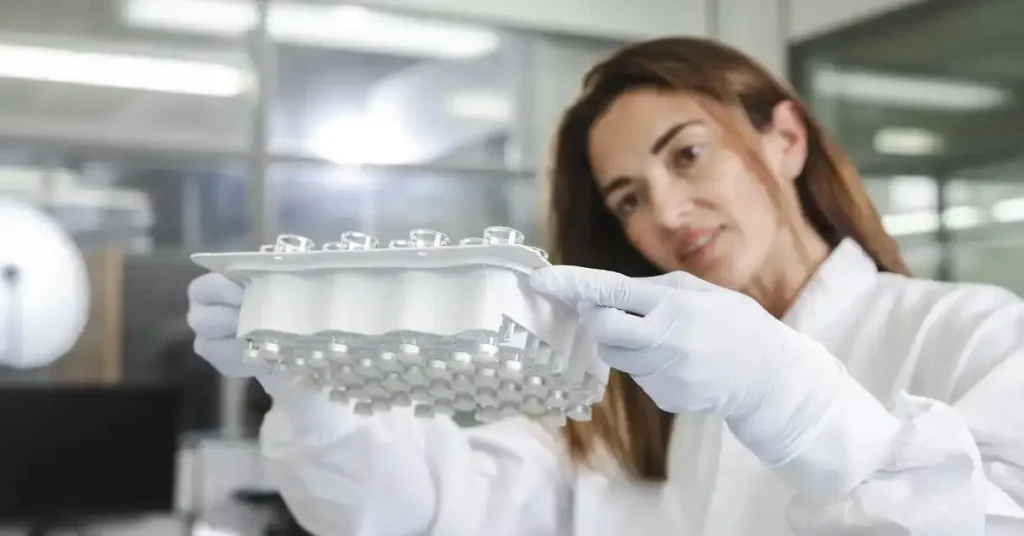
Traditional semi-automated systems often cap their sample trays at 20 positions. That means after every run—sometimes as short as 2 hours—an analyst must rush to collect vials, label them, cap them, and queue the next batch. Workflow gets interrupted, plus there are human errors, greater risks of samples evaporating, and loss of data integrity.
Modern Automated Dissolution Systems aim to solve these issues. The RT612-ST from RAYTOR, for example, has expanded on-board sample capacity from 20 to 120, thereby significantly impacting how QC labs plan, execute, and document dissolution tests. This article compares old vs. new approaches—horizontally across brands and vertically across generations—to show why capacity matters as much as precision.
1. The Old Paradigm: 20-Sample Limitation and Its Costs
Most first-generation automated sampling workstations hold 20 sample vials (typically 1.5 mL or 2 mL). While this was a leap forward from manual pipetting, it still forces compromises:
• Frequent interruptions – After collecting 20 time-point samples, the system stops. An operator must empty the tray, label new vials, and restart.
• Overnight runs impossible – For a 12-vessel system taking 5–10 time points over 8–12 hours, 20 positions are quickly exhausted.
• Contamination risk - Frequent manual handling of open vials will allow dust to settle and create the risk of spillage and vials being mislabeled.
• Data gaps - Lack of automated data collection will lead regulatory auditors to question the absence or irregular handling of sample vials.
*Real-world impact: A QC lab running three dissolution batches per day spends nearly 40% of its time just managing sample trays—not analyzing results.*
2. The 120-Sample Breakthrough: What Changes with a Modern Automated Dissolution System
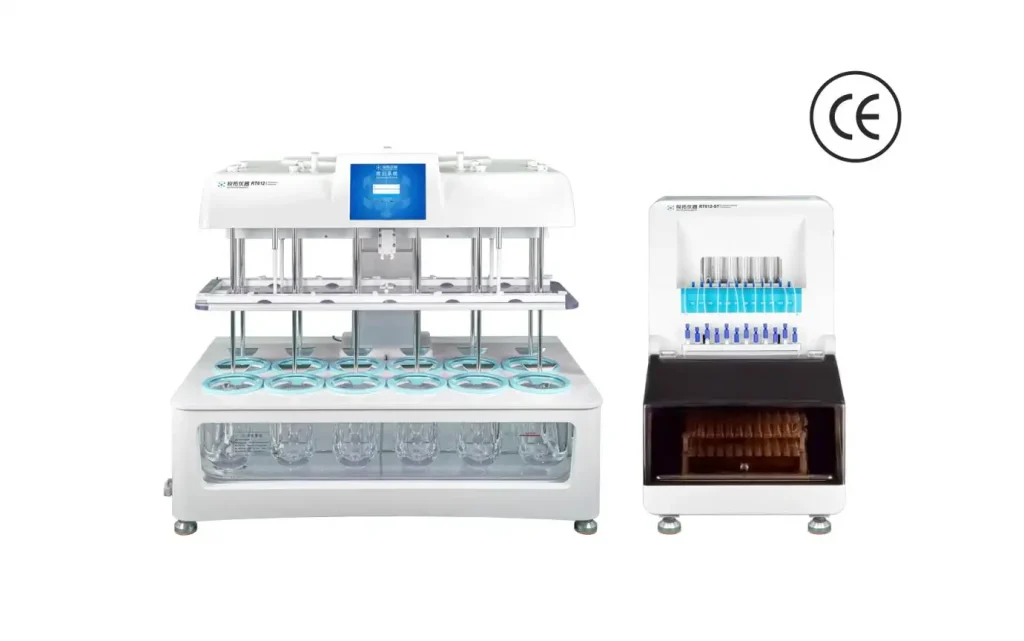
The RT612-ST Automated Dissolution System integrates a 120-position sample tray supporting both 1.5 mL HPLC vials and 10 mL test tubes. This seemingly simple upgrade creates a cascade of workflow improvements:
1) Unattended Overnight Operation
• With up to 20 sampling events per vessel (maximum settable sample number = 20), and 120 total positions, the system easily covers a 12-hour extended release profile.
• First sample point at 3 minutes, routine intervals at 5 minutes – no need for weekend or evening staff presence.
2) Batch Processing Without Human Touch
• Run three different dissolution batches sequentially, or one batch with intensive time points, without reloading.
• The robotic arm collects, filters online, and stores each sample into a uniquely positioned vial.
3) Elimination of "Sample Queue Anxiety"
Traditional 20-slot workstations often force analysts to prioritize which time points to keep. With 120 slots, every required time point is retained, plus room for replicates and system suitability checks.
Comparison Table – Traditional vs. RT612-ST Automated Dissolution System
| Feature | Traditional Automated Workstation | RT612-ST System |
| Sample tray capacity | 20 vials | 120 vials (1.5 mL) + 10 mL rack |
| Max samples per vessel | 8–10 | 20 samples |
| Unattended run time | ≤ 4 hours | Up to 720 hours (30 days) |
| Online filtration | Single, manual filter change | Dual online filters with automatic saturated filter washing |
| Sampling precision | ±2% typical | ≤±1% |
| 21 CFR Part 11 compliance | Often optional | Built-in |
3. Beyond Capacity – Integrated Automation That Redefines Workflow
A true Automated Dissolution System is more than a large tray. The RT612-ST embeds several automation layers that, together, turn the dissolution test into a "set-and-monitor" process:
1) Automatic Synchronous Dosing
Eliminates dosing time differences across 12 vessels. Each vessel receives its dose within <1 second of each other, and the exact dosing time is tracked – critical for immediate-release tablets.
2) Automatic Medium Preheating
Program the constant-temperature bath to begin heating at a specific time. Walk into a ready-to-run system each morning.
3) Dual Online Filtration + Saturated Filter Washing
Two inline filters work in parallel; the system automatically washes and saturates the backup filter before switching. No more clogged probes or adsorption artifacts.
4) Teflon + Nitrogen-Stabilized Pipeline
Highly anti-adsorption and chemically inert – even for lipophilic APIs like sirolimus or clotrimazole. The nitrogen-stabilized lines maintain consistent stirring speed and solvent volume throughout the run.
5) Real-Time Speed & Temperature Monitoring
• RPM resolution: 0.01 rpm | Steady-state error: ≤±0.3 rpm
• Temperature accuracy: ≤±0.2°C | Resolution: 0.01°C
When combined with the 120-position tray, these features mean a QC chemist can:
Set up on Friday afternoon, launch a 12-vessel, 20-time-point extended release test, and return on Monday to find all 240 samples (12 × 20) neatly collected, filtered, and stored in capped vials, with a full audit trail.
4. Horizontal & Vertical Industry Comparison
Horizontal comparison (vs. other automated dissolution brands):
Some competitors offer 40- or 60-position trays, but very few reach 120 positions while maintaining ≤±1% sampling precision and dual online filtration. Many still require manual filter changes between sampling intervals, which defeats true walk-away automation.
Vertical comparison (manual → semi-auto → full auto):
| Era | Sample Capacity | Data Integrity |
| Fully manual | N/A | High risk |
| 20-position auto | 20 vials | Moderate |
| RT612-ST 120-position | 120 vials | Full 21 CFR Part 11 |
Key takeaway: The leap from 20 to 120 positions is not incremental—it changes the QC lab from a "sample-chasing" model to a "data-reviewing" model.
5. Why RAYTOR Designed the RT612-ST Around Real Lab Needs
Behind every well-engineered Automated Dissolution System stands a manufacturer that understands daily pain points. RAYTOR (based in Jiaxing, Zhejiang, China) has spent years listening to QC supervisors and formulation scientists. The result is the RT612-ST – a system built for regulatory rigor and operational simplicity.
Key design advantages of RAYTOR's RT612-ST:
• Co-axial paddle-basket design – Switch between USP Apparatus 1 (basket) and 2 (paddle) without readjusting shaft height. Zero mechanical recalibration.
• FDA 21 CFR Part 11 ready – Built-in user access levels, password protection, audit trail, and electronic signatures. No external software patches required.
• Optional dual drive – For labs running continuous operation (e.g., accelerated stability studies), the dual drive provides redundancy and mechanical stability.
• Anti-corrosive injection needles & high-pressure resistant pipeline – Suitable for aggressive media (pH 1.2 HCl or pH 12 phosphate buffers with SLS).
• Automatic centering dissolving cups – Fast, repeatable vessel positioning eliminates centering deviations (< ±2.0 mm) and shaft wobble (< ±1.0 mm).
Moreover, RAYTOR's philosophy is "Make scientific experiments easier." Every design choice—from the large color touchscreen to the 120-position tray—reduces the hands-on time of your most valuable resource: your analysts.
Manufacturer at a glance:
• Company: RAYTOR
• Product: RT612-ST Automated Dissolution System with 120-position autosampler
• Compliance: Meets USP, EP, JP, and FDA 21 CFR Part 11
Contact:
• Phone: +86 (20) 3160 8901
• Email: sales@raytor.com
• Address: Youchegang Town, Xiuzhou District, Jiaxing, Zhejiang, China
Conclusion: Reshape Your Dissolution Workflow Today
Moving from 20 to 120 samples is not just about a larger tray—it is about giving your QC team back their time, ensuring data integrity across long runs, and meeting regulatory expectations without weekend work. The Automated Dissolution System has evolved; the RT612-ST from RAYTOR represents the new baseline for high-throughput, compliant, and truly walk-away dissolution testing.
If your lab still manages sample trays manually or suffers from 20-slot bottlenecks, consider this question: How many extra validated batches could you release each month if dissolution testing required only 30 minutes of setup per run?
Ready to upgrade? Contact RAYTOR today for a workflow audit or a live demonstration of the RT612-ST's 120-position automation.
FAQs
Q1. How many samples can the RT612-ST Automated Dissolution System hold in a single run?
Up to 120 samples (1.5 mL HPLC vials) plus additional 10 mL test tubes, supporting 20 sampling events per vessel.
Q2. Does the system comply with the requirements of FDA 21 CFR Part 11?
Yes. The system has all the required features of user access controls, user passwords, audit trails, and electronic signatures.
Q3. Can USP Apparatus 1 (Basket) and 2 (Paddle) be used interchanged without the need for recalibration?
Yes. The co-axial paddle-basket design accommodates method changes without the need for height adjustments.
Q4. What is the shortest time interval for sampling?
The first sample may be taken as early as 3 minutes, and then in subsequent intervals of 5 minutes.
Q5. How accurate is the sampling pump?
Sampling accuracy is ≤±1%, offering consistent results for all 12 vessels.