





What Is USP 4 Dissolution Apparatus? Working Principle and Selection Guide
2026-10-12


A poorly soluble drug may produce nearly identical dissolution profiles in a paddle apparatus, even when formulation changes should affect release. Increasing paddle speed does not necessarily solve the problem. Dissolved API can accumulate near the dosage form, while disintegrated particles settle into regions with different flow conditions.

USP 4 dissolution apparatus provides a different approach to dissolution testing. In this method, liquid is pumped through a cell containing the sample, and the medium is distributed under hydrodynamic conditions controlled by the user. A continuous supply of fresh medium can reduce saturation effects.
Pharmaceutical laboratories will adopt the USP Apparatus 4 approach for testing when the characteristics of the dosage form and its solubility indicate that the differences in performance of the dosage form cannot be detected with conventional dissolution methods.
How Does USP 4 Dissolution Apparatus Work?
A flow-through apparatus generally consists of a medium reservoir, pump, cell assembly, filter, and sampler.
The medium is pumped from the bottom of the cell and flows through the sample. The sample is filtered as it flows through the cell.
The sample is often distributed in a conical fluid-filled region. Glass beads in the inlet cone help direct the incoming medium. Another bead over the inlet opening may be used to control the flow distribution.
USP <711> defines some operating conditions, including:
• Cell diameters of 12 mm and 22.6 mm.
• Standard flow rates of 4, 8, and 16 mL/min.
• Flow accuracy of ±5%
• Temperature of 37 ± 0.5° C.
• Pulsation of 120 ± 10 pulses/min with a specified pulsating profile.
Cell dimensions and flow rate must be selected together. At the same volumetric flow rate, a smaller cell generally produces higher average linear fluid velocity. Local flow around the dosage form also depends on bead packing, sample geometry, and holder design.
When Is USP Apparatus 4 Preferable to Paddle Testing?
USP Apparatus 2 is suitable for many immediate-release tablets. Its limitations become more apparent when dissolution depends strongly on sedimentation, local fluid movement, or medium saturation.
A flow-through method deserves consideration in three situations.
• Poorly soluble formulations: Fresh medium delivered in an open-loop arrangement can help maintain a concentration gradient across the drug–liquid interface. However, increasing flow alone cannot guarantee sink conditions.
• Extended-release dosage forms: Continuous medium delivery allows release to be monitored over long periods without repeatedly manipulating the dissolution vessel.
• Powders, suspensions and multiparticulates: An appropriate cell geometry and sample supports can improve sample containment, but particle redistribution and filter blockage remain possible.
Apparatus 4 is not automatically more discriminating than Apparatus 2. This should be demonstrated with formulation comparisons and measurements of method recovery. The effects of method robustness should also be evaluated. A compendial method described in a product monograph should not be changed without justification.
Open-Loop vs. Closed-Loop: What Changes in the Results?
The circulation arrangement affects both dissolution conditions and drug-release calculations.
| Evaluation factor | Open-loop system | Closed-loop system |
| Medium supply | Fresh medium continuously enters | Medium recirculates |
| Sink conditions | Easier to maintain when adequately designed | Depend on reservoir volume and drug solubility |
| Medium consumption | Higher | Lower |
| Drug quantification | Effluent concentration and collected volume | Reservoir concentration with volume corrections |
| Main limitation | Medium consumption and collection accuracy | Drug accumulation and saturation |
| Typical use | Poorly soluble or prolonged-release formulations | Screening and limited-volume studies |
At 16 mL/min, one open-loop channel requires 960 mL of medium per hour. A six-hour test therefore consumes 5.76 L per channel, excluding priming and other losses.
For open-loop methods, the measured concentration and volume sampled must be reported for each sampling interval. In a closed-loop system, calculations must account for the volume of the reservoir, samples withdrawn, and replacement medium.
If these corrections are not done, differences observed in release profiles may be due to sampling errors rather than formulation behavior.
What Causes Unreliable USP 4 Dissolution Results?
Pump Pulsation and Pressure Changes
Even if a pump delivers the correct average volume, it may not be acceptable if there is a pulsation problem in the flow. Increased resistance to flow may alter flow behavior.
Flow behavior must be evaluated under representative operating conditions, including the tubing and filter configuration, to determine if there are adverse effects on the system.
Filter Blockage and Adsorption
Filter membranes may block the passage of a dissolved API, as well as adsorb it. Excipients and small particles may block the membrane.
Laboratories must examine the following:
• The compatibility of the membrane with the dissolution medium.
• Flow stability and backpressure.
• Residual drug in tubing and collection containers.
• Low adsorption tubing may alleviate some risks, but the need for recovery testing is still required.
Cell Loading and Air Entrapment
Different local flow patterns can develop among the cells due to inconsistencies in sample positioning and bead packing. Entrapped air can obstruct liquid contact and/or sample distortion.
Implementing a defined cell-loading procedure and completing a system primer and visual inspection reduce the sources of variability.
How Should Buyers Qualify a Flow-Through Dissolution System?
Identifying the instrument’s maximum flow rate should not drive the equipment selection process, particularly in relation to the method to be employed.
Prior to acquisition, laboratories should require evidence concerning the following four areas:
• Mechanical performance should include: characteristics of the cells (e.g. flow dimensions, accuracy, temperature, uniformity, pulsation and protection characteristics); and various protection features.
• Analytical compatibility should include assessment of sampling and filter, tubing, and method adsorption.
• Method reproducibility should include assessment of changes in release profiles and operating conditions.
• Documentation should include evidence of IQ/OQ and support calibration and maintenance.
• A USP statement of compatibility does not qualify the system nor validate the dissolution method.
Raytor USP 4 Dissolution Systems
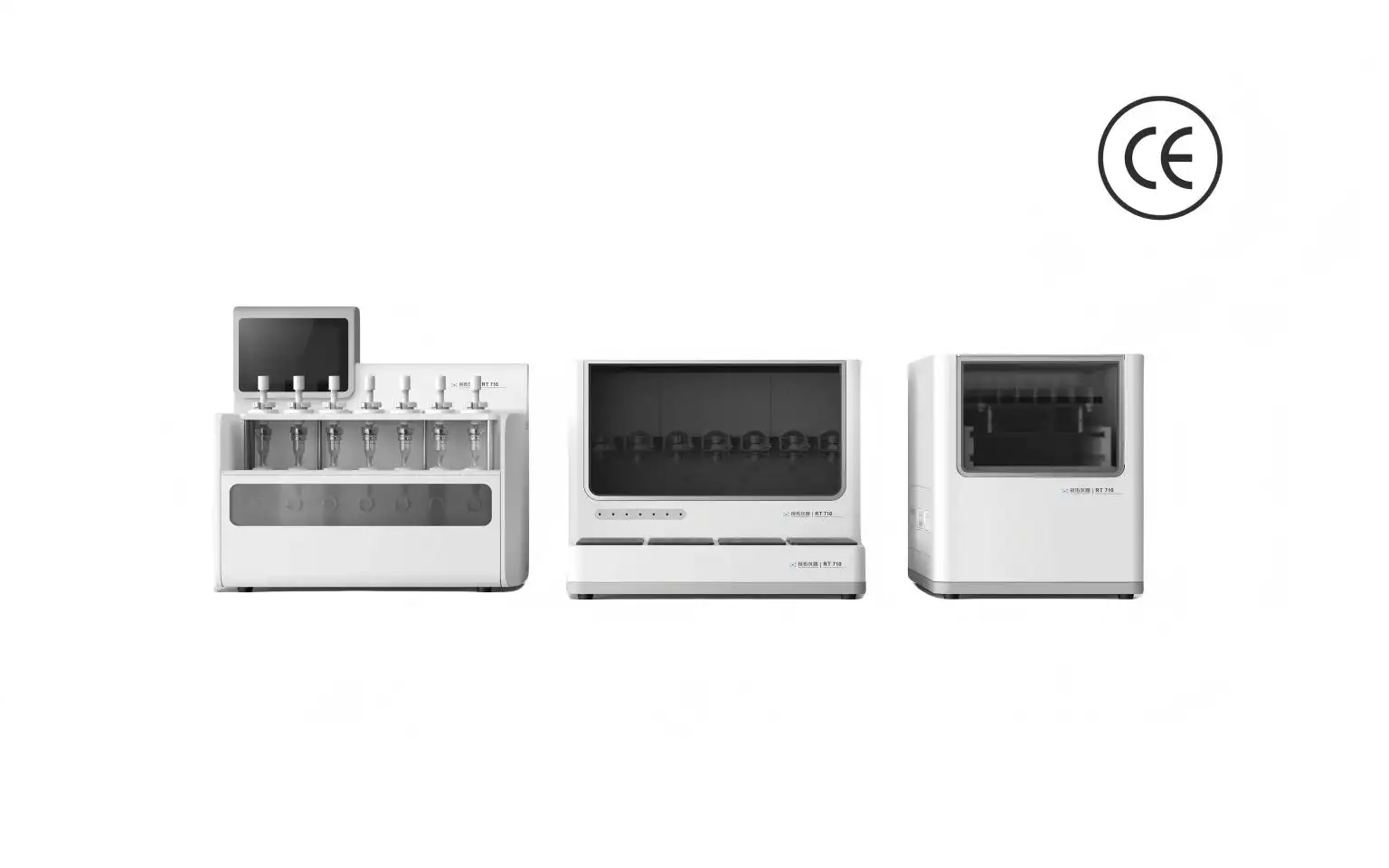
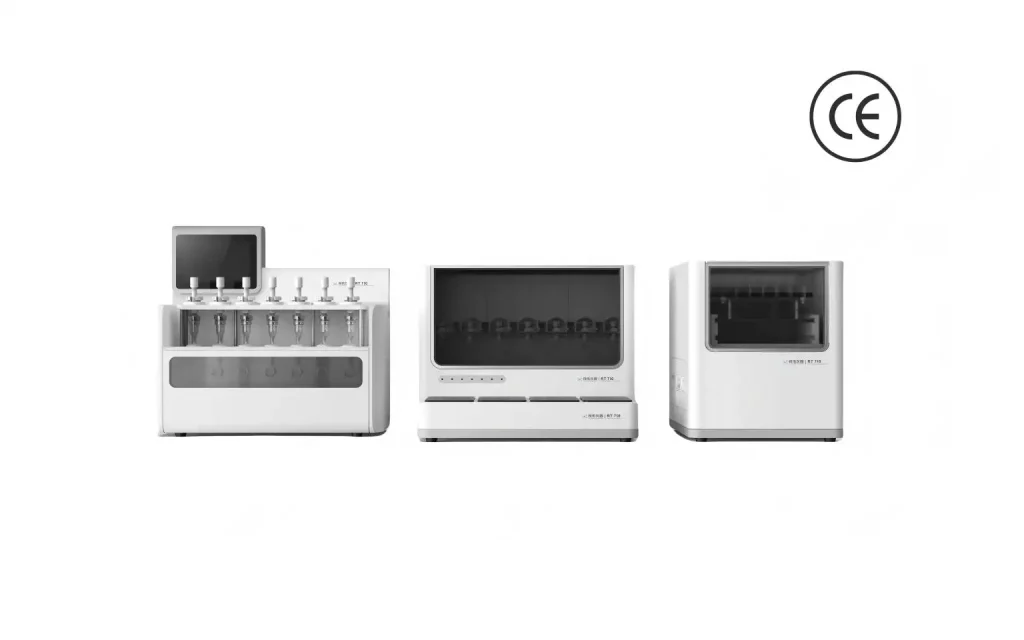
At Raytor, our RT700 and RT710 flow-through cell dissolution systems are designed for pharmaceutical release-testing applications requiring configurable flow and sampling conditions.
They offer the following features:
• 7 test channels with the ability to conduct tests at 2 different flow rates simultaneously.
• Both open-loop and closed-loop testing.
• Independent temperature monitoring of each channel.
• Automated sampling with selectable filtration components.
• A flow range of 1 to 38 mL/min(RT710).
The final configuration of the product should be assessed against the dosage form, required sampling intervals, filter compatibility, and the applicable qualification. It is important to assess the pump and accessory characteristics and product software prior to purchase.
Raytor has product information that can be beneficial to laboratory personnel evaluating flow-through dissolution apparatus for cell selection, planning for medium flow, and sampling configuration.
FAQs
Q1. What is Raytor's USP 4 dissolution apparatus used for?
Raytor's RT700 and RT710 flow-through cell systems support dissolution and drug-release testing for poorly soluble drugs, sustained-release tablets, suspensions, and other formulations requiring controlled medium flow.
Q2. What is the flow-rate range of Raytor's USP 4 system?
Raytor specifies an adjustable flow-rate range of 1–38 mL/min for its RT710 systems. The selected rate must be qualified for the intended dissolution method.
Q3. How many testing channels does Raytor provide?
The RT700 and RT710 systems each provide seven testing channels. Both support simultaneous testing at two different flow rates.
Q4. Does Raytor support open-loop and closed-loop dissolution testing?
Yes. Both configurations are supported. Open-loop testing supplies fresh medium continuously, while closed-loop testing recirculates medium through a reservoir.
Q5. Can Raytor's USP 4 apparatus test poorly soluble drugs?
Yes. Open-loop operation can reduce medium saturation by continuously supplying fresh medium. Sink conditions must still be verified against drug solubility, dose, and flow rate.