

Flow Through Cell Dissolution System in India for IVIVC and Generic Drug Development
2026-08-17


For generic-drug developers, dissolution testing must do more than confirm whether a batch passes a specification. During formulation development, the method should distinguish meaningful changes in composition, process conditions, and release behavior. This becomes especially important when dissolution data are used to support in vitro–in vivo correlation (IVIVC).

A Flow Through Cell Dissolution System in India laboratory may therefore consider USP Apparatus 4 when paddle or basket methods do not provide sufficient discrimination. In Apparatus 4, dissolution medium passes through a defined cell containing the dosage form, allowing flow rate, medium renewal, cell geometry, and sampling conditions to become controlled method variables.
When Does a Generic Formulation Need Flow-Through Testing?
Apparatus 4 should not be selected simply because it is more complex. The starting point is the formulation problem.
A flow-through method becomes technically relevant when a laboratory encounters:
• Poorly soluble APIs approaching saturation in a fixed-volume vessel;
• Extended-release formulations requiring long observation periods;
• Strong sensitivity to hydrodynamic conditions;
• Sedimentation or localized accumulation in paddle testing;
• Insufficient separation between test and reference formulations;
• A need to investigate dissolution conditions for IVIVC development.
Does the method used currently produce a discriminatory release profile? If the sensitivity and reproducibility of USP Apparatus 1 or 2 is met, the effect of other factors needs to be weighed against the addition of other equipment.
Flow Rate as a Dissolution Factor Beyond the Pump Setting
In the case of a flow through cell dissolution system, control over the flow rate enables the experimenter to manipulate and therefore study the effect of the dissolution environment on the dosage form.
A simplified mechanism is:
Higher Medium Flow → Faster Medium Renewal → Altered Concentration Gradient And Boundary Layer → Possible Change In Apparent Dissolution Rate
This is particularly important for low-solubility compounds. Continuous introduction of fresh medium in open-loop operation can help prevent local saturation, but excessive flow may create overly strong sink conditions and reduce the ability to differentiate formulations.
Flow rate must also be considered together with cell geometry. The same volumetric flow through two different cell cross-sections does not create the same linear fluid velocity.
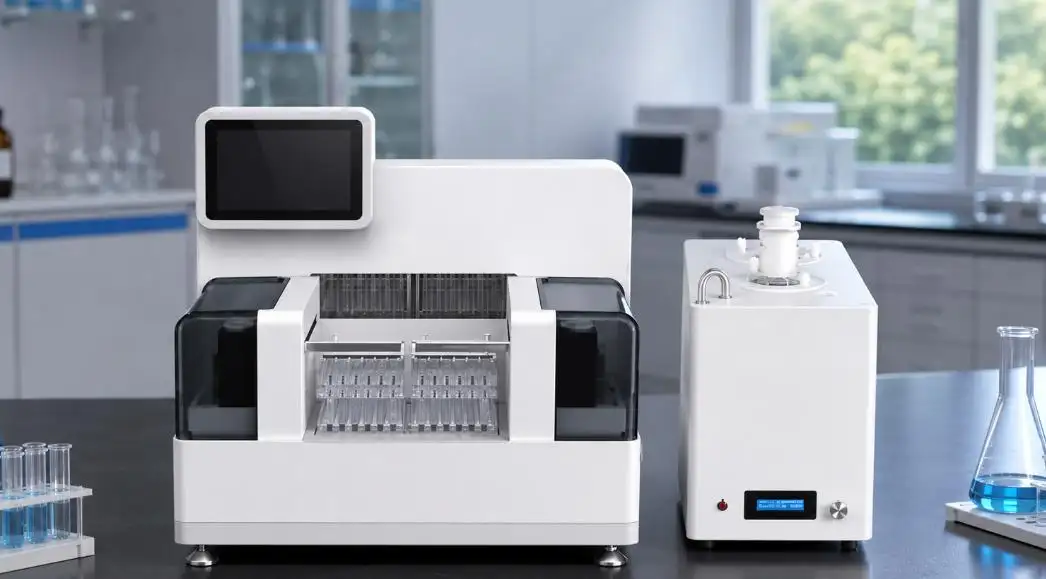
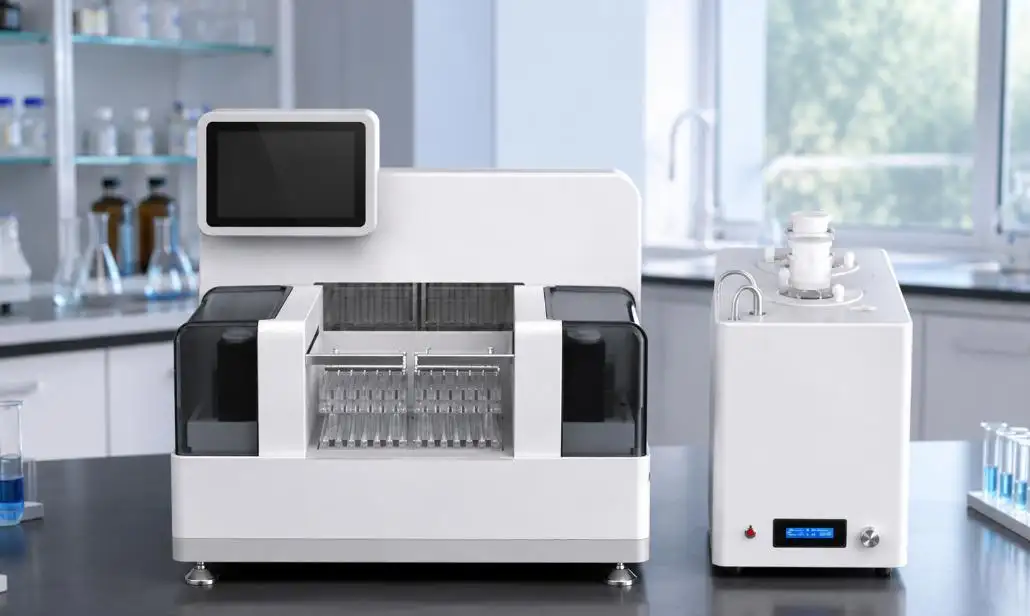
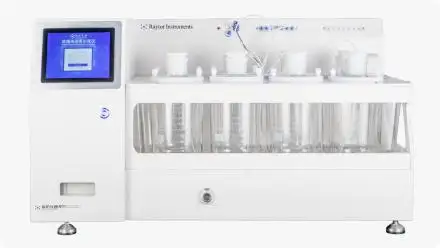
For method development, Raytor's flow-through platform provides an adjustable 1–40 mL/min flow range with published flow-rate error below ±5%. Its medium-delivery workstation also uses a high-precision syringe-pump architecture and a 120 Hz pulsation mode, providing defined flow conditions that can be evaluated during robustness studies.
USP Apparatus 1/2 or Apparatus 4?
Equipment choice should follow the formulation rather than the instrument specification.
| Technical Decision | Apparatus 1/2 | Apparatus 4 |
| Hydrodynamic driver | Basket/paddle rotation | Controlled medium flow |
| Medium condition | Fixed volume | Open or recirculating flow |
| Sink-condition control | Mainly medium volume/composition | Flow rate + medium renewal |
| Critical operating variable | RPM | Flow, cell geometry, flow mode |
| Method complexity | Lower | Higher |
| Typical advantage | Routine solid dosage forms | Poorly soluble, prolonged or complex release |
A Flow Through Cell Dissolution System in India application is therefore most defensible when controlled flow solves a specific analytical limitation—not because Apparatus 4 is assumed to be universally superior.
Open Loop vs. Closed Loop Changes the Release Environment
Selecting the loop configuration is another method-development decision.
Open-Loop Testing
Fresh medium enters the cell and eluate is collected downstream. This can support stronger sink conditions and long-duration studies, but medium consumption increases.
Closed-Loop Testing
A defined medium volume circulates repeatedly through the system. Drug concentration accumulates over time, making the concentration gradient different from open-loop operation.
Raytor integrates both modes in the same sampling architecture, avoiding the need to replace the automatic sampling workstation when switching methods. The system also allows two flow rates to be tested simultaneously across seven channels, which can help formulation scientists compare hydrodynamic conditions during screening rather than conducting completely separate studies.
Temperature, Filtration and Sampling Can Distort IVIVC Data
A technically sound dissolution method can still lose reproducibility through secondary variables.
Temperature Control
Raytor uses seven independent temperature sensors for real-time channel monitoring. Published temperature-control error is less than ±0.5°C, while the temperature difference between individual cells is maintained within the set value ±0.5°C.
This matters because temperature can change drug solubility, diffusion, and release kinetics.
Filtration Back Pressure
High particle loads can progressively block filters:
Filter Resistance ↑ → Back Pressure ↑ → Actual Flow Instability ↑ → Dissolution Variability ↑
Raytor uses a multiple-filtration design intended to reduce filtration back pressure and supports different membrane materials and pore sizes. PTFE tubing is also used to reduce adsorption and residual sample retention.
Sampling Accuracy
For extended-release and IVIVC studies, sampling resolution determines how well the release curve is characterized. Raytor specifies sampling-volume error of ≤±2% in closed-loop mode and ≤±5% in open-loop mode. Open-loop operation supports interval, continuous, and split-ratio sampling.
These values are more meaningful than simply stating that a system has “automatic sampling.”
Installation and Maintenance Are Part of Method Control
Before transferring a Flow Through Cell Dissolution System in India method into routine work, laboratories should verify the complete fluid path.
Critical checks include:
• Complete tubing priming and removal of air bubbles;
• Pump performance and actual flow verification;
• Filter blockage and membrane compatibility;
• Channel temperature consistency;
• Tubing connections and leakage;
• Drug adsorption and recovery;
• Carryover after cleaning.
These factors should be incorporated into system suitability and robustness work rather than treated only as maintenance issues.
Qualification Should Match the Parameters That Control Release
Instrument qualification and analytical method validation are not interchangeable.
Qualification should demonstrate that the equipment can reliably deliver the required flow, temperature, sampling, and fluid-handling conditions. Method validation must then show that the analytical procedure is fit for its intended purpose. ICH Q2(R2) specifically defines robustness through deliberate variation of analytical procedure parameters.
For regulated laboratories, Raytor also provides account/password control, authority management, audit tracking, data management, backup, and synchronization functions designed to support 21 CFR Part 11-related workflows.
Indian users should additionally confirm the current Indian Pharmacopoeia 2026, USP, European Pharmacopoeia, and target-market requirements applicable to the actual formulation and submission route. IP 2026 is the current 10th edition released by the Indian Pharmacopoeia Commission.
Selecting a Flow Through Cell Dissolution System in India Supplier
The purchasing sequence should therefore remain technical:
Formulation Problem → Apparatus Selection → Open/Closed-Loop Mode → Flow And Cell Conditions → Filtration And Sampling → Installation → Qualification → Regulatory Fit → Supplier Evaluation
For Indian pharmaceutical laboratories sourcing from China, Raytor's published system configuration provides seven-channel testing, 1–40 mL/min flow control, dual-flow-rate operation, independent temperature monitoring, automated sampling, flexible filtration, and data-integrity functions within one platform.
Rather than selecting a Flow Through Cell Dissolution System in India solution by price alone, laboratories can discuss dosage form, expected release duration, flow conditions, sampling strategy, and validation requirements with RAYTOR before final configuration. This helps ensure that the equipment is selected around the dissolution method and IVIVC objective—not the other way around.
FAQs
Q1. How does Raytor control temperature during flow-through testing?
Raytor's systems have channels where temperature can be monitored independently. Raytor reports an error of less than ±0.5ºC for temperature control. This ensures constant test conditions.
Q2. Can Raytor systems support USP Apparatus 4 testing?
Yes, this is possible. Raytor has developed a flow-through dissolution apparatus for USP Apparatus 4 testing for controlled-flow dissolution of generic drugs, poorly soluble drugs and extended-release formulations.
Q3. What flow-rate range does Raytor provide?
Raytor's flow-through system offers a flow range between 1 mL/min and 40 mL/min and thus offers labs the opportunity to study various hydrodynamic conditions in the development of the dissolution process.
Q4. Can Raytor support both open-loop and closed-loop dissolution testing?
Yes. The system can be used in open-loop and closed-loop schemes. Therefore, labs can decide on the medium circulation scheme based on the solubility and sink-condition and study criteria.”
Q5. How many dissolution channels can Raytor test simultaneously?
Raytor has a seven channel configuration. The system can use two different flow-rates at the same time, which is useful for simultaneous comparison of methods in different studies.