

Lab Equipment Supplier in Asia: China vs. Japan vs. South Korea vs. Singapore
2026-07-24


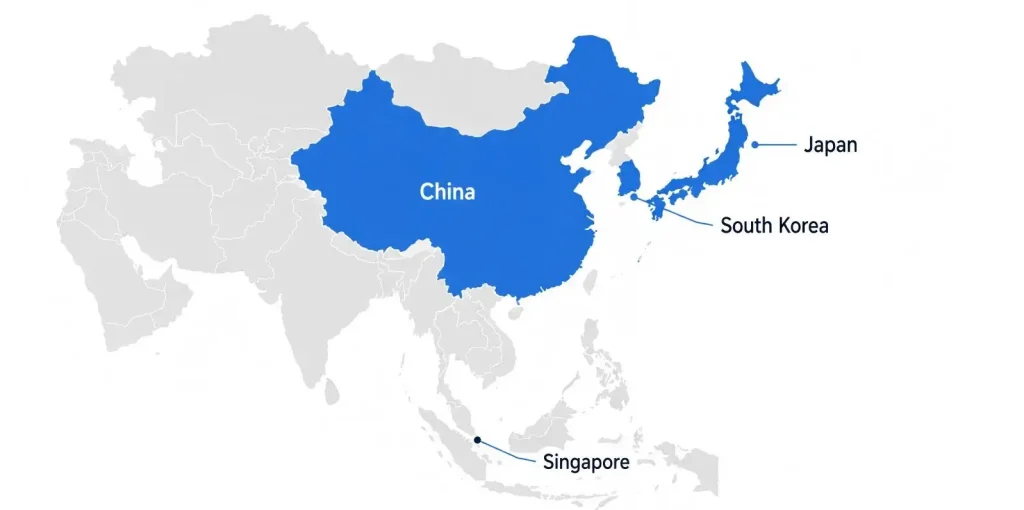
Choosing a Lab Equipment Supplier in Asia requires more than comparing quotations from China, Japan, South Korea, and Singapore. Pharmaceutical laboratories must also evaluate pharmacopoeial compatibility, data integrity, application expertise, automation, documentation, customization, and lifecycle support.
Each market has different strengths. The better question is not "Which country is best?" but "Which supplier can support the laboratory's dosage form, regulatory environment, testing method, and operating requirements?"
Why Pharmaceutical Laboratories Source Equipment from Asia
Asia offers a broad equipment ecosystem, from routine quality-control instruments to automated pharmaceutical testing platforms. Buyers value:
• Established instrument and component supply chains
• Multiple technical and budget levels
• Custom accessories for non-standard testing
• International installation and remote support
A qualified Lab Equipment Supplier in Asia is assessed on more than manufacturing cost. For regulated work, method support, software controls, calibration records, validation documents, and technical response can be equally important.
China vs. Japan vs. South Korea vs. Singapore
The comparison below reflects common sourcing considerations, not fixed rankings.
| Region | Typical Priority | Potential Strength | What Buyers Should Verify |
| China | Product range, customization, delivery, and cost balance | Broad manufacturing capacity and flexible engineering | Software controls, documentation, application support, and service |
| Japan | Precision engineering and long-term stability | Mature manufacturing and quality-management practices | Cost, lead time, customization, and local support |
| South Korea | Automation and digital integration | Alignment with intelligent laboratory workflows | Pharmaceutical application depth and pharmacopoeial coverage |
| Singapore | Regional coordination and English-language service | Convenient support for Southeast Asian projects | Equipment origin, maintenance capability, and spare-parts support |
Country reputation should not replace supplier qualification. Manufacturers in the same market may differ in R&D capability, software architecture, documentation, and pharmaceutical experience.
Seven Factors for Selecting a Lab Equipment Supplier in Asia
1. Pharmacopoeial Compatibility
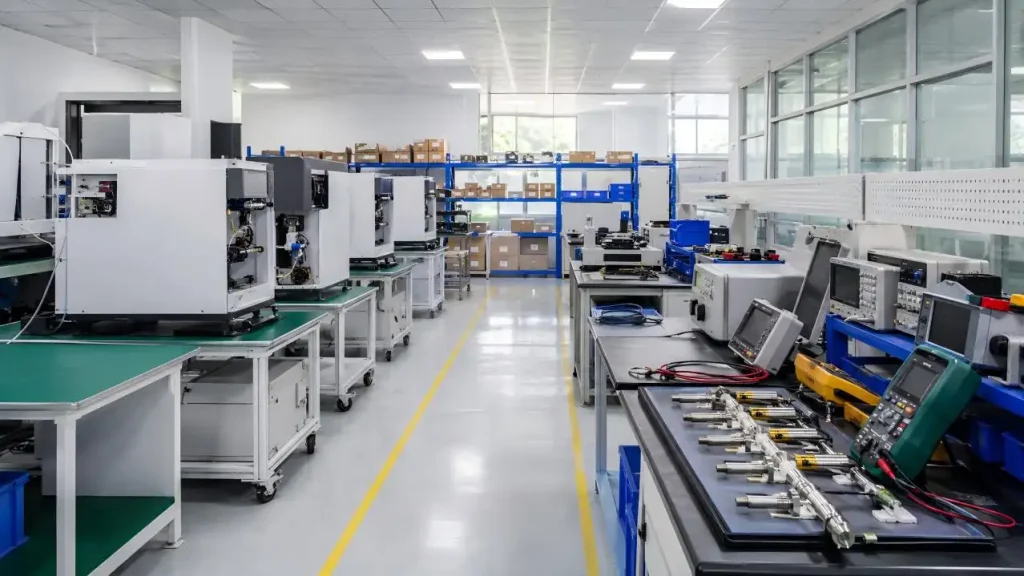
Target market methodologies dictate the required supporting equipment. For dissolution testing, this would include equipment for basket, paddle, reciprocating cylinder, and flow-through cell methodology.
Validation of :
• Pharmacopoeial methods supported
• Available vessels, cells, shafts, and accessories
• Mechanical verification tools
• Variable controls for temperature, speed, and sampling
• Appropriate for the dosage form
2. Data Integrity and Software Control
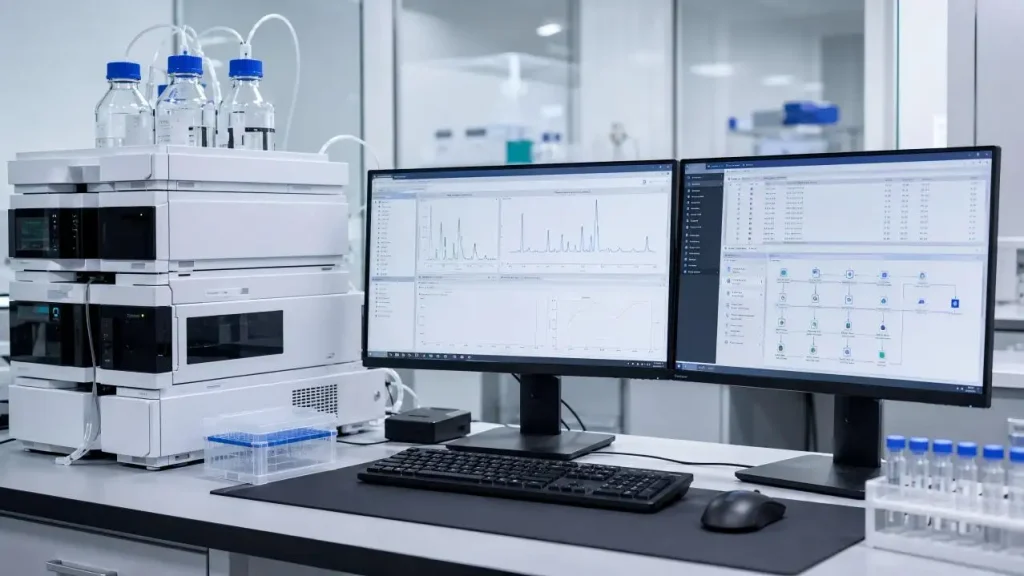
Simply conforming to data export standards does not justify a system being suitable for a regulated market. A Lab Equipment Supplier in Asia, for example, would need to substantiate their software with the following:
• Management of individual accounts and role-based permissions
• Audit trails and timed evidence
• Original data retention
• Data backup and system restore
• Controlled generation of reports
Potential customers need to understand which of these functions are standard, optional, or will be defined by the laboratory's standard operating procedure.
3. Pharmaceutical Application Expertise
Specifications do not guarantee method suitability. The technical team should understand dissolution, solubility, permeability, IVRT, IVPT, pre-formulation studies, and oral, transdermal, and subcutaneous delivery.
This knowledge supports correct selection of cells, sampling paths, media conditions, and automation sequences.
4. Automation Fitted to the Workflow
Automation of sampling includes dispensing, timing, sampling, replenishment, and cleaning. It also includes data acquisition, computation, and report generation.
A competent Asian Lab Equipment Supplier should show how automation can improve throughput, reproducibility, and traceability, and increase operator efficiency while simplifying the control of the method.
5. Customization Capability
Some forms of non-standard dosage may require custom cells, holders, vessels, sampling frameworks, and even software and reporting logic. Ensure customizations are documented and can be serviced and reproduced.
6. Qualification and Documentation
Request the following prior to purchasing:
• Support for IQ and OQ
• Certificates of Calibration
• User and maintenance manuals
• Descriptions of the software
• Procedures for mechanical inspection
• Materials related to validation
Lack of these can lead to delays of the installation of the system, transfer of the method, and internal approval.
7. Total Cost of Ownership
The lowest quotation may not deliver the lowest operating cost. Compare training, consumables, accessories, spare parts, software upgrades, maintenance, troubleshooting, and downtime.
Which Region Fits Different Purchasing Priorities?
| Laboratory Priority | Evaluation Direction |
| Mature precision engineering | Compare Japanese suppliers while reviewing budget and customization limits |
| Broad product range and customization | Assess Chinese manufacturers with proven R&D and application teams |
| Automation and digital integration | Compare technology-focused suppliers in South Korea and China |
| Southeast Asian coordination | Consider Singapore-based regional service organizations |
| Pharmaceutical compliance and method support | Audit the individual supplier rather than selecting by country |
The right Lab Equipment Supplier in Asia can translate regulatory and scientific requirements into a workable instrument configuration.
Common Procurement Risks
Pharmaceutical laboratories should avoid:
❌ Comparing purchase price without calculating lifecycle cost
❌ Treating data export as proof of data-integrity compliance
❌ Failing to verify the required pharmacopoeial apparatus
❌ Purchasing without confirming dosage-form experience
❌ Selecting automation that does not fit existing SOPs
❌ Accepting unsupported accuracy or repeatability claims
❌ Leaving training, spare parts, and software responsibilities undefined
How China-Based Raytor Addresses Pharmaceutical Laboratory Challenges
China's pharmaceutical and scientific instrument sectors are moving toward stronger domestic innovation, laboratory automation, and data traceability. Statistics released in January 2026 show that China's patent-intensive pharmaceutical and medical industry generated RMB 1.4068 trillion in value added in 2024. National equipment-renewal policy also targets more than 25% growth in equipment investment by 2027 compared with 2023.
In 2026, several initiatives in the promotion of domestic advanced scientific equipment began to focus on accuracy, stability, software compliance, application verification, automated integration, and artificial intelligence (AI) in laboratory operations.
Founded in 2015, Raytor specializes in providing comprehensive solutions for analytical instruments and application testing across key areas, including new compound identification, drug permeability, dissolution and solubility testing, and transdermal diffusion. Supported by a team of more than 50 researchers and engineers, Raytor combines technical expertise, instrument development, and application support to help customers address complex analytical and testing requirements.
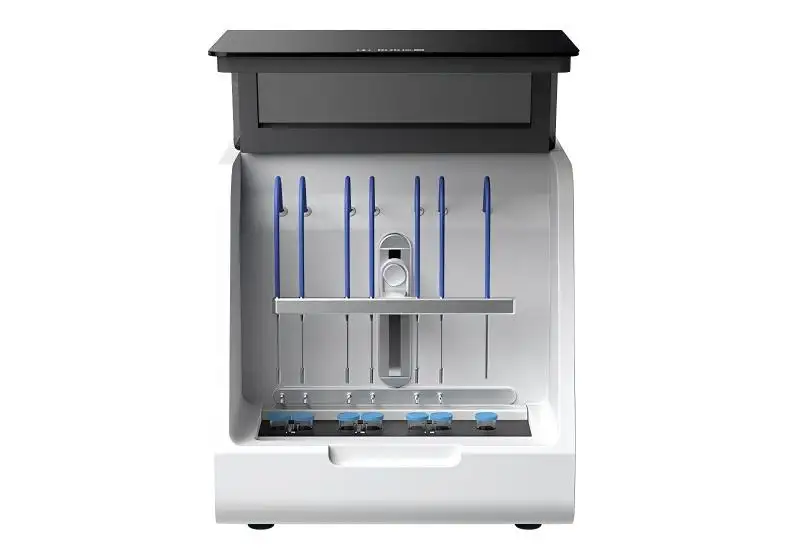
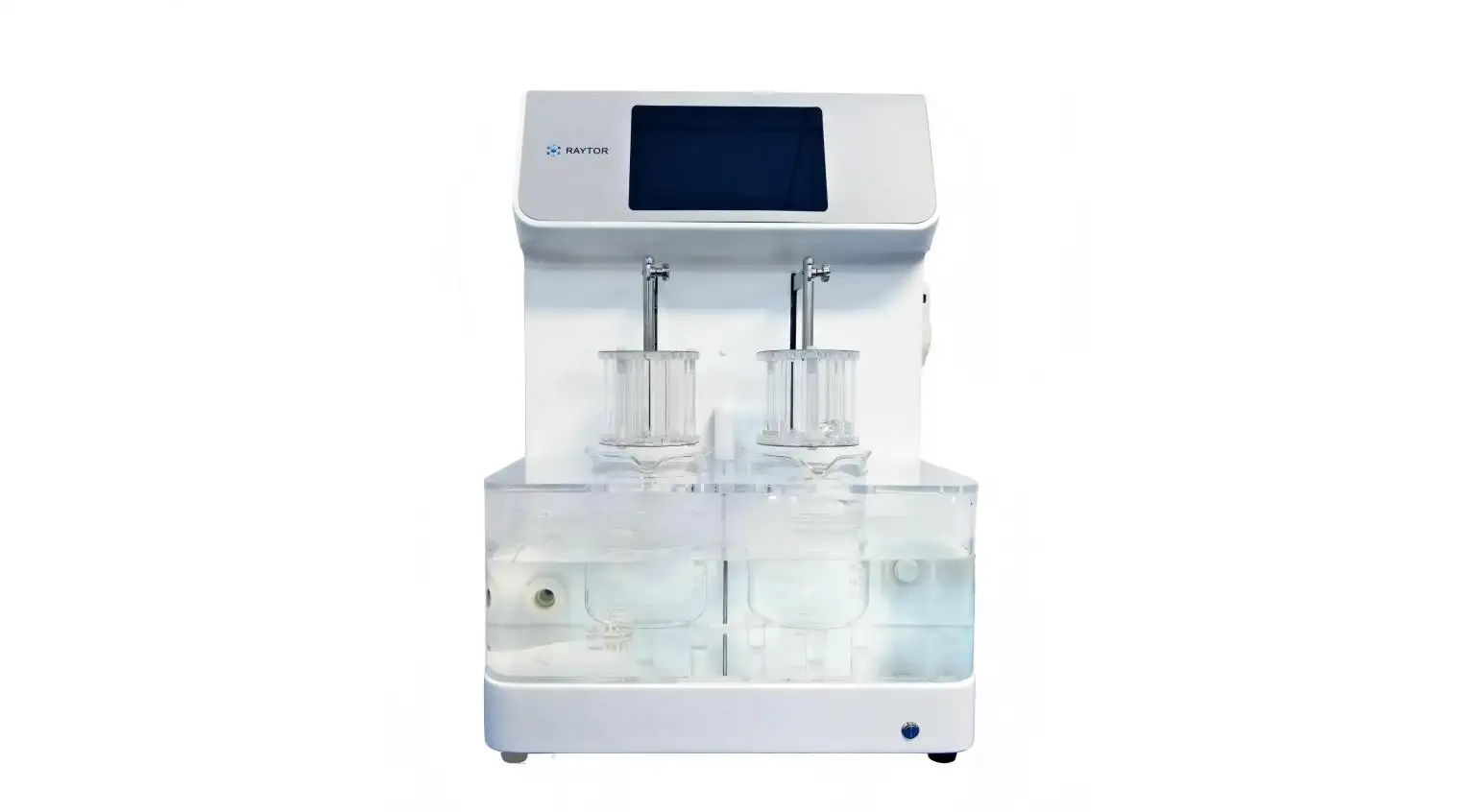
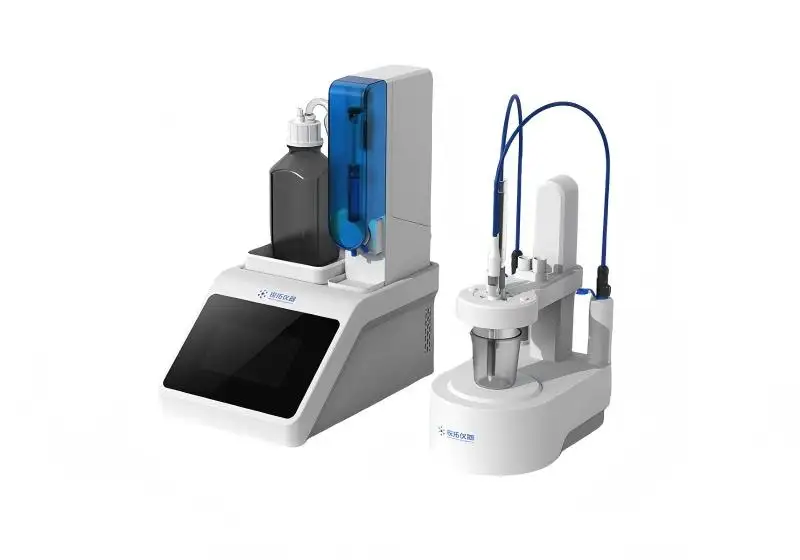
The Raytor systems cover research on oral, transdermal, and subcutaneous dosage forms, as well as USP Apparatus 1-4 and IVRT/IVPT workflows. Automation of media handling, as well as sampling, cleaning, data acquisition, and reporting, is designed to reduce variation due to laboratory personnel and improve traceability. Buyers of Lab Equipment Suppliers in Asia have a reasonable basis for the technical and life-cycle assessment of Raytor's systems due to an application center, a team of pharmaceutical experts, relationships with universities, and 6S production management system and configurability.
Last Word
Evaluating a Lab Equipment Supplier in Asia is not a simple country ranking exercise broken down into compliance, application, automation, documentation, customization, and service.
By leveraging its own R&D and oral, transdermal, and subcutaneous testing, Raytor offers analytical services for the pre-formulation and quality control stages of testing. Based on your regulatory needs and planned research and lab operations, contact us for more information.
☎️ Phone: +86 (20)3160 8901
📩 Email: sales@raytor.com
📍 Address: Youchegang Town, Xiuzhou District, Jiaxing, Zhejiang, China
FAQs
Q1. Where is Raytor located?
Established in 2015, Raytor is a Chinese company headquartered in Jiaxing, Zhejiang, China that manufactures and sells pharmaceutical research and quality-assurance analytical devices.
Q2. What lab instruments does Raytor offer?
Raytor manufactures analytical instruments for laboratory testing of drug dissolution, solubility, permeability, diffusion through the skin (transdermal), auch property, and laboratory automation.
Q3. What dosage forms do Raytor's systems cover?
Raytor's systems cover the analysis and testing of oral, transdermal, semi-solid, patch, and subcutaneous dosage forms for research and quality assurance. The testing can be done from the formulation stage all the way to pharmaceutical quality control.
Q4. Can Raytor systems perform USP dissolution tests?
Raytor creates solutions for the dissolution test methods of USP Apparatus 1, 2, 3 and 4 (basket, paddle, reciprocating cylinder, and flow through cell).
Q5. Are Raytor instruments meant for 21 CFR Part 11 compliant workflows?
Some Raytor systems feature user access control, audit trails, data and records storage. Compliance will also depend on system configuration, validation, and compliance of laboratory SOPs and management of user access.