

Pharmaceutical Research Equipment with Dual-Speed Control: When Is It Necessary?
2026-07-23


Dual-speed control is valuable when a pharmaceutical laboratory needs to evaluate two rotational conditions independently within the same dissolution run. It can improve method development, formulation comparison and compatible parallel testing. However, it is not a universal pharmacopoeial requirement, and routine quality-control methods specifying one fixed speed may not require this capability.
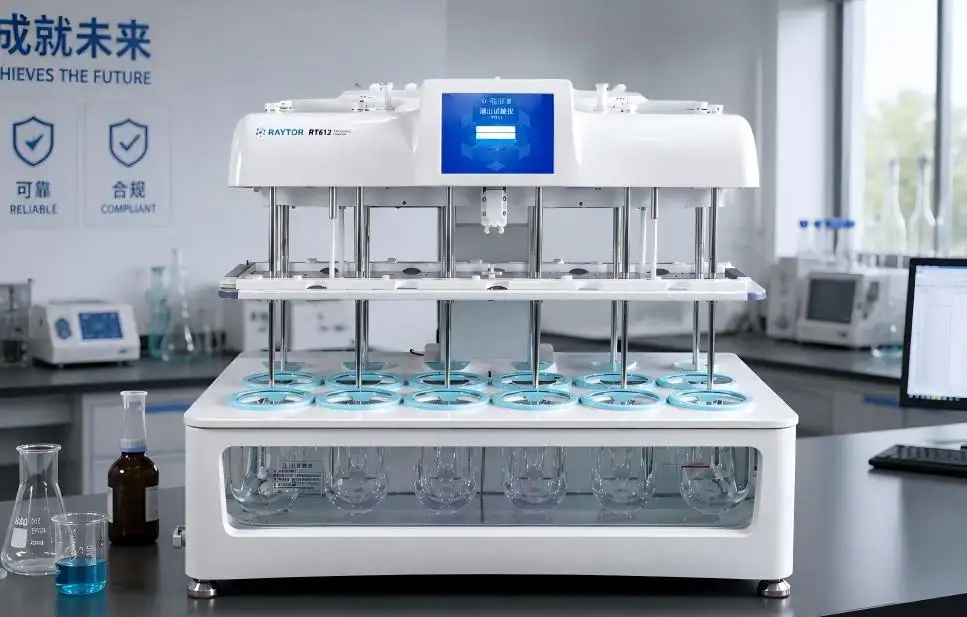
Dissolution testing is fundamental to pharmaceutical quality control, formulation development and product-performance assessment. As laboratories handle more products, dosage forms and analytical procedures, expectations for Pharmaceutical Research Equipment are shifting from basic mechanical operation toward flexible control, traceable data and higher testing efficiency.
The key question is not whether dual-speed control is more advanced, but whether it supports a defined analytical or operational need.
What Is Dual-Speed Control?
Traditional single-speed dissolution equipment drives all shafts at the same rotational speed. If the method specifies 50 rpm, every vessel operates at that condition.
Dual-speed Pharmaceutical Research Equipment separates the dissolution positions into two independently controlled groups. In a 12-position configuration, for example:
•Six shafts may operate at 50 rpm
•The other six may operate at 75 rpm
•Both groups remain within the same controlled water-bath environment
•Speed and temperature parameters are monitored separately
Dual-speed control is primarily intended for parallel comparison. It should not be interpreted as permission to change rotational speeds arbitrarily during a validated test.
| Operating Mode | Typical Use | Main Advantage | Main Limitation |
| Single-speed | Routine QC, release and stability testing | Simple operation and consistent conditions | Cannot compare two speeds simultaneously |
| Dual-speed | Method development and formulation screening | Runs two rotational conditions in parallel | Requires stronger control and traceability |
| Sequential testing | Low-volume development work | No dual-drive system required | Longer test time and greater run-to-run variability |
Is Dual-Speed Control a Pharmacopoeial Requirement?
Pharmacopoeial dissolution procedures normally define:
•Apparatus type
•Dissolution medium and volume
•Temperature
•Rotational speed
•Sampling intervals
•Acceptance criteria
They do not generally require every dissolution system to include dual-speed control.
When an approved QC method specifies one rotational speed, all samples should normally be tested under the same validated conditions. Dual-speed capability is therefore an operational feature of Pharmaceutical Research Equipment, not a replacement for an established analytical method.
Different speed groups must also be treated as separate experimental conditions. Their results should not be combined as though they were generated under one uniform method.

When Is Dual-Speed Pharmaceutical Research Equipment Useful?
1. Dissolution Method Development
The influence of rotational speed on the hydrodynamics associated with dosage forms is significant. During the development of an analytical method, the analyst must determine which of the following speeds, if any, between 50, 75, or 100 rpm, will provide an optimal release behavior and the ability to discriminate adequately.
The dual-speed function also allows laboratories to:
•Screen two rotational speeds during the same test
•Assess the release behavior of immediate and extended release as well as the behavior of highly insoluble formulations
•Minimize the effects of different surrounding conditions on separate tests
•Establish the release conditions which are the most sensitive to changes in formulation and or processing
•Consolidate the efforts of the early stages of method development
2. Formulation and Process Comparison
The release behavior of a formulation is highly sensitive to changes in the formulation and or the manufacturing process. Dual-speed Pharmaceutical Research Equipment can support comparative evaluation of:
•Excipient type or concentration
•Compression force
•Granulation parameters
•Coating thickness
•API particle size or solid form
•Development formulations versus reference products
Using two speeds may help determine whether a method is sufficiently sensitive to relevant product differences. The medium, temperature, dosage-unit preparation and sampling schedule must remain properly controlled.
3. Compatible Parallel Testing
Two validated methods may be performed in parallel when:
•Both methods require the same temperature
•Media and vessel specifications are the same
•Each method requires a maximum of six positions
•There are no conflicts in the sampling schedules
•The lab SOPs allow for shared water-bath use
•Records of the data clearly indicate the two groups
This method allows for better use of the available instruments, but samples must still be identified, timings must be recorded, and data must be separated.
4. High-Throughput QC Laboratories
Laboratories supporting multiple products often face equipment queues, repeated setup procedures and limited analyst availability.
Where test conditions are compatible, dual-speed control may:
•Reduce sequential test runs
•Improve equipment utilization
•Shorten waiting periods
•Support more flexible scheduling
•Reduce repeated heating, setup and cleaning cycles
The objective should be controlled workflow improvement—not simply increasing sample numbers.

5. Multiple Dosage-Form Research
Modern Pharmaceutical Research Equipment may support research involving:
•Oral immediate-release tablets
•Modified-release dosage forms
•Transdermal patches
•Semi-solid preparations
•Injectable or long-acting formulations
•Intrinsic dissolution testing of APIs
Because these applications may use different apparatus, speeds and sampling strategies, dual-speed functionality is most useful during condition screening. It does not mean that all dosage forms are suitable for simultaneous testing.
When Is Dual-Speed Control Unnecessary?
Dual-speed operation may provide limited benefit when:
•One validated speed is used for routine batch release
•All 12 positions are required for one sample set
•The laboratory handles only a narrow product range
•Test groups require different temperatures
•Media or sampling schedules are incompatible
•Parallel operation increases sample-mix-up risk
•The data system cannot separate both drive groups
Laboratories should not select dual-speed Pharmaceutical Research Equipment solely because it offers more functions. The feature should correspond to a documented analytical or workflow requirement.
Technical Risks in Dual-Speed Dissolution Testing
Operating two speeds simultaneously places greater demands on the entire system.
Speed Stability
The two driving groups need to maintain their assigned speeds and not interfere with each other The comparison reliability can be significantly impacted by unstable rotation since it can change the dissolution profiles.
Hydrodynamic Consistency
Dissolution results can be influenced by:
•Shaft and vessel verticality
•Vessel centering
•Paddle or basket depth
•Shaft and basket wobble
•Sampling-probe position
Non-resident sampling needles can reduce prolonged disturbance of the fluid environment.
Temperature Uniformity
Monitoring only the water-bath temperature may not identify differences between individual vessels. Reliable Pharmaceutical Research Equipment should maintain stable temperature distribution and support vessel-level monitoring where required.
Dosing and Sampling Time
Manual sequential dosing introduces start-time differences. This is particularly important for rapidly dissolving products and early sampling points. Synchronous dosing and traceable timing reduce this source of variability.
Selection Checklist for Dual-Speed Equipment
| Evaluation Area | What the Laboratory Should Verify |
| Drive configuration | Are both shaft groups independently controlled? |
| Speed performance | Are range, resolution and steady-state error documented? |
| Temperature control | Can individual vessel temperatures be monitored? |
| Mechanical geometry | Are centering, depth, verticality and wobble controlled? |
| Dosing | Is synchronous dosing available with time records? |
| Sampling | Does the design minimize hydrodynamic disturbance? |
| Data management | Are speed, temperature, dosing and sampling records traceable? |
| Method compatibility | Does the system support common basket and paddle procedures? |
| Maintenance | Is the water bath easy to circulate, inspect and clean? |
How Raytor Supports Dual-Speed Dissolution Workflows
Raytor develops configurable Pharmaceutical Research Equipment for routine QC and analytical development. Its optional dual-drive architecture allows two groups of six shafts to operate independently or under one unified speed condition.
The system provides:
•A 0–300 rpm operating range
•0.01 rpm speed resolution
•Steady-speed error within ±0.3 rpm
•Temperature accuracy within ±0.2°C
•0.01°C temperature resolution
•Individual vessel temperature monitoring
•Automatic synchronous dosing with traceable timing
•Non-resident, volume-adjustable sampling needles
•Automatic vessel centering
•Coaxial paddle-and-basket positioning
•Scheduled medium preheating
•Real-time parameter monitoring and extensive data storage
These functions help analysts distinguish genuine formulation behavior from variability caused by unstable speed, uneven temperature, dosing delays or mechanical misalignment.
Conclusion
Dual-speed control is not essential for every pharmaceutical laboratory. Routine testing with one validated speed generally depends more on repeatability, mechanical accuracy and consistent operation.
Its most pronounced advantage is in method development, formulation comparison ,and condition screening and compatible parallel testing. When choosing Pharmaceutical Research Equipment, laboratories should consider the whole system. This includes speed stability, temperature uniformity, hydrodynamics, dosing accuracy, sampling design and traceability of data.
Raytor provides pharmaceutical laboratories with flexible dissolution testing solutions for QC, research and multiple dosage forms. Get in touch with Raytor to configure your solution for your analytical methods and sample throughput within your compliance workflow.
FAQs
Q1. What Pharmaceutical Research Equipment does Raytor provide for dissolution testing?
Dissolution-testing equipment from Raytor supports configurable systems for pharmaceutical quality control, method development, and formulation research. The system offers 12-position testing, basket and paddle methods, parameter monitoring, automated dosing, and an optional dual-speed control.
Q2. Does Raytor Pharmaceutical Research Equipment support dual-speed testing?
Yes. Raytor’s optional dual-drive configuration divides 12 dissolution positions into two controlled groups. Within parallel studies, rotational speed for the six shafts on each side may be set differently.
Q3. When should laboratories use Raytor’s dual-speed control?
Dual-speed control may be appropriate for:
•Dissolution method development
•Rotational-speed screening
•Formulation comparison
•Reference-product studies
•Parallel QC methods
•High-throughput laboratory tasks
Routine methods that call for a fixed speed should not require dual-speed control.
Q4. What is the speed range of Raytor Pharmaceutical Research Equipment?
Equipment from Raytor reaches rotational speeds from 0 to 300 rpm with a resolution of 0.01 rpm and a constant steady-state speed error of ±0.3 rpm.
Q5. How does Raytor control temperature during dissolution testing?
Raytor Pharmaceutical Research Equipment is capable of temperature control with an accuracy of ±0.2°C and a resolution of 0.01°C. Individual vessel temperature control enables laboratories to detect temperature disparities among vessels that may not be apparent with control of the primary water bath.