

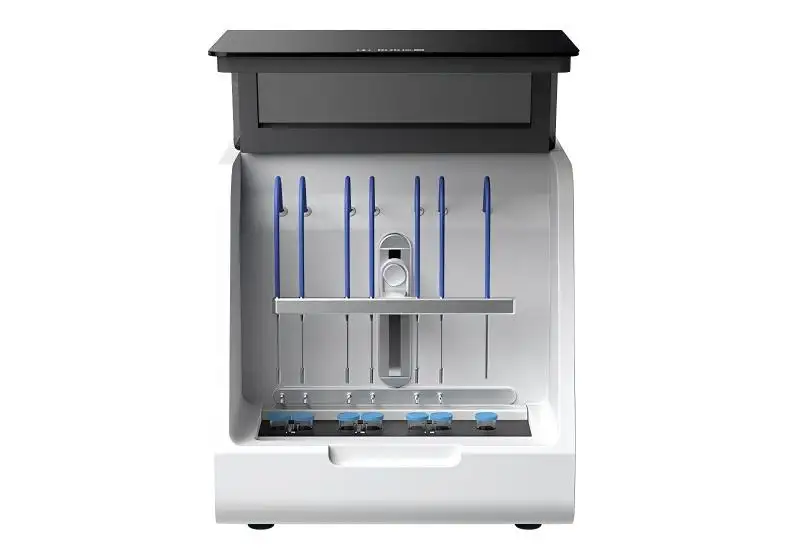
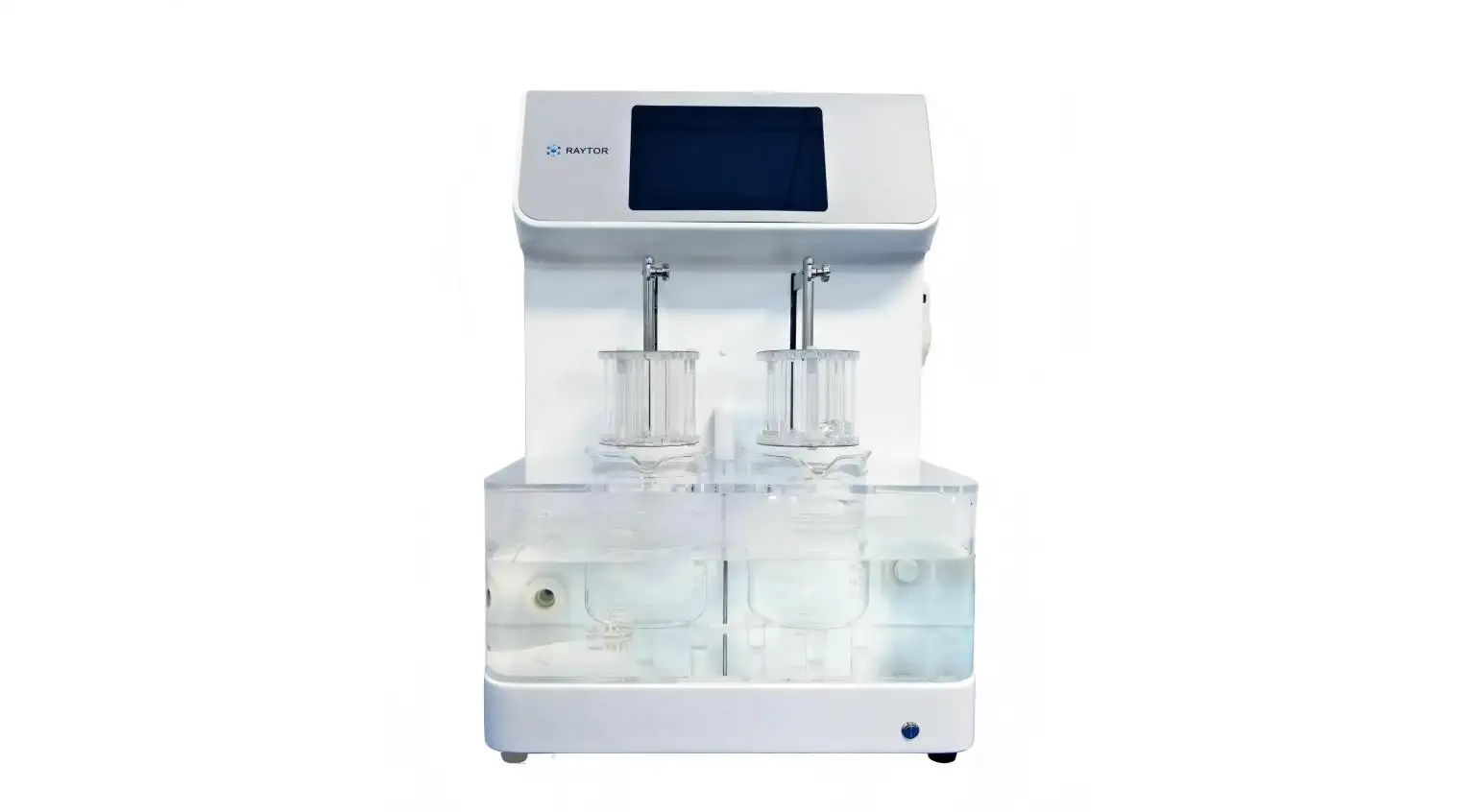
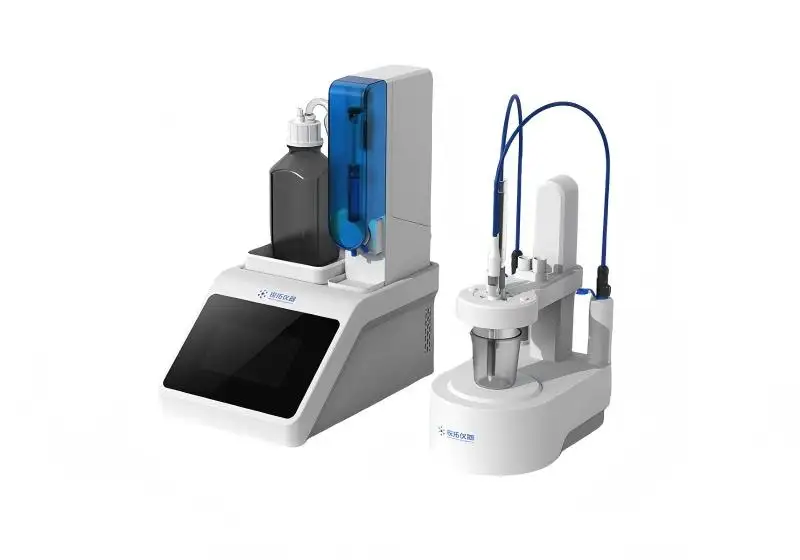
Pre-Formulation Research Instruments for Intrinsic Dissolution Rate Testing of APIs
2026-07-20


Intrinsic dissolution rate (IDR) testing measures how quickly an active pharmaceutical ingredient dissolves from a defined surface area under controlled temperature, medium, and hydrodynamic conditions. Unlike equilibrium solubility, IDR reflects dynamic solid–liquid behavior and can distinguish polymorphs, salts, hydrates, solvates, and processing histories.
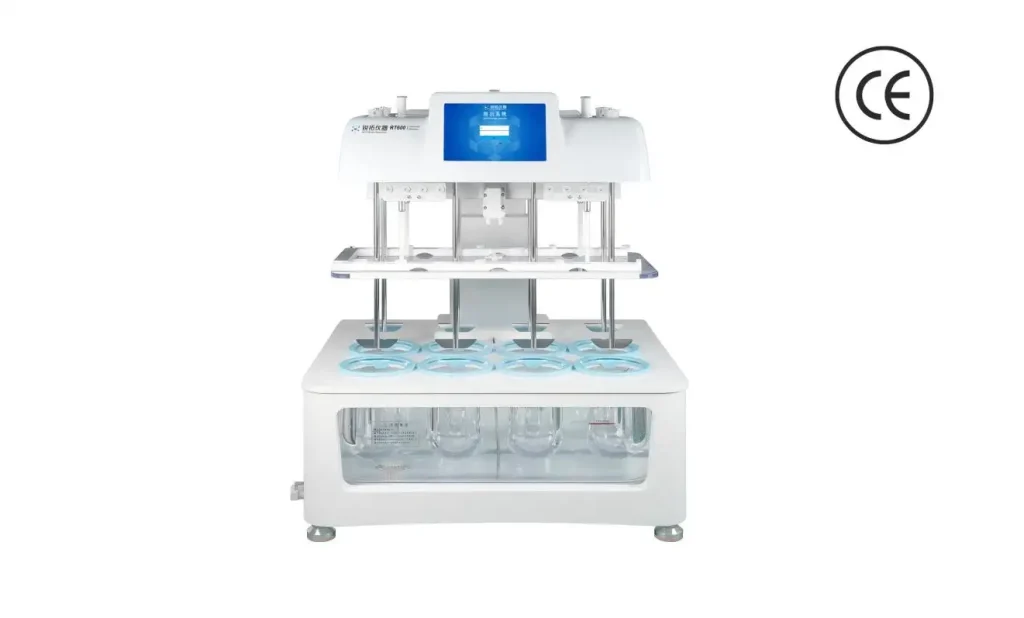
Reliable Pre-Formulation Research Instruments are crucial because IDR data can be affected by temperature, rotational speed, vessel alignment, sample exposure, dosing timing, and sampling position.
What Does Intrinsic Dissolution Rate Measure?
In this case, Intrinsic dissolution rate is the mass of the API that is dissolved per unit of exposed area in unit time.
Intrinsic dissolution rate equation:
IDR = (1/A) × (dM/dt)
Where, A is the fixed exposed area. And (dM/dt) is the mass dissolved per unit of time. Intrinsic dissolution rates are largely reported in the literature in units of mg/cm²/min.
Because the surface area is controlled, IDR is less affected by particle-size distribution than powder dissolution testing. It is useful for comparing API surface behavior before excipients and dosage-form variables are introduced.
Why IDR Testing Matters in Pre-Formulation
| Research Question | What IDR Testing Shows | Possible Decision |
| Which polymorph is more developable? | Relative dissolution of solid forms | Select a stable form |
| Is salt formation beneficial? | Differences between free and salt forms | Continue or reject salt selection |
| Has processing changed the API? | Effects of milling or crystallization | Adjust particle engineering |
| Which medium is discriminatory? | Responses to pH and surfactants | Define later method conditions |
| Has storage altered the material? | Hydration or solid-state conversion | Review stability controls |
These studies are especially relevant to poorly soluble compounds, including many BCS Class II and IV candidates. Suitable Pre-Formulation Research Instruments help separate genuine API differences from equipment-related variation.
How Is an Intrinsic Dissolution Study Performed?
1. Prepare a Defined API Surface
The API is either plugged into a compacted mount, or compressed to a compact size. Only a certain area of the mount is allowed to touch the medium. Key controls are as follows:
• Applied pressure is reasonably constant
• Surfaces are flat and free of cracks
• No edges are exposed
• Density of compact is measured
• Bubbles are inspected for attached to the compact
Porosity, cracking, and exposed areas result in errors. These affect the calculated IDR Value.
2. Choose an Appropriate Medium
While selecting a medium, the following should be taken into account:
• pH, buffer capacity, ionic strength
• API pKa and stability
• Surfactant concentration
• Sink conditions
• Compatibility with HPLC and/or UV
The goal is not to enhance the dissolution capacity of the medium. Instead, the selected medium should provide measurable, repeatable, and discriminative results.
3. Control Hydrodynamics
Rotational speed, paddle or basket position, shaft verticality, vessel centering, liquid volume, and vibration can change local shear at the API surface.
For this reason, Pre-Formulation Research Instruments should be assessed as complete mechanical systems, not only by their nominal rpm range.
4. Standardize Dosing and Sampling
Sequential manual dosing creates different start times between vessels, which matters for rapidly dissolving APIs.
Sampling should use:
• Fixed time points
• A repeatable sampling height
• Minimal flow disturbance
• Preheated replacement medium when required
• A validated analytical method
Basket vs. Paddle Methods
Both are widely used pharmacopoeial methods, but intrinsic dissolution still requires a stable, known API surface.
| Method | Advantage | Main Risk | Critical Controls |
| Basket | Restrains floating samples | Mesh blockage and bubbles | Wobble, mesh condition, shaft alignment |
| Paddle | Suitable for settled samples | Coning and position effects | Paddle height, vessel centering, shaft verticality |
Method selection should reflect whether the sample floats, settles, adheres, erodes, or releases particles.
Major Sources of IDR Variability
Temperature Drift
The kinetics of diffusion, viscosity, and dissolution record data dependent on temperature. Insufficient preheating will cause data errors during the initial runs. Differences in data will also occur due to variations from vessel to vessel.
Mechanical Misalignments
The flow field is altered whenever a vessel is out of center, a shaft is tilted, a vessel is of excessive depth, or a shaft has excessive wobble. All of these may also be interpreted as API variability.
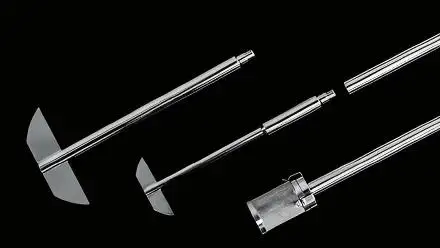
Induced Sampling Turbulence
A sampling needle that is not removed from a vessel may alter the hydrodynamics. Unrepresentative results may also be produced by variable sampling needle insertion depth.
Timing Variability
Small delays in dosing may also be detrimental in cases of rapid early dissolution. Dosing may be made more comparable by synchronization.
Desired Features of Pre-Formulation Research Instruments
| Instrument Features | Importance to API Testing |
| Constant rotational speed | Uniform shear |
| Optimal temperature control | Minimized thermal fluctuations |
| Centered vessels | Uniform flow |
| Controlled wobble of shaft and basket | Greater reproducibility |
| Positioned sampling | Representative results |
| Synchronization of dosing | Minimized variability in starting time |
| Traceable data | Supports API verification |
| Ease of cleaning | Minimized carryover |
Pre-Formulation Research Instruments for API Testing should allow for mechanical precision, temperature control, reproducibility, and efficient data management.
How Raytor Controls Critical Test Variables
Raytor develops Pre-Formulation Research Instruments around the variables that most directly influence dissolution reproducibility.
Speed and Temperature Control
Raytor dissolution systems provide:
•0.01 rpm speed resolution
•Steady-speed error within ±0.3 rpm
•Temperature accuracy within ±0.2°C
•0.01°C temperature resolution
•Real-time speed and temperature display
Automatic medium preheating allows the water bath to stabilize before testing, reducing thermal variation during early measurements.
Synchronized Dosing and Controlled Sampling
Synchronous dosing reduces vessel-to-vessel start-time differences and records the dosing point. This is particularly relevant when an API shows rapid early dissolution.
Non-resident sampling needles insert into the medium at the point of sampling. They can be configured to keep the position of the needles within the solvent volume and minimize sampling flow disruptions to increase the repeatability of sampling.
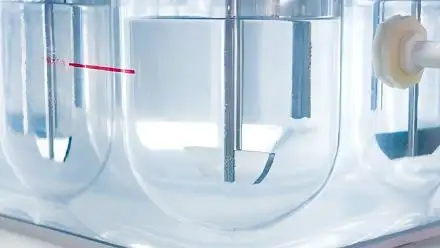
Mechanical Positioning
Raytor controls a few key parameters of alignment:
•An instrument level of < 0.5°
•A horizontal or vertical alignment with a 90° angle of ± 0.5°
•Centering deviation of < ± 2.0 mm
•Depth deviation of < ± 1.0 mm
•Shaft and basket wobble of < ± 1.0 mm
These specifications will maintain uniform hydrodynamic conditions throughout the various test positions.
With automatic vessel centering, the alignment is repeatable. The coaxial design of the paddle-basket minimizes the need for adjustment for switching the testing methods. The rounded design of the water bath, which is a one-piece unit, enhances both circulation and cleaning.
Pharmacopoeial and Application Scope
Raytor Pre-Formulation Research Instruments are designed to support procedures described in:
•ChP 0931
•USP <711> and <724>
•EP 2.9.3 and 2.9.4
The applicable procedure still depends on the API, dosage form, study objective, and laboratory protocol.
Typical applications include:
•API intrinsic dissolution studies
•Oral tablet dissolution testing
•Transdermal patch release testing
•Semi-solid preparation testing
•Injectable formulation research
•Routine pharmaceutical quality control
Build More Reliable API Dissolution Studies
An IDR study requires that you control surface preparation, temperature, hydrodynamics, dosing time, and the position at which samples are taken. Well chosen Pre-Formulation Research Instruments help laboratories provide better repeatability and more robust pre-formulation data.
Raytor offers dissolution solutions that help to achieve precise control over the temperature, position, timing, and repeatability for each step in the dissolution process. Contact Raytor to discuss the characteristics of your API, the test methods you intend to use, and the pharmacopoeial requirements that will be applicable.
FAQs
Q1. What Tools for Pre-Formulation Research Does Raytor Supply?
Raytor supplies pharmaceutical dissolution testing tools for API intrinsic dissolution studies, dissolution testing of different dosage forms, method development, and routine pharmaceutical quality control. The system allows the user to control dissolution testing parameters of speed, temperature, position of the vessel, dosing, and sampling.
Q2. Can Raytor Tools Be Used for Testing API Intrinsic Dissolution Rate?
Yes. Raytor Pre-Formulation Research Tools can be used for intrinsic dissolution rate studies when used with a suitable API holder, controlled exposed surface area, a validated dissolution medium, and the appropriate analytical method.
Q3. Which Pharmacopoeial Methods Do Raytor Dissolution Systems Comply With?
Raytor dissolution systems comply with the methods of the ChP 0931, USP <711> and <724>, and EP 2.9.3 and 2.9.4. The method to be applied will depend on the dosage form, the purpose of the study, and the laboratory's standard operating procedures.
Q4. How Does Raytor Control Speed of Rotation for Dissolution Testing?
Raytor systems offer control of speed in a range of 0 - 300 rpm, with resolution of 0.01 rpm, and steady-state error of control of ±0.3 rpm. Controlled rotation becomes important to ensure uniform hydrodynamic conditions surrounding the sample.
Q5. How Good Is the Control of Temperature for Raytor Instruments?
Raytor Pre-Formulation Research Instruments offer a temperature control accuracy of ±0.2 °C, and a resolution of 0.01 °C. The system offers a real time temperature control display to reassure the operator that the dissolution medium is maintained in the defined temperature range.